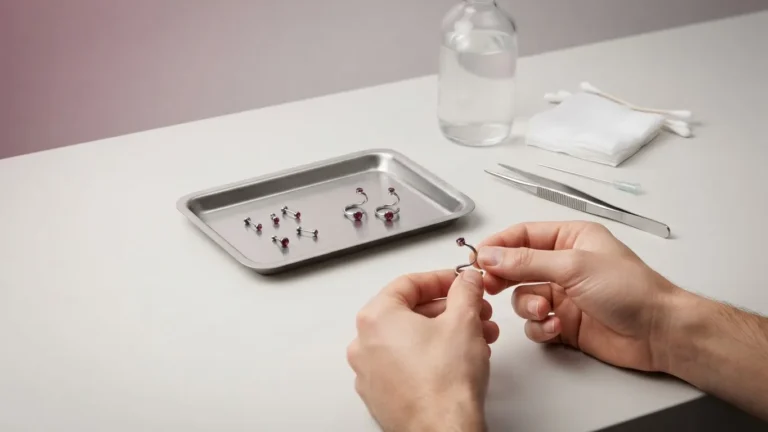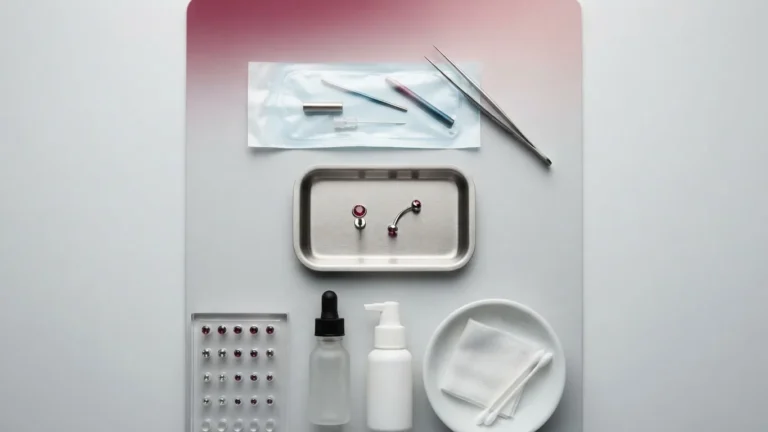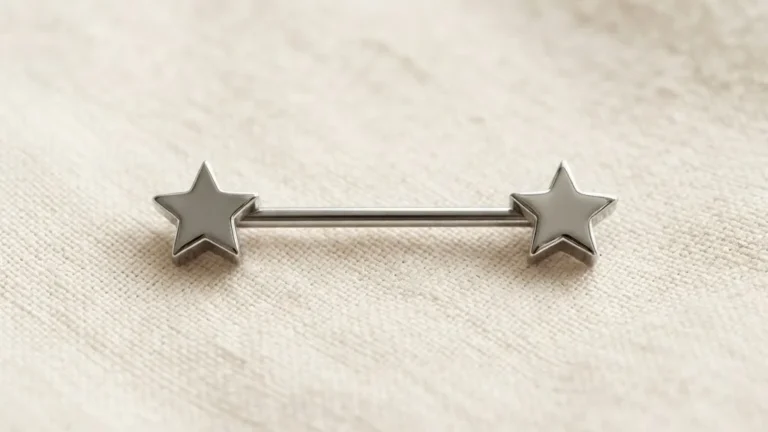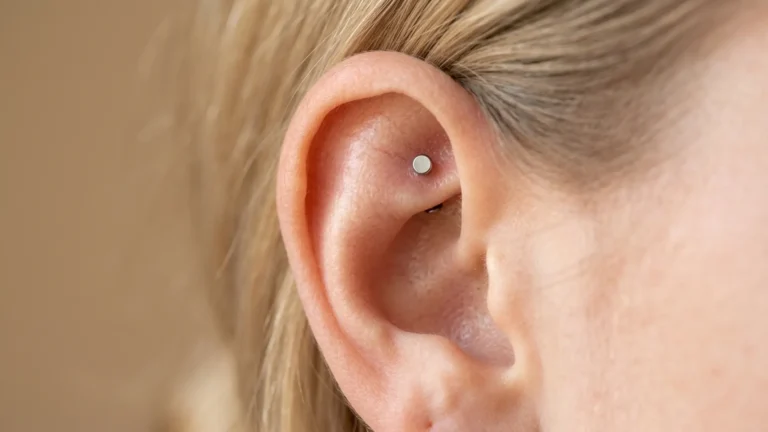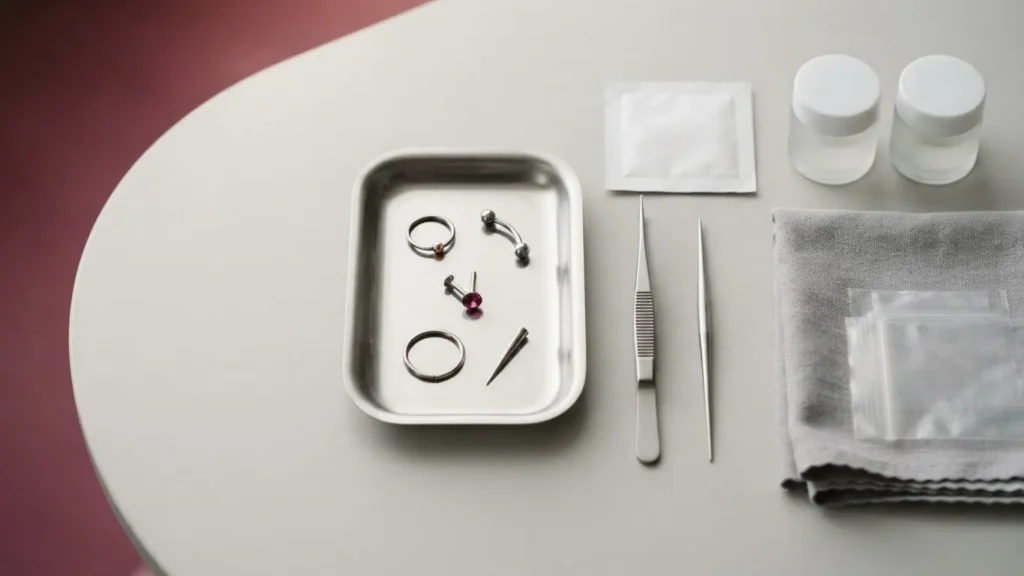
The tissue your piercer passes a needle through at the top of the ear is not the same as the earlobe, and that single fact governs almost everything that follows. An upper ear piercing sits in cartilage, which Cleveland Clinic describes as a thick, stiff tissue with less blood flow than the fleshy lobe. Lower blood flow means slower healing, fewer immune cells reaching the site, and a higher stake if infection takes hold. A lobe knits closed in weeks; cartilage measures its recovery in months, and the complications it can produce are more serious. Everything below treats that difference as the reason to plan differently, not as a detail.
The Lobecraft Editorial Desk compiles these timelines and aftercare steps from published professional body-modification standards and named medical sources. Nothing here replaces a hands-on assessment from your own piercer or a clinician.
Quick answer: An upper ear piercing passes through cartilage, which Cleveland Clinic notes may take four to 12 months to heal, versus six to eight weeks for an earlobe. Expect a sharper, more lingering pinch than a lobe. A professional pierces it with a sterilized needle and fits an implant-grade, flat-back labret or small ring, usually titanium for anyone nickel-sensitive. Aftercare means sterile 0.9% sodium chloride saline, no twisting of the jewelry, and no submerging the ear in pools or lakes until it is fully healed.
Why cartilage changes the whole calculation versus a lobe
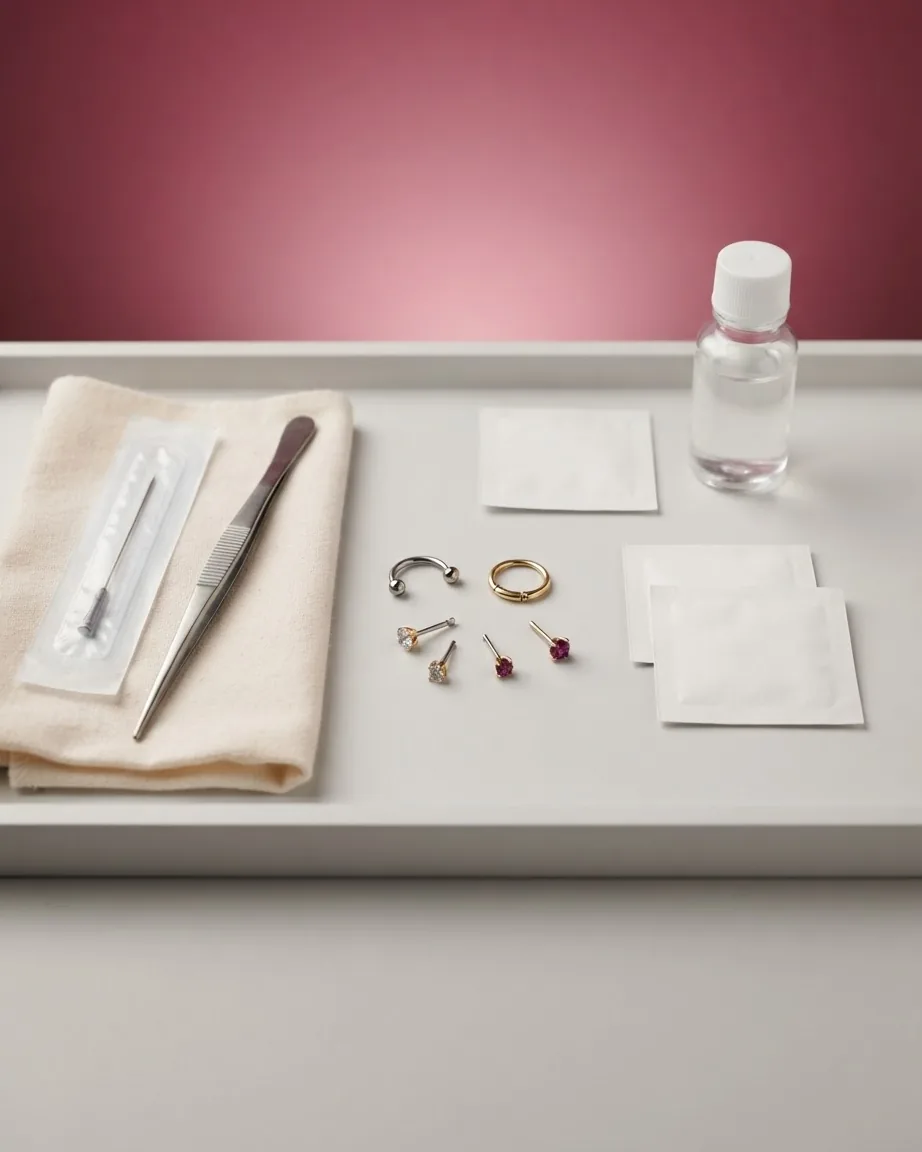
The earlobe is soft, vascular tissue. The upper ear is cartilage, which Cleveland Clinic characterizes as stiff and poorly supplied with blood. That reduced blood flow is why the same piercing done higher up heals slower and punishes mistakes harder.
The clinical stakes are documented. The American Academy of Family Physicians, in its review of body-piercing complications, states plainly that “high” ear piercing through the cartilage is associated with more serious infections and disfigurement than lobe piercing. That is not a styling preference talking; it is anatomy. When infection reaches cartilage, the body has fewer resources on hand to fight it, and the structural tissue that gives your ear its shape is what sits at risk.
Outbreak evidence sharpens the point. A JAMA investigation via PubMed traced infections after commercial upper-ear cartilage piercings at a single kiosk and found that upper ear cartilage piercing was more likely to result in either confirmed or suspected infection than was lobe piercing. From 186 piercings in 118 individuals, investigators identified 7 confirmed Pseudomonas aeruginosa infections and 18 suspected ones. Read that figure carefully: it came from one outbreak tied to one location, so it is not the general odds for any individual. What it does establish is that the cartilage site, when something goes wrong, goes wrong more seriously.
The practical takeaway is to stop mentally filing an upper ear piercing next to a second lobe hole. It belongs in its own category, with a longer calendar and a lower tolerance for shortcuts.
Helix and cartilage piercings: healing time, gauge, and jewelry
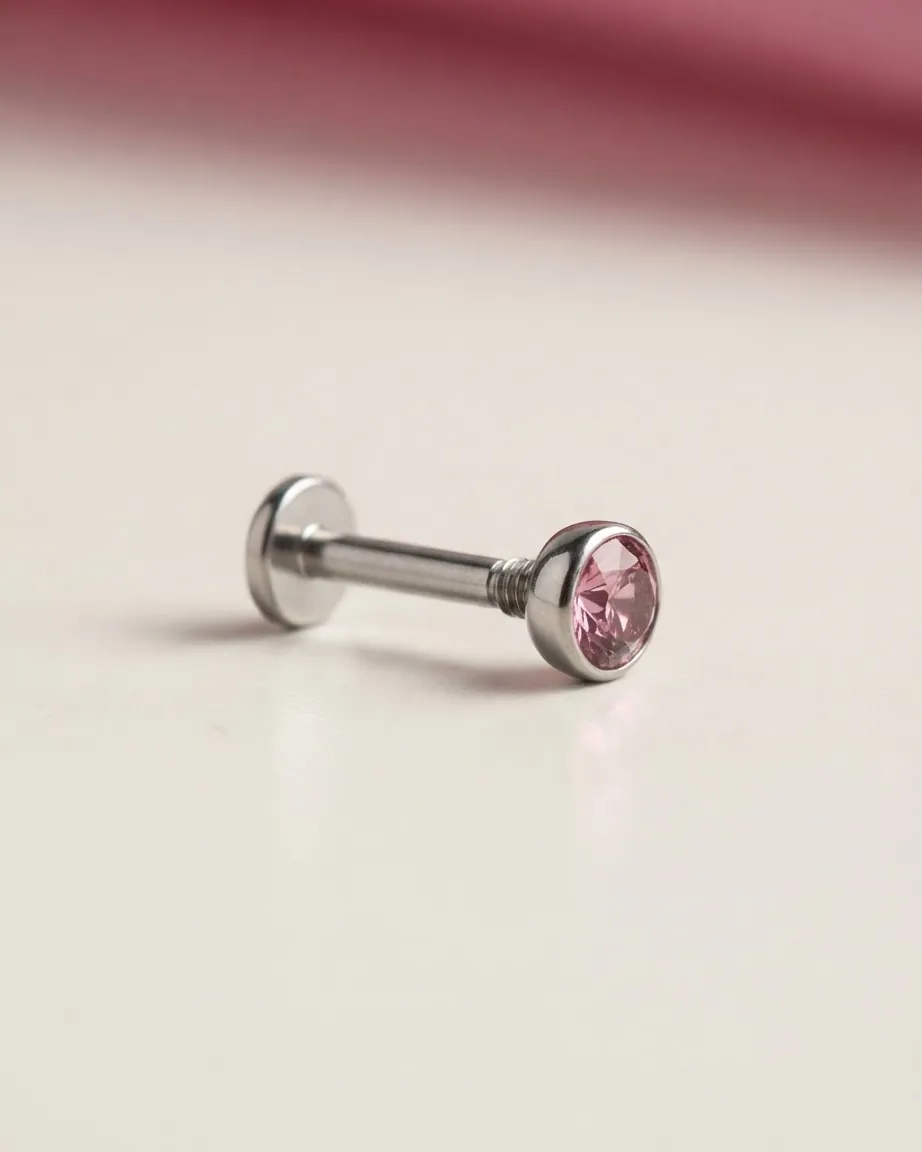
The helix is the outer curved rim of the ear, and it is the most common cartilage placement. The forward helix sits at the front where the rim meets the face; the flat is the broad cartilage plate inside the helix curve. All of them run through cartilage, so all of them follow the long healing clock.
Plan for four to 12 months. Cleveland Clinic states that while earlobe piercings take six to eight weeks to heal, cartilage piercings may take four to 12 months. That is a wide window because position, your own tissue, and how well the piercing is protected all move the timeline. Treat the longer end as your working assumption, not the shorter.
For jewelry, a piercer working to professional standards fits a flat-back labret stud or a small fixed-bead ring in an implant-grade material. The Association of Professional Piercers, through its Safe Piercing standards, emphasizes that ill-fitting jewelry increases the likelihood of swelling, embedding, and other complications if it is too small, or catching and excessive trauma if it is too large. Fresh cartilage swells, so the initial post is usually fitted slightly long to leave room, then downsized later. A flat back sits flush against the skin and is less likely to snag on hair, pillows, or a phone.
On metal, titanium is the default safe choice. Safe Piercing describes titanium as a lightweight metal that is ideal for people with concerns about nickel sensitivity, which matters more than most shoppers expect, as a later section explains. If you want to understand why the flat-back stud became the standard rather than a decorative hoop for a fresh hole, our flat-back studs guide is a useful companion. For a stacked row of three along the upper curve, see our triple helix cartilage piercing guide.
Tragus, conch, and daith: how the anatomy fits and how it feels
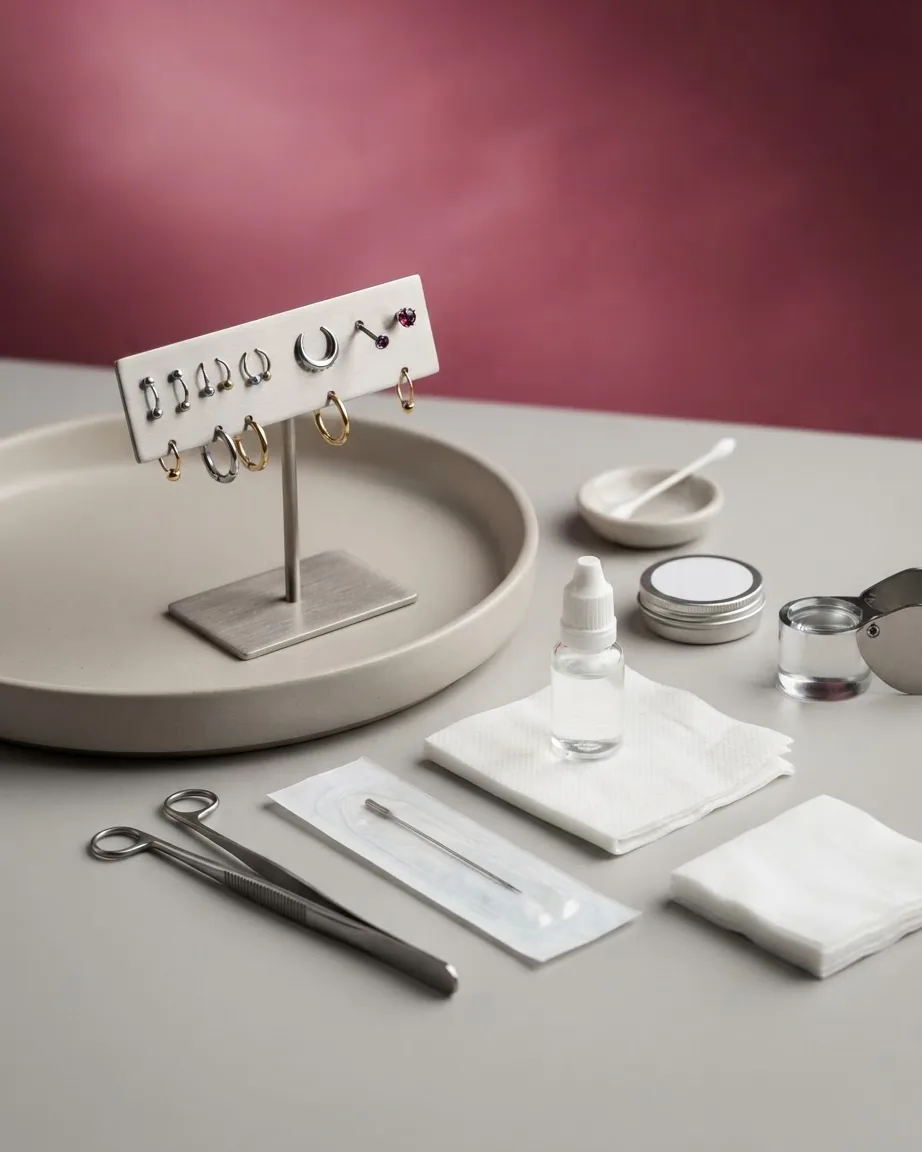
Not every cartilage placement sits on the rim. The tragus is the small flap of cartilage that projects over the ear canal. The conch is the large bowl-shaped cartilage in the center of the ear, named inner or outer depending on where it sits in that bowl. The daith threads through the innermost fold of cartilage above the ear canal. Each one is still cartilage, so each one inherits the four-to-12-month healing window and the same infection stakes described above.
Pain is the question most people actually want answered, and the honest version is conditional. A cartilage piercing generally feels sharper and lingers longer than a lobe, which passes through soft tissue almost without resistance. The tragus and daith involve dense, thick cartilage and a tighter working angle, so the pressure can feel more intense even if the pinch is brief. The conch is a larger-diameter pass, which some people register as more of a firm crunch than a sting. Because the fact-pack carries no validated numeric pain scale for these placements, no number is offered here; anyone wanting a placement-by-placement comparison can consult our piercing pain chart.
What is not conditional is that pain ends in minutes and healing does not. A placement that hurt less going in can still take a full year to settle, and vice versa. Pain at the moment of piercing is a poor predictor of how smoothly the months afterward will go.
Lobe and stacked ears: spacing, order, and when to add the next hole
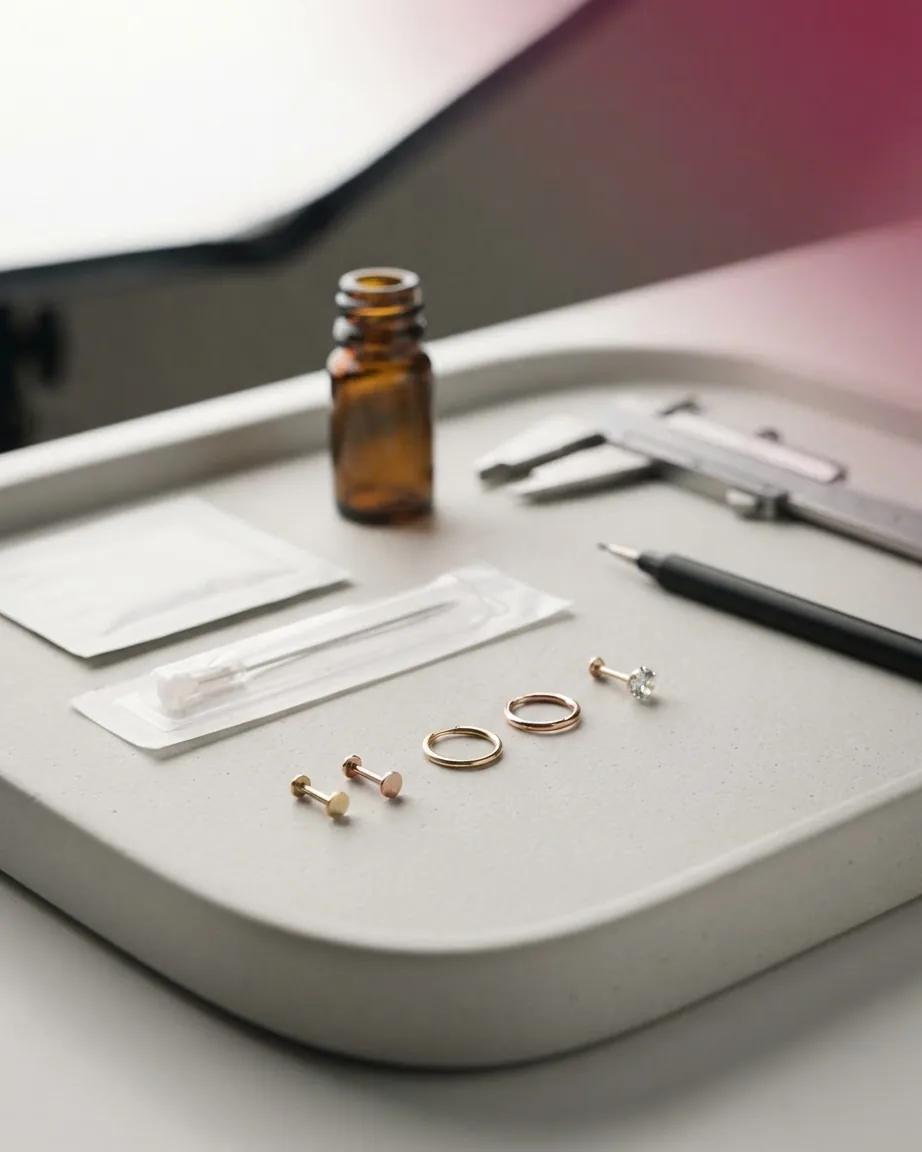
Building a curated ear is a staged project, not a single appointment. Lobes heal in six to eight weeks per Cleveland Clinic, so they are the fast, forgiving part of the plan. Cartilage is the slow part. The order that keeps you out of trouble is to let each piercing establish itself before the next needle goes near it.
Spacing is set by anatomy before style. Two holes placed too close on the lobe can leave too little tissue between them; a cartilage piece crowded against a healing neighbor invites irritation on both. A professional maps placement to your ear’s actual ridges and curves rather than to a template, which is why a consultation beats pointing at a photo.
On timing the next piercing: the governing rule is that a fresh cartilage site needs its full healing window before you load more trauma nearby or sleep on that side again. Add the next piercing once the current one is genuinely settled, not once it merely looks calm. The temptation to do several at once runs into a simple limit, which is that every new wound competes for the same healing resources and you only have two sides to sleep on. For sequencing a full project, see our multiple ear piercings guide, and for the wider subject our ear piercings section collects the placements in one place.
The “looks healed” trap: why a calm upper ear piercing can still be fragile
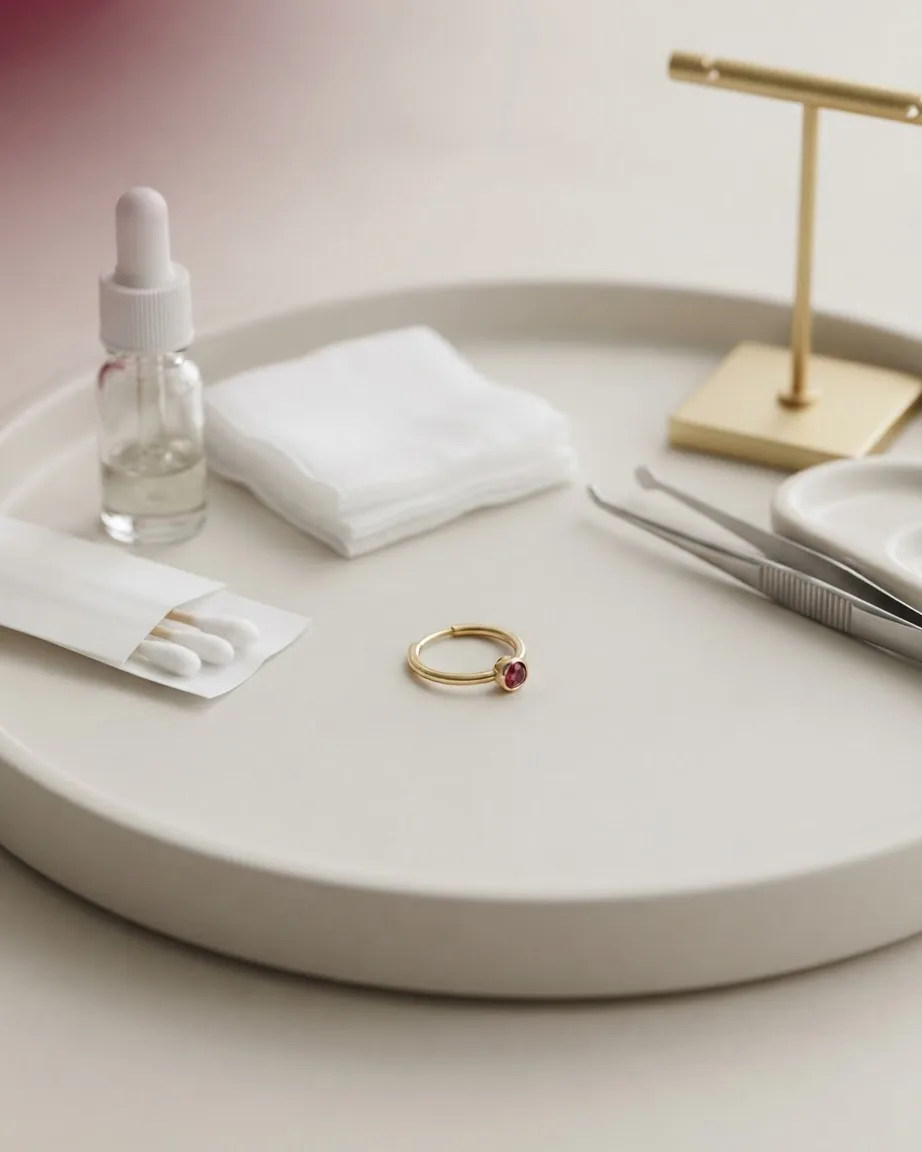
This is where most cartilage problems start. A piercing may seem healed before the healing process is actually complete, a point the Association of Professional Piercers makes directly in its aftercare standards. The surface skin at the entry and exit points can close and quiet down while the channel of tissue running through the cartilage remains delicate for months.
The consequence is practical. Change the jewelry too early, sleep hard on the side, or let the piece catch and the still-forming tissue can tear, inflame, or shift. Safe Piercing notes that sleeping directly on a healing cartilage piercing can cause irritation, even causing shifts in the piercing’s angle, which is how a perfectly placed helix ends up tilted months after the appointment.
So the safe rule for changing jewelry is to wait out the four-to-12-month window rather than trusting the mirror. If the piercing is at the longer end of that range and you are unsure, your piercer can assess the channel far better than a surface glance can. The fact-pack carries no single universal downsizing date for every helix, so there is no magic week number to quote; the judgment belongs to a professional looking at your specific healing.
Normal early healing versus the signs that mean call someone
Knowing which symptoms are routine and which are a red flag is the practical skill that protects your ear. The two look similar at a glance, which is exactly why the distinction matters.
For the first few weeks, the National Health Service notes a new piercing might be tender, itchy, and the surrounding area may look slightly red on white skin, or a little darker than usual on dark skin. That is the body doing its job. Mild soreness and a thin clear or pale crust are part of ordinary cartilage healing, not cause for alarm.
The escalation signs are different in kind, not just degree. The NHS flags the area around a piercing being swollen, painful, hot, very red or dark depending on your skin color. Mayo Clinic advises seeking medical care for a cartilage piercing that is painful, itchy, swollen, and very red or dark. The cluster to watch for is heat plus spreading swelling plus pus plus pain that worsens rather than eases, and especially any sign of feeling unwell in yourself.
Here is the part that is easy to underestimate. A Laryngoscope systematic review via PubMed found that greater than 5 days of symptoms prior to seeking treatment was significantly more likely to result in hospitalization. That association comes from reviewed cases, not a prediction for any one person, but the direction is unambiguous: with cartilage, waiting it out is the expensive gamble. In the same review, Pseudomonas aeruginosa accounted for 87.2% of infections, a microbiologic distribution among selected reported cases rather than the odds your piercing becomes infected. If the escalation cluster shows up on an upper ear piercing, the fact that you otherwise feel fine is not reassurance; cartilage viability can be threatened before you feel systemically ill. Call your piercer or a clinician.
Sterile saline versus homemade salt water, and the twisting myth
Aftercare for an upper ear piercing is short on steps and long on discipline. Two pieces of folklore cause most of the damage: the wrong cleaning solution and the habit of rotating the jewelry.
On the solution, precision matters. The Association of Professional Piercers, via its Safe Piercing aftercare standards, specifies that your saline ingredients should list 0.9% sodium chloride as the only ingredient, sometimes with purified water also listed. A sterile wound-wash saline at that concentration is not the same as salt stirred into tap water at home, where the strength is a guess and the water is not sterile. Rinse the piercing, let it dry, and leave it alone between cleanings.
The rotating habit is actively counterproductive. Safe Piercing states that moving or rotating jewelry is not necessary during cleaning or rinsing and may actually irritate the piercing. The old advice to twist the stud daily belongs to a different era; on cartilage it drags crust through the channel and keeps the wound agitated. Hands off is the method.
Water bodies are the other hazard. Cleveland Clinic advises against swimming or submerging your head in a pool, hot tub, lake, or river before your piercing fully heals, because standing or treated water is a route for bacteria into an open channel. Given the four-to-12-month window, that is a long stretch of keeping the ear dry during swims; our swim after getting ears pierced guide addresses that waiting period.
When aftercare itself becomes the source of infection
One failure mode runs against intuition: the product meant to protect the piercing can carry the infection. This is not hypothetical. The Centers for Disease Control and Prevention, in Emerging Infectious Diseases, documented a Pseudomonas aeruginosa outbreak in Australia in 2021 traced to a contaminated aftercare solution. Investigators isolated P. aeruginosa from opened and unopened bottles of the implicated batch, matching the outbreak strain by genomic sequencing.
That episode involved one specific aftercare-solution batch, not commercial products as a category, so it is a cautionary case rather than a verdict on any brand. The practical lesson is sensible rather than alarmist: use sterile, sealed, reputable saline; do not top up a bottle or decant into an unsterile container; and if an aftercare product looks cloudy, off, or has been open a long time, replace it. A single-ingredient 0.9% sodium chloride wound wash from an intact, sealed source is the standard this points toward.
Nickel allergy, biocompatible metal, and why titanium is the default
Allergen warning
Jewelry choice for a fresh cartilage piercing is a health decision before it is a style one, and nickel is the reason. The American Academy of Dermatology Association, in its guidance on nickel allergy, estimates that more than 18 percent of people in North America are allergic to nickel, including 11 million children in the U.S. The AAD also notes that it is common for a nickel allergy to develop from wearing jewelry containing nickel, meaning you can start tolerant and become sensitized over time.
Allergic contact dermatitis at a healing piercing looks a lot like infection to an untrained eye, with redness, itch, and irritation, which is another reason to let a professional sort out what is happening rather than guessing. The way to sidestep the problem is to start with a metal that does not provoke it. Safe Piercing identifies titanium as a lightweight metal ideal for people with concerns about nickel sensitivity, and implant-grade titanium is why it is the common first choice for initial cartilage jewelry.
Fit belongs in the same decision. A biocompatible metal in the wrong size still causes trouble, because, as Safe Piercing notes, jewelry that is too small drives swelling and embedding while jewelry that is too large invites catching and trauma. Metal and measurement are one choice, not two. For a worked example of sizing and metal on a related placement, see our rook jewelry guide.
Needle versus gun: the question that misses the real risk
The needle-versus-gun debate dominates most conversations about safe piercing, and it is worth putting in proportion. A histologic study in the Journal of Plastic, Reconstructive & Aesthetic Surgery via PubMed compared piercing techniques and reported no significant difference in the amount of injury between them, concluding that focus should be on other factors such as hygiene and aftercare.
Read that carefully. “No significant difference in cartilage injury” is a narrow finding about tissue trauma in that study. It does not establish that the two approaches are equivalent on sterility, jewelry fit, operator skill, or cross-contamination, which are the factors that actually drive real-world infection. The outbreak evidence points the same way: the JAMA kiosk cases and the CDC’s contaminated-solution outbreak were problems of contamination and conditions, not of the instrument’s physics.
So the decision that protects you is less about the tool and more about the setting. A trained piercer working with single-use sterile equipment, implant-grade jewelry, and sound aftercare is the standard to look for. If a venue cannot speak clearly to its sterilization and jewelry, the brand of instrument it uses does not fix that gap.
Perichondritis, keloids, and the treatments a clinician may use
Two serious outcomes deserve their own space because they are specific to cartilage and because catching them early changes how they go.
Perichondritis is infection of the tissue around the cartilage, and its danger is structural. Cleveland Clinic warns that if left untreated, an abscess can cut off the blood supply to your cartilage. Cartilage with its blood supply choked off can die, and dead cartilage does not grow back, which is how a serious upper-ear infection turns into lasting deformity. This is the concrete reason the five-day delay association from the Laryngoscope review matters so much here: with the lobe you have margin, with cartilage you have far less. For treatment, the American Academy of Family Physicians, in its review of body-piercing complications, notes that treatment with 2 percent mupirocin ointment or oral antistaphylococcal antibiotics may be warranted. Which one, and whether more is needed, is a clinician’s call, not a self-prescription.
Keloids are the other long-horizon risk: raised scar tissue that overgrows the piercing site. Cleveland Clinic notes ear keloids develop slowly, and may take three to 12 months to become noticeable, and can continue to grow for years. That is a different clock from healing; a keloid can appear well after the channel has settled. Among treatment options, Cleveland Clinic describes pressure earrings, which can be uncomfortable and must be worn for up to 16 hours every day for six to 12 months to be effective. That demanding regimen is itself a reason to take placement and aftercare seriously up front.
For context on how often complications occur at all, the AAFP review cites one study in which up to 35 percent of persons with pierced ears had one or more complications, with minor infection reported at 77 percent and allergic reaction at 43 percent among those affected. These figures describe a studied population rather than your individual odds, and some are drawn from an older review, so weigh them as scale and pattern, not as a personal forecast.
What an upper ear piercing costs and what the price should include
Budget in two parts, because the fee and the jewelry are usually priced separately. Shops that bundle a cheap stud into a low flat rate are often economizing on exactly the jewelry quality and sterilization that this entire article argues you cannot cut.
What the price should buy is specific: a trained piercer, single-use sterile needles and equipment, implant-grade titanium or comparable biocompatible jewelry fitted to your anatomy, a clear aftercare briefing, and the option to come back for a downsize or a check without a fuss. The expensive outcome is the one you are paying to avoid.
How much more does an upper ear piercing hurt than a lobe?
Expect something sharper and more lingering than the near-painless lobe, because the needle meets dense cartilage rather than soft tissue. The tragus and daith can feel especially firm due to tight angles. No validated number applies to these placements, so treat any single pain score you see elsewhere with caution and judge by placement type instead.
Can I switch to a hoop once the surface looks closed?
Not on surface appearance alone. The outer skin can quiet down while the cartilage channel stays fragile for the rest of the four-to-12-month window, and an early swap can tear or shift the still-forming tissue. Have your piercer check the channel before any change, and start a ring only once they confirm the site is genuinely settled.
Is a piercing bump the same as an infection?
Not necessarily, and the confusion is risky. Routine early healing brings mild tenderness, itch, and faint redness or darkening. An infection adds heat, spreading swelling, pus, worsening pain, or feeling unwell. Because symptoms lasting beyond five days before treatment were linked to higher hospitalization odds in reviewed cases, get that cluster assessed promptly rather than waiting.
Why not just use salt water I mix at home?
Concentration and sterility are the problems. Professional standards call for a wound wash listing 0.9% sodium chloride as the only ingredient, sometimes with purified water. A home mix guesses the strength and starts with non-sterile tap water. Even commercial solution can fail: one Australian batch was genomically matched to a Pseudomonas outbreak, so use sealed, reputable saline.
Should I twist the jewelry while it heals?
No. Rotating the piece is unnecessary during cleaning and may irritate the piercing, dragging crust back through a cartilage channel that heals slowly. The older twist-daily advice does not apply here. Rinse with sterile saline, let it dry, and otherwise leave it untouched, including keeping the ear off the pillow on that side to avoid shifting its angle.
Infection, keloids, and cartilage damage are medical matters. This guide compiles published standards and named sources for general understanding, and nothing in it is a diagnosis or a treatment plan. If an upper ear piercing looks or feels wrong, contact your piercer or a clinician.
Cartilage vs lobe: combien de fois plus long?
Les deux fourchettes de cicatrisation sont dans l’article: lobe 6 à 8 semaines, cartilage 4 à 12 mois. En ramenant les semaines en mois (4 semaines/mois), le lobe cicatrise en 1,5 à 2 mois. On peut alors comparer directement.
- Borne haute: 12 mois ÷ 2 mois = 6× plus long qu’un lobe.
- Borne basse: 4 mois ÷ 1,5 mois ≈ 2,7× plus long.
- Pire des cas: 12 mois − 2 mois = 10 mois d’attente en plus avant cicatrisation complète.
Concrètement: tant que tu n’as pas tenu le site au moins 2,7 à 6 fois plus longtemps qu’un trou de lobe, il n’est pas cicatrisé – même s’il a l’air calme.