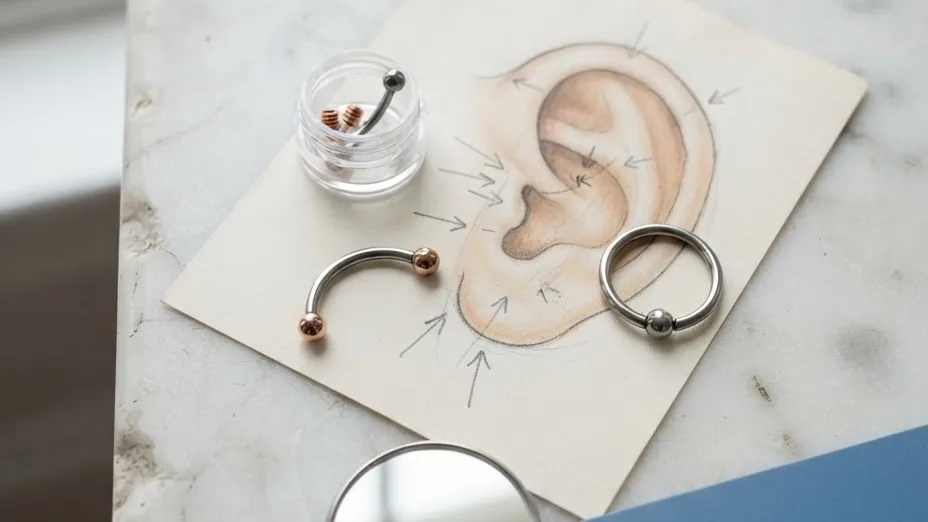
Rook jewelry sits in one of the trickiest spots on the whole ear, threaded through the antihelix ridge of cartilage in the upper inner ear, above the tragus and daith. That location changes everything about what you can wear, how long it takes to settle, and which metal you should trust against a fresh wound. The standard starting gauge is 16 gauge, equal to 1.2 millimeters, and the healing clock runs far longer than most people expect. Get the material and the fit wrong and you are inviting months of irritation. Get them right and the piece disappears into a curated ear as if it belongs there.
Most guides on this piercing pick a lane. The health articles nail anatomy and red-flag symptoms, then wave a hand at “titanium or gold” and move on. The shop pages show you a wall of gemstones with no explanation of what a 16 gauge curved barbell actually needs to be. This one refuses to choose. It treats the metal question with the seriousness a wound deserves, and it treats the shopping question with the specificity a buyer deserves.
That means covering three kinds of intent in one place: the person who just wants to know what rook jewelry even is, the person comparing materials and styles before they commit to a purchase, and the person who already knows they want a curved barbell and just needs to know which gauge, length, and metal to click. Splitting those three into separate articles is how most of the competition ends up shallow in exactly the places that matter most for a healing wound.
Quick answer: Rook jewelry for a fresh piercing should be a 16 gauge (1.2 millimeters) curved barbell in implant-grade titanium meeting ASTM F136, sized slightly long to allow for swelling. Cartilage sites like the rook heal in roughly 6 to 12 months, far slower than the 6 to 8 weeks a lobe takes, so you keep the initial barbell until a piercer downsizes it once swelling drops. Rings and clickers are for healed rooks, not fresh ones. Verify the ASTM designation before you buy anything.
Anatomy first: what the rook actually is and who should think twice
The rook is not a single point but a ridge. It is the fold of cartilage called the antihelix, positioned in the upper inner portion of the outer ear, above the tragus and just outside the daith. Because it is a ridge rather than a flat plane, a piercer threads the needle through the fold itself, and the jewelry that follows has to bridge that curve rather than sit flush against skin the way a lobe stud does. This is the anatomical reason the curved barbell exists as a shape in the first place: nothing else conforms to that fold without pressing awkwardly on one side.
Anatomy also decides who is, and is not, a straightforward candidate. People with a history of keloid scarring, active autoimmune conditions, or a current ear infection should talk to a piercer or a clinician before adding a slow-healing cartilage piercing to the mix. This is not a scare tactic; it is the same logic that applies to any elective procedure that involves breaking skin and asking cartilage to repair itself over many months. A consultation before the piercing is far cheaper, in time and discomfort, than solving a complication after the fact.
Why the antihelix ridge dictates a curved barbell, not a ring
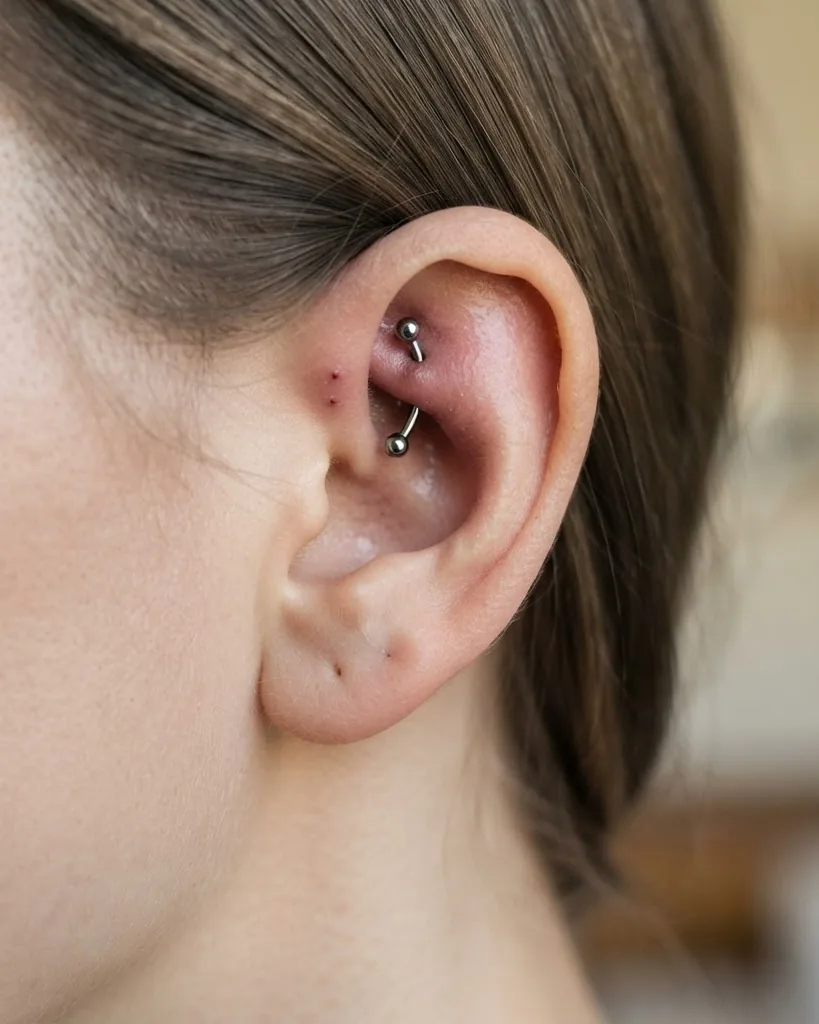
The rook pierces the antihelix, a fold of cartilage that arcs across the upper inner ear. A curved barbell bridges that fold with two ball ends resting on either face of the ridge, and it does not rotate inside the channel. That stillness is the entire point for a fresh piercing. A ring, by contrast, spins as you sleep and dress, and a rotating ring drags surface bacteria into the healing wound. Ear cartilage piercings already carry a longer healing timeline and higher reported complication rates than earlobes, so anything that adds trauma to the channel is working against you from day one.
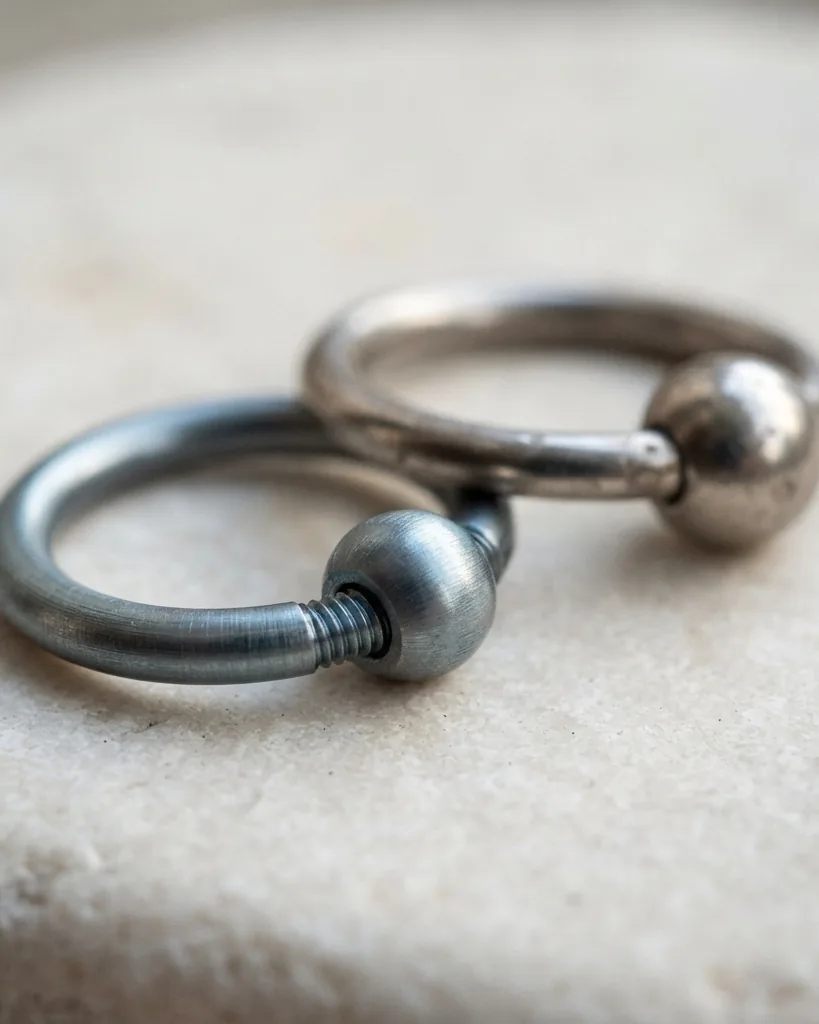
This is why nearly every reputable studio starts a rook with a curved barbell and nothing else. Seamless rings, captive bead rings, and hinged clicker rings all belong to the healed-piercing stage, once the channel has matured enough to tolerate movement. Trying to skip straight to a ring on day one is one of the more common mistakes first-time buyers make, usually because a product photo showed a healed ear wearing a delicate hoop and nobody mentioned that the photo was taken months after the original piercing.
If you are choosing a fresh piece, think in terms of these rook-specific tradeoffs:
- Curved barbell: stationary, low-drag, sits close to the ear. The standard for initial rook piercings.
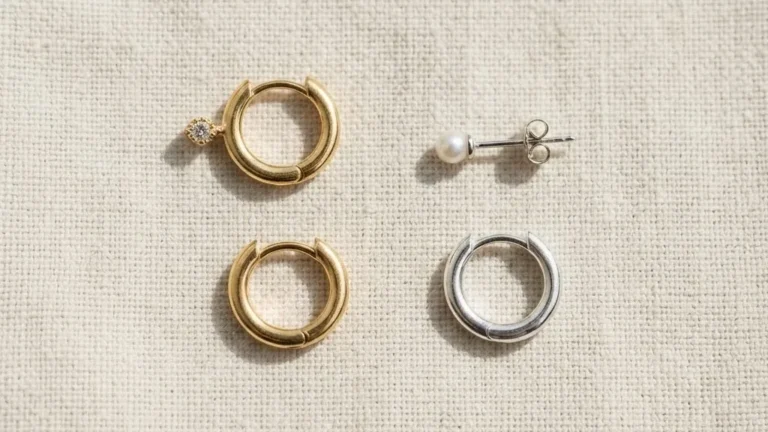
- Hinged clicker ring: striking on a healed rook, but the diameter and movement make it a poor first choice.
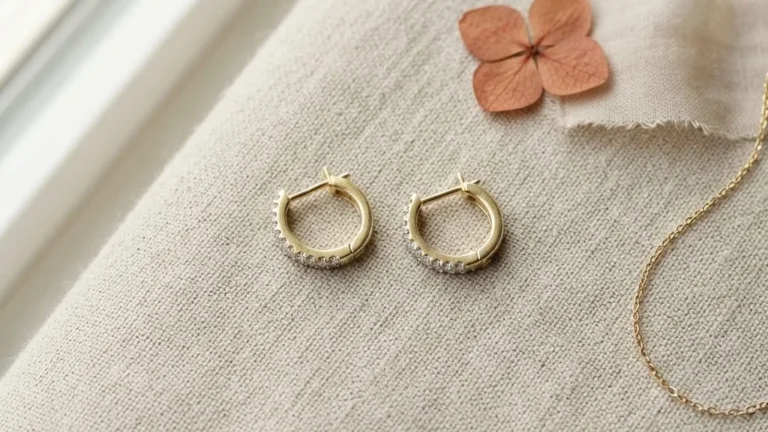
- Seamless / continuous ring: minimalist and popular once healed, though it still rotates against the channel.
- Labret-style post: flat back, low profile, occasionally used but less common than the curved barbell here.
The tradeoff table above is worth reading twice if you are shopping while your piercing is still fresh, because it is the single fastest way to avoid buying a piece you cannot actually wear yet. For a deeper walkthrough of the piece itself, the sizing math, and the metal choices unique to this spot, our companion piece on the curved barbell for rook piercing sizing and metal goes through it stone by stone.
What 16 gauge and 18 gauge actually mean in millimeters
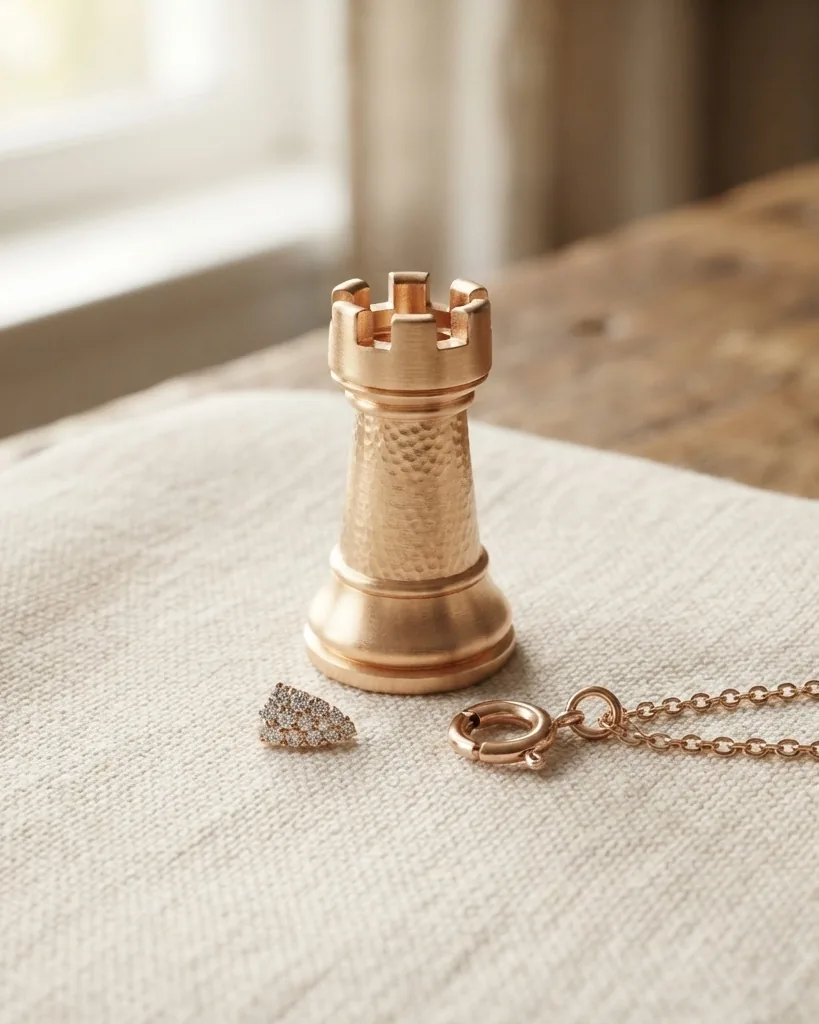
Gauge is thickness, and for the rook the standard is 16 gauge, which equals 1.2 millimeters. Some studios use 18 gauge, equal to 1.0 millimeters, depending on your anatomy and how the piercer wants to sit the barbell. That single number decides whether a replacement piece will even thread through your channel, so it is the first spec you confirm before buying anything. A gauge counterintuitively runs backwards: the larger the number, the thinner the post, so 18 gauge is finer than 16 gauge.
Length is the second number, and it is where fresh piercings and healed piercings diverge sharply. A new rook is fitted with a longer curved barbell so the swelling that follows the piercing has somewhere to go. If the post is too short at the start, the balls press into swollen tissue and can cause embedded-jewelry complications. Once the swelling subsides, that same length becomes a snagging hazard.
Worked example: imagine your piercer fits you with a barbell long enough to clear the swelling of week one. By week six, the swelling is mostly gone, but the barbell still sticks out slightly further than it needs to. That extra length is now doing nothing useful and is instead catching on hairbrushes and pillowcases. This is the exact gap that downsizing closes, and it is also why buying a “healed length” barbell online during week one, before you have been downsized, is a common and avoidable mistake.
Here is how the two specs break down at a glance:
- Gauge: 16G equals 1.2 millimeters (standard); 18G equals 1.0 millimeters (some studios, anatomy-dependent).
- Initial length: deliberately longer to accommodate post-piercing swelling.
- Healed length: shorter, fitted at downsizing to reduce snagging and migration.
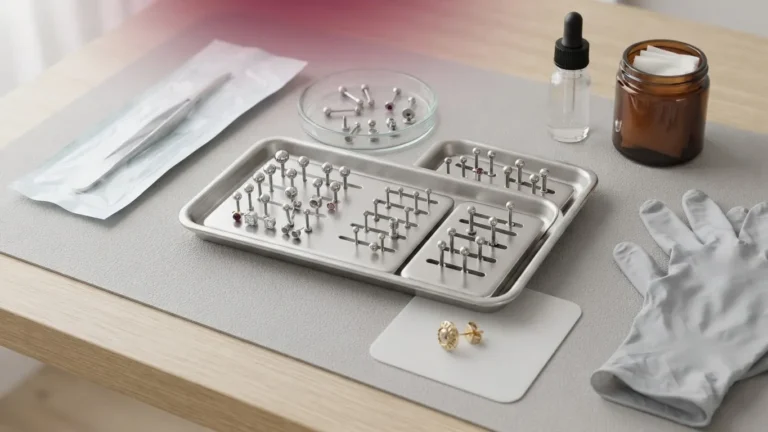
Never measure a fresh piece by eye. To measure existing jewelry safely, gauge is read across the post’s diameter and length is the wearable span between the two ends, and a piercer can confirm both in seconds. If you are still learning how the tools and posts relate to sizing, the mechanics of the piercing needle sizing and safety guide explain why the initial gauge is chosen the way it is.
Implant-grade titanium (ASTM F136) versus “surgical steel” you cannot verify
The single most important thing you can learn about rook jewelry is that “surgical steel” and “hypoallergenic” are marketing words with no guaranteed meaning, while ASTM designations are technical specifications you can check. ASTM F136 is the published standard for wrought Titanium-6Aluminum-4Vanadium ELI alloy for surgical implant applications, an alloy of roughly 6 percent aluminum and 4 percent vanadium. That is what “implant-grade titanium” means. ASTM F138 is the parallel standard for wrought stainless steel for surgical implant applications, the real “implant-grade steel.” Generic “surgical steel” may never have met F138 at all.
Why does this matter more for cartilage than for a lobe? Because the rook heals over 6 to 12 months, and every one of those months your immune system is in contact with the metal. The American Academy of Dermatology treats nickel as one of the most common causes of allergic contact dermatitis, and cheap plated pieces and unverified steel are exactly where stray nickel shows up. The U.S. Food and Drug Administration oversees consumer-safety questions around jewelry materials and allergic reactions, and the Association of Professional Piercers builds its material recommendations around exactly these implant-grade standards.
A useful way to think about this: a lobe piercing gives a nickel-sensitive person a few weeks of exposure before the wound closes over and the risk drops. A rook gives that same person the better part of a year of exposure while the channel is still open and vulnerable. The cost of choosing a vague “hypoallergenic” post over a documented ASTM F136 titanium one is small at checkout and potentially large six months later, in the form of redness, itching, or a bump that will not go away until the metal is removed.
When you read a product listing, sort claims into two piles: verifiable specifications and vague reassurances.
- Trust the spec: “implant-grade titanium, ASTM F136” or “implant-grade steel, ASTM F138.”
- Treat cautiously: “surgical steel,” “hypoallergenic,” “nickel-free” with no standard named.
- Also solid: nickel-free 14k or 18k gold, and niobium.
- Avoid for a fresh rook: plated brass, acrylic, and any metal a seller cannot document.
Established manufacturers such as Body Vision Los Angeles (BVLA), Anatometal, Industrial Strength, and NeoMetal are named as reference points precisely because their material disclosures are specific. The Association of Professional Piercers publishes its standards through its own site at safepiercing.org, and the ASTM specifications themselves live at astm.org. If you want the dermatology angle on why nickel matters at all, the American Academy of Dermatology documents it at aad.org.
The metal question runs through every ear piece, not just this one. If you are curating a full ear, the metal logic in our guide to choosing rook earrings that heal well carries the same standards into styling decisions.
Threadless and internally threaded posts protect the healing channel
Closure systems sound like a technicality until you understand what happens when the wrong one slides through a fresh wound. Externally threaded jewelry has the screw threads on the post itself, so those sharp ridges scrape the inside of the healing channel every time the piece goes in. Internally threaded jewelry hides the threads inside the ball, leaving the post smooth. Threadless, or push-pin, systems have no threads at all: a slight bend in a pin holds tension. For an initial rook, threadless and internally threaded systems are the professional standard because they cause the least trauma to tissue that is trying to close.
That distinction is not cosmetic. A rough insertion can reopen microtears, and microtears are how a piercing that was healing cleanly turns into a months-long irritation problem. If you have ever wondered why a professional piercer winces at the idea of a cheap externally threaded barbell for a fresh cartilage site, this is the whole reason: every insertion and removal during aftercare checks is another pass of rough threads against tender tissue.
The short version for buyers:
- Threadless (push-pin): smooth post, no threads, professional first choice.
- Internally threaded: threads inside the ball, smooth post, also studio-grade.
- Externally threaded: threads on the post, avoid for initial insertion.
Once a rook is fully healed, the practical risk of externally threaded jewelry drops, since you are changing the piece far less often and the channel is mature. Even then, most experienced piercers will simply keep recommending internally threaded or threadless systems out of habit, because the smoother insertion is more comfortable regardless of healing stage.
The 6-to-12-month heal and why downsizing is not optional
Cartilage does not heal like a lobe, and the timeline gap is the number that surprises people most. Earlobe piercings typically settle in about 6 to 8 weeks, while cartilage piercings including the rook generally need several months, commonly cited in the 6 to 12 month range, to fully heal. That is roughly six to eight times longer, and the reason is blood supply: cartilage is poorly vascularized, so the tissue repairs slowly and stays vulnerable far longer than the fleshy lobe.
Downsizing is the practical consequence of that timeline, and it is the step most self-piercers skip to their cost. Your first curved barbell is fitted long to leave room for the swelling that follows any new piercing. Once that swelling subsides, professional piercers recommend swapping the longer initial curved barbell for a shorter one. The reasons are mechanical: a barbell that is now too long for the settled tissue sticks out, catches on hair, brushes, pillows, and headphones, and every one of those snags tugs the channel and invites migration or irritation.
Think of downsizing as a scheduled maintenance step, not an optional upgrade you can skip if the piercing feels fine. Plenty of rook piercings feel comfortable at the two-month mark even though the barbell is objectively too long for the now-reduced swelling. Comfort is not the same signal as correct fit, and the snag risk exists whether or not you can feel it day to day.
The UK National Health Service sets out the public-health side of piercing risk and aftercare, and its guidance on when to seek medical help is worth reading before you pierce, at the NHS body piercings guidance. The Association of Professional Piercers frames downsizing as standard practice rather than an optional upgrade.
Watch for these signals over the healing window:
- Weeks 1 to a few weeks: swelling present, keep the longer initial barbell.
- Swelling subsided: book a downsize to a shorter barbell.
- Persistent pain or a shifting angle: see a piercer or clinician rather than waiting it out.
Because so many people stack a rook alongside other cartilage work, the pacing question matters. Our overview of healing multiple ear piercings safely explains why loading several slow-healing sites at once can overwhelm your aftercare.
Risks and how jewelry choice makes each one better or worse
Every risk associated with a rook piercing gets better or worse depending on the jewelry sitting inside it. Infection risk rises with rough threading, unverified metals, and jewelry that is handled or changed before the wound is ready. Prolonged swelling is worsened by a barbell that is fitted too short from the start, since pressure on swollen tissue slows the body’s ability to calm the inflammation down. Hypertrophic scarring and keloids are a separate risk tied more to individual healing tendency than to jewelry choice, which is exactly why a pre-piercing consultation matters for anyone with a personal or family history of keloids.
Migration and rejection, where the body gradually pushes the jewelry toward the surface and out, are influenced heavily by weight and movement. A heavier gem-set piece, or a ring that rotates constantly against the channel, puts more mechanical stress on a healing rook than a lightweight, stationary curved barbell does. This is the same “healing physics” point that runs through the closure-system and shape sections above: anything that adds unnecessary movement or weight to a fresh cartilage piercing is working against the body’s own repair process, not with it.
How rook jewelry differs from daith, snug, and conch pieces
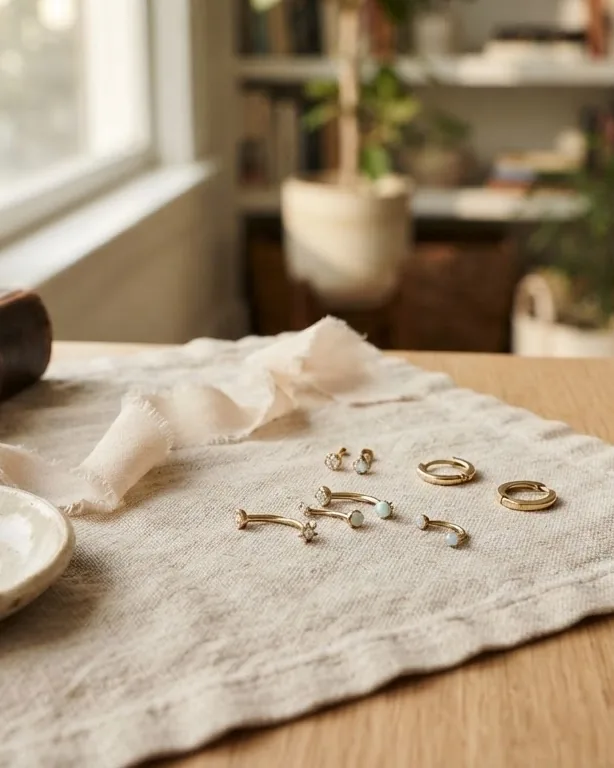
Confusing the rook with its neighbors is one of the most common mistakes buyers make, and it leads to ordering the wrong shape entirely. The rook sits on the antihelix ridge and takes a curved barbell that bridges that fold. The daith sits lower, wrapping the innermost cartilage fold, and takes a larger-diameter ring rather than a barbell. Buy a daith-style ring for a rook and it will not sit right; buy a rook barbell for a daith and it will not fit the fold at all.
The snug and the conch add two more common points of confusion. The snug runs along the inner antihelix, close enough to the rook that shoppers sometimes mix the two up, and it also typically takes a curved barbell rather than a ring. The conch is a different animal altogether: it is the large, bowl-shaped cartilage in the center of the ear, and it comfortably fits either a stud or a larger-diameter ring, depending on whether you are piercing the inner or outer conch.
The quick anatomical distinctions:
- Rook: antihelix ridge, upper inner ear, standard piece is a curved barbell.
- Daith: innermost cartilage fold, standard piece is a larger-diameter ring.
- Snug: along the inner antihelix, another curved-barbell site.
- Conch: the large central cartilage bowl, fits studs or larger rings.
If daith is the one you keep mixing up with your rook, our dedicated guide on choosing the right daith jewelry ring, gauge, and metal lays out exactly how the ring diameter and fold anatomy differ from the rook’s barbell.
Special populations and lifestyle considerations
A rook piercing does not exist in isolation from the rest of your life, and a few groups of people benefit from thinking through their daily habits before choosing a piece. Anyone with a documented metal allergy should stay strictly within materials that carry a named ASTM designation, or solid nickel-free gold, rather than gambling on an unlabeled “hypoallergenic” listing. The stakes are higher here than with a lobe simply because the exposure window is so much longer.
People who wear over-ear headphones for work, gaming, or commuting for hours at a time face a different problem: constant pressure and friction against a spot that is already trying to heal. For this group, a low-profile, correctly downsized curved barbell that sits flush against the ear reduces the number of times a headphone band catches or presses on the piece each day. Choosing a piece with larger decorative balls or a gem cluster before downsizing has happened is one of the more common ways this group ends up with prolonged irritation.
Healthcare workers and anyone whose job involves frequent personal protective equipment, including masks with ear loops or tight-fitting headwear, face a similar friction problem multiplied across a full shift. The same advice applies: prioritize a flush, downsized, lightweight piece over a statement one until the piercing has fully matured, and only then consider swapping in something with more visual presence.
Troubleshooting: what to do when something feels off
Even a well-chosen rook piercing sometimes throws up a scare, and knowing which symptoms are ordinary and which need attention saves a lot of unnecessary anxiety. Mild redness and tenderness in the first few days is expected. A small amount of clear or slightly whitish fluid crusting around the jewelry during the first weeks is also typical and is not the same thing as infection, though it can look alarming the first time you see it.
What is not ordinary, and does warrant a call to your piercer or a clinician, includes spreading redness beyond the immediate piercing site, increasing pain rather than gradually decreasing pain, a fever, or thick colored discharge. A bump that forms behind the piercing and does not resolve after a few weeks of consistent saline aftercare is also worth a professional look, since it can indicate either irritation from an ill-fitting barbell or the early stages of a keloid. In every one of these cases, removing the jewelry yourself is usually the wrong move, since a closing channel can trap infection inside; a piercer or clinician can advise on whether the jewelry should stay in or come out.
Reading a listing, price tiers, and the curated-ear payoff
Once you know the gauge, the metal standard, and the closure type, shopping becomes a filtering exercise rather than a gamble. Price tiers on rook jewelry run from entry-level implant-grade titanium up through solid nickel-free 14k and 18k gold and gem-set clicker pieces from names like Body Vision Los Angeles and Anatometal. The jump in price mostly tracks material and craftsmanship, not the shape. What you are really paying for at the top of the range is documented material provenance and finishing that will not shed metal into a healing channel.
The listing itself tells you whether a seller is trustworthy. A real disclosure names an ASTM designation. A weak one hides behind “hypoallergenic” and stops there. It is also worth checking whether the seller lists the gauge and length in millimeters rather than vague sizing like “small” or “standard,” since those words mean different things across brands and are effectively useless for matching a replacement piece to your existing channel.
Red flags and green flags when you read a product page:
- Green flag: explicit ASTM F136 or F138 designation, gauge and length listed in millimeters.
- Green flag: clear return and warranty terms, named manufacturer.
- Red flag: “surgical steel” with no standard, no gauge listed, no returns.
A curated ear that mixes a rook barbell with helix, tragus, and conch pieces looks intentional only when every piece is sized and finished correctly, which is why the technical groundwork pays off aesthetically too. Popular curated-ear directions built around a rook include a minimalist all-gold arrangement, a single gem-set clicker paired with plain lobe studs for contrast, and a heavier industrial or edgy look that stacks multiple cartilage pieces close together. None of these styling choices override the sizing and material fundamentals above; they simply build on top of a foundation that has to be correct first.
Frequently asked questions about rook jewelry
What gauge is a rook piercing?
The standard gauge for initial rook jewelry is 16 gauge, which equals 1.2 millimeters. Some studios use 18 gauge, equal to 1.0 millimeters, depending on your anatomy and how the piercer wants the barbell to sit. Because gauge runs backwards, 18 gauge is the thinner of the two. Always confirm your exact gauge with your piercer before ordering any replacement piece so it threads through your channel.
Can I use a ring in my rook piercing?
Not while it is fresh. A ring rotates as you move and sleep, and that rotation drags surface bacteria into a healing wound, which is why studios start a rook with a stationary curved barbell. Once the piercing has fully healed over its 6 to 12 month timeline, seamless rings and hinged clicker rings become options. Ask your piercer to confirm the channel is mature first.
How long until I can change my rook jewelry?
Cartilage piercings including the rook generally need 6 to 12 months to fully heal, far longer than the 6 to 8 weeks a lobe takes. You should not swap the piece yourself during that window. The one professional exception is downsizing, when a piercer replaces your longer initial barbell with a shorter one after swelling subsides to reduce snagging and migration.
What is the difference between rook and daith jewelry?
The rook pierces the antihelix ridge in the upper inner ear and takes a curved barbell that bridges that fold. The daith sits lower, wrapping the innermost cartilage fold, and takes a larger-diameter ring instead. The shapes are not interchangeable: a daith ring will not sit correctly in a rook, and a rook barbell will not fit the daith’s fold. Match the piece to the anatomy.
Is surgical steel safe for a rook piercing?
It depends entirely on whether the steel meets ASTM F138, the published standard for implant-grade stainless steel. Generic “surgical steel” with no standard named may contain enough nickel to trigger allergic contact dermatitis, which the American Academy of Dermatology identifies as a common problem. For a slow-healing cartilage site, choose documented ASTM F136 titanium or ASTM F138 steel rather than trusting a vague label.
How do I verify a jewelry material claim before buying?
Look for an explicit ASTM designation in the listing, F136 for titanium or F138 for steel, rather than words like “hypoallergenic” or “surgical steel.” Reputable manufacturers such as Body Vision Los Angeles, Anatometal, and NeoMetal document their materials specifically. The Association of Professional Piercers builds its guidance around these implant-grade standards, so matching a listing to a named standard is your safest check.
Why does my rook piercing seem to take so much longer to heal than my lobe piercing?
Cartilage has a much poorer blood supply than the soft, fleshy tissue of a lobe, and blood supply is what carries the immune cells and nutrients tissue needs to repair itself. That is the physical reason cartilage sites like the rook take 6 to 12 months instead of the 6 to 8 weeks a lobe needs. It is not a sign anything is wrong; it is simply how that tissue type heals, and rushing the process by changing jewelry early tends to reset the clock rather than speed it up.
Rook jewelry rewards patience and punishes shortcuts. The channel heals slowly, the metal touches you for the better part of a year, and the difference between a piece that disappears into your ear and one that keeps you at the piercer’s chair usually comes down to three decisions made before you ever buy: correct gauge, documented implant-grade material, and a stationary curved barbell you keep until a professional downsizes it. If you are still weighing whether to stack a rook with other cartilage work, read up on placement and pacing before you commit to more than one slow-healing site at once.