Tragus earrings sit on the small flap of cartilage in front of your ear canal, and that little shelf of tissue decides almost everything about what you can safely wear. Get the metal, the gauge, or the post length wrong, and you trade a clean ear stack for months of angry, swollen cartilage.
The tragus is not a lobe. It heals slower, it swells more, and it punishes shortcuts. Before you commit, it helps to know how much each placement hurts so the pressure near the ear canal does not blindside you.
Cartilage rewards patience and the right hardware. The rest comes down to a handful of numbers most product pages quietly skip.
Quick answer: Tragus earrings should start as a flat-back labret stud in implant-grade titanium (ASTM F136), usually 16 gauge with a post around 6mm to leave room for swelling. Hoops and rings come later, only after the piercing has healed and been downsized. Plan on 3 to 6 months of healing at a minimum, and up to a full year to remodel completely. Buy internally threaded jewelry, keep it in until a professional swaps it, and clean with sterile saline twice daily. Skip sterling silver, tea tree oil, and any “surgical grade” claim that never names a standard.
What a tragus piercing is and where the earring sits
The tragus is the small, rounded nub of cartilage that sits just in front of your ear canal, partly shielding it. A piercing here passes straight through that flap, so the jewelry lies flat against the side of your face instead of hanging free the way a lobe stud does.
That placement is exactly why the tragus behaves nothing like a lobe. It is dense, avascular cartilage under a thin skin covering, which means low blood supply and slow, stubborn healing. The flap also sits right against your headphones, your pillow, and your phone, so it absorbs more mechanical abuse than nearly any other ear placement.
Piercers reach for a hollow needle rather than a gun here, because a needle removes a clean core of tissue instead of crushing it. A gun cannot be sterilized properly and it shatters cartilage rather than parting it, which is one reason cartilage guns are widely discouraged.
Anatomy matters too. A shallow or thin tragus narrows your options, which is why a careful piercer studies the flap before choosing a gauge. Some tragi are simply too small to seat a stud safely, and a good piercer will tell you that instead of forcing it.
There is also a surface tragus, which sits on the flat skin next to the flap rather than through the cartilage. It uses a surface bar and rejects far more often, so treat it as a separate, riskier project.
Tragus earrings by type: studs, barbells, hoops and clickers
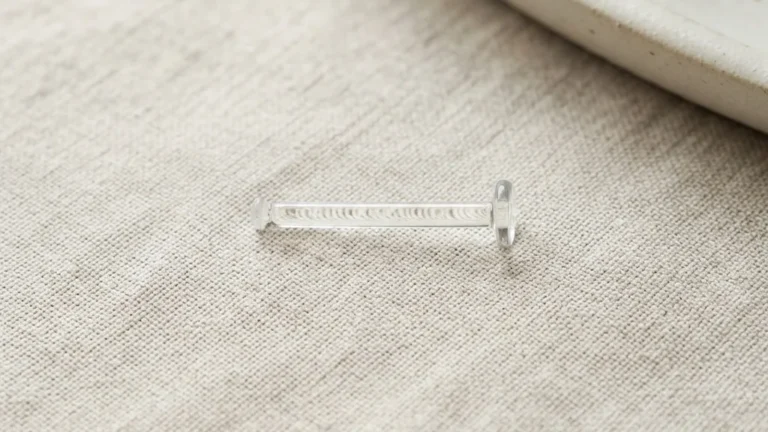
Tragus earrings fall into a few clear categories, and the right one depends entirely on whether your piercing is fresh or fully healed. For a new tragus, the safe default is a flat-back labret stud: a flat disc on the inside, a straight post, and a small top that seats smoothly against the flap without pressing into it.
Everything else is a question of timing and threading. Internally threaded jewelry hides the screw thread inside the post, so a smooth channel slides through your ear. Externally threaded posts drag that thread across raw tissue on the way in, which is why piercers push internal threading or threadless push-pins for cartilage.
The difference is not cosmetic. An external thread is a tiny screw ridge on the outside of the bar, and every time it passes through a healing channel it scrapes the wound wider. A threadless push-pin has no thread at all; the top presses into a hollow post and holds by tension. Brands like Maison Miru and Maria Tash lead with flat-back push-pin studs for this exact reason, and studios like Studs and Adornmonde gate hoops to healed piercings for the same logic.
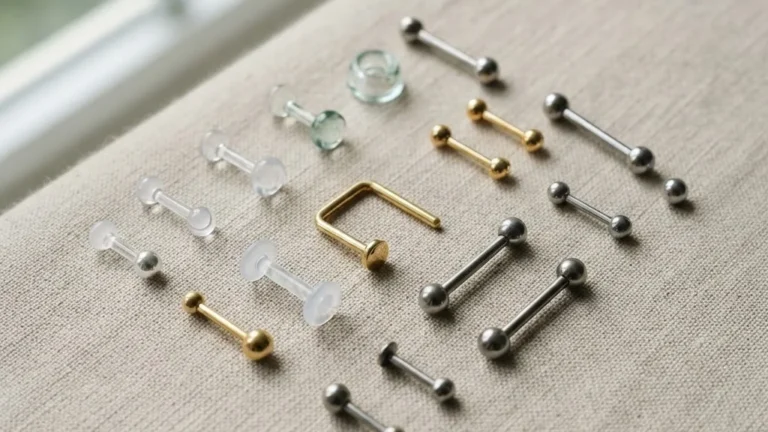
Here is how the common styles break down:
- Flat-back labret stud: the starter for a fresh tragus. Flat inside, low profile, minimal snag risk.
- Barbell: a straight or slightly curved bar with two beads. A workable initial option in some anatomies.
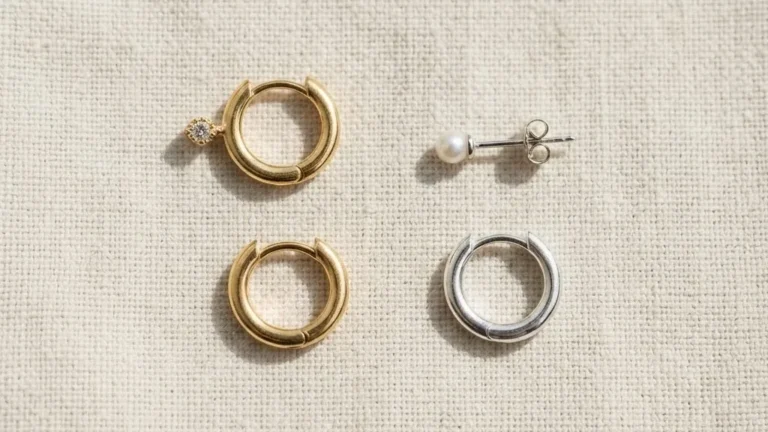
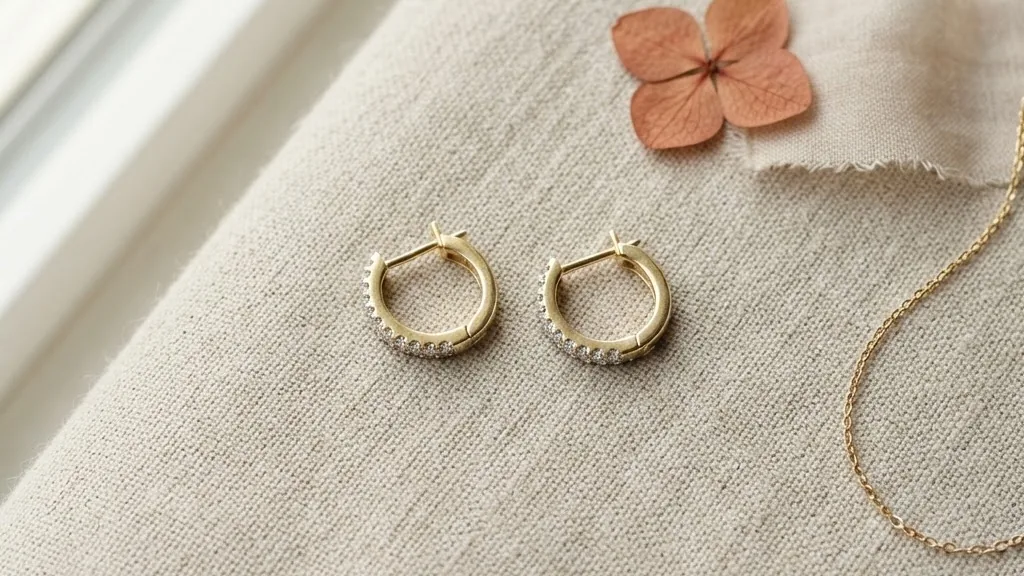
- Hoop or seam ring: a full circle that snaps shut. Great look, but only on a healed, downsized piercing.
- Captive bead ring: a ring held closed by a small bead. Also a healed-only piece.
- Clicker: a hinged segment that clicks shut. Convenient, still strictly for healed cartilage.
If you are eyeing a ring for later, our breakdown of how to choose the right ring and gauge covers diameters and closures in more depth. The short version: studs heal, hoops decorate.
Tragus sizing: gauge, post length and hoop diameter
Sizing a tragus earring comes down to three measurements, and most shops standardize around the same figures. The most common gauge is 16 gauge, with anatomy-permitting range running roughly from 18 gauge to 14 gauge. Initial studs usually carry a post around 6mm, longer than the healed piercing needs, to leave breathing room for swelling.
Remember that gauge counts backward: a lower number means a thicker bar, so 14G is chunkier than 18G. A too-thin post can cheese-wire delicate cartilage, while a too-thick one takes longer to settle. That 16G middle ground is why nearly every reputable studio defaults to it for the tragus.
That extra post length is deliberate, not a mistake. A fresh piercing puffs up, and a post cut too short can bury itself in the swollen flap, sometimes to the point where the flat disc gets swallowed by the tissue. Once the swelling settles, you downsize to a shorter post so the jewelry stops rocking. Hoops, when you eventually earn them, typically run a 6mm to 8mm inner diameter for a snug tragus fit.
A concrete starter spec looks like this: 16G bar, roughly 6mm post, flat-back internally threaded titanium, then a downsize to a shorter post at 4 to 6 weeks, and a 6 to 8mm hoop reserved for after full healing. If you are considering doing any of this yourself, read what to know before at-home piercing kits first, because cartilage is not a beginner surface.
| Spec | Typical | Range or note |
|---|---|---|
| Gauge | 16 gauge | 18G to 14G, anatomy permitting |
| Stud post length | ~6mm | Extra length allows for swelling |
| Hoop inner diameter | 6-8mm | Healed piercings only |
| Downsize timing | ~4-6 weeks | 2 weeks with no swelling or discharge |
Tragus metals ranked by safety for fresh cartilage
Metal choice is where most cheap tragus earrings quietly fail, because the safe list is short and specific. For a fresh piercing, the top tier is implant-grade titanium meeting ASTM F136, the Ti-6Al-4V ELI alloy also labeled Grade 23, which runs roughly 90 percent titanium, 6 percent aluminum, and 4 percent vanadium.
Titanium wins on cartilage for reasons you can measure. It carries a passive titanium dioxide oxide layer only about 1 to 10 nanometers thick that self-repairs, and it is roughly 45 percent lighter than steel, non-magnetic, and autoclavable. That MRI-safe, non-magnetic profile also means you keep the jewelry in during most scans, which matters more than people expect.
The tiers below titanium still have their place. Commercially pure titanium under ASTM F67 skips the alloy entirely and suits reactive skin. Implant steel under ASTM F138 is strong and smooth but contains some nickel, so it belongs on healed piercings rather than fresh ones. Niobium is another quiet winner: inert, hypoallergenic, and safe for sensitive wearers. Solid 14k or higher gold is beautiful but strictly a healed metal.
The Association of Professional Piercers publishes the material and aftercare benchmarks most reputable studios follow, and you can read their standards at safepiercing.org. The one thing that unites every safe option is a named standard from ASTM International, not a vague “surgical grade” tagline. On the ISO side, the same alloys map to ISO 5832-3 for titanium and ISO 5832-1 for implant steel, with the ISO 10993 series covering biocompatibility testing.
| Material | Best for | Note |
|---|---|---|
| Implant titanium (ASTM F136) | Fresh piercings | Ti-6Al-4V ELI, ~90 percent titanium |
| CP titanium (ASTM F67) | Fresh piercings | Commercially pure, no alloy |
| Implant steel (ASTM F138) | Healed, no nickel issues | Contains some nickel |
| Solid 14k+ gold or niobium | Healed only (gold) | Niobium is hypoallergenic |
What to avoid in a fresh tragus is just as clear. Sterling silver, which is 925 stamped and 92.5 percent silver, oxidizes and can leave silver salts in the wound and stain skin, so it stays out until you are fully healed. Solid 14k gold or higher is lovely, but strictly a healed-piercing metal. Gold-plated and “surgical steel” of unknown grade are the two traps to watch, since plating wears through and generic steel labels never name a standard.
How much a tragus piercing hurts and how long it heals
Most people describe the tragus more as a firm pressure and a “pop” than a sharp sting, because the needle passes right next to the ear canal. It is quick, but the sensation is loud and close, which unsettles some folks more than the actual pain does.
Healing is the part that trips people up. Cartilage has low blood supply, so a tragus typically takes 4 months to a full year to heal, with 3 to 6 months a realistic minimum and up to 12 months for the tissue to fully remodel. Compare that to a lobe, which closes in 6 to 8 weeks, and you can see why patience matters here.
It helps to picture the timeline in stages. The first two to three weeks bring swelling, tenderness, and maybe a little clear crusting, which is normal. Weeks four to six are when swelling usually eases enough to downsize. From there through several months the channel keeps toughening internally even as the surface looks settled. Only near the end of that window is the tissue truly remodeled.
During that stretch, water exposure is a real infection vector, so knowing whether you can swim after a new piercing saves you a setback. Do not judge healing by how it looks on the surface. A tragus can feel calm and still be raw inside the channel, which is exactly why you leave the starter jewelry alone.
Downsizing your tragus stud and why it matters
Downsizing is the step most people skip and later regret. Your starter post is intentionally long to sit above the swelling, but once that swelling subsides, the extra length lets the jewelry rock and catch. That constant movement is what breeds irritation bumps and can nudge a piercing toward migration.
The rule of thumb is simple: about two weeks with no swelling, redness, or discharge means you are ready, which usually lands around 4 to 6 weeks in. Have your piercer measure and swap the post rather than guessing at home, since forcing a shorter bar through a channel that is still puffy just restarts the trauma. One clean downsize is often all a tragus needs before it settles for good.
Standards, regulation and what safe tragus jewelry costs
The bodies that govern piercing safety split cleanly between who makes the rules and who enforces skin-contact limits, and knowing which is which protects you from marketing. Material standards come from ASTM International; nickel-release limits come from regulators; aftercare and studio conduct come from the Association of Professional Piercers. No single agency “certifies” a body jewelry brand as safe, so the burden of proof falls on documentation.
The most trust-building fact for a health topic is the paper trail. Ask your studio for the mill certificate that ties the jewelry back to its ASTM standard. Product pages love the word “hypoallergenic,” but a certificate plus a regulatory number is what actually proves it. A shop that stocks proper implant titanium can usually produce that paperwork without blinking.
Who sets the rules
The U.S. Food and Drug Administration regulates jewelry in a nickel-sensitivity and device-material context, but it does not formally certify body jewelry, a distinction worth stating plainly; the agency’s overview lives at fda.gov. The American Academy of Dermatology publishes the clinical guidance on nickel contact allergy and irritation, and its resources sit at aad.org.
The Centers for Disease Control and Prevention frame the infection-control side that studios apply through sterilization. In the European Union, the REACH Regulation, Annex XVII entry 27, often called the Nickel Directive, caps nickel release at 0.2 micrograms per square centimeter per week for posts inserted into pierced ears, and 0.5 micrograms per square centimeter per week for other prolonged-contact jewelry. That tighter 0.2 figure exists precisely because a fresh piercing is an open wound.
What it costs you
Pricing is where sticker shock hits, because the number on the sign is rarely the total. The needle and service fee commonly runs $30 to $80, though some studios quote piercing-only work at $30 to $50. A surface tragus, which is trickier, usually lands around $50 to $100.
On top of that, add the jewelry itself and a tip for your piercer. Skimping on the implant-titanium starter piece to save a few dollars is the classic false economy, since a nickel-releasing cheap stud can cost you the whole heal and a doctor’s visit on top.
Choosing a reputable piercer for cartilage
The piercer matters as much as the metal on a slow-healing spot like the tragus. Look for a shop that uses a single-use hollow needle, not a piercing gun, and that opens sterile packaging in front of you. Guns crush cartilage and cannot be autoclaved between clients, which is a real cross-contamination risk.
Ask whether the studio stocks ASTM F136 titanium and can show mill certificates, and check whether the piercer is an Association of Professional Piercers member, or a UKAPP member in the United Kingdom. Membership is not a legal license, but it signals training in bloodborne pathogen handling and current aftercare standards. A piercer who talks you out of a too-small tragus is worth trusting more than one who pierces anything for the sale.
Aftercare: the mistakes that wreck tragus healing
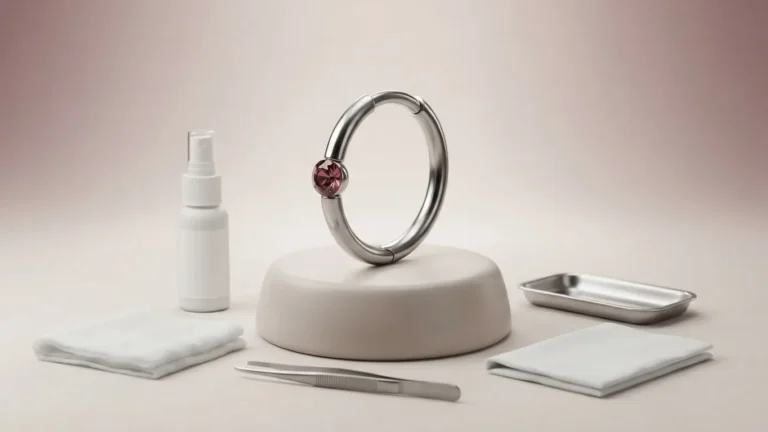
Good tragus aftercare is almost entirely about restraint, not effort. Clean the piercing with sterile 0.9 percent saline twice a day, let it dry, and otherwise leave it alone. The single most common wound comes from overhandling: twisting, turning, or “checking” the jewelry drags bacteria into the channel and irritates the cartilage into a bump.
The don’t-do list is short and non-negotiable:
- Do not rotate or twist the jewelry, ever. That old advice is outdated and harmful.
- Do not use tea tree oil, rubbing alcohol, or hydrogen peroxide. They dry and damage healing tissue.
- Do not sleep on that side. Constant pressure stalls healing and encourages migration.
- Watch your headphones. Over-ear cups and tight earbuds press directly on the flap.
A travel pillow with the center cut out, or simply training yourself onto the other side, keeps night pressure off the piercing. Saline you can buy premixed or make from non-iodized salt at the right dilution, but sterile wound-wash spray is the fuss-free option most piercers prefer.
AirPods and in-ear headphones deserve their own warning, since they sit millimeters from a fresh tragus and can push on it for hours. If you rely on them, give the piercing frequent breaks and keep the buds scrupulously clean. Numbing products come up a lot too; here is what numbing cream really does and why many piercers stay cautious about it.
Risks: infection, keloids, nickel allergy and rejection
Every cartilage piercing carries a real complication profile, and the tragus is no exception. The main risks are bacterial infection, hypertrophic bumps and keloid scarring, allergic contact dermatitis from nickel, and migration or outright rejection, which is most common with the surface tragus rather than the standard placement through the flap.
It helps to tell those bumps apart. A hypertrophic bump is a localized irritation reaction that often calms once you fix the cause, usually pressure, snagging, or a bad metal. A true keloid is an overgrowth of scar tissue that spreads beyond the piercing site and can need a dermatologist. Do not try to pop or file either one.
Nickel is the risk worth taking seriously, because it is common and preventable. A 2025 meta-analysis pooling 79 studies and more than 280,000 participants put nickel sensitivity at roughly 17 percent of women and 6 percent of men, and it flagged ear piercing as one of the strongest predictors of becoming sensitized. That is the entire case for implant-grade titanium over a mystery-metal stud.
If a piercing stays red, hot, swollen, or leaks discolored discharge beyond normal healing, treat it as a medical question, not a styling one. Mayo Clinic keeps plain-language guidance on infected piercings and when to seek care at mayoclinic.org. Do not remove the jewelry on your own if you suspect infection; that can seal bacteria inside and turn a surface problem into an abscess.
Myth check: a tragus piercing won’t cure migraines
No, a tragus piercing does not treat migraines, anxiety, or weight, and there is no clinical evidence supporting any of those claims. The idea borrows loosely from acupuncture-style pressure points, but a permanent hole through cartilage is not the same as pressure therapy, and no controlled research shows a therapeutic effect.
Get pierced because you like how tragus earrings look and how they build an ear stack, not because a social post promised relief from a health condition. If migraines or anxiety are the real issue, that is a conversation for a doctor, and the piercing is beside the point. Treating a decorative piercing as medicine mostly just delays care that would actually help.
Styling a tragus stud into an ear stack
Styling is where the tragus earns its popularity, because it anchors the front of an ear stack the way few placements can. A small flat-back stud on the tragus pairs cleanly with a helix higher up, a conch in the bowl of the ear, and a lobe or two below, giving you a curated line rather than one lonely point.
Keep proportions in mind: a low-profile tragus disc reads as an accent, while an oversized top fights everything around it. Mixing metals can work, but pick one that repeats across the ear so the stack feels intentional. Once you are fully healed and downsized, a tiny hoop can swap in for a stud to change the rhythm of the stack without a new piercing.
Frequently asked questions
Can I wear AirPods with a healing tragus piercing?
You can, but carefully. In-ear buds like AirPods sit right beside the tragus and press on it, which slows healing and irritates the cartilage. Give the piercing regular breaks, keep the buds clean, and switch to over-ear or bone-conduction headphones when you can during the first few months of healing.
When can I change my tragus earring to a hoop?
Only after the piercing is fully healed, which for a tragus means 4 months to a year, not weeks. Swap to a shorter post at the downsizing stage first, roughly 4 to 6 weeks in with no swelling. Hoops move and snag, so save them until a professional confirms the channel is stable.
Are tragus earrings safe for sensitive or nickel-sensitive skin?
Yes, if you choose the right metal. Stick to implant-grade titanium meeting ASTM F136 or commercially pure titanium under ASTM F67, both of which are the standards piercers recommend for reactive skin. Avoid nickel-containing steel and sterling silver in fresh piercings, and ask the studio for a mill certificate proving the material.
What is a surface tragus versus a standard tragus piercing?
A standard tragus goes through the cartilage flap in front of the ear canal and sits flush. A surface tragus sits on the flat skin beside it, held by a surface bar, and it rejects and migrates far more often. Surface work also costs more, commonly $50 to $100, and demands an experienced piercer.
Does a tragus piercing help with migraines or anxiety?
No. There is no clinical evidence that a tragus piercing relieves migraines, anxiety, or aids weight loss, despite the claims that circulate online. It is a decorative cartilage piercing, not a medical treatment. If you are managing a health condition, talk to a physician, and treat the piercing purely as a styling decision.
How much does a tragus piercing cost?
Budget for the service fee plus jewelry plus a tip. The needle and service commonly run $30 to $80, with some studios quoting piercing-only work at $30 to $50. A surface tragus typically costs $50 to $100. Do not cut corners on the starter jewelry; a proper implant-titanium piece is worth every dollar.
Why does my tragus keep getting an irritation bump?
Nine times out of ten it is pressure, snagging, or the wrong metal. Sleeping on that side, phone pressure, headphones, and an oversized post that never got downsized are the usual culprits. Fix the cause first, keep cleaning with plain saline, and see your piercer before you assume it is a keloid.
The short version
Start with a flat-back implant-titanium stud, respect the long cartilage heal, and let hoops wait until you are healed and downsized. If you want to see how the tragus fits alongside every other spot on the ear, our reference on every ear placement explained by area maps the whole thing out, and the same fit-first rules carry over. For placement-specific styling, the flat ear piercing placement and jewelry guide is a useful next stop.