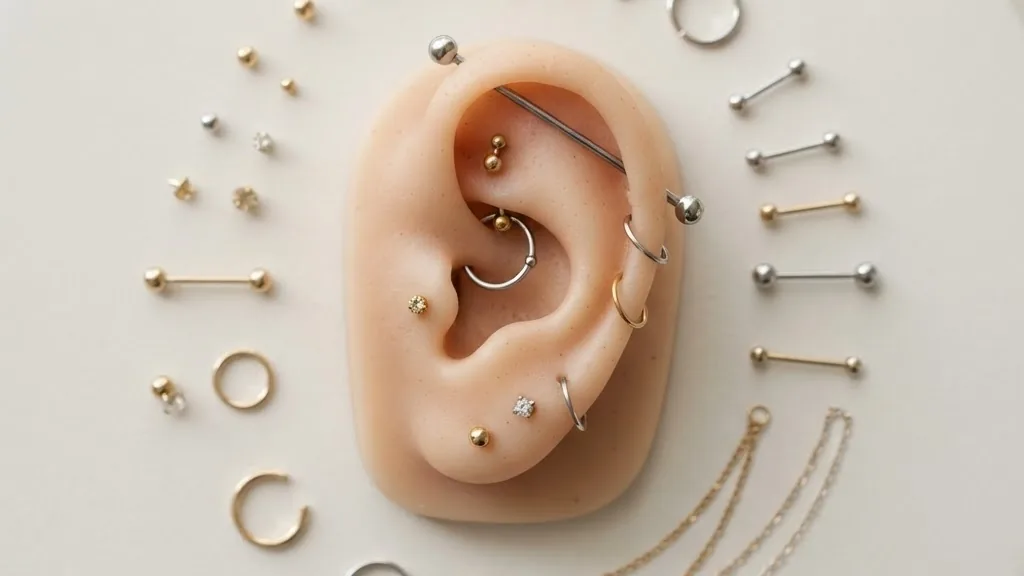
An ear piercing pain chart ranks each placement on the ear by roughly how much it hurts, usually on a scale from 1 to 10, so you can see at a glance why a lobe barely registers while a snug makes people wince. It is a useful planning tool, but it comes with an honest caveat: pain is subjective, and no chart can promise what a given piercing will feel like for you. What a chart can do reliably is show the pattern, which is that soft tissue hurts less and dense cartilage hurts more, in a predictable order. This guide lays out that chart placement by placement and explains the anatomy behind it, without inventing anyone’s personal pain story.
The reason a pain chart works at all is that ear tissue is not uniform. The lobe is soft, fleshy, and richly supplied with blood, so a needle passes through it with a quick pinch. Cartilage is dense and has a poor blood supply, so a needle needs more force to pass, and the sensation is a deeper, more pressing one. That single difference drives almost the entire ranking below.
The pain ratings here are aggregated general estimates from piercing sources, not medical measurements, and the healing windows and aftercare details are drawn from published health guidance.
Quick answer: On a 1-to-10 scale, the earlobe is the least painful at about 2/10, moderate cartilage spots like the daith, flat, and forward helix sit around 5/10, the conch is around 7/10, the industrial around 8/10, and the snug is often rated the most painful at about 9/10. The actual piercing is over in a second or two; cartilage placements ache longer afterward and heal far more slowly than the lobe. Pain varies by person, so treat the chart as a guide, not a guarantee.
The ear piercing pain chart
Here is the full ranking, from the gentlest placement to the most intense. The ratings are approximate and overlap, because individual anatomy and tolerance shift the numbers. Use the tissue column to understand the why, not just the score.
| Placement | Pain (1-10) | Tissue | What it feels like |
|---|---|---|---|
| Earlobe | 2 | Soft, fleshy | Quick pinch, over fast |
| Helix (outer rim) | 4 to 5 | Thin cartilage | Sharp, warm pressure, brief |
| Forward helix | 5 | Thin cartilage | Sharp, quick |
| Flat | 5 | Cartilage | Firm pressure |
| Daith | 5 | Inner cartilage fold | Deep pinch and pressure |
| Tragus | 5 to 6 | Cartilage nub | Distinct pressure pop, quick |
| Antitragus | 6 | Cartilage | Firm, pressing |
| Rook | 6 | Thick inner fold | Deep pressure |
| Orbital | 6 | Cartilage (two holes) | Two firm passes |
| Conch | 7 | Thick cartilage | Deep, thudding pressure |
| Contraconch | 7 | Thick cartilage | Deep pressure |
| Industrial | 8 | Two cartilage passes | Two piercings, one bar |
| Snug | 9 | Dense inner ridge | Often rated most intense |
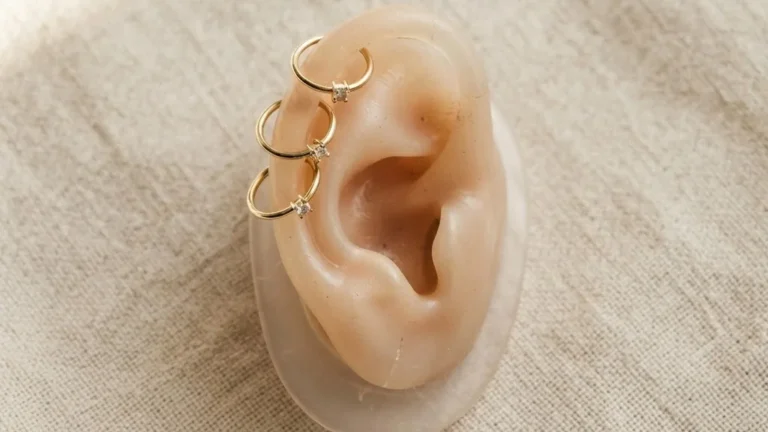
If you are matching these names to spots on your own ear, our overview of the types of ear piercings maps each placement, so you can see exactly where the daith, rook, conch, and snug sit before you commit to one.
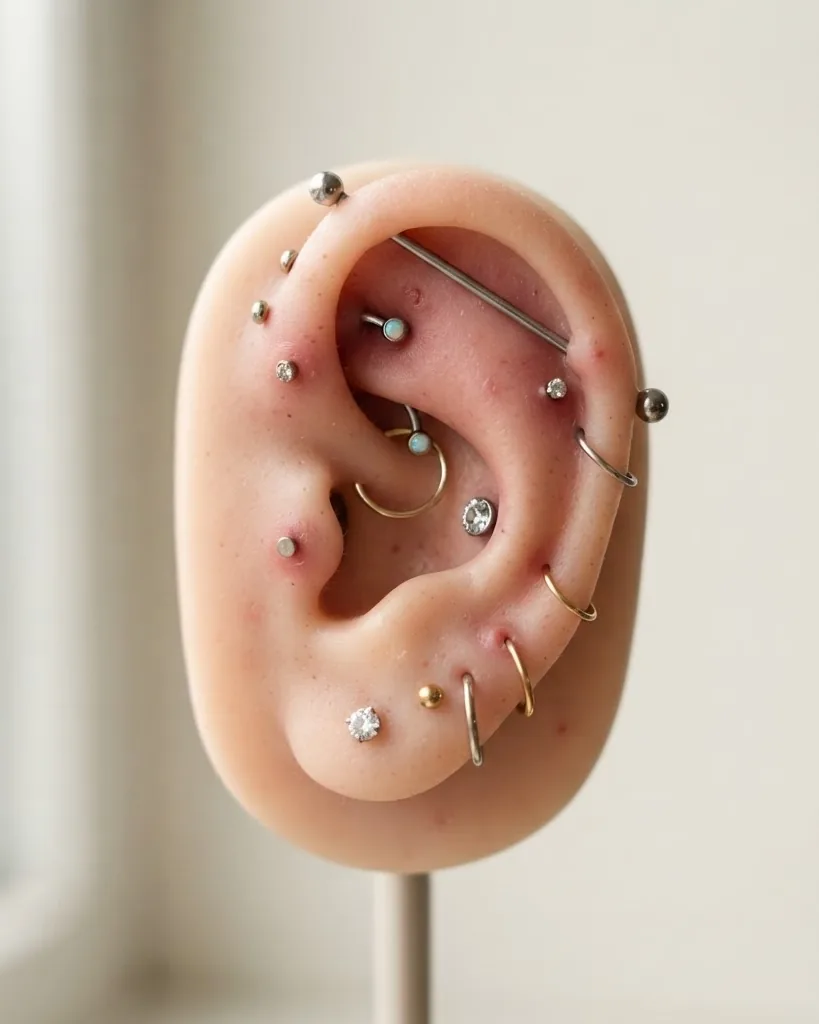
Why cartilage hurts more than the lobe
The chart is really a map of tissue density. The earlobe is soft and vascular, so it yields easily and a needle slips through with minimal force, which the brain reads as a fast pinch. Cartilage is firm, fibrous, and avascular, meaning it has a poor blood supply, so passing a needle through it takes more force and produces a deeper, pressing sensation. As a general rule, the thicker the cartilage, the more pressure the pass requires, which is why the conch and snug outrank the thin helix. Healthline’s overview of the most painful piercings describes the same relationship between dense tissue and higher pain.
It is worth stressing how brief the actual event is. The pierce itself lasts a second or two even on the highest-rated placements; what differs is the aftermath. A lobe settles quickly, while dense cartilage stays tender for longer and can throb for a day or two. So the chart is really measuring two things at once: the sharpness of the moment and the length of the soreness that follows. When people say a piercing “hurt,” they are often describing that trailing tenderness more than the pierce itself, which is another reason the higher-ranked cartilage placements earn their reputation: the sensation simply lingers longer before it fades.
The least painful placements
At the bottom of the chart, the earlobe is the classic starting point for a reason. At roughly 2/10 it is the gentlest ear piercing, quick to do and quick to calm down, which is why it is the usual first piercing and the one most people barely remember. The outer helix comes next, still low on the scale at around 4 to 5/10, delivering a sharp warm pinch that is over almost as soon as it starts.
These lower-pain placements are also the most forgiving to heal, which is not a coincidence. Softer, better-supplied tissue both hurts less going in and knits faster afterward. If a low-pain, straightforward first piercing is what you want, the lobe is the honest recommendation.
Just above the floor of the chart sit the thinner cartilage placements, the forward helix, flat, and daith, clustered around 5/10. These feel firmer than a lobe but are still described by most people as manageable, a sharp pressure that peaks and passes quickly. What separates them from the lobe is less the intensity of the moment and more the aftermath: they are cartilage, so they stay tender longer and heal on a cartilage timeline. If one of these mid-scale spots appeals to you, the daith is a common draw, and our guide to daith jewelry covers the sizing and metal that keep it healing smoothly.
The most painful placements
At the top of the chart sit the dense inner structures. The conch, at around 7/10, passes through thick cartilage and feels like a deep, thudding pressure rather than a sharp sting. The industrial, around 8/10, is intense because it is two cartilage piercings in one go, joined by a single barbell, so you feel two firm passes in sequence. The snug, often rated near 9/10, runs through a dense inner ridge and is frequently named the most painful ear piercing of all.
None of this should scare you off if you love the look; plenty of people happily wear conch, industrial, and snug piercings. But going in informed matters, because these are also the placements that punish impatience during healing. The same density that makes them hurt makes them slow, so the pain rating and the healing burden rise together.
Why pain charts disagree with each other
If you compare two pain charts, you will notice the numbers rarely match exactly, and that is not a flaw so much as a reflection of what pain is. There is no instrument that measures piercing pain objectively; every rating is an average of self-reported experiences, and self-reports are shaped by memory, mood, and expectation. One chart might put the tragus at 5/10 and another at 6/10, and both are defensible. What every credible chart agrees on is the ordering: lobe lowest, thin cartilage in the middle, dense inner cartilage highest. Trust the pattern more than any single number.
Anatomy is the other reason charts vary. Cartilage thickness differs from ear to ear, so a conch that is dense in one person may be thinner in another, shifting the felt intensity. Placement precision matters too; a piercing that passes through a slightly thicker section of the same structure will feel sharper. This is why a chart is a starting point for setting expectations, not a promise, and why an experienced piercer who can read your particular anatomy is a better predictor of your experience than any table on the internet.
It also helps to separate two sensations people lump together: the pierce itself and the pressure of the jewelry going in. On some cartilage placements, the needle pass is quick and the more memorable sensation is the firmer pressure as the jewelry follows through the fresh channel. Neither lasts long, but knowing there are two distinct moments can make the whole thing feel less alarming when you are in the chair.
What actually changes your pain
The chart is a baseline; several real factors move your personal experience up or down. Being honest about them helps you plan rather than fear.
- Individual tolerance: pain perception varies widely from person to person, so two people can rate the same piercing differently.
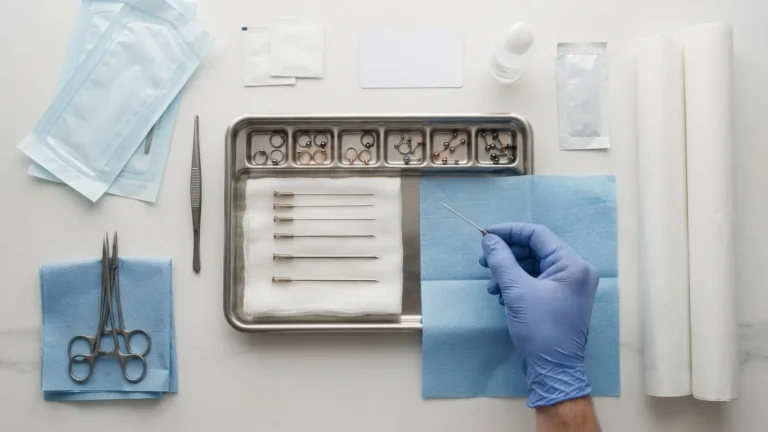
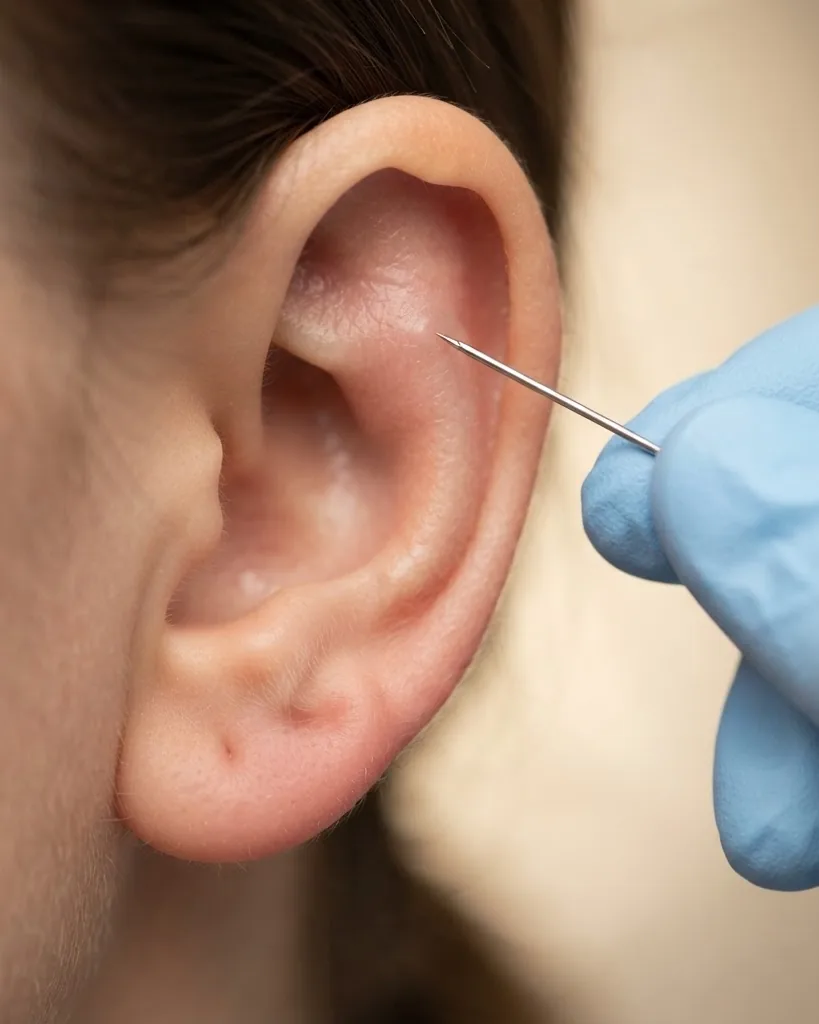
- Technique and tool: a trained piercer using a sharp, single-use needle makes a cleaner pass than a blunt gun, which forces a stud through by pressure and tends to cause more trauma.
- Your anatomy: thicker or denser cartilage in your particular ear takes more force and can feel sharper.
- Your state: anxiety, exhaustion, and an empty stomach all tend to heighten perceived pain.
- Placement count: doubles like the industrial or orbital stack two passes, so the total sensation is greater.
Of these, the tool is the one you can most directly control by choosing a reputable studio. A needle cuts a clean channel while a gun pushes tissue aside with blunt force, and the cleaner pass is generally both less traumatic in the moment and kinder to healing afterward.
The moments around the piercing matter more than people expect. Much of what someone remembers as pain is really anticipation, the tension of waiting for the pass, and a good piercer manages that by talking you through each step and timing the pierce on a slow exhale so your body is relaxed rather than braced. Going in rested and fed, rather than anxious and running on empty, genuinely lowers the reported intensity. None of this changes the tissue you are piercing, but it changes how loudly your nervous system reports it, which is why two people can leave the same chair describing the same placement very differently. If you tend to feel faint at medical appointments, tell your piercer beforehand so they can have you sit or lie down and take extra care.
Safe ways to lower the pain, and what not to do
You can take the edge off responsibly, but some popular shortcuts do more harm than good, so this is where care matters. The safe, simple steps are the boring ones: eat a normal meal beforehand so you are not lightheaded, hydrate, and breathe slowly and steadily through the pass rather than holding your breath. A calm body reports less pain than a tense one.
On numbing products, be cautious. Topical numbing creams that contain lidocaine exist, but they should only ever be used according to the product label and, ideally, with your piercer’s agreement, because not every piercer works with them and some prefer not to alter the tissue. Do not try to self-medicate with blood-thinning painkillers like aspirin right before a piercing in the hope of dulling it, because thinning your blood can increase bleeding at the site. General guidance on reducing piercing risks is available from Mayo Clinic’s page on preventing piercing complications. The goal is to steady yourself, not to chemically override a warning system that exists for a reason.
Pain and healing go together
One of the most useful things the pain chart tells you is not about the piercing day at all; it is about the months after. The placements that hurt most are, almost without exception, the ones that heal slowest, because both traits come from the same dense, poorly supplied cartilage. A lobe usually feels healed in about 6 to 8 weeks and matures fully within 3 to 6 months. Cartilage placements, from the daith to the conch to the industrial, commonly take 4 to 12 months to heal, and rushing a jewelry change during that window is a leading cause of irritation bumps and setbacks.
So when you read the chart, read the second lesson too: a higher pain score is a heads-up that you are signing on for a longer, more disciplined aftercare commitment. For a placement-by-placement breakdown of timelines, see our guide to how long ear piercings take to heal. If you are drawn to the daith specifically, our guide to daith jewelry covers the right gauge and metal for that fold.
This connection is worth weighing when you plan multiple piercings. Getting several high-pain cartilage placements at once not only stacks the discomfort of the day, it also means managing several slow-healing wounds simultaneously, each needing months of care and each vulnerable to being knocked while you sleep. Many piercers suggest spacing cartilage projects out, letting one settle before adding the next, both to keep the aftercare manageable and to avoid crowding the ear with fresh channels that press on one another. A curated ear is usually built over time, not in a single sitting, and the pain chart is one reason why.
Aftercare and infection warning signs
Whatever the pain rating, every fresh piercing needs the same simple aftercare. Irrigate with sterile 0.9 percent saline, keep your hands off, and leave the jewelry in. Avoid hydrogen peroxide and antibacterial soaps, which the American Academy of Dermatology notes can damage healing skin in its guidance on caring for new piercings.
- Step 1 – Wash your hands with soap and water before touching the piercing.
- Step 2 – Spray sterile 0.9 percent saline over both sides of the piercing, once or twice a day.
- Step 3 – Let it sit, then gently loosen any crust around the jewelry.
- Step 4 – Pat dry with clean disposable gauze, never a shared cloth towel.
- Step 5 – Leave the jewelry alone; do not twist, rotate, or remove it while it heals.
Some soreness, mild redness, and light crusting are normal at first. Watch for spreading redness, warmth, worsening pain after the first few days, or yellow or green discharge, which can signal infection. Mayo Clinic suggests a warm compress for about 15 minutes up to four times in 24 hours for irritation, and advises seeing a professional if the site becomes sore, red, or puffy, or if you develop a fever. Choosing implant-grade titanium also helps, since nickel is the most common contact allergen and a reaction can mimic an infection.
One last point ties the pain chart back to aftercare. A piercing that hurt more going in is usually cartilage, and cartilage is exactly where post-piercing pain that lingers or returns deserves closer attention, because a cartilage infection is harder to clear than one on the lobe. So use the chart in two directions: before the appointment to set expectations, and afterward as a reminder that the higher-ranked placements warrant more vigilance if something feels off weeks later. Ordinary healing soreness fades steadily; pain that climbs back up after it had settled is worth a professional look.
Frequently asked questions
What is the most painful ear piercing?
The snug is the most commonly cited as the most painful, at around 9/10, because it passes through a dense inner ridge of cartilage. The industrial (about 8/10) and conch (about 7/10) are close behind. Pain is subjective, so these are general estimates rather than guarantees.
What is the least painful ear piercing?
The earlobe is the least painful, at roughly 2/10. It is soft, fleshy tissue, so a needle passes through with a quick pinch, and it also heals the fastest, usually feeling settled in about 6 to 8 weeks.
Why do cartilage piercings hurt more than the lobe?
Cartilage is dense, fibrous, and has a poor blood supply, so a needle needs more force to pass through it, producing a deeper pressure than the quick pinch of a soft, vascular lobe. The thicker the cartilage, the more pressure required, which is why the conch and snug rank highest.
Does a needle hurt less than a piercing gun?
A single-use needle makes a clean cut through the tissue, while a gun forces a blunt stud through by pressure, which tends to cause more trauma, swelling, and soreness. Professionals favor needles both for the cleaner pass and for sterilization reasons.
Can I use numbing cream before an ear piercing?
Topical lidocaine creams exist, but use them only according to the product label and ideally with your piercer’s agreement, since not all piercers work with them. Do not take blood-thinning painkillers like aspirin beforehand, as that can increase bleeding at the site.
The bottom line
An ear piercing pain chart is a planning tool, not a verdict. The pattern it shows is dependable: the lobe is gentlest at about 2/10, moderate cartilage like the daith and flat sits near 5/10, and the dense inner structures, the conch, industrial, and snug, climb toward 7 to 9/10. The same density that drives those scores also drives the healing time, so the placements that hurt most are the ones that demand the most patience afterward. Choose a reputable studio with a single-use needle, steady yourself with food and slow breathing rather than risky shortcuts, and commit to the aftercare, and the number on the chart becomes a brief moment rather than the thing you remember.