How long does it take for ear piercings to heal depends almost entirely on one thing: whether the piercing went through the soft lobe or the firmer cartilage. A standard lobe usually heals in about 6 to 8 weeks, while cartilage piercings like a helix, tragus, conch, or rook take roughly 6 to 12 months, and sometimes longer. That gap surprises people, and misunderstanding it is the single most common reason a healthy piercing gets ruined: someone treats a cartilage piercing as healed at week six, swaps the jewelry, and sets themselves back months. This guide gives you the real timelines by placement, explains why cartilage runs on such a slow clock, walks through the healing stages week by week, and lists the factors that speed healing up or drag it out, so you know exactly when your ear is actually done.
The short version is below in a chart you can scan. The longer version, with the stages and the factors that change your timeline, is what keeps you from declaring victory too early.
Ear piercing healing times by placement
Here is the chart. Times are typical ranges for full internal healing, not just the point where it stops hurting, which comes much earlier.
| Placement | Tissue | Typical full healing |
|---|---|---|
| Standard lobe | Soft tissue | 6 to 8 weeks (up to 3 months) |
| Upper or second lobe | Soft tissue | 6 to 8 weeks |
| Helix | Cartilage | 6 to 12 months |
| Forward helix | Cartilage | 6 to 12 months |
| Flat | Cartilage | 6 to 12 months |
| Tragus | Cartilage | 6 to 12 months |
| Conch | Cartilage | 6 to 12 months |
| Rook | Cartilage | 6 to 12 months |
| Daith | Cartilage | 6 to 12 months |
| Industrial | Cartilage (two holes) | 9 to 12 months or longer |
Notice the pattern: every lobe is weeks, every cartilage spot is months. If you remember nothing else, remember that line, because it dictates how long you keep up aftercare and how long you wait to change jewelry.
Why cartilage heals so much slower than the lobe
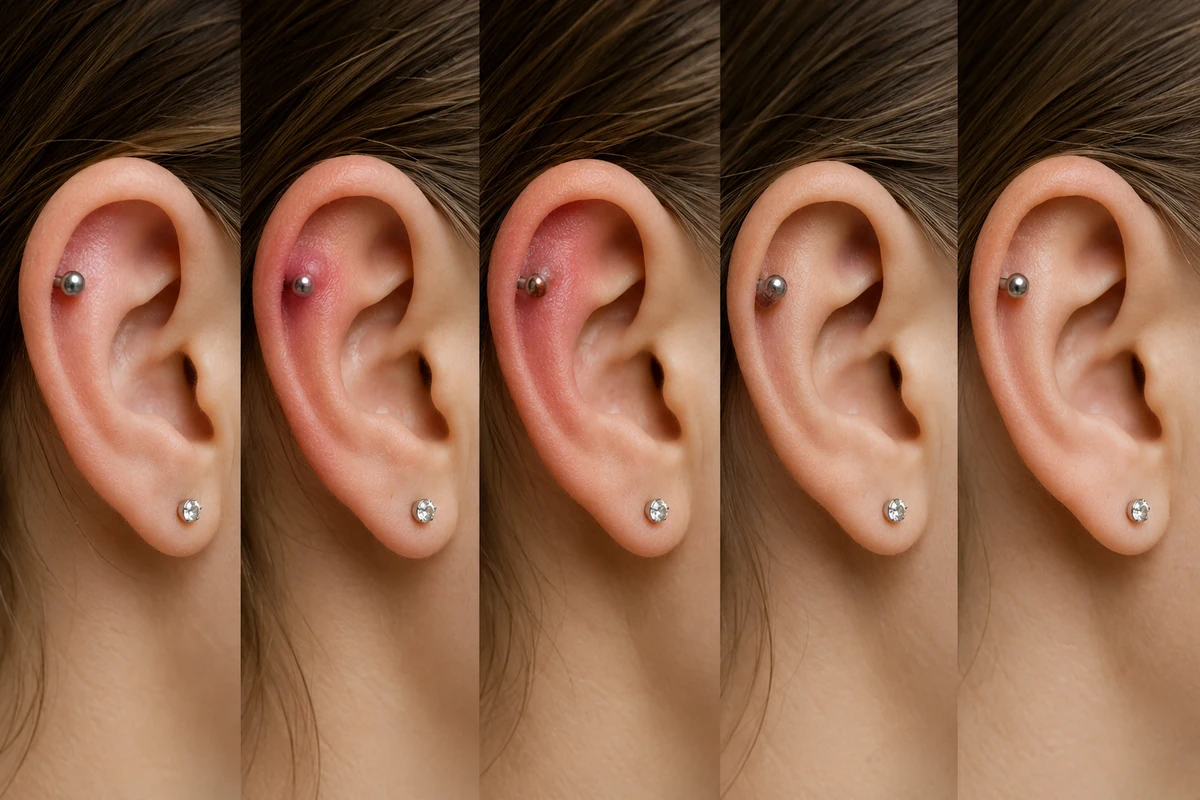
The reason comes down to blood flow. Your earlobe is soft tissue laced with small blood vessels that deliver the cells and nutrients a wound needs to close, so a lobe piercing heals quickly and predictably. Cartilage is different: it is a dense, gristly tissue with very little direct blood supply. Healing cells have a harder time reaching the wound, so cartilage rebuilds slowly and stays fragile far longer than it looks. That low blood flow is also why cartilage infections can be more stubborn and occasionally serious, which is a good reason to take any warning sign seriously rather than waiting it out.
This is the trap: a cartilage piercing can stop hurting and look completely settled within a few weeks while the channel inside is only partway healed. The outside calm fools people into changing jewelry, sleeping on it, or stopping aftercare too soon, and the piercing reacts with a bump, irritation, or a stall. The slow internal clock is exactly why patience, not effort, is what gets cartilage to the finish line.
What “healed” actually means
There are two milestones worth separating. Initial healing is when the surface has closed enough that the piercing is no longer tender and looks settled; this comes early, often within weeks even for cartilage. Full healing is when the tissue inside the channel has strengthened and is no longer prone to irritation, infection, or closing if the jewelry comes out; this is the real finish line, and for cartilage it is months away from initial healing.
The practical takeaway: do not treat initial healing as permission to change jewelry or stop aftercare. The only reliable way to know a piercing is fully healed is to keep up gentle care through the expected window and have your piercer confirm it, rather than going by how it feels.
The healing stages, week by week
Knowing the normal arc keeps you from panicking at a rough patch or getting complacent too soon. Every body differs, but a healthy ear piercing tends to follow this pattern. Cartilage moves through the same stages, just stretched out over many more weeks.
Days 1 to 7: tenderness, warmth, mild swelling, and some redness right at the hole are expected. A cartilage piercing may throb for the first couple of days. Clean twice a day with saline, keep your hands off, and do not panic about light crusting.
Weeks 2 to 6: the worst soreness fades. You will see clear or pale-yellow crusties, which are dried lymph and a normal part of healing, not pus. A lobe is close to initial healing by the end of this stretch; cartilage is only getting started. This is when impatience causes the most damage.
Months 2 to 6 (cartilage): the piercing looks settled and stops being sore, but the channel inside is still fragile. This is the most common stage to cause a setback by switching jewelry too early or sleeping on it. Keep the saline going.
Months 6 to 12 (cartilage): full internal healing for most people. Only once your piercer confirms it is healed should you treat it as low-maintenance. The exact routine that carries a piercing through these months is laid out in our saline cleaning guide for cartilage piercings, which applies to any cartilage spot, not just the tragus.
Factors that speed up or slow down healing
The ranges in the chart are averages, and several things push your timeline toward the fast or slow end. Most of them are in your control.
- Aftercare consistency. Twice-daily saline, hands off, no rotating the jewelry. Consistency matters more than intensity, and over-cleaning actually slows healing by irritating the tissue.
- Jewelry material and fit. Implant-grade titanium (ASTM F-136) or solid 14k or higher gold heal cleanest. Cheap “surgical steel” of unknown grade, nickel alloys, and plated pieces irritate and can stall a piercing. A piece that is too tight or too loose snags and pressures the channel.
- Piercing technique. A clean needle piercing at the right angle by a skilled piercer heals faster than a gun-crushed one. The Association of Professional Piercers explains why needles and proper technique matter in its aftercare and safety guidance.
- Pressure and snagging. Sleeping on it, in-ear headphones, phone calls against the ear, hair, hats, and masks all bump and press a piercing. Each disruption restarts the local healing.
- Your overall health. Rest, nutrition, hydration, not smoking, and managing conditions that affect healing all help your body do its work.
- Swimming. Pools, lakes, hot tubs, and the ocean introduce bacteria a healing piercing is slow to clear, so avoid them until you are healed.
Signs you are NOT healed yet (even if it looks fine)
Because cartilage fools people, it helps to know the tells that a piercing is still healing even when it seems done. Any of these means keep up aftercare and leave the jewelry alone: occasional clear or pale-yellow crusties, mild tenderness when you press or sleep on it, slight pinkness around the hole, a bit of swelling that comes and goes, or the jewelry feeling sensitive when you move it. A truly healed piercing is comfortable, quiet, and produces no crust, and even then your piercer’s confirmation beats your own guess. If you are still seeing any of these signs, you are not at the finish line yet, no matter what the calendar says.
How long until a piercing closes if you take the jewelry out?
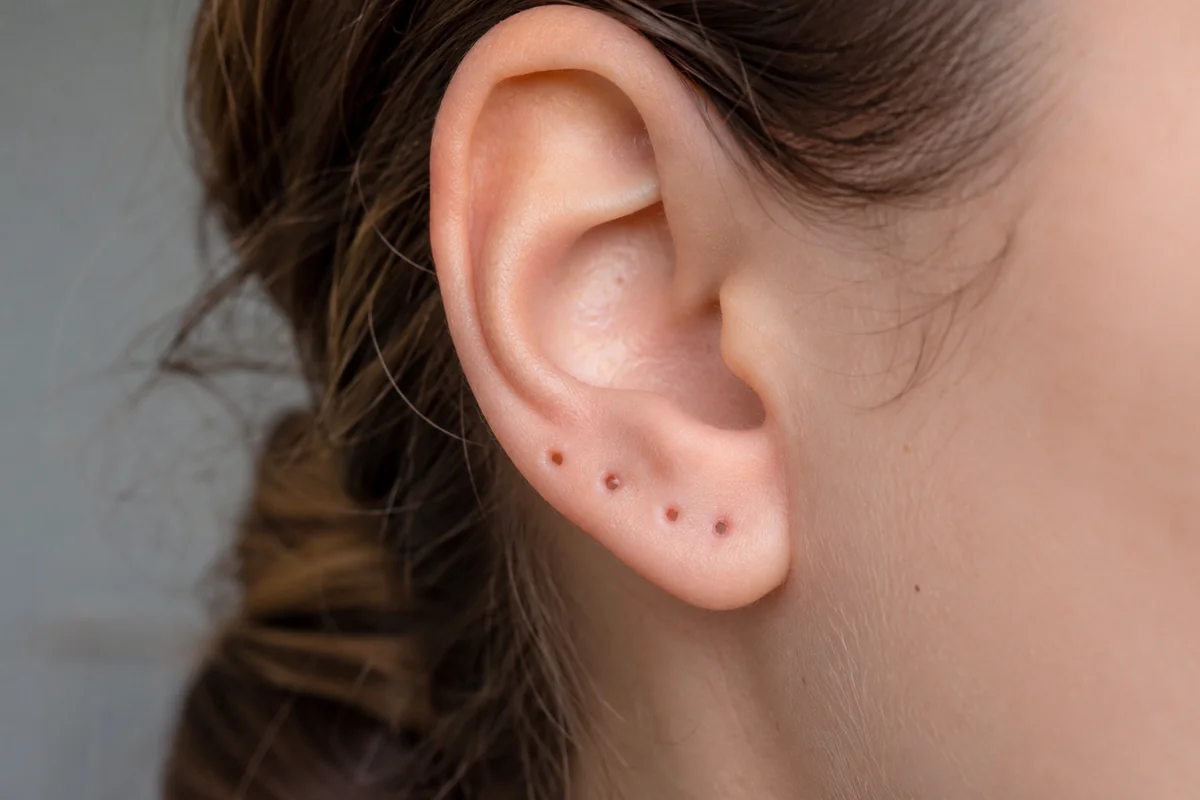
This is the flip side of healing, and the timeline mirrors it. A brand-new piercing can start to close within hours to a day or two if the jewelry comes out, which is exactly why you do not remove a fresh piece even if it is irritated. A piercing that is fully healed but still young, say under a year, can shrink or close over a matter of hours to days without jewelry, so if you love it, keep something in it. An old, well-established lobe, worn for years, may stay open for days, weeks, or even permanently, but cartilage is far less forgiving and tends to close faster than a lobe at any stage. The practical rule is simple: if you want to keep a piercing, keep jewelry in it, and if you ever need to leave a piece out during healing, see your piercer rather than risk losing the channel or trapping an irritation.
Does a second piercing or a re-pierce heal faster?
Not really, and it is worth dispelling the myth. A second lobe hole or a re-pierced spot is a fresh wound through tissue or cartilage, and it heals on the same clock as the first: weeks for a lobe, months for cartilage. Scar tissue from a previous piercing in the same spot can actually make a re-pierce slightly more finicky, not faster, because the tissue is less uniform. The same goes for getting several piercings at once: each one heals on its own timeline, and doing many cartilage spots together simply means managing several months-long heals at the same time, which raises the odds that at least one gets bumped or irritated. If a curated, multi-piercing ear is the goal, spacing the piercings out so you heal one or two at a time is gentler on your ear and easier to keep on schedule.
Normal healing vs warning signs
Some redness, mild swelling, tenderness, and clear or pale-yellow crusties are normal, especially early. The table below separates expected healing from signs that need action. Because cartilage infections can be stubborn, err on the side of caution.
| Normal healing | Warning sign (act on it) |
|---|---|
| Mild redness right around the hole | Spreading redness or heat across the ear |
| Light swelling that settles | Increasing swelling after the first week |
| Tenderness when touched | Throbbing or worsening pain |
| Clear or whitish crusties | Thick yellow or green pus, or bleeding |
| Slowly improving week to week | Getting worse, or fever and feeling unwell |
If you see the right-hand column, do not remove the jewelry yourself, which can trap an infection; keep up gentle saline and get help. A trusted piercer can assess irritation, but a suspected infection is a medical issue. The Cleveland Clinic’s guide to an infected ear piercing explains when to see a doctor, and cartilage infections sometimes need prescription treatment. A firmer, growing scar that extends beyond the piercing may be a keloid rather than a simple bump; the American Academy of Dermatology covers the difference in its overview of keloids.
How to help your ear piercing heal on schedule
The reason piercings stall is rarely that someone could not clean correctly; it is that they did not clean consistently or got impatient. Pair your saline routine with things you already do twice a day, rinsing after your morning face wash and again before bed, and keep the saline where you will see it. Sleep on the other side or use a travel pillow with a hole so the ear floats free. Switch to over-ear headphones during healing. Leave the jewelry untouched and unrotated. And resist the urge to change it early, which is genuinely the hardest rule and the one that protects your timeline most. The same gentle, consistent care that the months reward is detailed in our step-by-step saline routine, which works for every ear placement on this chart.
It also helps to set your expectations before you even get pierced. If you know going in that a helix or a conch is a six-month-to-a-year commitment, you are far less likely to get impatient and sabotage it at month two. Tell yourself the jewelry stays put and the saline keeps going until your piercer signs off, full stop. Booking a quick check-in with your piercer a couple of months after the piercing is a smart move too: they can confirm whether you are healing on track, downsize the jewelry if the swelling has settled, and catch a fit problem before it becomes a bump. A piercing is a small wound that rewards patience more than fuss, and the people who heal cleanly are almost always the ones who simply left it alone and stuck to the routine.
Bottom line
How long it takes for ear piercings to heal comes down to lobe versus cartilage: lobes heal in about 6 to 8 weeks, cartilage in roughly 6 to 12 months. The catch is that cartilage looks and feels healed long before it actually is, so the calendar, not your comfort, should govern when you change jewelry and stop fussing. Heal with implant-grade titanium or gold, clean twice a day with saline, protect the piercing from pressure and snags, and let your piercer confirm full healing before you treat it as done. Respect the slow cartilage clock and watch for the genuine warning signs, and your piercing will heal cleanly and last for years.
Frequently Asked Questions
How long does it take for ear piercings to heal?
A standard lobe piercing usually heals in about 6 to 8 weeks, while cartilage piercings such as the helix, tragus, conch, daith, or rook take roughly 6 to 12 months, sometimes longer. Cartilage heals slowly because it has limited blood flow, so keep up saline care until your piercer confirms it is fully healed.
Why do cartilage piercings take so much longer than lobes?
Cartilage has very little direct blood supply, so the healing cells your body needs reach the wound slowly, and the tissue rebuilds slowly. The lobe is soft tissue with good blood flow, so it heals in weeks. That low blood flow is also why cartilage infections can be more stubborn.
How do I know when my ear piercing is fully healed?
A fully healed piercing is comfortable and quiet, produces no crust, is not tender or pink, and the jewelry moves without sensitivity. Initial healing (no longer sore) comes much earlier than full healing. The reliable way to know is to keep up care through the expected window and have your piercer confirm it.
Can I change my jewelry once the piercing stops hurting?
No. A cartilage piercing stops hurting long before it is fully healed inside, and changing jewelry too early can tear the channel, cause a bump, or let it start to close. Wait until your piercer confirms it is healed, which for cartilage usually means several months, not weeks.
What slows down ear piercing healing?
Inconsistent or excessive cleaning, poor jewelry (unknown-grade steel, nickel, or plated metal, or a bad fit), gun piercing, pressure from sleeping on it or in-ear headphones, snagging, swimming, and poor overall health all slow healing. Twice-daily saline, implant-grade jewelry, and protecting the piercing keep you on schedule.
Is it normal for my piercing to still crust after a few weeks?
Yes. Clear or pale-yellow crusties are dried lymph and a normal part of healing, not pus, and they can continue for weeks, especially on cartilage. Gently rinse them with saline rather than picking them dry. Thick yellow or green discharge, by contrast, is a warning sign that needs medical attention.