Saline solution for tragus piercings is the single most important part of healing one well. The tragus is that small flap of cartilage just in front of your ear canal, and because it is cartilage with limited blood flow, it heals slowly and is fussier than a standard lobe. The good news is that the care routine is simple: a sterile saline rinse, done gently and consistently, is all most tragus piercings need. This guide covers exactly which saline to use, how to make your own if you prefer, the step-by-step cleaning method, how often to do it, the tragus-specific snags to watch for, and how to tell normal healing from an infection.
None of this replaces your piercer. If something looks wrong, a reputable piercer is your first call, and a doctor is the right call for a suspected infection. But for day-to-day healing, getting the saline routine right is what keeps a tragus on track.
Why saline is the gold standard for a tragus piercing
Sterile saline is just salt and water at the same concentration as your body’s own fluids (0.9 percent, called isotonic). That is the whole point: it cleans away the dried lymph, the crusties, and loose debris around the piercing without stinging, drying out the skin, or killing the new cells your body is using to heal. Harsher products do the opposite. The Association of Professional Piercers recommends a plain sterile saline rinse as the core of aftercare, and you can read their full aftercare guidelines for the official position.
What saline does NOT do is disinfect like an antiseptic, and that is a feature, not a flaw. A fresh piercing is a healing wound, and aggressive disinfectants damage tissue and slow everything down. Saline supports your body’s process instead of fighting it.
What saline solution to use (buy vs DIY)
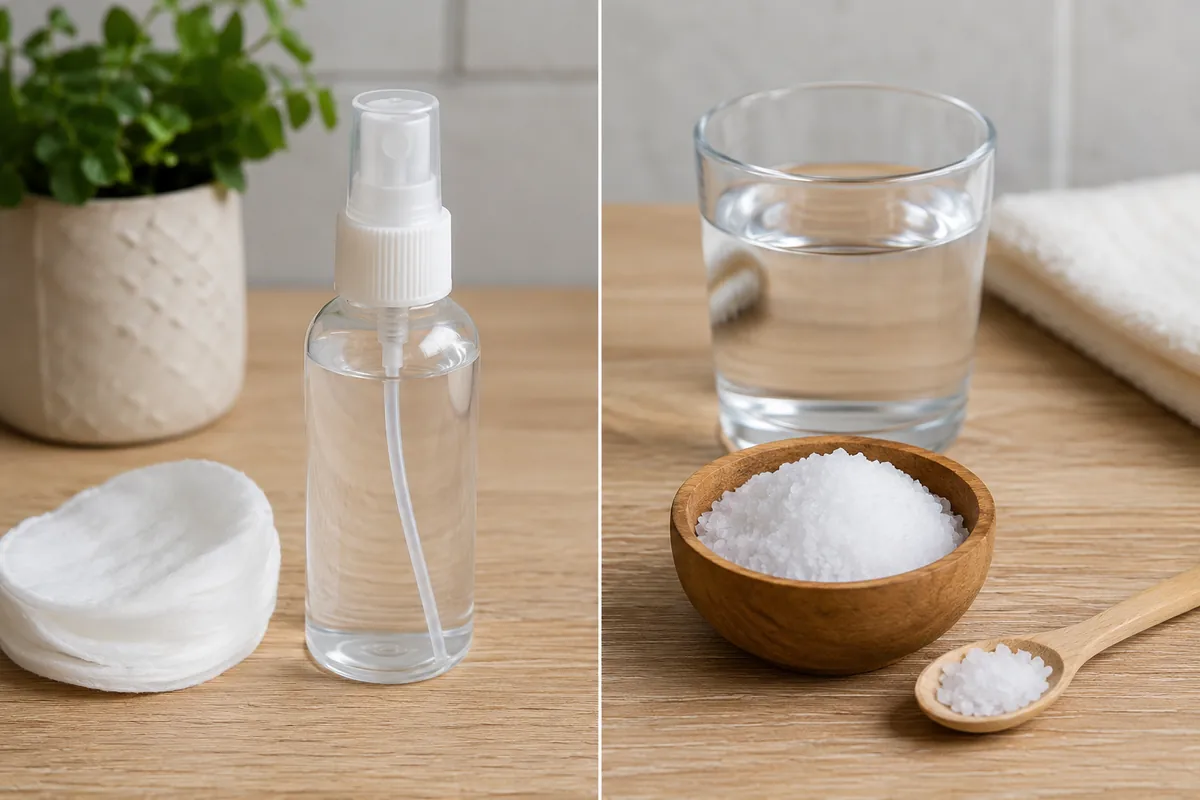
You have two good options: buy a sterile saline made for wound or piercing care, or make a basic solution at home. Buying is more convenient and truly sterile; DIY is cheaper and fine when done correctly.
Buying sterile saline: what to look for
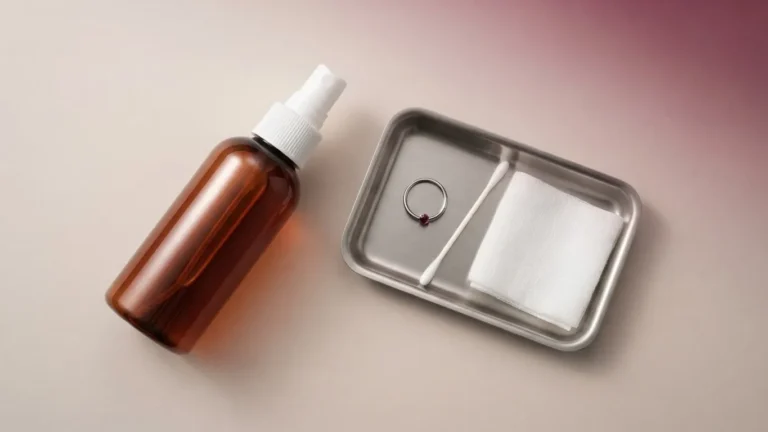
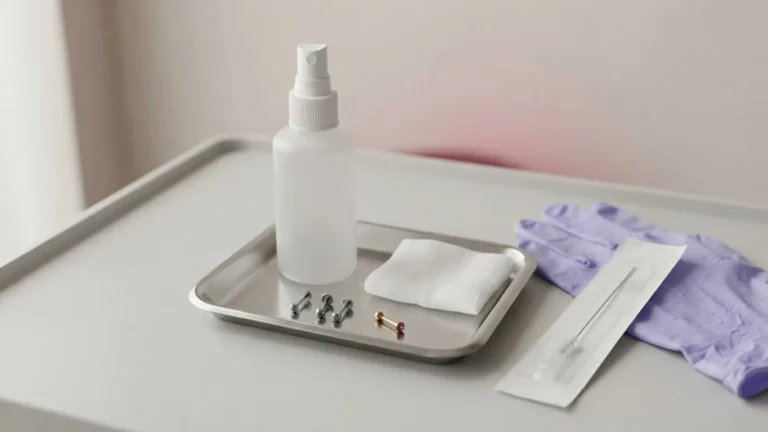
Look for a sterile saline whose only ingredients are sodium chloride and water, at 0.9 percent. Wound-wash sprays sold for first aid are ideal, and many brands are marketed specifically for piercing aftercare. The spray format is genuinely useful for a tragus because it reaches the spot without much fiddling.
The common buying mistake is grabbing contact lens saline. Many of those contain borate buffers, preservatives, or cleaning agents meant for lenses, not healing skin, and they can irritate a fresh piercing. Read the label: if it lists anything beyond salt and water, skip it for piercing care.
Making your own saline
If you make it yourself, the recipe matters. Mix 1/4 teaspoon of non-iodized fine sea salt into 1 cup (240 ml) of distilled or previously boiled and cooled water. That ratio lands close to the 0.9 percent isotonic target. Two details are not optional:
- Distilled water, not tap. Tap water can carry chlorine, minerals, and microbes (including, rarely, organisms that cartilage infections are slow to clear). Distilled removes that variable.
- Non-iodized salt with no additives. Table salt usually contains iodine and anti-caking agents that irritate healing tissue.
Make a fresh batch often. A homemade solution has no preservatives, so mix small amounts and discard leftovers within about 24 hours rather than keeping a jar for a week.
How to clean a tragus piercing with saline, step by step
The method is deliberately gentle. You are rinsing, not scrubbing.
- Wash your hands thoroughly with soap and water first. Most piercing problems start with dirty hands touching the jewelry.
- Apply the saline. Spray it directly onto the front and back of the piercing, or saturate a clean piece of gauze or a cotton pad and hold it against the area for a few seconds to soften any crust. Avoid cotton swabs and cotton balls if you can, because the fibers snag on jewelry.
- Gently wipe away loosened debris. Once crusties are soft, wipe them off with the damp gauze. Do not pick at them dry, and do not force the jewelry.
- Do not rotate or twist the jewelry. The old advice to “turn” a piercing is outdated; rotating drags bacteria and dried lymph through the channel and tears healing tissue.
- Pat dry with a clean disposable paper product. A cloth towel harbors bacteria and catches on the post. Dry is good; moisture trapped against the piercing invites irritation.
How often and for how long
Clean your tragus twice a day, morning and night, plus any time it gets obviously dirty (after a sweaty workout, for example). Twice daily is the sweet spot. More is not better here, which surprises people.
As for duration, a tragus is a cartilage piercing, so it heals slowly: plan on roughly 6 to 12 months, and sometimes longer, before it is fully healed on the inside, even though it may look healed within weeks. Keep up the saline routine until your piercer confirms it is done, not just until it stops hurting.
Tragus-specific challenges most guides skip
The tragus sits exactly where daily life keeps bumping it. These are the snag points that derail an otherwise healthy piercing, and they are specific to this placement.
| Trigger | Why it matters for a tragus | What to do |
|---|---|---|
| Earbuds / AirPods | They sit right on the tragus, pressing and harboring bacteria | Avoid in-ear buds during healing; use over-ear headphones |
| Phone against your ear | Presses the jewelry and transfers screen bacteria | Use speaker or earphones; wipe your phone |
| Sleeping on that side | Pressure causes irritation bumps and migration | Sleep on the other side; a travel pillow helps |
| Face masks / glasses arms | Loops and arms catch the jewelry | Route mask straps carefully; mind the snag |
| Hair and hair products | Hair tangles the post; sprays and dry shampoo coat it | Keep hair back; rinse with saline after styling |
Mistakes to avoid
Most healing problems are not bad luck; they are one of these habits.
- Tap water rinses. Convenient, but it reintroduces the very impurities sterile saline avoids.
- Alcohol, hydrogen peroxide, or antibacterial ointments. All three damage healing tissue. Ointments also trap moisture and debris against the piercing.
- Over-cleaning. Rinsing five times a day strips the area and irritates it. Twice is the target.
- Rotating or playing with the jewelry. Every touch is a chance to introduce bacteria and tear new tissue.
- Strong “sea salt soaks.” A too-salty homemade mix (more salt than the 0.9 percent ratio) dries and irritates rather than soothes. Stronger is not better.
- Changing the jewelry too early. Swapping before the channel is healed reopens the wound. Wait for your piercer’s go-ahead.
Normal healing vs infection: how to tell
Some redness, mild swelling, tenderness, and clear or pale-yellow crusties are normal for a healing tragus, especially in the first weeks. The table below separates expected healing from warning signs. Because the tragus is cartilage with low blood flow, infections there can be more stubborn and occasionally serious, so err on the side of caution.
| Normal healing | Possible infection (act on it) |
|---|---|
| Mild redness right around the hole | Spreading redness or heat across the ear |
| Light swelling that settles | Increasing swelling after the first week |
| Tenderness when touched | Throbbing or worsening pain |
| Clear or whitish crusties | Thick yellow or green pus, or bleeding |
| Slowly improving week to week | Getting worse, or fever / feeling unwell |
If you see the right-hand column, do not remove the jewelry yourself (that can trap the infection), and get help. A trusted piercer can assess irritation, but a suspected infection is a medical issue: Healthline’s overview of an infected tragus piercing and the Cleveland Clinic’s guide to an infected ear piercing both explain when to see a doctor. Cartilage infections sometimes need prescription treatment, so do not wait it out.
Sterile saline vs a “sea salt soak”: they are not the same
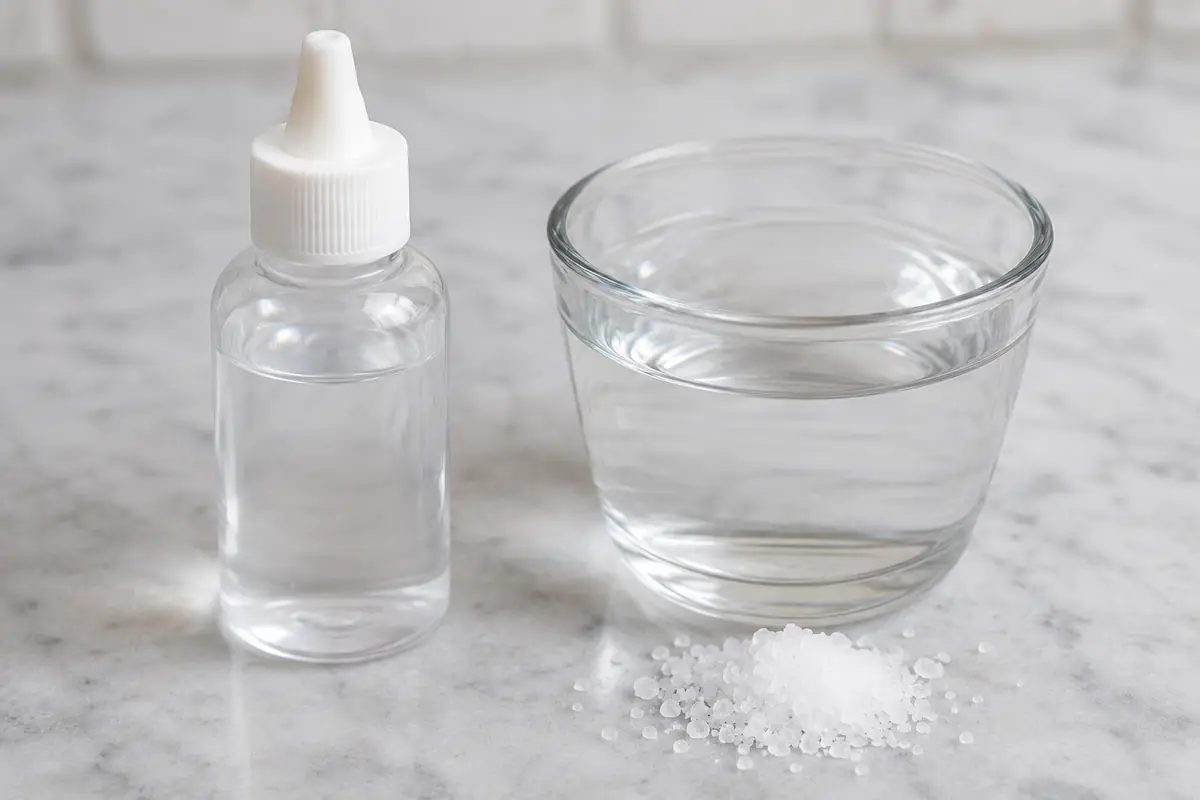
People use these terms interchangeably, and that confusion causes a lot of irritated tragus piercings. Sterile saline is a pre-made, isotonic (0.9 percent) salt-and-water solution that is genuinely sterile out of the bottle. A “sea salt soak,” or SSS, is a homemade cup of warm salt water that you dunk or compress the piercing in. Both can work, but the homemade version invites two errors: people make it too strong, thinking more salt cleans better, and they soak too long or too often. A too-salty or too-frequent soak dries out and irritates the new tissue, which can look like a problem the soak then gets blamed for not fixing.
If you want simplicity and consistency, a bottled or sprayed sterile saline at the right concentration is the lower-risk choice, especially for a fiddly spot like the tragus where soaking is awkward anyway. If you do make your own, hold the 1/4 teaspoon to 1 cup ratio and treat it as a gentle rinse, not a long marinade.
Building the saline routine into your day
The reason piercings stall is rarely that someone could not clean correctly; it is that they did not clean consistently. A tragus heals over months, so the routine has to be effortless enough to keep up. Pair it with things you already do twice a day: rinse after your morning face wash and again before bed when you are already at the sink. Keep the saline spray where you will see it, not buried in a drawer.
Travel and gym days are where routines fall apart, so plan for them. A small saline spray fits in a bag, and a quick rinse after a sweaty session clears salt and bacteria before they settle in. The goal is not perfection on any single day; it is showing up twice a day for the long haul, which is exactly what cartilage healing rewards.
What tragus healing actually looks like, week by week
Knowing the normal arc keeps you from panicking at week three or getting complacent at week eight. Every body is different, but a healthy tragus tends to follow this rough pattern.
Days 1 to 7: tenderness, some swelling, and a bit of redness right at the hole are expected. The area may feel warm and throb mildly for the first couple of days. Saline twice a day, hands off, and do not panic about light crusting.
Weeks 2 to 6: the worst of the soreness fades. You will see clear or pale-yellow crusties, which are dried lymph and a normal part of healing, not pus. This is when many people get impatient and start over-cleaning or changing the jewelry. Resist both.
Months 2 to 6: the piercing looks settled and stops being sore, but the channel inside is still fragile. This is the most common stage to cause a setback by switching jewelry too early or sleeping on it. Keep the saline going.
Months 6 to 12: full internal healing for most people. Only once your piercer confirms it is healed should you treat it as low-maintenance. Even then, the occasional saline rinse after workouts or travel is good insurance.
Two things are worth flagging across the whole timeline. First, an “irritation bump” (a small, flesh-toned or pink bump) is usually a response to a snag, pressure, or harsh products, not an infection, and it often calms once you remove the cause and stick to plain saline. Second, healing is rarely perfectly linear; a stretch of feeling great followed by a slightly cranky few days is normal, as long as the overall trend is improvement.
The right jewelry while a tragus heals
Saline does the cleaning, but the jewelry you heal with matters just as much. The wrong metal or the wrong shape causes more stalled tragus piercings than poor cleaning does.
Material: for a fresh piercing, stick to implant-grade titanium (ASTM F-136) or solid 14k or higher gold. Titanium is the default for good reason: it is biocompatible, light, and rarely reactive. Avoid cheap “surgical steel” of unknown grade, nickel-containing alloys, and anything plated, since plating can wear and expose reactive metal to the wound.
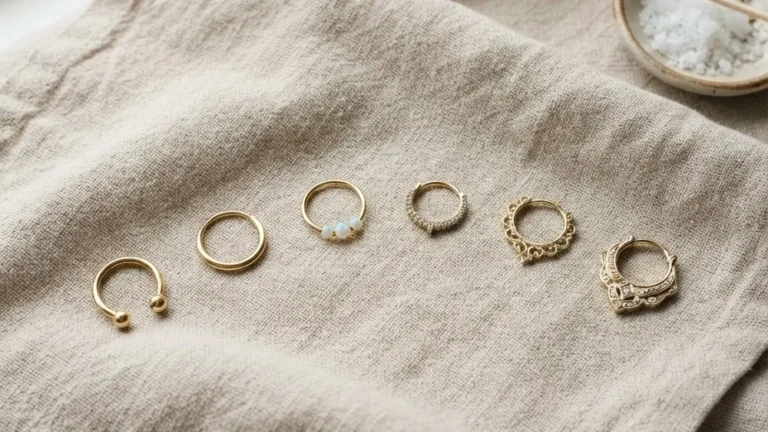
Shape: a flat-back labret stud is the standard for a tragus. The flat disc sits comfortably against the inside of the ear instead of digging in, which matters in such a tight spot. A tight ring or hoop on a fresh tragus tends to move, snag, and pressure the piercing, so most piercers start you with a flat-back and save hoops for after healing.
Fit: a good piercer leaves a little extra post length at first to allow for swelling. Once the swelling goes down, that extra length can catch and irritate, so a “downsize” to a shorter post a few weeks in is a normal, worthwhile step rather than an upsell.
When and how to change your tragus jewelry
The temptation to swap in something prettier hits early, and it is the single most common cause of a setback. Wait until your piercer confirms the piercing is healed, which for a tragus usually means several months, not weeks. Changing too soon can tear the channel, trigger a bump, or even let it start to close.
When the time comes, the safest first change is done by your piercer, especially because the tragus is awkward to reach and easy to fumble. If you change it yourself later, wash your hands, work with clean tools and clean jewelry, do it after a warm shower when tissue is most supple, and never force anything. If the new piece does not slide in easily, stop and see your piercer rather than pushing.
Frequently Asked Questions
Can I use contact lens saline on my tragus piercing?
Better not to. Many contact lens solutions contain borate buffers or preservatives meant for lenses, which can irritate a healing piercing. Use a sterile saline whose only ingredients are salt and water (0.9 percent), or a wound-wash spray.
How often should I clean my tragus piercing with saline?
Twice a day, morning and night, plus after anything that gets it dirty or sweaty. Cleaning more than that tends to irritate the area rather than help.
How long does a tragus piercing take to heal?
Because it is cartilage, expect roughly 6 to 12 months, sometimes longer. It can look healed on the outside long before the channel is healed inside, so keep up the saline until your piercer confirms it is done.
Can I make my own saline solution for a tragus piercing?
Yes. Mix 1/4 teaspoon of non-iodized fine sea salt into 1 cup of distilled water. Use distilled water (not tap) and salt with no additives, and make a fresh batch every day or so since it has no preservatives.
Should I rotate or move the jewelry while cleaning?
No. Rotating jewelry is outdated advice that drags bacteria through the piercing and tears healing tissue. Leave it still and just rinse around it.
What should I do if my tragus piercing looks infected?
Do not take the jewelry out, which can trap the infection. Keep doing gentle saline rinses and see a healthcare professional, since cartilage infections can be serious and may need prescription treatment.