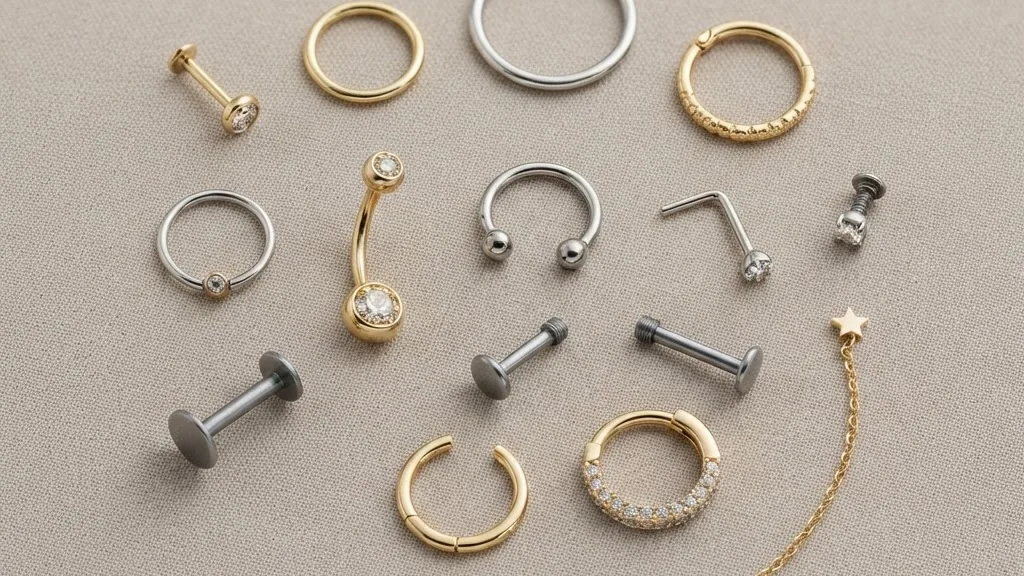
Piercing types confuse almost everyone who walks into my studio for the first time, because most of the guides they read online are secretly ear-only lists dressed up as a full-body overview. This page is the actual map. I have grouped every common placement by area, from the earlobe you got at a mall kiosk to the surface anchor that needs a real needle and a steady hand. For each one you get four numbers that matter before you book: the starting gauge, a rough pain level, a realistic healing window, and the catch nobody mentions.
Quick answer: piercing types split into six practical groups. Ear piercings (lobe, helix, tragus, conch, daith, rook, industrial) run 18 g to 16 g and heal anywhere from 6 to 8 weeks for a lobe to 12 months for cartilage. Nose and septum sit at 14 g to 20 g and heal 6 weeks to 6 months. Facial (eyebrow, bridge) heals 2 to 3 months. Oral (tongue, labret) is fast at 4 to 8 weeks but risks your teeth. Navel and nipple are 14 g and slow at 6 to 12 months. Surface and dermal piercings are the least stable of all.
How to read this guide
Three numbers do the heavy lifting on this page, so it helps to know what each one means before you scan the sections. Get these straight and every placement below reads at a glance.
Gauge is the thickness of the jewelry post, and it runs backward: a bigger number is a thinner bar. An 18 g post is 1.0 mm, a 16 g post is 1.2 mm, and a 14 g post is 1.6 mm. Cartilage and body piercings need thicker metal so the jewelry does not cheese-wire through tissue while it heals. The Association of Professional Piercers recommends a minimum of 16 g for lobes and 14 g for anyone with thicker anatomy or plans to wear heavier jewelry.
Pain is scored 1 to 10 here, and it is honest but personal. The needle pass lasts two or three seconds; the dull ache afterward lasts far longer and is what most people actually complain about. Healing time is the window before a piercing is stable enough to change jewelry safely, not the day it stops being sore. I always tell clients to trust the longer end of every range and to keep their first piece in until a piercer confirms it is done.
Ear piercing types
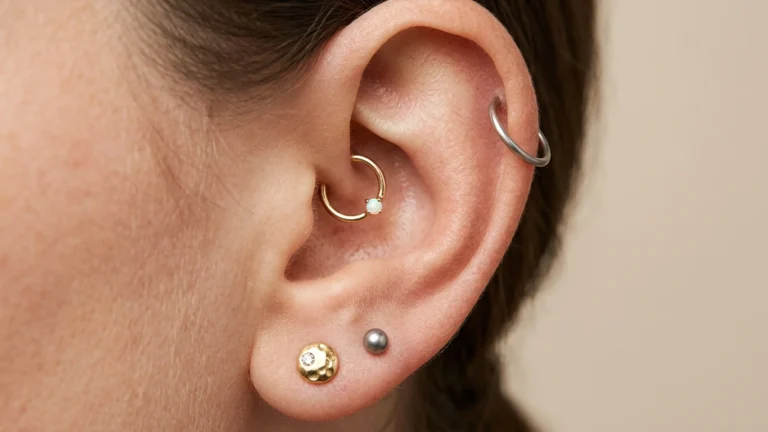
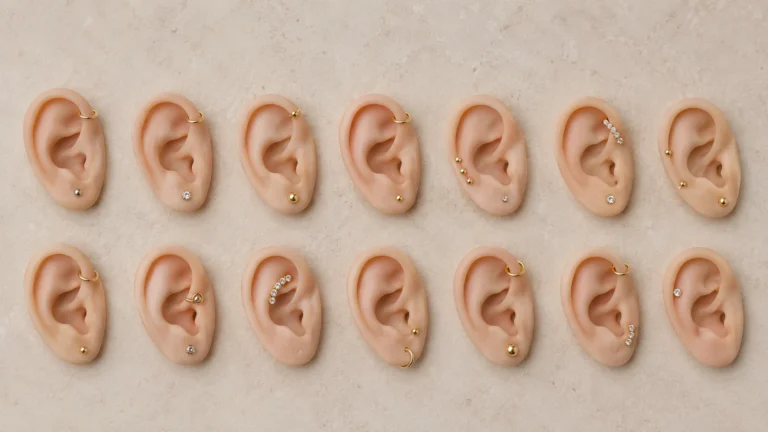
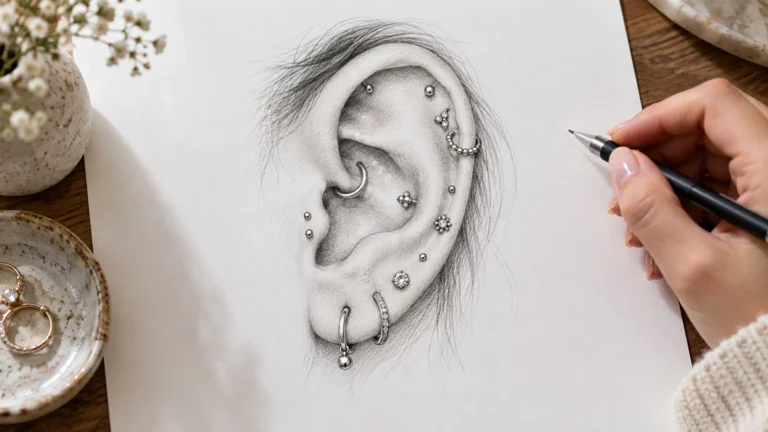
The ear is where most people start and where the menu is longest, because a single ear holds a dozen distinct placements across soft lobe and dense cartilage. Lobes are the fast, forgiving ones. Everything above the lobe is cartilage, which means slower healing, more fuss, and a jewelry choice that actually matters. Here is the run of them.
The earlobe is the classic. It takes an 18 g post at 1.0 mm, rates about a 2 out of 10 for pain, and heals in 6 to 8 weeks. Stacked lobes, a second or third hole up the ear, run a little longer at 8 to 12 weeks because they sit closer to cartilage and get knocked more. This is the one placement I am comfortable seeing done young, and it is still the safest introduction to the whole hobby.
The helix is the upper rim of the ear and the most popular cartilage piercing by a wide margin. It takes a 16 g post at 1.2 mm, rates about a 4 out of 10, and heals slowly at 6 to 12 months. The forward helix, tucked at the front where the ear meets the face, behaves the same way. Both love a flat-back labret stud over a ring during healing, because a ring rocks with every pillow and phone call. For a deeper walk through each spot, see our full breakdown of the different types of ear piercings.
The tragus is the little nub of cartilage in front of the ear canal. It takes 16 g, rates around 4 out of 10, and heals in 6 to 12 months. The conch, named for the shell-like bowl of the ear, is denser and rates about 5 out of 10 over the same 6 to 12 month window. The daith, the inner fold some people pierce hoping for migraine relief, takes 16 g, rates about 5 out of 10, and heals a touch faster at 6 to 9 months. Placement here is everything.
The rook, snug, and industrial are the advanced end. The rook sits in the fold above the daith, rates around 5 out of 10, and heals over 6 to 12 months. The industrial is a single barbell through two helix holes and is a commitment: pain climbs to about 7 out of 10 and healing stretches past 9 to 12 months because two cartilage wounds must settle in perfect alignment. If you want to compare every spot side by side, our visual ear piercing chart maps them all, and the complete helix piercing guide covers the most-requested one in depth.
One honest note on cartilage: it has poor blood supply, so it heals on its own schedule and punishes impatience. Swapping jewelry at two months because it “feels fine” is the single most common reason a helix flares up. If you want a feel for how the placements stack up before you sit in the chair, the ear piercing pain chart is worth a look.
Nose and septum types
Nose piercings split into two very different animals. The nostril sits in soft-to-firm tissue on the side of the nose, while the septum passes through the thin flexible wall between your nostrils. They share a face and almost nothing else, including their healing times.
The nostril takes a fine 18 g or 20 g post, roughly 0.8 to 1.0 mm, which is why the jewelry looks so delicate. It rates about 3 out of 10, more watery-eyed surprise than real pain, and heals in 4 to 6 months. That long window catches people off guard because the hole looks settled at week three. Nose shape changes what suits you, and our guide to the best nose shapes for a nose piercing helps you pick a side and a style that flatters your face.
The septum is the plot twist of this whole guide. A good piercer threads the “sweet spot,” a thin strip of soft tissue below the cartilage, so it takes a chunkier 14 g to 16 g at 1.6 mm yet heals fast at 6 to 8 weeks. Pain is a brief 5 out of 10 sting with instant eye-watering, then it settles quickly. If your piercer hits cartilage instead of the sweet spot, everything about that experience gets worse. Our roundup of septum ring styles and sizes covers what to wear once it heals.
Facial piercings
Facial piercings outside the nose live on skin that moves constantly, which is the source of both their drama and their charm. Expression, chewing, and sleep all tug at them, so placement and jewelry choice carry more weight than they do on an ear.
The eyebrow is the headliner. It takes a 16 g curved barbell at 1.2 mm, rates a mild 3 out of 10, and heals in 2 to 3 months. The catch is rejection: because it is a surface piercing through a thin pinch of skin, the body pushes it out at a rate near 30 percent over time. A skilled piercer, correct depth, and a light curved bar all lower that risk, but no one can promise it. The bridge, across the top of the nose between the eyes, is another surface piece rating about 7 out of 10 and healing in 8 to 12 weeks.
Cheek or dimple piercings are the slow, high-maintenance option in this group, healing over 6 to 12 months and carrying real risk to the parotid duct if placed carelessly. I steer most first-timers away from cheeks entirely. If you want something on the face that is friendlier, an eyebrow or a nostril is the gentler place to begin.
Oral piercings
Oral piercings are the speed demons of the body. Your mouth is packed with blood vessels and saliva that fights bacteria, so these placements heal remarkably fast. The trade is a standing risk to your teeth and gums that never really goes away, which is why I make people think twice.
The tongue takes a sturdy 14 g barbell at 1.6 mm, rates about 3 out of 10, and heals in a quick 4 to 6 weeks. It swells hard for the first days, so the first bar is deliberately long and gets downsized once swelling drops. The labret and other lip piercings take 16 g, rate around 3 out of 10, and heal in 6 to 8 weeks. A vertical labret runs a bit longer at 8 to 10 weeks, and a Medusa in the center dip of the upper lip lands around 6 to 12 weeks.
The smiley, through the little web of tissue behind your upper lip, is a fun hidden one that heals in 4 to 8 weeks but tears out easily and can wear at your front teeth. Every oral piercing shares that dental risk. Metal against enamel chips teeth over years, and a bar resting on the gumline can cause recession. Titanium or a piece with a soft polymer backing helps, but the honest move is regular dental checks and a piercer who fits the jewelry to your mouth.
Navel and torso piercings
Navel and nipple piercings look easy and heal like cartilage, which is the mismatch that trips people up. Both sit in skin that folds, stretches, and rubs on clothing all day, so they demand patience measured in months, not weeks.
The navel, or belly button, takes a 14 g curved barbell at 1.6 mm, rates a manageable 4 out of 10, and heals over a long 6 to 12 months. That thick gauge is not for show; a thinner bar migrates and rejects far more easily in an area that never stops moving. High-waisted jeans, seatbelts, and workouts all irritate a fresh navel, so loose clothing for the first few months genuinely speeds things up.
The nipple takes 14 g as well, rates a sharp 7 out of 10 that lasts longer than most ear pain, and heals over 6 to 12 months. Well-fitted jewelry and a soft cotton layer while healing make the difference between a smooth year and a bumpy one. Both of these are patience tests, not quick wins, and anyone promising a six-week nipple heal is selling you something.
Surface and dermal piercings
Surface piercings are the wild cards, and I want you to go in clear-eyed. Unlike an earlobe, which has two natural exit points, a surface piece enters and leaves through flat skin that has no reason to hold it. The body treats it as a splinter and works to push it out.
Flat-bar surface piercings, done with a specialized surface bar, can look sharp on the nape, chest, or hips, and they heal over 6 to 12 months. Even with perfect placement and aftercare, most eventually migrate or reject; good technique buys time, not permanence. Microdermals, also called dermal anchors, use a single 14 g foot seated under the skin with a screw-on top. The anchor settles in about 6 to 12 weeks, but it remains a lifelong tenant that can be dislodged by a snagged towel.
None of this means avoid them. It means budget for the reality that a surface piece is temporary jewelry with a great view, and choose a piercer who does them often. If longevity is your priority, an ear or nostril placement will serve you far better.
Pain, gauge, and healing at a glance
Step back from the list and a pattern appears. The fast healers are soft tissue with rich blood supply: lobes at 6 to 8 weeks, tongues at 4 to 6 weeks, septums at 6 to 8 weeks. The slow ones are cartilage and mobile skin: helix, conch, navel, and nipple all landing in that 6 to 12 month range no matter how careful you are.
Gauge tracks tissue stress more than pain. Delicate spots like nostrils sit at 18 g to 20 g, everyday cartilage at 16 g, and high-movement or heavy placements like septum, navel, tongue, and nipple at 14 g. Pain is the least predictable number of the three. It depends on your anatomy, your piercer’s speed, and how much you psych yourself out beforehand. A calm client with a fast piercer often reports a 4 where a nervous one reports a 7 for the identical placement.
How to choose your first piercing
If this is your first piece beyond a childhood lobe, match the placement to your patience and your daily life rather than to a photo you saved. The right first piercing is the one you will actually care for correctly for its full healing window.
Sleepers and side-sleepers should think hard before a helix or conch, because months of pressure on a healing cartilage wound is the fastest route to an angry bump. Anyone who plays contact sports should skip eyebrow, navel, and surface pieces until the season ends. If you want maximum reward for minimum fuss, a lobe or a nostril is the honest recommendation, and a septum is the surprise pick that heals fast and hides at work.
Whatever you choose, go to a piercer who uses a needle, not a gun, and who starts you in implant-grade titanium. The Association of Professional Piercers keeps a searchable member directory, and choosing from it is the single biggest decision you make. The jewelry material matters as much as the placement; cheap metal is the number-one cause of the itchy, weepy first month that people blame on bad luck.
Aftercare that works for every type
Aftercare is boring on purpose, and the same simple routine covers almost every piercing type on this page. The goal is to keep the wound clean without irritating it, and most problems come from doing too much, not too little.
Clean twice a day with sterile saline, the kind sold as wound wash, and nothing else. Skip alcohol, hydrogen peroxide, tea tree oil, and antibacterial soaps; the Association of Professional Piercers warns these over-dry and irritate healing tissue rather than helping it. Do not twist or spin the jewelry, a myth that only drags crust into the wound. Wash your hands before you touch anything, and leave the first piece of jewelry in until a piercer says the healing window is genuinely done.
Know the warning signs, because infection is not rare. Mayo Clinic notes that piercing infection rates can reach 30 percent, and clinical reviews report roughly 23 percent of non-earlobe piercings run into trouble. Spreading redness, hot skin, thick green or yellow discharge, or a fever means you see a doctor, not a forum. For general skin reactions and scarring questions, the American Academy of Dermatology is a solid, calm resource, and Cleveland Clinic has plain-language guidance on when a bump is normal versus when it needs care.
Piercing types comparison table
Sometimes the fastest way to compare ten placements is a single table instead of ten paragraphs. Use this chart to weigh gauge, pain, and healing time side by side before you book, then go back to the sections above for the details behind each number.
| Piercing type | Body area | Typical gauge | Pain level (1-10) | Healing time | Rejection risk |
|---|---|---|---|---|---|
| Earlobe | Ear | 18 g (1.0 mm) | 2 | 6 to 8 weeks | Low |
| Helix | Ear cartilage | 16 g (1.2 mm) | 4 | 6 to 12 months | Low to moderate |
| Tragus | Ear cartilage | 16 g (1.2 mm) | 4 | 6 to 12 months | Low |
| Industrial | Ear cartilage | 16 g (1.2 mm) | 7 | 9 to 12 months | Moderate |
| Nostril | Nose | 18 g to 20 g | 3 | 4 to 6 months | Low |
| Septum | Nose | 14 g to 16 g (1.6 mm) | 5 | 6 to 8 weeks | Low |
| Eyebrow | Face | 16 g (1.2 mm) | 3 | 2 to 3 months | High, near 30 percent |
| Tongue | Oral | 14 g (1.6 mm) | 3 | 4 to 6 weeks | Low |
| Navel | Torso | 14 g (1.6 mm) | 4 | 6 to 12 months | Moderate |
| Nipple | Torso | 14 g (1.6 mm) | 7 | 6 to 12 months | Moderate |
Read the table by row, not just by column: a placement with a low pain score and a long healing time, like the helix, still demands more patience than a placement with a higher score and a short healing time, like the septum. Pain fades in days. Healing time is the number that actually governs how long you wait to change jewelry.
Tip: Eat a real meal within two hours of your appointment and skip the pre-piercing energy drink. Low blood sugar, not the needle, is the most common reason first-time clients feel lightheaded in the chair.
Frequently asked questions
What is the least painful piercing type?
The earlobe wins by a mile, rating about 2 out of 10, followed by the nostril and eyebrow near 3 out of 10. Soft-tissue placements with a quick needle pass hurt least. The sharp end of the scale is nipple and industrial piercings around 7 out of 10, where dense tissue or a double pass drags the sensation out longer.
Which piercing types heal the fastest?
Oral and soft-tissue piercings heal fastest. Tongues settle in 4 to 6 weeks, smileys in 4 to 8 weeks, and lobes and septums in 6 to 8 weeks thanks to rich blood supply. Cartilage and high-movement piercings are the slow group, with helix, conch, navel, and nipple all needing 6 to 12 months before you change jewelry safely.
What gauge will my piercing be?
It depends on the spot. Lobes and nostrils start at 18 g to 20 g, everyday ear cartilage like the helix at 16 g, and high-stress placements such as septum, navel, tongue, and nipple at 14 g, which is 1.6 mm. Bigger gauge numbers mean thinner bars. The Association of Professional Piercers sets 16 g as the recommended minimum for lobes.
Can I use a piercing gun for cartilage?
No. Guns crush cartilage with blunt force instead of cleanly passing a needle, which raises the risk of shattering, scarring, and slow healing. They also cannot be fully sterilized between clients. Every reputable studio uses a single-use needle for all placements, and for cartilage in particular the difference in healing outcomes is not close.
Why do surface and eyebrow piercings reject?
Surface and eyebrow piercings pass through flat skin with no natural anchor, so the body slowly pushes the jewelry toward the surface as if removing a splinter. Eyebrow rejection runs near 30 percent over time. Correct depth, a light curved or surface bar, and avoiding snags all extend the lifespan, but rejection is common enough that you should treat these as beautiful and temporary.
How do I know if my piercing is infected?
Some redness, clear crust, and tenderness are normal in the first weeks. Worry when redness spreads outward, the skin feels hot, discharge turns thick green or yellow, or you develop a fever. Those signs mean you see a doctor promptly. Mayo Clinic lists infection as a real risk, so do not tough it out or take the jewelry out yourself, which can trap the infection.
The bottom line
Piercing types are easiest to understand as six neighborhoods rather than one long list. Ears give you the widest menu and the widest range of healing, from a 6 week lobe to a 12 month industrial. Noses split into a slow nostril and a fast septum. Facial and surface pieces reward you with style but ask you to accept rejection risk. Oral piercings heal fastest but tax your teeth, and navel and nipple demand cartilage-level patience. Pick the placement that fits your life, choose implant-grade titanium and a needle-using piercer, follow the boring saline routine, and let each one heal on its own clock. Do that and almost any piercing on this page can be yours for the long haul.