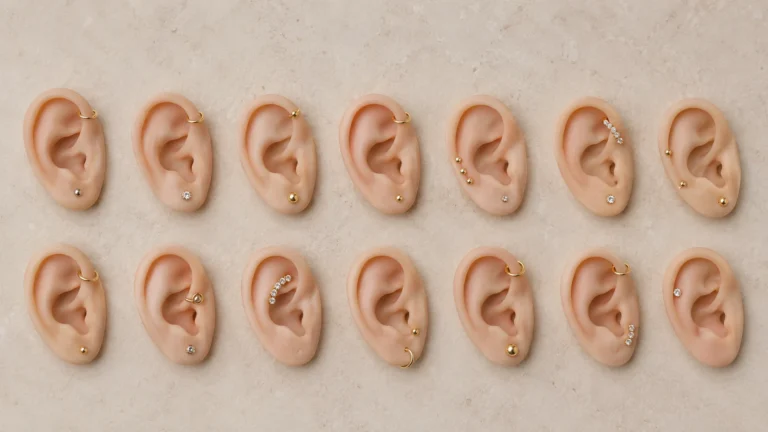
The name of a piercing tells you more than where the jewelry sits. It tells you what tissue the needle passes through, and that one fact predicts how long you will wait to heal. A lobe piercing moves through soft, well-fed flesh; a helix moves through cartilage with a thin blood supply. Learning the ear piercings names in tissue groups, rather than as a flat vocabulary list, lets you set the right expectation before you book. Cleveland Clinic puts earlobe healing at roughly six to eight weeks, while a cluster of cartilage placements can run far longer. This desk compiles the placements, their healing ranges, and the aftercare standards published by medical and regulatory bodies so the name you choose carries the information you actually need.
The quick version, for readers who want one block to keep:
Ear piercing names split into two tissue families. Lobe piercings (standard lobe, stacked second and third lobe) sit in soft flesh and heal fastest. Cartilage piercings sit in the firm outer ear and heal slowly: helix, forward helix, flat/scapha, conch, tragus, anti-tragus, rook, daith, snug, orbital and industrial all pass through cartilage. Cleveland Clinic lists a six-to-12-month healing window for daith, rook, conch, helix and tragus. Because cartilage has a limited blood supply and a higher infection risk, the name signals a longer commitment and closer aftercare, not only a look.
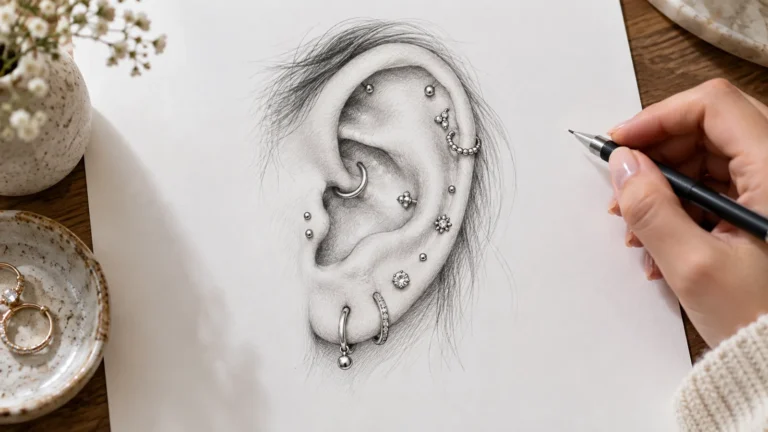
The ear piercing chart: where each name sits and how long it heals
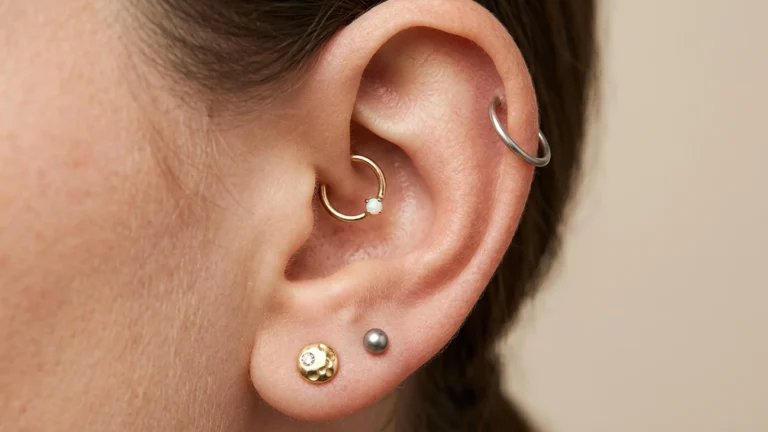
Read the ear from the bottom up. The lobe is the fleshy base. Everything above it is cartilage, arranged in ridges and hollows that each carry a name.
- Lobe – soft tissue at the bottom. Standard first hole, plus stacked second and third positions. Lowest pain, fastest healing. Cleveland Clinic gives earlobe piercings roughly six to eight weeks.
- Helix – the curved outer rim of the upper ear. Cartilage.
- Forward helix – the same rim where it begins near the face, above the tragus. Cartilage.
- Flat / scapha – the flat sheet of cartilage inside the helix rim. Cartilage.
- Conch – the large bowl in the center of the ear, inner or outer. Cartilage.
- Tragus – the small flap in front of the ear canal. Cartilage.
- Anti-tragus – the ridge opposite the tragus, above the lobe. Cartilage.
- Rook – the fold of the antihelix ridge, upper inner ear. Cartilage.
- Daith – the innermost cartilage fold above the ear canal. Cartilage.
- Snug – along the inner antihelix ridge. Cartilage.
- Orbital – two holes joined by one ring, often placed in cartilage such as the conch or helix. Cartilage.
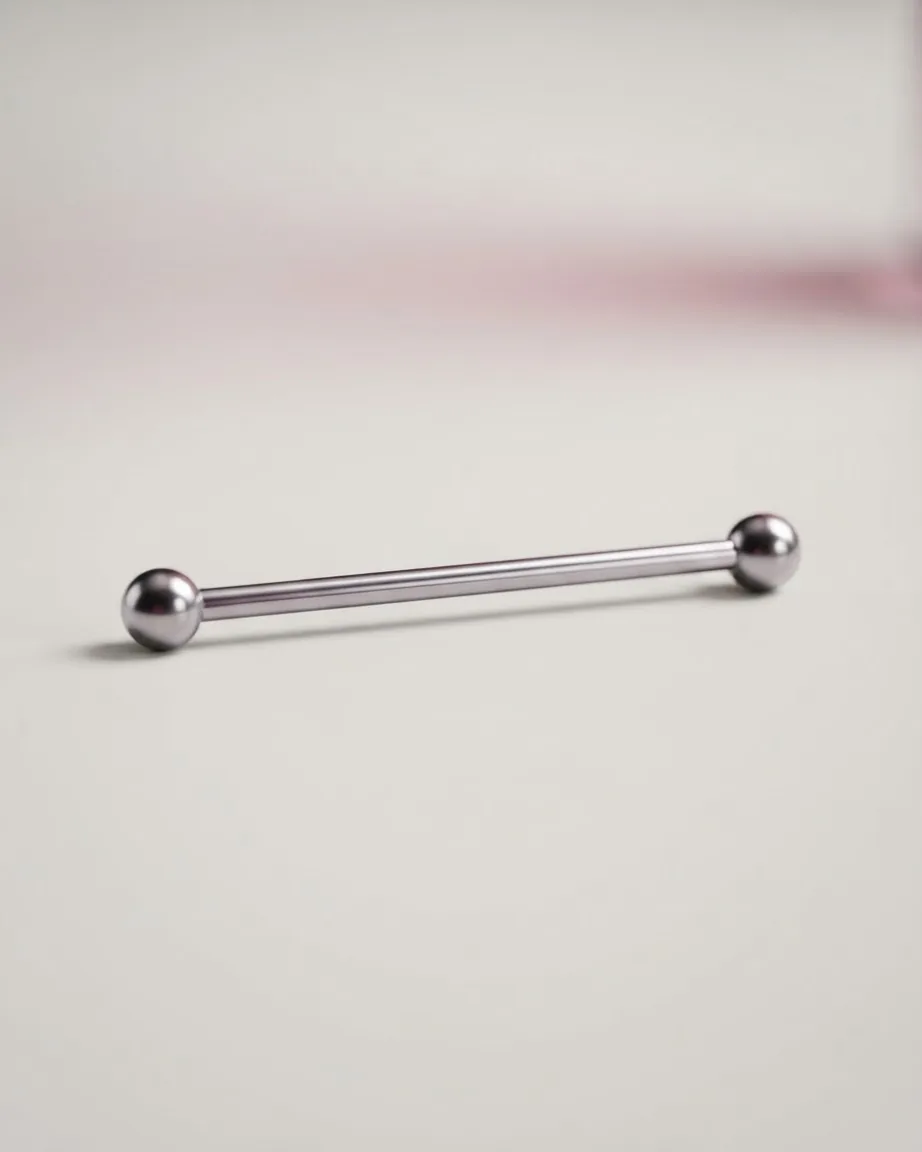
- Industrial – one barbell spanning two cartilage holes, usually helix to forward helix. Cartilage.
Cleveland Clinic gives a six-to-12-month expected healing range for daith, rook, conch, helix and tragus. That range is the practical difference between the lobe family and the cartilage family: a lobe closes its healing in weeks, these placements take most of a year. For a side-by-side sense of how each spot feels going in, see also our piercing pain chart.
One naming footnote worth flagging: the consumer spelling “daith” appears rendered as “diath” in part of the New Mexico Regulation and Licensing Department’s body-art training page. Both point at the same inner-fold placement; the studio spelling you will see on a price list is “daith.”
Lobe versus cartilage: why the two name groups are not interchangeable
The split between lobe and cartilage names is not cosmetic labeling. It reflects how the tissue is fed. The lobe is soft and vascular, so it closes a wound quickly. Cartilage has a limited blood supply of its own, which is the reason a helix or conch heals over months rather than weeks and why it stays vulnerable to problems for far longer. Cleveland Clinic frames the contrast plainly in its guidance on getting ears pierced: earlobe piercings tend to heal in about six to eight weeks, while cartilage piercings take longer.
Applying lobe expectations to a cartilage name is the most common planning mistake. Someone whose first lobe piercing felt settled in two months may assume a forward helix will behave the same way, downsize or swap jewelry early, and interrupt a channel that was nowhere near finished. The name is your warning label: if it belongs to the cartilage group, budget for the long window and treat the piercing as still healing well into the back half of a year.
Exact anatomical boundaries between some consumer terms – flat versus scapha, snug versus a general antihelix piercing, orbital as a technique rather than a fixed spot – are drawn differently by different studios. Where those definitions are fuzzy, the tissue group is the reliable signal: all of them are cartilage, all of them heal on the long timeline.
Ear piercing names and what they tell you about healing
Match each name to its tissue and the healing expectation follows. Against the lobe baseline of six to eight weeks, here is how the cartilage names group:
- Six to 12 months (named directly): daith, rook, conch, helix, tragus – the placements Cleveland Clinic lists in that expected range.
- Same cartilage family, plan for the long window: forward helix, flat/scapha, anti-tragus, snug, orbital, industrial. These sit in the same firm tissue; treat them on the cartilage timeline rather than the lobe one.
A 12-month horizon changes ordinary decisions. The American Academy of Dermatology advises leaving starter jewelry in a new piercing for six weeks or more, even at night, because an opening can close if the jewelry comes out early – and that six-week floor is written for the fast case. On a cartilage piercing still in its months-long window, the same caution against premature changes applies for far longer. Industrial piercings add their own wrinkle: one barbell depends on two separate cartilage holes healing in alignment, so the slowest of the two sets the pace. When you do reach the point of swapping a cartilage barbell, our rook jewelry guide is a useful reference for a spot on this list.
Is a high-ear cartilage piercing just an aesthetic choice?
Choosing a cartilage name over a lobe name is a risk decision as much as a style one. High-ear cartilage piercings carry a higher infection risk than lobe piercings, and the consequence of a cartilage infection is more serious than a lobe one. The specific concern is perichondritis – an infection of the tissue surrounding the ear cartilage. Cleveland Clinic’s clinical page on perichondritis describes it as an infection of the connective tissue around cartilage that, left untreated, can progress to damage the cartilage itself and distort the shape of the ear.
That is the real content behind the pretty diagram: a conch or forward helix is not merely a longer-healing version of a lobe. It opens a wound in poorly-vascularized tissue where an infection has more room to do lasting harm. None of this is a reason to avoid cartilage piercings – it is a reason to choose a careful piercer, follow published aftercare, and act quickly if something looks wrong. Before you commit to a placement, the wider topic lives in our types charts section.
Which symptoms turn a style question into a medical one
The National Health Service publishes public guidance on infected piercings that sets the escalation line most readers need. Its guidance on infected piercings points to signs such as swelling, increasing pain, heat around the site, and marked redness or darkening of the skin, alongside any discharge, as reasons to seek care rather than wait it out.
On a cartilage placement those signs matter more, because infection in cartilage can damage tissue, as the perichondritis picture above shows. A lobe that looks angry for a day after a bump is one thing; a tragus or conch that grows hot, swollen and increasingly painful is a prompt to contact your piercer and, where the signs point to infection, a clinician. This desk does not diagnose infections or offer treatment plans. The rule it can state plainly: style questions are yours to decide, but swelling, heat, spreading redness or darkening, and worsening pain are medical questions – see a professional.
If this is a sensitive area for you personally and you are weighing a first or second hole, our double ear piercing guide stays on the gentlest end of this list.
The one aftercare rule two health authorities do not agree on
Aftercare is where sourced guidance stops lining up neatly, and readers deserve to know it. Two reputable bodies give different instructions on moving the jewelry during healing.
Cleveland Clinic states that routine rotation is no longer advised. Its position: in the past, people were told to rotate a piercing regularly to keep the jewelry from sticking to the skin, and that is not recommended anymore. The National Health Service, by contrast, advises gently turning the jewelry while cleaning a new piercing. These are genuinely different instructions from two credible authorities, and collapsing them into one tidy rule would misrepresent both. If you are unsure which to follow, your piercer knows your specific placement and jewelry and should settle it for you.
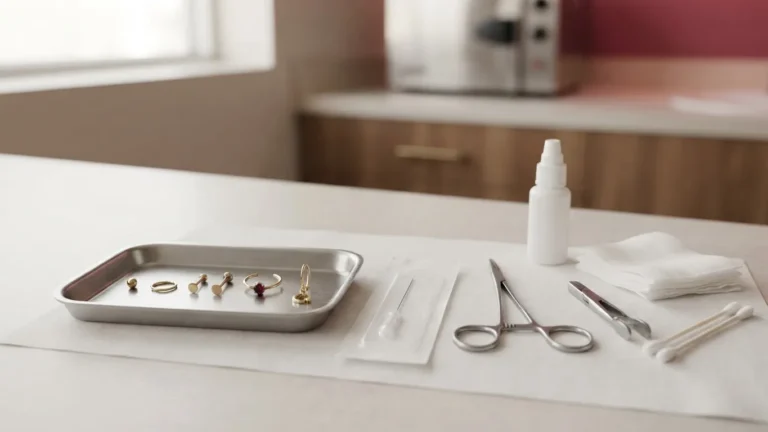
Two aftercare points do not conflict. The American Academy of Dermatology advises against hydrogen peroxide and antibacterial soaps, because they can damage the skin trying to heal – a correction worth keeping, since an antiseptic is not automatically the gentler choice. And the AAD’s six-weeks-or-more rule on leaving starter jewelry in place is a floor, not a target, especially for cartilage names on the long timeline. For the wound channel itself, our piercing needle guide covers the geometry involved.
Choosing your placement by anatomy, not only by the photo
The name you pick should match the ear you have. Some placements depend on a specific fold or ridge being present and roomy enough to hold jewelry safely – a rook needs a defined antihelix fold; a daith needs enough of the inner cartilage ledge; an industrial needs two points that line up on a straight barbell. A piercer assesses this in person, which is why the same name is a green light on one ear and a no on another.
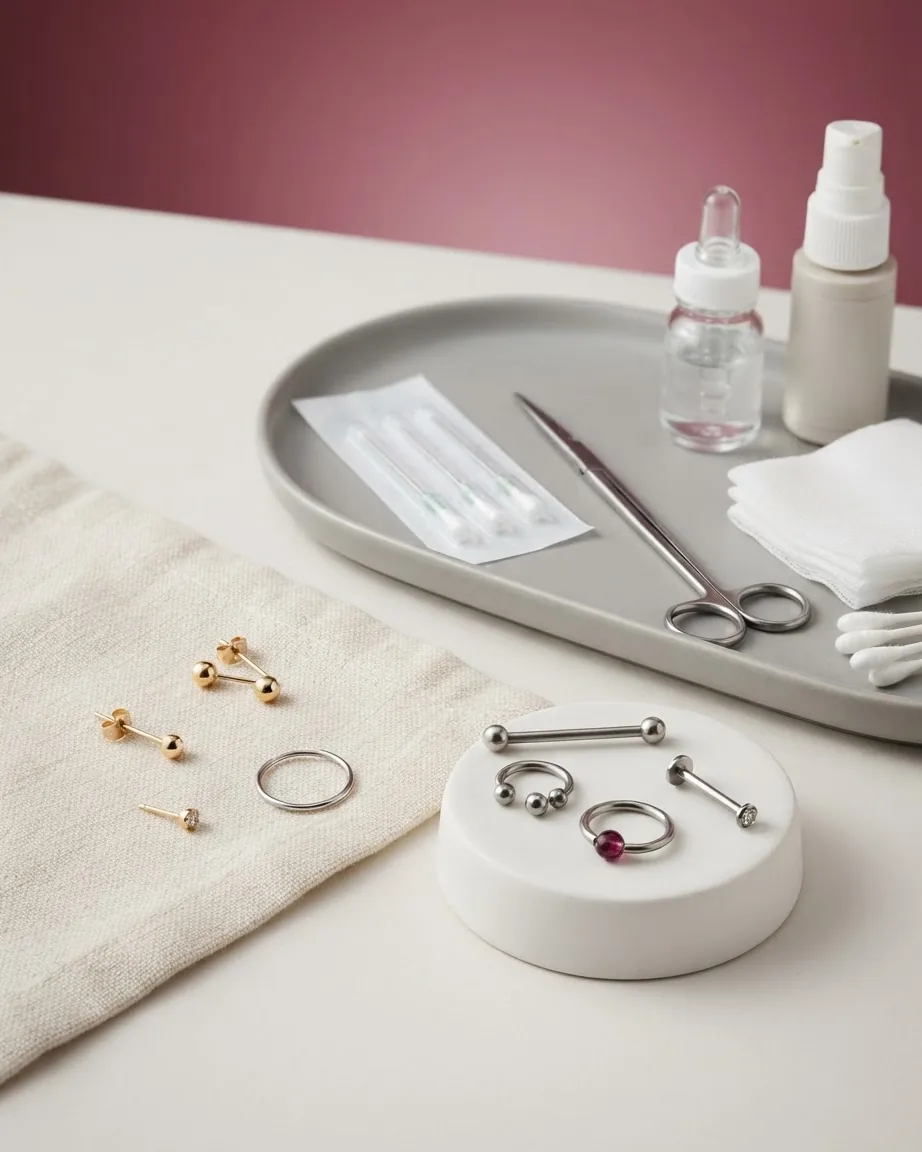
Work the decision in order. First the tissue group, because it sets the healing window and the risk profile: a lobe name for the fastest, lowest-risk route, a cartilage name if you accept the six-to-12-month commitment and closer aftercare. Then the anatomy fit, which a professional confirms. Then the jewelry style that suits the spot – studs and small rings read cleanly on lobe and helix, curved barbells suit folds like the rook and daith, and a single long barbell defines the industrial. The matching jewelry details belong in the deeper hubs; the placement decision is the one to settle first.
Body-art practice is regulated at the state level in many places. The New Mexico Regulation and Licensing Department, through its Board of Body Art Practitioners, publishes the training requirements and anatomy categories a licensed piercer is expected to know – a reminder that the person assessing your ear should be trained and licensed, not improvising.
Naming overlaps that trip people up at the counter
A few names collide in everyday use, and sorting them before you book saves a confused conversation.
- Flat and scapha refer to the same flat cartilage sheet inside the helix rim; studios use either word.
- Orbital describes a technique – two holes joined by one ring – not a single fixed location. An orbital can be placed in the conch, the helix or elsewhere, so always confirm the exact spot, not just the word.
- Industrial is likewise defined by the hardware: one barbell through two cartilage holes. The usual run is helix to forward helix, but the name describes the bar, not a guaranteed pair of spots.
- Daith / “diath” – the same inner-fold placement, with the official New Mexico training page using a variant spelling. The studio-standard spelling is daith.
When a name is doing double duty like this, point at your own ear and have the piercer confirm the tissue and the entry and exit before anything is marked. The word is a starting point; the anatomy is the decision.
The healing-window math: how much longer cartilage really takes
The article quotes two healing ranges straight from Cleveland Clinic: six to eight weeks for the lobe, and six to 12 months for daith, rook, conch, helix and tragus. Doing the arithmetic on those exact figures shows why the two name groups cannot share a timeline.
- Cartilage runs up to twice as long at its slowest as at its fastest. 12 months ÷ 6 months = 2×.
- The lobe window is tight by comparison. 8 weeks − 6 weeks = just a 2-week spread. The lobe resolves inside a fortnight’s margin; cartilage resolves inside a half-year one.
- The AAD’s six-week jewelry floor is three-quarters of the lobe’s own ceiling. 6 weeks ÷ 8 weeks = 0.75, i.e. 75%. That caution against early removal was written for the fast case – so on a cartilage piercing still inside its six-to-12-month window, treat “leave it in” as the rule for far longer than six weeks.
The name decides the unit. Lobe healing is measured in weeks with a two-week margin; cartilage healing is measured in months with a six-month margin and can take twice as long at the high end as at the low end.
FAQ
Do second and third lobe piercings heal as fast as the first?
They sit in the same soft, well-fed tissue as a first hole, so they belong to the fast-healing lobe group rather than the cartilage one. The practical caution is spacing: stacked holes placed close together can irritate each other if jewelry is too large. Keep each on the lobe timeline and avoid crowding them.
Can I get several cartilage piercings in one sitting?
Multiple placements at once is possible, but every cartilage hole adds an independent wound on the long healing clock, and combining several high-ear spots raises the aftercare load and the infection exposure at the same time. A piercer weighs your anatomy and sleeping side before agreeing. Our multiple ear piercings guide covers doing more than one at once.
Is a numeric healing figure guaranteed for my helix?
No. The six-to-12-month range is a published expectation for cartilage placements, not a promise for any individual ear. Your own healing depends on aftercare, jewelry, bumps to the site, and whether an infection sets in. Treat the window as a planning floor for commitment, and judge readiness to change jewelry by how the site actually looks, confirmed with your piercer.
Why avoid hydrogen peroxide if it kills bacteria?
Killing bacteria is not the only effect. Harsh antiseptics also damage the fragile new skin repairing the channel, which can slow healing rather than help it. That is why dermatologist guidance steers new piercings toward gentler cleaning and away from hydrogen peroxide and antibacterial soaps. An “antiseptic” label does not make a product the safe default on an open piercing. Infection, perichondritis and piercing aftercare are sensitive, health-adjacent topics. Nothing here is a diagnosis or a treatment plan. If your piercing shows swelling, heat, spreading redness or darkening, or worsening pain, contact your piercer and a clinician – a trained professional assessing your ear in person is the right call for anything that looks wrong.