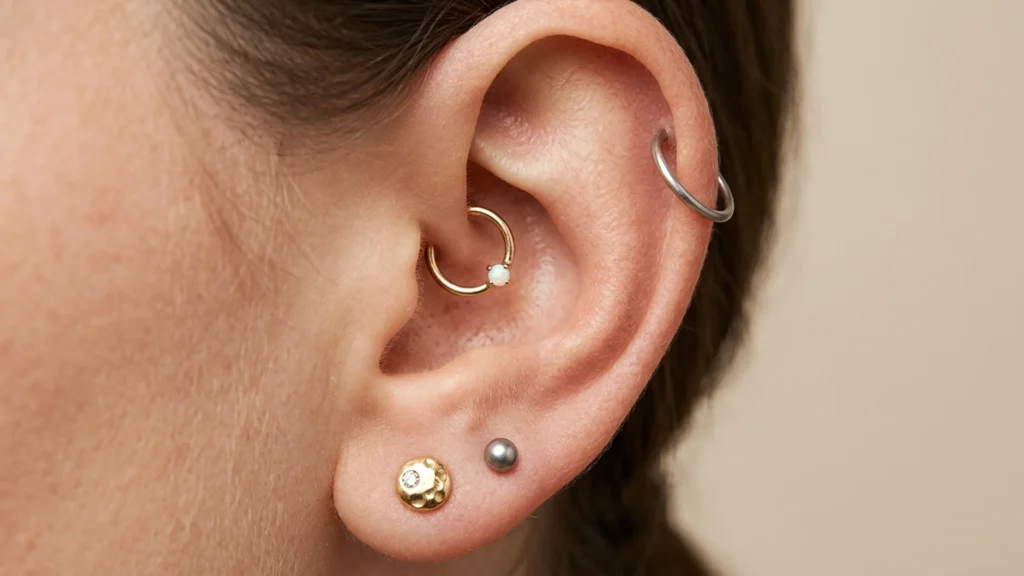
A good piercing chart is the single most useful thing you can study before you sit in the chair, because it lines up every common placement next to the facts that actually matter: where it sits on the body, how much it tends to hurt, how long it takes to heal, and what gauge and jewelry it usually takes. I have spent years pointing at ears and noses and explaining these same numbers, so I built this guide as the chart I wish every client read first. It will not replace a conversation with a real piercer who can look at your anatomy, but it will get you fluent in the language and stop you from being surprised by a six to nine month healing time on a piercing you assumed would close in a month.
Charts get misused, though. People treat a pain ranking like a promise and a healing range like a deadline. Neither is. Pain depends on your nerves, your nerves are not your friend’s nerves, and healing depends on your body, your aftercare, and a fair amount of luck. So read every chart below as a typical range, not a guarantee, and use it to ask better questions, not to skip the professional.
How to Read a Piercing Chart
Every row on a useful piercing chart answers four questions. Where does it go, which tells you whether it is soft tissue like a lobe or stubborn cartilage like a helix. How much does it hurt, usually scored one to ten, where a one is a quick pinch and a ten is a sharp deep pressure that passes in a second or two. How long does it heal, which for cartilage and most body piercings is months, not weeks. And what gauge and jewelry does it take, which determines what you can buy and when you can change it.
Two of those four trip people up. Pain is the one everyone fixates on, and it is the least reliable, because a placement that is brutal for one person is a non-event for another. Healing is the one people underestimate, and it is the most important, because rushing it causes most piercing problems. If you read nothing else, internalize that cartilage and body piercings heal slowly and unevenly from the outside in, and that the surface looking fine does not mean the inside is done.
Ear Piercing Chart
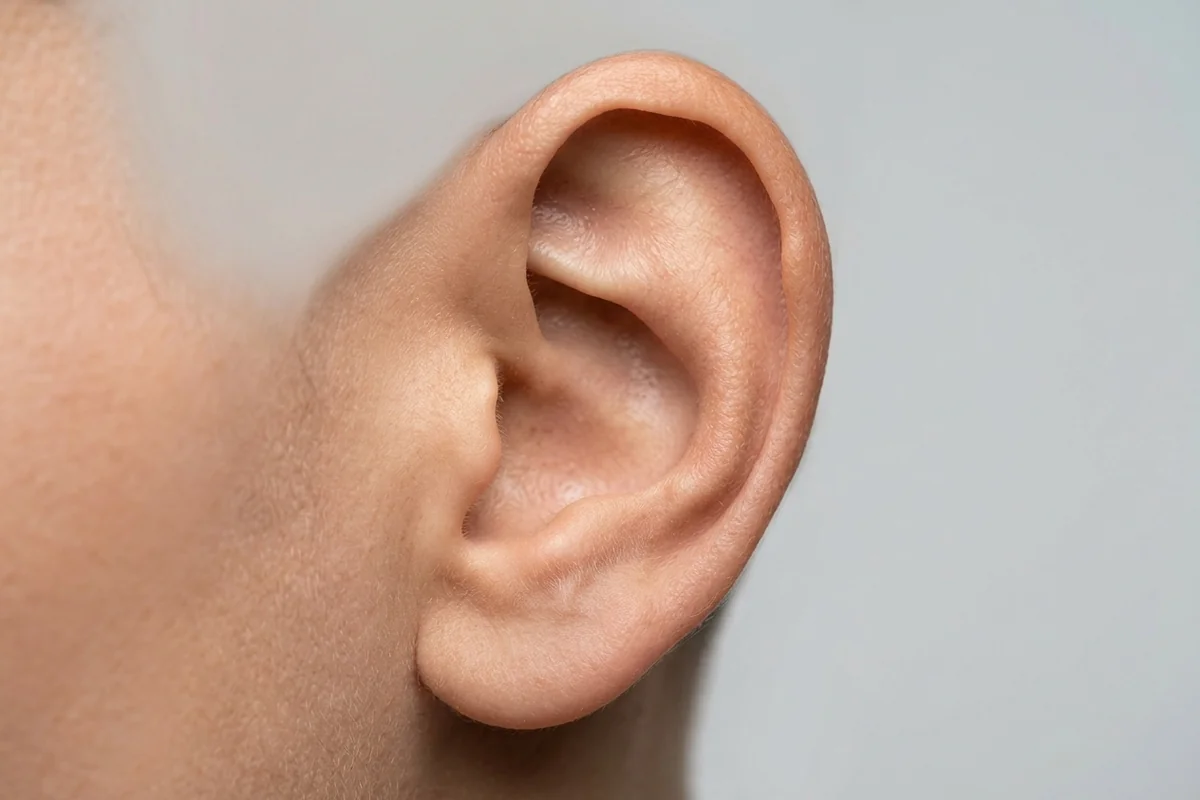
The ear holds more distinct placements than anywhere else on the body, which is why it gets its own chart. Lobes are soft tissue and heal fast. Everything else on the ear is cartilage and heals slowly. Pain here is scored relative to a standard lobe at a 2.
| Placement | Tissue | Pain (1-10) | Healing time | Common gauge |
|---|---|---|---|---|
| Lobe | Soft | 2 | 6 to 8 weeks | 20g to 16g |
| Upper lobe | Soft | 3 | 8 to 10 weeks | 18g to 16g |
| Helix | Cartilage | 4 | 6 to 9 months | 16g |
| Forward helix | Cartilage | 5 | 6 to 9 months | 16g |
| Tragus | Cartilage | 5 | 6 to 9 months | 16g |
| Conch | Cartilage | 6 | 9 to 12 months | 16g to 14g |
| Rook | Cartilage | 6 | 9 to 12 months | 16g |
| Daith | Cartilage | 6 | 8 to 12 months | 16g |
| Snug | Cartilage | 7 | 12 to 18 months | 16g |
| Anti-tragus | Cartilage | 6 | 9 to 12 months | 16g |
| Industrial | Cartilage | 7 | 9 to 12 months | 14g |
The snug and the industrial are the two that surprise people. The snug threads through a tricky fold and is one of the slowest healers on the whole body. The industrial is two helix piercings joined by one bar, so you are healing two cartilage wounds that have to stay in alignment, which is why it earns a higher pain and difficulty rating. For a placement-by-placement breakdown of how much each ear spot hurts, our ear piercing pain chart ranks them in detail, and the full set of ear piercing guides covers each one individually.
Nose and Facial Piercing Chart
The nose is the most common facial piercing, and the chart here splits cleanly between the nostril, which is soft cartilage near the surface, and the septum, which goes through the soft sweet spot of tissue below the cartilage rather than through the hard cartilage itself when it is done well.
| Placement | Tissue | Pain (1-10) | Healing time | Common gauge |
|---|---|---|---|---|
| Nostril | Cartilage | 4 | 4 to 6 months | 20g to 18g |
| High nostril | Cartilage | 5 | 6 to 9 months | 18g |
| Septum | Soft tissue | 4 | 2 to 4 months | 16g to 14g |
| Bridge | Surface | 4 | 3 to 4 months | 16g to 14g |
| Eyebrow | Surface | 3 | 2 to 4 months | 16g |
| Lip / labret | Soft tissue | 4 | 2 to 3 months | 16g to 14g |
| Tongue | Muscle | 4 | 4 to 6 weeks | 14g |
A common myth is that the septum is the most painful facial piercing. Done correctly through the thin flexible sweet spot, it is a sharp watering-eyes moment that passes fast, and it heals more quickly than most nostrils. The eyebrow and bridge are surface piercings, which means they sit shallow and carry a real risk of migration or rejection, so they need looser jewelry and a careful piercer. If you want to match a nose placement to your face, our guide on nose and septum piercings goes through the options.
Gauge Chart and What the Numbers Mean
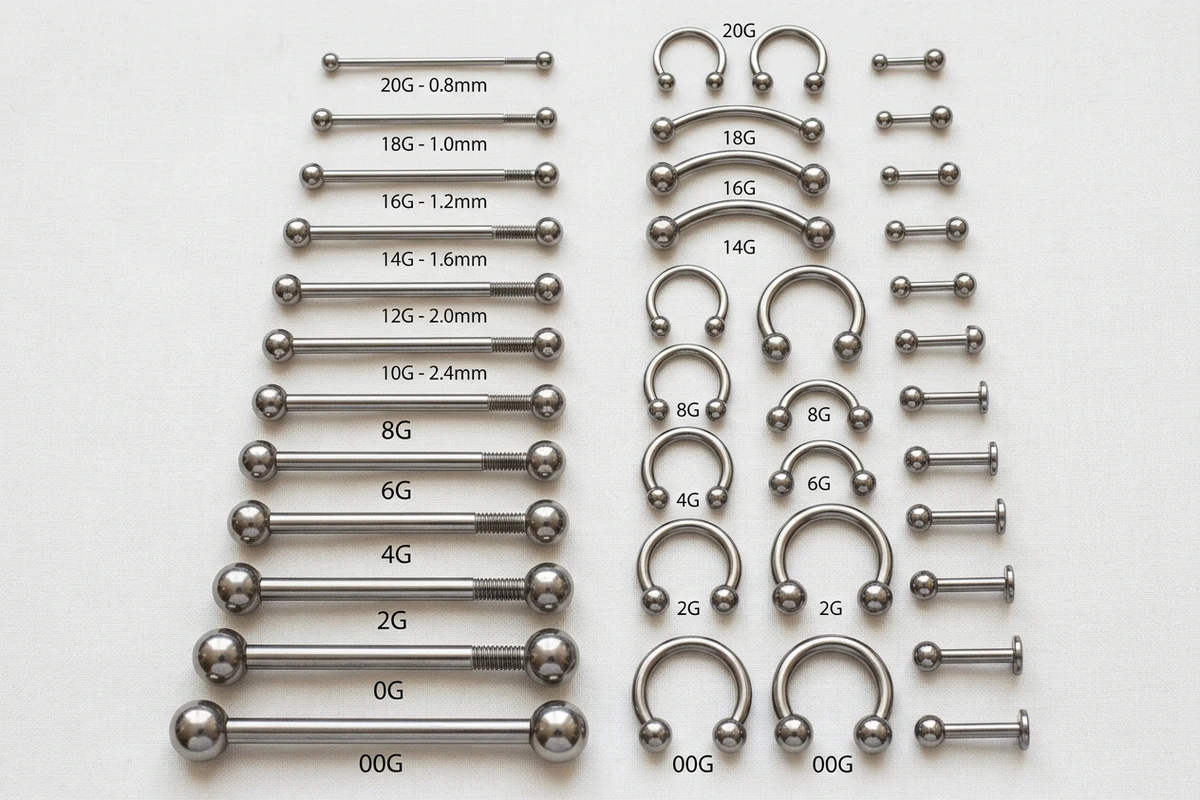
Gauge measures the thickness of the jewelry, and the system runs backward, which confuses everyone at first. The higher the number, the thinner the post. A 20 gauge is thin, a 14 gauge is noticeably thicker. Lobes often start at 20 or 18 gauge. Cartilage is usually 16 gauge. Heavier body piercings go to 14 gauge and thicker. Matching the gauge matters because you cannot put a 16 gauge post through an 18 gauge hole without stretching it, and a too-thin post in a wider channel will move around and irritate.
| Gauge | Thickness (mm) | Typical use |
|---|---|---|
| 20g | 0.8 mm | Lobes, some nostrils |
| 18g | 1.0 mm | Lobes, nostrils, high nostril |
| 16g | 1.2 mm | Most cartilage, septum, lip, eyebrow |
| 14g | 1.6 mm | Septum, conch, industrial, tongue, navel |
| 12g | 2.0 mm | Stretched lobes, heavier body piercings |
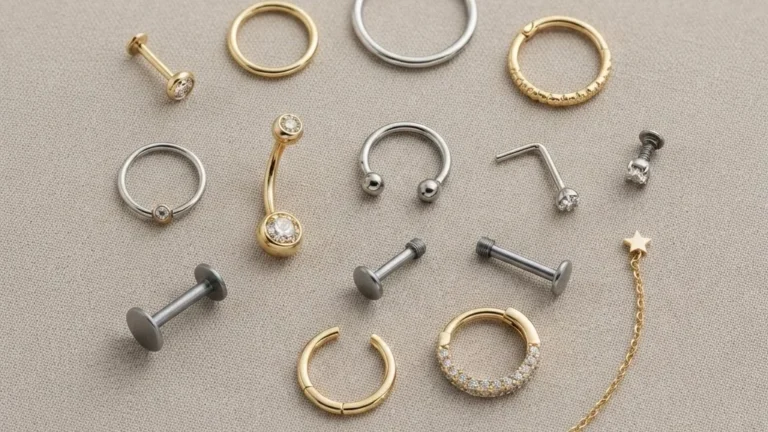
Length and diameter matter too. A flat-back stud has a post length, and a hoop has an inner diameter, both measured in millimeters. Fresh piercings get longer posts to allow for swelling, and you downsize to a shorter, neater post once that swelling fades. Our jewelry sizing and materials guide explains how to read these measurements and pick body-safe metal.
Pain Rankings and Why They Lie a Little
Pain is the column everyone reads first and the one I trust least. Three things drive how a piercing feels: the density of the tissue, how many nerves run through the area, and your own pain response on that particular day. Cartilage gives a deeper, blunter pressure than the quick sting of a lobe, and a placement that sits over a nerve-rich fold like the rook or snug carries a sharper sensation. But anxiety amplifies everything, an empty stomach makes you lightheaded, and tensing up makes a quick procedure feel longer.
The numbers I give are population averages. I have watched people breeze through a daith and rate it a 3 who then flinch at a lobe. Use the ranking to brace yourself, not to talk yourself out of a placement you want. The actual piercing on any of these takes a second or two. The healing months are the real commitment, not the pinch. For a fuller picture of what each placement costs in money and discomfort, our pain and cost guides break it down.
Body Piercing Chart Beyond the Face
The chart does not stop at the head. Body piercings follow the same logic of tissue type driving pain and healing, and they tend to take thicker gauges because they carry more weight and movement. The navel is the most requested, and it is a surface-adjacent piercing that heals slowly because it sits in a spot that bends, folds, and rubs against waistbands all day. Nipple piercings heal on a long timeline because the tissue is dense and constantly moved by clothing. Genital piercings vary enormously by exact placement and are best discussed one on one with a piercer, so I keep them off a general chart.
| Placement | Tissue | Pain (1-10) | Healing time | Common gauge |
|---|---|---|---|---|
| Navel | Surface | 4 | 6 to 12 months | 14g |
| Nipple | Soft tissue | 6 | 9 to 12 months | 14g |
| Dermal anchor | Surface (single point) | 4 | 1 to 3 months | 14g to 12g |
| Surface bar | Surface | 4 | 3 to 6 months | 16g to 14g |
Surface and dermal piercings deserve a warning the chart cannot fully convey. They sit shallow in flat skin that was never designed to host jewelry, so the body is more inclined to push them out over time, which is called migration or rejection. A skilled piercer using the right anchor or bar and a careful aftercare routine improves the odds, but these placements are inherently less permanent than a piercing that passes through a fold or a rim. If longevity matters to you, weigh that before you sit down. For a sense of what each of these costs to have done properly, our pain and cost guides lay out typical pricing.
Aftercare That Applies Across the Whole Chart
No matter which row of the chart you pick, the aftercare is nearly identical, and it is simpler than the internet makes it sound. Rinse the piercing once or twice a day with sterile saline. Do not touch it with dirty hands. Do not twist, spin, or rotate the jewelry, because that habit damages healing tissue and is the leading cause of bumps. Keep hair products, makeup, and pool or hot tub water off it while it heals. Sleep so you are not pressing on it.
Just as important is what to leave out. Skip alcohol, hydrogen peroxide, tea tree oil, antibacterial ointments, and harsh antiseptics, all of which dry out and irritate the tissue. Simple saline and patience do the work. Reputable health sources agree on this minimalist approach, and you can read body piercing care basics from Healthdirect Australia and infection and care guidance from MedlinePlus. If a piercing becomes warm, very painful, swollen, or starts producing thick discolored discharge, stop guessing and see a doctor, since those can be signs of infection rather than normal healing.
Using the Chart to Plan a Full Ear
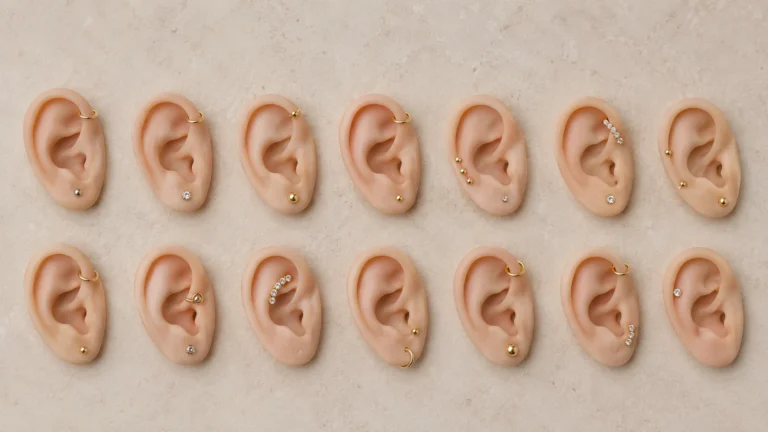
Once you understand the chart, you can plan ahead instead of piercing impulsively. If you want a curated ear with several pieces, the order and timing matter. Do not get four cartilage piercings on the same ear in one sitting, because every one of them needs to stay unpressured while it heals, and you only have one side to sleep on. Space them out. Heal one or two, let them settle for several months, then add the next. Lobes and septum heal fast, so they are good starting points if you are nervous. Snug, industrial, and conch are commitments, so save those for when you trust your aftercare discipline.
Think about jewelry too. A coherent look comes from matching metals and proportionate sizes across placements, which is easier when you know each spot’s gauge in advance. And remember that a piercing chart is a starting map, not your anatomy. A piercer marking your ear will tell you that your specific helix sits at an angle that suits a stud rather than a hoop, or that your nostril wall is too thin for a particular ring. That personal read is the one thing no chart can give you, so bring the chart’s vocabulary to the studio and let a professional fill in the rest.
What the Chart Cannot Tell You
For all its usefulness, a chart flattens things that vary person to person, and pretending otherwise sets people up for disappointment. Your anatomy is the first variable. A nostril chart says 4 to 6 months, but if your nostril wall is unusually thick or thin, the right jewelry and the real timeline shift. A helix heals in 6 to 9 months on the chart, but if your particular cartilage is on the thicker side or you are a dedicated side sleeper, plan for the longer end. The chart gives you the middle of the road, and most people are not exactly in the middle.
Your habits are the second variable, and they matter more than the placement. Two people can get the same conch on the same day, and the one who sleeps off it, rinses with saline, and leaves it alone heals in nine months while the one who twists the jewelry, sleeps on it, and douses it in alcohol is still fighting a bump at eighteen. The chart assumes good aftercare. It cannot account for the person who does everything wrong. So when you read a healing range, read it as the best case for someone who follows the rules, and know that the slow lane is entirely avoidable.
The third thing a chart cannot give you is judgment about jewelry quality and piercer skill. A placement done with a needle by a trained professional using implant grade jewelry heals on the timelines shown. The same placement done with a piercing gun at a mall kiosk, which crushes cartilage rather than cleanly piercing it, can take far longer and is far more likely to go wrong. Guns have no place in cartilage. If a chart makes a helix look routine, that is true only when the person holding the needle knows what they are doing. Choose the studio before you choose the placement.
Building Confidence Before Your Appointment
Walk into the studio with the chart’s vocabulary and you change the whole conversation. Instead of pointing vaguely and hoping, you can say you want a forward helix, you understand it is 16 gauge cartilage with a six to nine month heal, and you would like a flat-back titanium stud. A piercer hears that and knows you will follow aftercare, which makes them more willing to talk through your real options. You will also catch red flags. If someone quotes you a six week heal on a conch, suggests a gun for cartilage, or cannot tell you the gauge and material of the jewelry they use, the chart in your head will flag that something is off.
Prepare your questions from the rows that matter to you. Ask what gauge they pierce your chosen spot at, what the jewelry is made of and whether it is labeled implant grade, how long until you can downsize, and how long until the first safe jewelry change. A good piercer answers all of that without hesitation and usually volunteers more. The chart is not a substitute for that conversation, but it is the thing that lets you have it as an informed adult rather than a passenger. Pair it with our piercing types and charts hub and you will have a fuller map of where everything sits before you ever sit in the chair.
Frequently Asked Questions
What is the most painful piercing on the chart?
By average ranking, the snug and the industrial tend to top ear charts, and the cartilage placements over nerve-rich folds like the rook rate higher than a lobe. That said, pain is individual. The numbers on any piercing chart are population averages, so treat them as a rough guide rather than a guarantee of how it will feel for you.
Why does my piercing chart show healing in months not weeks?
Because most piercings beyond the soft earlobe go through cartilage or surface tissue that heals slowly and unevenly from the outside in. Cartilage has little blood supply, so a helix or conch needs six to twelve months, not weeks. The surface can look healed long before the inside is, which is why the chart uses months.
What does the gauge number on a piercing chart mean?
Gauge is the thickness of the jewelry, and the scale runs backward, so a higher number is thinner. A 20 gauge post is thin and common for lobes, while a 14 gauge is thicker and used for septum, industrial, and body piercings. Your replacement jewelry should match the gauge your piercing was done at.
Can I use a piercing chart instead of seeing a piercer?
No. A chart teaches you the language of placements, pain, healing, and gauges, which makes you a better-informed client. But it cannot read your anatomy. A professional piercer looks at your ear or nose, checks tissue thickness and angles, and tells you which placements and jewelry actually suit you, which no chart can do.