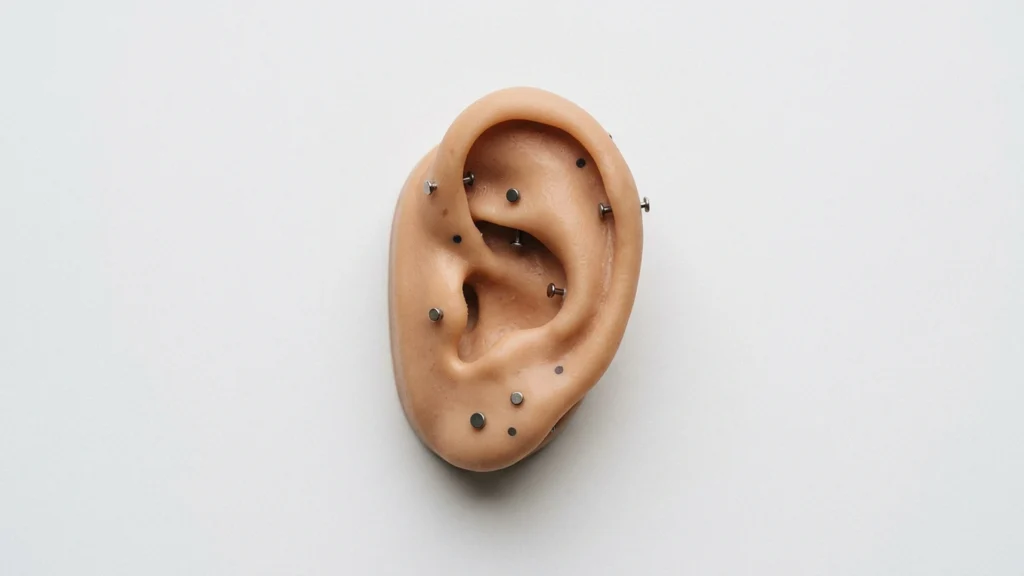
The first question almost everyone asks before they sit down is some version of “how bad is this going to hurt.” It is a fair question, and the internet answers it badly. You will find pain charts that give the same piercing a two on one site and an eight on another, which tells you these numbers are softer than they look. After placing thousands of piercings across every part of the ear, I want to give you a chart you can actually trust, along with the context that makes it useful: why some spots hurt more than others, what the pain actually feels like, and how long it lasts.
The truth is that pain is real but brief, and it is far more manageable than the anticipation. The needle is through in under a second. What people remember is not the piercing itself but the dull ache afterward, and that fades over hours to days. Use this chart to set your expectations and to choose placements wisely, not to scare yourself out of a piercing you want. We will rank every common ear placement from least to most painful, explain the anatomy behind the ranking, and cover the things that genuinely affect your experience, including the one piece of equipment that makes any piercing hurt more than it should.
How Piercing Pain Actually Works
Two factors drive how much an ear piercing hurts: tissue type and nerve density. The earlobe is soft, fatty tissue with relatively few nerve endings, which is why it is the gentlest spot on the ear. Cartilage is firm and dense, and pushing a needle through it takes more force, which registers as more intense pressure and a sharper pinch. The general background on ear piercing lays out the anatomy in neutral terms if you want the wider context. The denser and thicker the cartilage, and the more the placement involves passing through cartilage at an awkward angle, the more it tends to hurt.
It is worth being honest that any pain scale is subjective. Your pain tolerance, your anxiety level, how well you slept, whether you ate beforehand, and the skill of your piercer all move the number. Two people getting the same piercing on the same day can rate it differently. So treat the chart that follows as a reliable relative ranking, the order is dependable, even if your personal number lands a point higher or lower.
The Ear Piercing Pain Chart
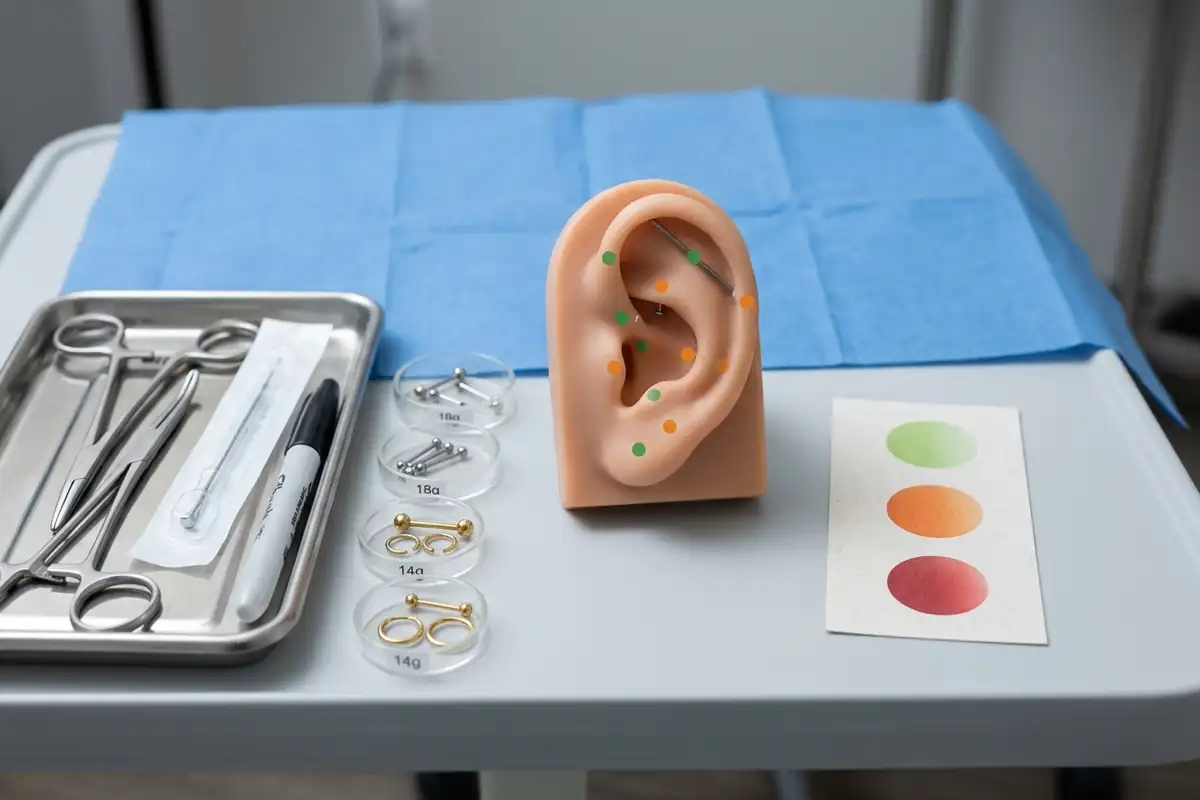
Here is the full ranking, from gentlest to most intense, on the familiar one-to-ten scale. The numbers reflect the consensus among piercers and the common client experience, not a clinical measurement.
| Placement | Pain (1-10) | Tissue / why |
|---|---|---|
| Earlobe | 2 to 3 | Soft, fatty tissue, few nerve endings |
| Helix (upper rim) | 4 to 5 | Firm cartilage; a pressured pinch |
| Tragus | 4 to 5 | Thicker flap; loud near the canal, manageable |
| Forward helix / flat | 4 to 5 | Cartilage on the upper ear |
| Daith / rook | 5 to 6 | Folded cartilage; sharper pressure |
| Conch | 5 to 6 | Dense central cartilage |
| Anti-tragus | 5 to 6 | Thick cartilage ridge above the lobe |
| Snug | 6 to 7 | Thick, tightly curved inner cartilage; slow to heal |
| Industrial | 6 to 7 | Two cartilage punctures in one sitting |
A few things stand out when you see them lined up. The lobe really is in a class of its own at the bottom. The big middle band, where most cartilage piercings sit, is closer together than people expect; the difference between a helix and a tragus is smaller than the anxiety around them suggests. And the top of the chart belongs to the placements that pass through thick cartilage twice or sit in dense, awkward tissue, namely the snug and the industrial.
Walking Through the Ranking
The Gentle End: Lobe and Standard Lobe Stacks
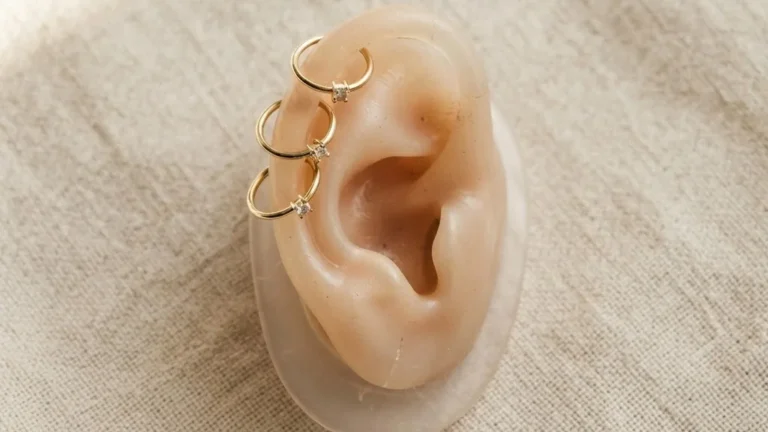
A standard lobe piercing is the one most people start with, and for good reason. It is soft tissue, quick, and most people describe it as a brief pinch that is over before they register it. Second and third lobe piercings feel essentially the same. If you are nervous about pain in general, the lobe is reassuring proof that piercings are more bark than bite.
The Moderate Middle: Most Cartilage Piercings
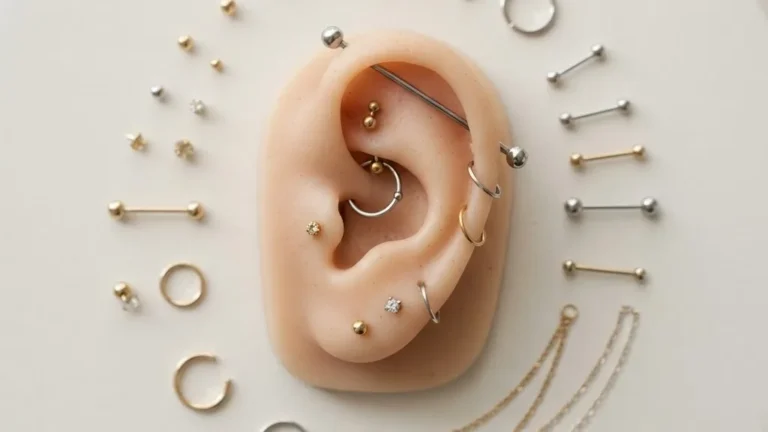
This is where the bulk of ear piercings live, generally in the four-to-six range. The helix on the upper outer rim is many people’s first cartilage piercing and is usually described as a firm pinch with more pressure than a lobe but nothing alarming. The tragus, that little flap in front of the ear canal, often surprises people by being very manageable, though the sound of the needle near your ear canal is louder than the sensation. The forward helix, flat, rook, daith, and conch all cluster in this same band. They differ more in healing difficulty than in the moment of piercing.
The Sharper End: Anti-Tragus, Rook, and Daith Angles
Some cartilage placements edge higher because of denser tissue or the angle the needle must take. The anti-tragus sits in thick cartilage, and the rook and daith pass through folded cartilage, which can make the pressure feel more pronounced even though they are still over in a second.
The Top of the Chart: Snug and Industrial
Two placements consistently top every honest pain ranking. The snug passes through a shelf of cartilage in the inner ear that is both thick and tightly curved, and it is widely considered one of the most intense ear piercings as well as one of the slowest and most demanding to heal. The industrial is technically two helix piercings connected by a single barbell, so you feel two punctures through firm cartilage in one sitting. Neither is unbearable, and plenty of people get them happily, but go in with realistic expectations.
What the Pain Actually Feels Like, and How Long It Lasts
People imagine a long, drawn-out pain. The reality is the opposite. The needle itself is a fast, sharp sensation lasting under a second, often described as a hard pinch or a quick pressure. Many clients say the anticipation was worse than the act. Immediately afterward you get a warm, pulsing ache, more noticeable in cartilage than the lobe, that settles substantially within the first hour and continues to fade over the next day or two.
Cartilage piercings stay tender longer than lobes, mostly because they are easy to bump and slow to heal. You will likely feel a dull soreness if you sleep on a fresh cartilage piercing or knock it. That tenderness is not a sign of trouble; it is the piercing reminding you to be gentle with it. Sharp, increasing pain days later, along with spreading redness, heat, or discharge, is a different matter and worth a check with your piercer or a clinician.
What Actually Affects Your Pain Level
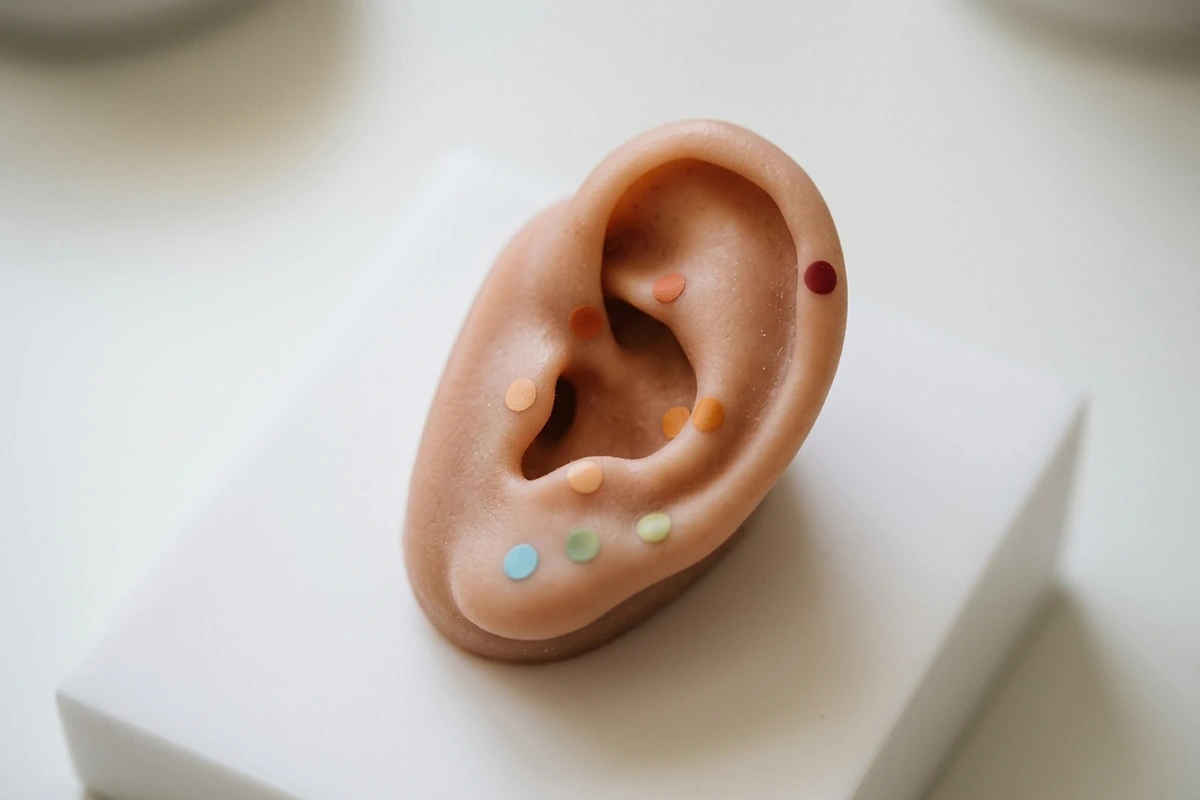
You have more influence over your experience than you might think.
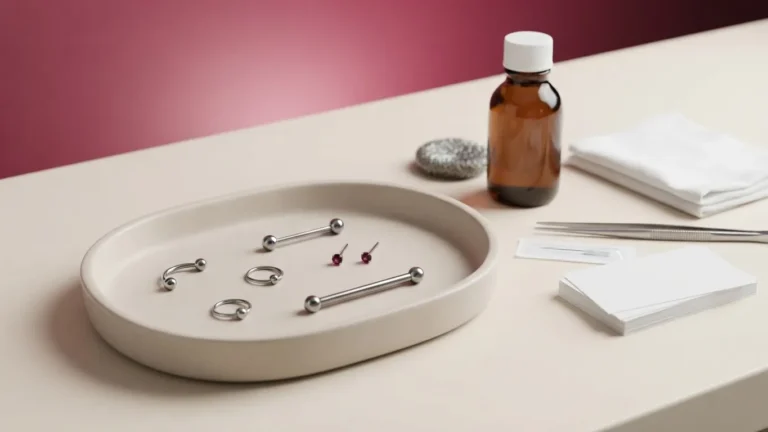
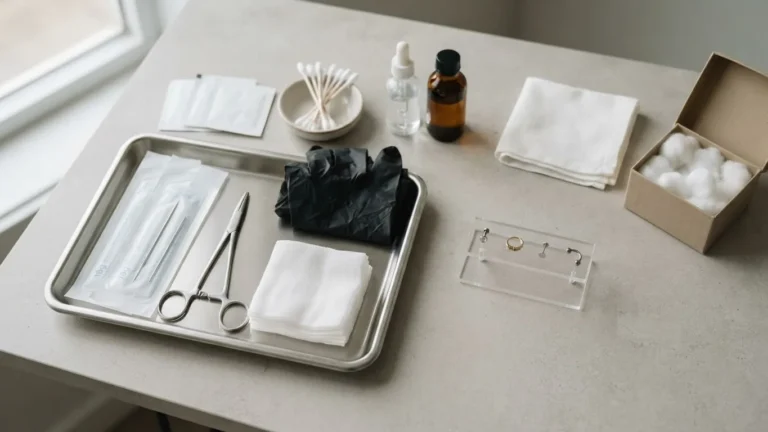
- Your piercer’s skill and tools matter most. A sharp, single-use needle in experienced hands is fast and clean. This is also the place to mention the single biggest pain mistake people make: getting cartilage pierced with a piercing gun. Guns are designed for soft lobes, they crush rather than cleanly pierce, they cannot be properly sterilized, and on cartilage they cause more pain, more trauma, and worse healing. The Association of Professional Piercers is unambiguous that guns have no business on cartilage, and a reputable studio uses needles only. If you want to vet a studio before you book, the APP’s guidance on picking a piercer is the checklist I would hand any first-timer.
- Eat and hydrate first. Going in on an empty stomach makes people lightheaded and amplifies the experience. A normal meal beforehand steadies you.
- Breathe. A good piercer counts you down and times the piercing to your exhale. Tensing up makes it worse; slow breathing genuinely helps.
- Skip the numbing creams for cartilage. Over-the-counter topical creams numb only the skin surface and do little for a needle passing through cartilage. Most piercers do not use them, and some will not pierce over freshly applied cream.
- Do not pierce when run down. Poor sleep, illness, and high stress all lower your pain threshold and can slow healing.
Can You Numb a Piercing Beforehand?
This comes up in nearly every consultation, so it deserves a straight answer. For ear cartilage, the honest truth is that the numbing options available to you are limited and mostly ineffective. Over-the-counter lidocaine creams sold for tattoos and piercings only numb the top layer of skin. A piercing needle passes through the full thickness of cartilage, well below where a topical cream reaches, so the cream does little for the sensation that actually registers. On top of that, many creams need to sit under occlusion for half an hour or more to do anything at all, and some piercers will not work over a freshly creamed ear because the residue interferes with marking and a clean technique.
There is no safe injectable numbing you can arrange yourself, and a piercing studio is not a medical office that administers local anesthetic. So the realistic strategy is not to chemically numb the ear but to manage your nervous system: eat beforehand, hydrate, get a decent night of sleep, and breathe slowly through the count. A skilled piercer pierces on your exhale precisely because a relaxed, well-oxygenated body reports less pain than a tense, breath-holding one. Some people find a dose of an over-the-counter pain reliever an hour beforehand takes the edge off the after-ache, though you should avoid aspirin and other blood thinners right before any piercing because they can increase bleeding. When in doubt, ask your piercer what they recommend rather than improvising.
The reassuring part is that none of this is really necessary. Because the needle is through in under a second, the thing people most want to numb is over almost before it begins. The energy is better spent choosing a great piercer and showing up rested than hunting for a cream that will not deliver.
It is also worth naming the role anxiety plays, because for a lot of people the fear is the real obstacle, not the nerve endings. The brain treats anticipated pain and actual pain through overlapping circuitry, which is why the wait in the chair so often feels worse than the piercing. A few things genuinely help here. Ask your piercer to talk you through each step so there are no surprises, and have them count you down so you are not bracing indefinitely. Bring a friend if a familiar face settles you. Look away from the needle if the sight winds you up, or watch closely if not knowing is worse for you; people split both ways and you know yourself best. None of this is about toughing it out. It is about giving your nervous system fewer reasons to escalate, so the brief, real sensation stays brief and real instead of being amplified by a half-hour of dread beforehand.
Choosing Placements With Pain in Mind
A pain chart is most useful as a planning tool. If you are new to piercings, starting with a lobe or a helix builds your confidence before you tackle anything higher on the chart. If you want a multi-piercing curated ear, you do not have to get everything at once; spacing placements out lets each heal and keeps any single session manageable. And if you have your heart set on a snug or an industrial, knowing in advance that it tops the chart and demands a long, patient heal lets you commit with eyes open rather than being caught off guard.
It also helps to weigh pain against healing difficulty, because they are not the same thing. A tragus is quick and only moderately uncomfortable to pierce, but it can be fussy to heal. A lobe is gentle on both counts. The full picture of every placement, including where each sits and what it asks of you afterward, is laid out in our guide to the types of ear piercings.
After the Piercing: Keeping Discomfort Low
How you care for a new piercing affects how much it bothers you in the days that follow. The routine professional piercers recommend is simple: clean with sterile saline two or three times a day, pat dry with clean disposable paper, and leave the jewelry alone. Do not twist or rotate it, do not sleep on it, and protect cartilage piercings from headphones and earbuds. Avoid pools and hot tubs until healed. This gentle approach keeps irritation, and therefore lingering discomfort, to a minimum. For the warning signs that mean you should seek medical advice rather than wait it out, MedlinePlus from the National Institutes of Health offers a clear reference on piercing care and complications.
One underrated factor in comfortable healing is simply feeling well, since rest, hydration, and steady meals support tissue repair. People navigating a tender first week often keep food easy and pleasant, whether that is a batch of comforting no-bake cookies for a small treat or a few make-ahead plant-based breakfasts so mornings are one less thing to think about. It will not change the chart, but feeling cared for makes the sore days lighter.
The bottom line on ear piercing pain: it is brief, it is rankable, and it is far more manageable than the worry that precedes it. Use the chart to plan smart, choose a needle-only studio, take care of yourself going in and coming out, and the pain becomes a footnote to a piercing you will enjoy for years.
Frequently Asked Questions
What is the most painful ear piercing?
The snug and the industrial consistently top honest pain rankings, generally in the six-to-seven range. The snug passes through a thick, tightly curved shelf of inner-ear cartilage and is also one of the slowest to heal. The industrial is two helix piercings joined by one barbell, so you feel two punctures through firm cartilage in a single sitting. Neither is unbearable, but both ask for realistic expectations.
What is the least painful ear piercing?
The standard earlobe piercing is the gentlest by a clear margin, usually rated around a two or three out of ten. The lobe is soft, fatty tissue with relatively few nerve endings, so most people experience only a quick pinch that is over almost instantly. Second and third lobe piercings feel essentially the same, which is why the lobe is the usual starting point.
How long does ear piercing pain last?
The sharp sensation of the needle lasts under a second. Afterward you get a warm, dull ache that settles substantially within the first hour and fades over the following day or two. Cartilage piercings stay tender longer than lobes, mainly because they are easy to bump and slow to heal, so expect some soreness if you knock or sleep on a fresh cartilage piercing.
Does a piercing gun hurt less than a needle?
No, the opposite is true for cartilage. Piercing guns are designed for soft lobes and crush tissue rather than cleanly piercing it, which causes more pain, more trauma, and worse healing on cartilage, and they cannot be properly sterilized. The Association of Professional Piercers recommends needles only, especially anywhere above the lobe. A sharp single-use needle in skilled hands is faster and less painful.