A helix piercing is a perforation through the upper rim of cartilage along the outer edge of your ear, and it is the single most popular cartilage piercing people ask for by name. It is easy to see why: the spot flatters almost every ear, it pairs well with lobe piercings you may already have, and you can wear it as a tiny stud, a snug hoop, or a row of several. This guide walks through where a helix sits, how a piercer does it, what the pain is really like, how long it takes to heal, the jewelry that suits it, and the day-to-day care that keeps it calm. None of it replaces a conversation with a reputable piercer, but it will get you ready to ask the right questions.
If you are deciding between a helix and another cartilage spot, or you already booked one and want to know what you are in for, the short version is this: it looks great, it hurts a moderate and brief amount, and it heals slowly but reliably when you leave it alone and rinse it with saline. The longer version, with the details that actually matter, is below.
What a helix piercing is and where it sits
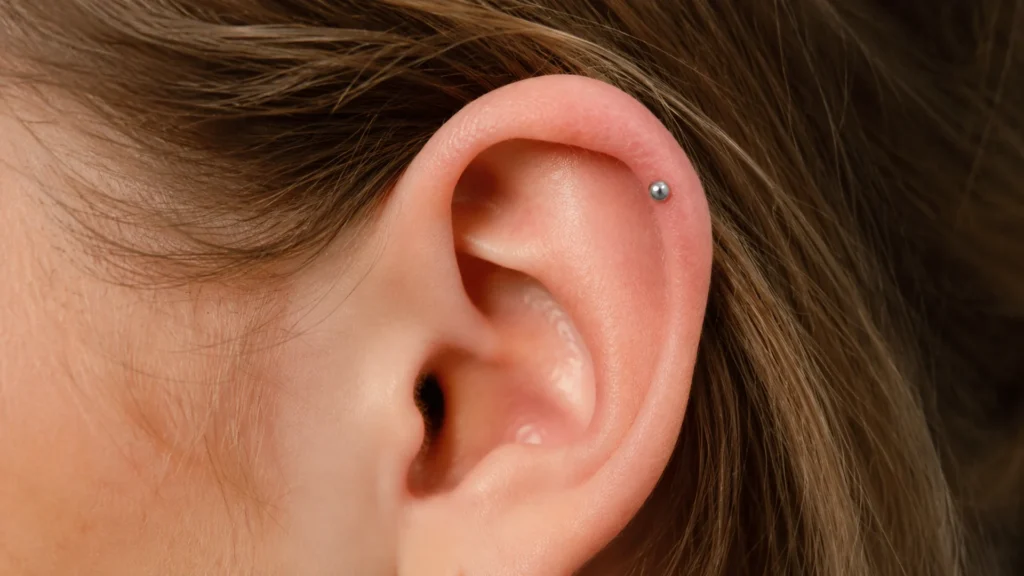
The helix is the curved outer rim of your ear, the band of cartilage that runs from just above your lobe up and around the top. A standard helix piercing goes through the upper portion of that rim, usually in the area many people simply call the “top of the ear.” Because the whole rim is fair game, the helix is really a family of placements rather than one fixed point, and that flexibility is a big part of its appeal.
Several named variations live on the same rim. A forward helix sits at the front of the ear, near where the rim meets your face, just above the tragus. A flat helix, sometimes just called a flat, sits on the broader flat plane of cartilage inside the upper rim rather than on the thin edge. A double or triple helix is two or three piercings spaced along the rim, often done to be worn as a cluster. A floating or hidden helix uses a flat-back stud placed so the jewelry seems to sit weightlessly on the rim with no visible ring. Each variation changes the look, the jewelry options, and slightly the healing experience, but they share the same cartilage and the same basic care.
Helix vs other cartilage piercings
People often weigh a helix against a tragus, conch, or rook. The helix is the most accessible of the group because the rim is easy to reach and easy to pierce cleanly, which is part of why it is so common. A tragus sits on the small flap in front of the ear canal and is fussier to care for. A conch goes through the large shell-shaped middle of the ear. A rook pierces the inner ridge above the daith. Compared with those, a helix is generally a gentler introduction to cartilage piercings, though every cartilage piercing demands more patience than a lobe.
How a helix piercing is done
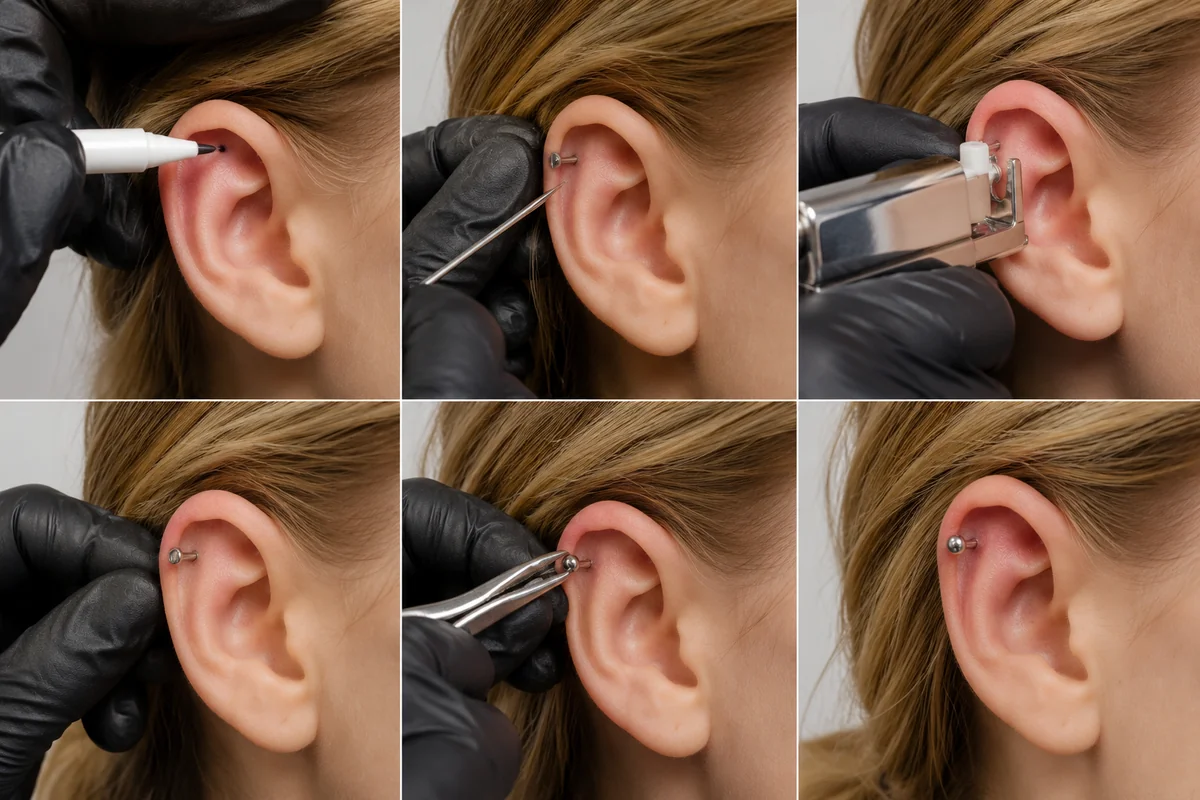
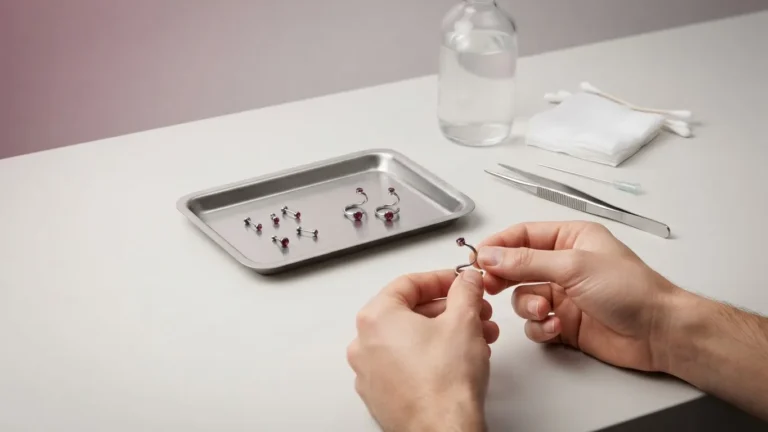
A professional piercing follows a predictable, sterile routine, and knowing it removes most of the nerves. Your piercer will discuss placement with you, mark the spot with a pen, and have you check it in a mirror before anything happens. Marking matters more on a helix than people expect, because the angle and exact position change how a future hoop will sit.
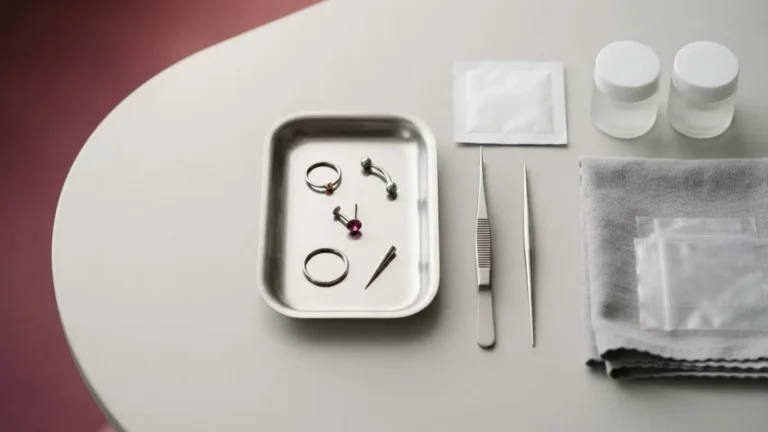
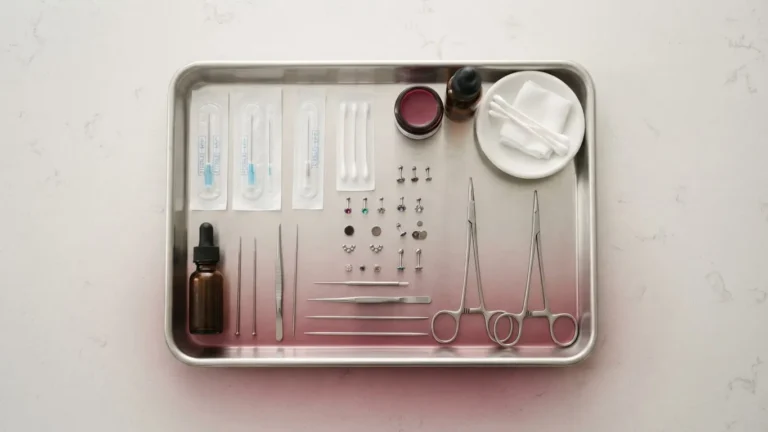
The piercing itself should be done with a sterile, single-use hollow needle, not a piercing gun. This is not a small preference. A needle removes a clean core of tissue and lets the piercer control the angle, while a gun uses blunt force to push jewelry through cartilage, which crushes tissue, raises the risk of complications, and cannot be fully sterilized between clients. The Association of Professional Piercers is explicit that guns should not be used on cartilage; you can read their stance in the APP aftercare and safety guidance. A good studio uses needles, an autoclave for sterilization, single-use supplies, and gloves, and is happy to show you all of it.
After the needle passes through, the piercer inserts your starter jewelry, usually a labret stud or a small barbell sized with a little extra length to allow for swelling. The whole act takes seconds. You may feel a sharp pinch and a brief wave of pressure, then it is done.
Does a helix piercing hurt? An honest answer
A helix piercing hurts, but most people are surprised by how brief and manageable it is. Cartilage has no give the way a fleshy lobe does, so the sensation is a firm, sharp pinch with some pressure rather than a soft poke. On a rough 1 to 10 scale, most people put the initial pierce around a 4 to 6, sharper than a lobe but well short of the worst piercings. The actual perforation lasts a second or two.
What surprises people more is the aftermath. A helix can throb for a few minutes right after, then feel tender, warm, and a little swollen for the first few days. Cartilage also tends to stay sensitive longer than a lobe during healing, so expect it to be touchy if you bump it for a couple of weeks. Pain tolerance is personal, and factors like how anxious you are, the time of day, and even how rested you are all nudge the experience. If you are weighing several ear piercings by how much they sting, our broader look at cartilage aftercare and what is normal covers the same calm-down period that follows any cartilage pierce.
Managing the discomfort
You rarely need more than an over-the-counter pain reliever for the first day or two, and many people skip even that. Cool compresses (a clean cold pack over a barrier, never ice directly on the piercing) can ease early swelling. Avoid aspirin right before your appointment if you are prone to bleeding, and talk to your own doctor about any medication questions. Numbing creams exist, but reputable piercers often skip them on cartilage because they can distort the tissue and the marked placement; ask your piercer what they prefer.
How long does a helix piercing take to heal?
This is where patience earns its keep. A helix is cartilage, and cartilage has limited blood flow, so it heals slowly from the inside out. Plan on a realistic 6 to 12 months for full healing, and sometimes a bit longer. The catch is that it will look and feel healed long before it actually is. The outside can settle and stop hurting within a few weeks while the channel inside is still fragile, which is exactly when people make the classic mistake of changing the jewelry too soon and setting themselves back.
The timeline below shows the rough arc. Everyone differs, so treat it as a guide, not a promise.
| Stage | What you will notice | What to do |
|---|---|---|
| Days 1 to 7 | Tenderness, warmth, mild swelling, some redness at the hole | Saline twice a day, hands off, sleep on the other side |
| Weeks 2 to 8 | Soreness fades, clear or pale-yellow crusties appear | Keep rinsing, resist changing jewelry, do not over-clean |
| Months 2 to 6 | Looks settled and stops hurting, but the channel is still healing | Stay consistent, avoid pressure and snags, no early swaps |
| Months 6 to 12 | Full internal healing for most people | Have your piercer confirm before treating it as low-maintenance |
If you want the deeper version of why ear cartilage runs on this slow clock, our walkthrough of sterile saline cleaning for cartilage covers the same slow timeline and the gentle routine that supports it.
Aftercare: keeping a helix piercing calm
Helix aftercare is gloriously simple, and simple is the point. The whole goal is to clean away debris without fighting your body’s healing process. The core routine is a sterile saline rinse, done gently and consistently, and very little else.
- Wash your hands with soap and water before touching anywhere near the piercing.
- Apply sterile saline (a 0.9 percent sodium-chloride wound wash) by spraying it on or holding saline-soaked gauze against the spot to soften any crust.
- Wipe gently to remove loosened crusties with clean gauze. Do not pick dry crust, and do not force anything.
- Do not rotate or twist the jewelry. The old “turn it” advice is outdated and drags bacteria through the channel.
- Pat dry with a clean disposable paper product, never a shared cloth towel.
Do this twice a day, morning and night, plus after anything sweaty. More is not better; over-cleaning strips and irritates the area. Skip alcohol, hydrogen peroxide, antibacterial ointments, tea tree oil, and harsh soaps, all of which damage healing tissue. Healthline’s overview of how to clean an ear piercing echoes the same saline-first, hands-off approach.
The bump question
An irritation bump near a helix is common and usually not an infection. It tends to be a small, flesh-toned or pink bump that appears in response to a snag, pressure, sleeping on it, or harsh products. Most calm down once you remove the cause and stick to plain saline. A keloid, by contrast, is a firmer, growing scar that can extend beyond the piercing and is more likely if you are prone to them; the American Academy of Dermatology explains the difference and treatment in its overview of keloids. If a bump grows, hardens, or will not settle, see your piercer, and a dermatologist for a suspected keloid.
Choosing helix jewelry
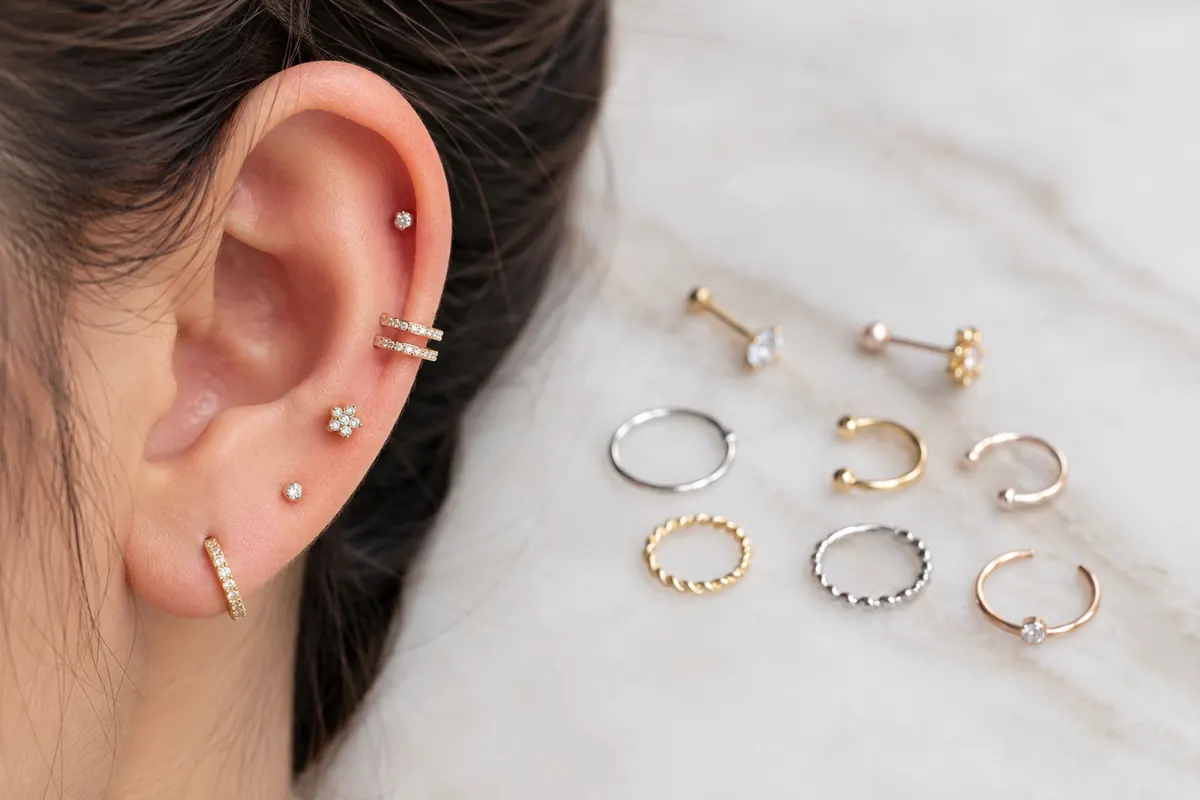
The jewelry you heal with matters as much as how you clean it. The wrong metal or shape stalls more helix piercings than poor cleaning does.
Material comes first. For a fresh piercing, stick to implant-grade titanium (ASTM F-136) or solid 14k or higher gold. Titanium is the default for good reason: it is biocompatible, light, and rarely reactive. Avoid cheap “surgical steel” of unknown grade, nickel-containing alloys, and anything plated, because plating wears and exposes reactive metal to the wound.
Shape comes next. Most piercers start a helix with a flat-back labret stud because the flat disc sits comfortably against the back of the ear and the small front gem stays out of trouble while you heal. Hoops and rings look fantastic on a helix, but a ring on a fresh piercing moves, snags, and pressures the channel, so save hoops for after it is healed and your piercer clears the swap.
| Jewelry style | Best for | Notes |
|---|---|---|
| Flat-back labret stud | Fresh piercings, everyday wear | The standard starter; comfortable and low-snag |
| Seamless or clicker hoop | Healed helix, statement look | Wait until fully healed; choose the right diameter |
| Curved or tiny barbell | Some flat and forward helix spots | Piercer chooses based on anatomy |
| Cluster or chain (multiple) | Double and triple helix | Plan placement together so pieces sit evenly |
When can you change helix jewelry?
Wait until your piercer confirms the piercing is healed, which for a helix usually means several months, not weeks. Changing too early can tear the channel, trigger a bump, or let it start to close. The safest first change is done by your piercer, especially for a hard-to-reach spot. If you change it yourself later, work with clean hands and clean jewelry, do it after a warm shower when tissue is supple, and never force a piece that will not slide in.
How much does a helix piercing cost?
In the United States, a single helix piercing typically runs somewhere in the rough range of 30 to 70 dollars for the piercing service, plus the cost of the jewelry, which is often quoted separately. Implant-grade titanium or gold quality jewelry can add anywhere from about 20 to 60 dollars or more, depending on the piece and any gemstones. A reputable studio with an autoclave, single-use needles, and a knowledgeable piercer is worth paying for; bargain piercings, especially mall guns, cost far more in complications. Tipping your piercer (commonly around 20 percent) is customary in the US. Prices vary widely by city and studio, so treat these as ballpark figures and ask for a full quote, jewelry included, when you book.
Risks and when to see a professional
Most helix piercings heal without drama, but cartilage carries real risks worth respecting. The main ones are irritation bumps, keloids in people prone to them, migration or rejection if the jewelry is wrong or under constant pressure, and infection. Because cartilage has poor blood supply, an infection there can be more stubborn and occasionally serious, so it is not something to wait out.
Normal early healing includes mild redness right at the hole, light swelling that settles, tenderness when touched, and clear or whitish crusties. Warning signs that call for action include spreading redness or heat across the ear, increasing swelling after the first week, throbbing or worsening pain, thick yellow or green pus, bleeding, or feeling unwell or feverish. If you see those, do not remove the jewelry yourself, since that can trap the infection; keep up gentle saline and get medical help. A trusted piercer can assess irritation, but a suspected infection is a medical issue. The Cleveland Clinic’s guide to an infected ear piercing explains when to see a doctor, and cartilage infections sometimes need prescription treatment.
Helix piercing tips that prevent setbacks
A few habits separate a smooth heal from a frustrating one. Sleep on the opposite side, or use a travel pillow with a hole so the piercing floats free; pressure at night is the most common cause of bumps. Switch from in-ear earbuds to over-ear headphones during healing, because buds press and harbor bacteria right where you do not want them. Be careful pulling shirts, hats, and masks over your head, since the rim catches easily. Keep hair and hair products off the fresh piercing, and rinse with saline after styling. Do not swim in pools, lakes, hot tubs, or the ocean while it is healing, since that water introduces bacteria your cartilage is slow to clear. And resist touching it, which is genuinely the hardest rule and the most important one.
Bottom line
A helix piercing earns its popularity. It suits almost every ear, gives you room to grow into hoops and clusters later, and asks for very little beyond patience and a saline rinse. Go to a reputable studio that uses needles and an autoclave, heal with implant-grade titanium or gold, clean twice a day with sterile saline, and leave the jewelry alone until your piercer says it is healed. Respect the cartilage timeline, watch for the genuine warning signs, and a helix will reward you with a piercing that looks good and stays trouble-free for years.
Frequently Asked Questions
How painful is a helix piercing?
Most people rate the initial pierce around a 4 to 6 out of 10: a sharp pinch and pressure that lasts a second or two, more than a lobe but far from the most painful piercings. It then feels tender and a little swollen for a few days. Pain tolerance varies, so your experience may differ.
How long does a helix piercing take to heal?
Plan on roughly 6 to 12 months for full healing, sometimes longer, because it is cartilage with limited blood flow. It often looks healed within weeks while the channel inside is still fragile, so keep up saline care and do not change the jewelry until your piercer confirms it is done.
What jewelry is best for a new helix piercing?
Start with an implant-grade titanium (ASTM F-136) or solid 14k or higher gold flat-back labret stud. The flat disc sits comfortably against the ear and resists snagging. Save hoops and rings for after the piercing is fully healed and your piercer clears the change.
Can I sleep on my helix piercing?
Avoid sleeping on it while it heals. Nighttime pressure is the most common cause of irritation bumps and can push the jewelry at an angle. Sleep on the opposite side or use a travel pillow with a hole so the ear floats free.
Why does my helix piercing have a bump?
A small flesh-toned or pink bump near a helix is usually irritation, not infection, often from snagging, pressure, or harsh products. It tends to calm once you remove the cause and stick to plain saline. If it grows, hardens, or will not settle, see your piercer, and a dermatologist for a suspected keloid.
Can I use a piercing gun for a helix?
No. Piercing guns crush cartilage with blunt force, raise the risk of complications, and cannot be fully sterilized between clients. The Association of Professional Piercers advises against guns on cartilage. Choose a studio that uses a sterile, single-use needle instead.