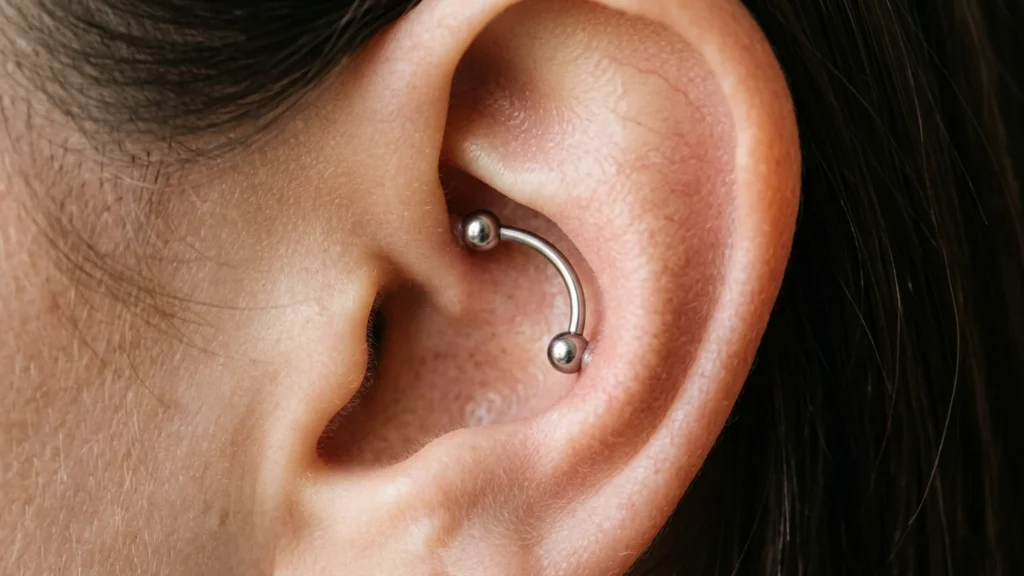
The snug is one of the most striking ear piercings you can ask for, and one of the most misunderstood. It sits where almost nothing else does, it heals on its own slow schedule, and it punishes shortcuts more than a lobe ever will. I have pierced a lot of ears, and the snug is the placement I talk people out of more than any other, not because it is a bad piercing, but because the people who end up loving theirs are the ones who knew exactly what they were signing up for.
This guide is meant to be that briefing. We will cover where a snug actually goes, whether your ear can take one, how much it hurts, how long it really heals, what jewelry and gauge belong in it, and how to care for it without sabotaging yourself. No fear-mongering, no sugar-coating, just the same conversation I would have with you across the counter before I ever picked up a needle.
What Is a Snug Piercing
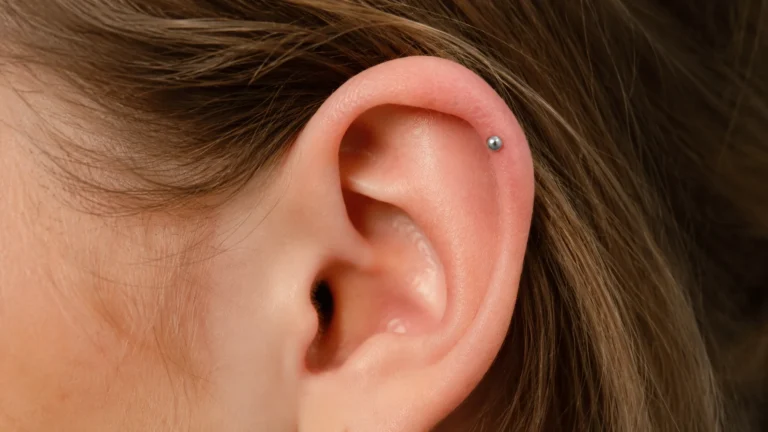
A snug is a horizontal cartilage piercing through the antihelix, the inner ridge of cartilage that runs roughly parallel to the outer rim of your ear. Picture the outer edge of the ear, the helix. Just inside it sits a raised fold, and the snug passes through the front face of that fold so that both decorative ends of the jewelry rest on the front of the ear, close together. That tight, low-profile look is exactly where the name comes from.
The snug is sometimes called an anti-helix piercing, and that is the more anatomically precise term. It is easy to confuse with its neighbors. A rook sits higher, through the folded ridge above it. A conch goes through the large flat bowl in the center of the ear. A snug is shallower and more horizontal than either, which is part of what makes it tricky. If you are still mapping out the ear, our overview of the types of ear piercings lays every placement side by side so you can see where the snug fits in the bigger picture.
Can Your Ear Even Take a Snug
This is the question most articles skip, and it is the most important one. The snug is the most anatomy-dependent piercing on the ear. It needs a well-defined antihelix ridge with enough depth and projection for the jewelry to sit on without crushing the tissue. Plenty of ears simply do not have that shelf in a pronounced enough form, and forcing a snug into a shallow antihelix is a recipe for migration, pressure, and a piercing that never settles.
A good piercer will look at your ear, mark it, and sometimes tell you no. That is not them being difficult. A snug placed in unsuitable anatomy is far more likely to reject than one placed in a deep, defined ridge. If your piercer suggests a rook, a flat, or a conch instead, listen, they are reading your ear, not their schedule. The Association of Professional Piercers stresses that placement should follow individual anatomy rather than a fixed template, and nowhere is that truer than the snug.
How Much Does a Snug Piercing Hurt
I will be straight with you: the snug is one of the more painful ear piercings, commonly landing around a 7 to 9 out of 10 for the moment of the piercing itself. There are two reasons. First, the antihelix is firm cartilage, not soft lobe tissue. Second, a snug passes through two walls of that cartilage in a single motion, so you feel it more than a piercing that only crosses one surface.
Most people describe a sharp, hot pinch in the moment, followed by a deep, throbbing ache that can hang around for several hours and flare again over the next few days. Swelling tends to be more pronounced than with many other cartilage piercings, and the area can stay tender to the touch for two to three weeks. Pain is personal, so treat any chart as a guide rather than a promise, but here is roughly how the snug compares to its neighbors.
| Ear piercing | Typical pain (1-10) | Why it sits there |
|---|---|---|
| Lobe | 2 to 3 | Soft fatty tissue, no cartilage to push through |
| Helix | 4 to 5 | Thin outer-rim cartilage, quick to pass |
| Tragus | 4 to 6 | Small dense nub, brief firm pressure |
| Conch | 5 to 7 | Thick inner-bowl cartilage |
| Rook | 6 to 8 | Folded cartilage ridge, two walls |
| Snug | 7 to 9 | Thin antihelix shelf, two cartilage walls in a single pass |
A skilled piercer using a sharp, single-use needle makes a real difference here. The piercing is fast, the technique is clean, and the worst of it is over in seconds. If you want to compare the sensation to something more familiar first, our breakdown of the helix piercing covers a gentler cartilage placement that many people start with.
Snug Piercing Healing Time
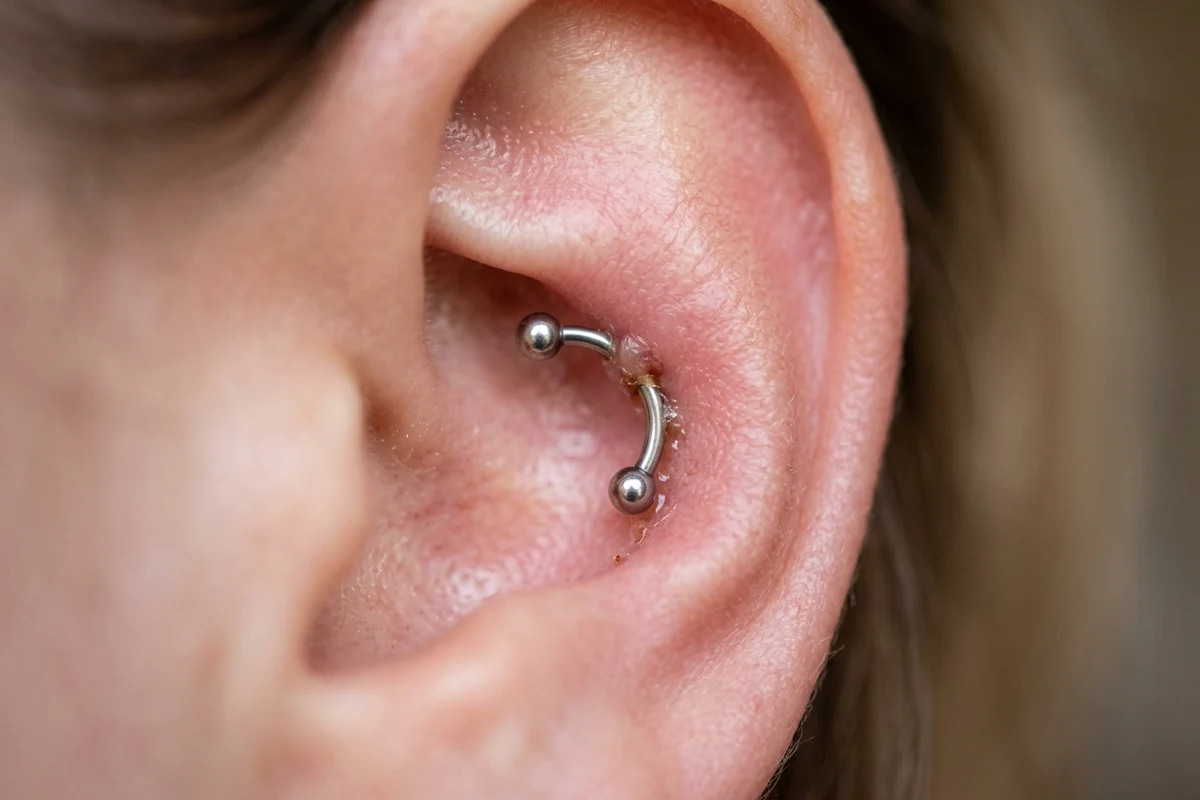
Here is where honesty matters most. A snug is not a fast healer. Realistic full healing runs roughly 8 to 16 months, and some people need longer. That is one of the longest timelines of any ear piercing, and it happens for two reasons: cartilage is poorly supplied with blood compared to soft tissue, so it repairs slowly, and the antihelix flexes more than you would think every time you sleep, wear glasses, or pull on a hoodie.
The looks-healed trap is real. A snug can appear calm on the surface at three or four months while the channel inside is still fragile. Piercings heal from the outside inward, a point the APP aftercare guidelines make clearly, so the external surface is the last thing you should trust. Changing jewelry early, sleeping on it, or rough handling during this window is the single most common reason a snug fails. If you want the broader picture of how cartilage timelines work across the ear, we go deeper in our guide to how long ear piercings take to heal.
| Stage | Rough timeline | What you can expect |
|---|---|---|
| Initial | Weeks 1 to 4 | Swelling, throbbing, redness, clear or whitish crust on the jewelry |
| Settling | Months 2 to 4 | Swelling eases, tenderness fades, the bar feels less tight |
| Consolidating | Months 5 to 9 | Looks calm but still fragile inside; no jewelry change yet |
| Downsize | Around months 3 to 6 | Piercer swaps the long starter bar for a shorter one once swelling is gone |
| Fully healed | Months 8 to 16 | Stable channel, safe to change jewelry yourself |
Best Jewelry for a Snug Piercing
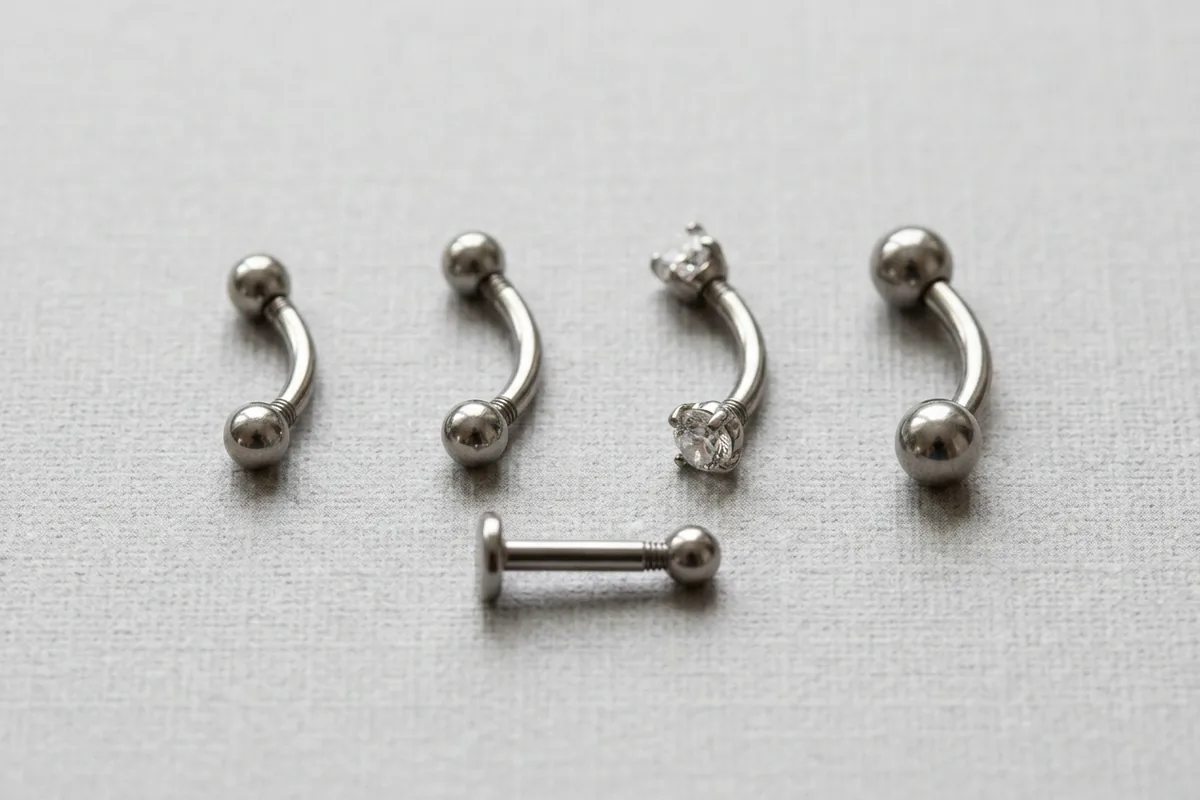
The shape of the antihelix dictates the jewelry. A snug is almost always started with a small curved barbell, because the curve follows the natural arc of the ridge and lets both ends sit comfortably on the front of the ear. Straight barbells fight the curve, and rings move far too much for a fresh channel.
Material matters more than style while you heal. For an initial piercing, the APP recommends inert, body-safe metals, and the safest default is implant-grade titanium (ASTM F-136). It is low in nickel, the most common contact allergen, and well tolerated by raw tissue. Solid 14k or 18k gold is another safe choice. Avoid mystery-metal fashion jewelry and anything plated, especially early on. The APP keeps a clear standard for jewelry for initial piercings that is worth reading before you buy anything.
| Jewelry | Best for | Notes |
|---|---|---|
| Curved barbell | The standard starter for almost every snug | Follows the antihelix curve, leaves room for swelling |
| Flat-back labret | Flatter ears, sleeping comfort | Smooth disc backing reduces snagging on pillows |
| Small captive hoop | Healed snugs only | Tempting early on but moves too much for a fresh channel |
| Decorative curved barbell | Personalizing a healed snug | Gems or charms once the piercing is settled |
Once your snug is fully healed and stable, you have room to play, decorative ends, gems, even a small fitted hoop if your anatomy allows. The same logic that governs healed cartilage jewelry elsewhere applies here; our notes on daith piercing jewelry cover sizing and style choices that translate well to a settled snug.
Gauge and Sizing, the Part Most Guides Skip
Gauge is jewelry thickness, and for a snug the standard is 16G, which is 1.2 mm. That thickness is sturdy enough to resist the constant micro-movement of the antihelix and reduces the leverage that drives migration in thinner bars. Starter bars are deliberately a little long, usually 8 to 10 mm, to leave room for the swelling that always follows a fresh cartilage piercing.
Downsizing is the step people forget. Once the initial swelling has gone down, usually somewhere between months three and six, your piercer should swap the long starter bar for a shorter one. A bar that stays too long catches on hair, pillows, and headphones, and that snagging is a major cause of irritation bumps. Booking that downsize appointment is not optional maintenance, it is part of healing.
| Spec | Common choice | Why |
|---|---|---|
| Gauge (thickness) | 16G (1.2 mm) | Standard for cartilage; thick enough to resist migration |
| Starter bar length | 8 to 10 mm | Extra room so swelling does not bury the ends |
| Downsized length | 6 to 8 mm | Snug fit once swelling is gone, less leverage and snagging |
| Material | Implant-grade titanium (ASTM F-136) | Low nickel, well tolerated by fresh tissue |
Snug Piercing Aftercare
Aftercare for a snug is simple, but it has to be consistent for a long time. The method is the same one the APP recommends for any piercing, and it is built around doing less, not more.
Clean it twice a day with a sterile saline wound wash whose only ingredient is 0.9 percent sodium chloride. Wash your hands first, spray or soak the piercing, and let it air dry or pat it with clean gauze, never a cloth towel that harbors bacteria and snags. Do not twist or rotate the jewelry, that old advice tears healing tissue. The APP specifically warns against mixing your own sea-salt solution, because homemade mixes are usually too strong and over-dry the wound. If you want a deeper walkthrough of getting the saline step right, we cover it in detail in our guide to saline solution for cartilage piercings.
What to avoid is just as important as what to do. Skip alcohol, hydrogen peroxide, antibacterial soaps, and ointments, all of which irritate or suffocate the wound. Keep the piercing out of pools, lakes, and hot tubs while it heals. And protect it while you sleep, which for a snug is the single hardest habit.
Sleeping With a Snug
The snug sits right where your ear meets the pillow, so side-sleeping on it is almost guaranteed to flare it up. Train yourself to sleep on the other side, or use a travel pillow with a hole in the center, or a dedicated piercing pillow, so the ear hangs free. A flat-back labret bar, with its smooth disc on the inside of the ear, snags far less on bedding than a ball-ended barbell and is worth asking about at your downsize.
Long, slow healers like the snug also reward you for taking care of the rest of your body. The early tender weeks are a good excuse to lean on easy, comforting meals that do not have you clenching your jaw or fussing in the kitchen for an hour, think a pot of creamy soups you can make ahead, or a simple bowl of healthy pasta. Good rest and steady nutrition genuinely help cartilage do its slow work.
Bumps, Rejection, and When to Worry
Snugs are prone to two things people often confuse: irritation bumps and true rejection. An irritation bump is a small, fluid-feeling or firm bump that shows up next to the piercing, usually from snagging, sleeping on it, a too-long bar, or harsh products. These are common and usually settle once the cause is removed and aftercare is back on track. They are not the same as a keloid, which is a raised, growing scar that extends beyond the original wound; you can read how clinicians describe those in the MedlinePlus entry on keloid scars.
Rejection and migration are different. Migration is when the body slowly pushes the jewelry toward the surface and the piercing drifts from where it started. Full rejection is when it pushes the jewelry all the way out. The snug, because it sits in a thin, mobile shelf of cartilage, rejects more often than sturdier placements. Warning signs include the jewelry sitting visibly shallower, the skin over the bar thinning or going shiny, the holes widening, or the ends drifting apart. If you see those, see your piercer promptly, removing the jewelry early can save the piercing or at least limit scarring.
Know the line between healing and infection, too. Some swelling, tenderness, and whitish crust is normal. Spreading redness, hot skin, significant green or yellow pus, throbbing pain that worsens after the first week, or fever is not, and warrants a doctor, not just your piercer. A clinical review of body piercing complications in the National Library of Medicine notes that cartilage piercings carry a higher infection and complication rate than lobes, which is exactly why clean technique and patient aftercare matter so much with a snug.
How Much Does a Snug Piercing Cost
In the United States, a snug usually runs about 40 to 80 dollars for the piercing service at a reputable studio, plus the price of the jewelry, which for quality implant-grade titanium or solid gold can range from roughly 20 to well over 100 dollars depending on the piece. Many studios price the service and the jewelry separately, so ask up front.
Do not shop on price alone. A snug is a demanding piercing that depends entirely on skilled placement and sterile technique. Pay for a piercer who uses single-use needles, autoclave-sterilized tools, and implant-grade jewelry, and who is willing to assess your anatomy and say no if your ear is not suited. The cheapest snug is the one that has to be redone, or the one that rejects. Budget for the downsize appointment too, since it is part of getting a clean, lasting result.
Frequently Asked Questions
Is a snug piercing the most painful ear piercing?
It is among the most painful, usually rated around 7 to 9 out of 10, because it passes through two walls of firm antihelix cartilage in one motion. Pain tolerance varies, and a skilled piercer with a sharp single-use needle keeps the moment brief, but most people rank the snug above the lobe, helix, and tragus and on par with or above the rook.
How long does a snug piercing take to fully heal?
Plan for roughly 8 to 16 months, and sometimes longer. Cartilage heals slowly because it has a limited blood supply, and the antihelix flexes constantly. A snug can look healed on the surface months before the channel inside is stable, so do not change the jewelry yourself until your piercer confirms it is fully healed.
What gauge and jewelry is best for a snug piercing?
The standard is a 16G (1.2 mm) curved barbell in implant-grade titanium, started a little long at 8 to 10 mm to allow for swelling, then downsized to 6 to 8 mm once the swelling settles. The curve follows the antihelix, titanium is low-allergen, and downsizing reduces the snagging that causes irritation bumps.
Why do snug piercings reject so often?
The snug sits in a thin, mobile shelf of cartilage, so the body finds it easier to push the jewelry toward the surface than it does with deeper placements. Poor anatomy, a too-long or too-thin bar, sleeping on it, and constant snagging all raise the odds. Choosing a piercer who assesses your anatomy honestly and downsizing on schedule are the best ways to lower the risk.