Daith piercing jewelry has to do something tricky: sit inside the tight inner fold of cartilage above your ear canal, hug that curve comfortably, and look good doing it. Pick the wrong style, metal, or size and a daith that would have healed cleanly turns cranky and slow. This guide walks through every jewelry option that suits a daith (clicker hoops, seamless rings, captive bead rings, and curved barbells), the materials that are safe for healing cartilage, the gauge and diameter you actually need, and exactly when it is safe to swap your starter piece for something prettier. None of it replaces your piercer’s eye for your specific anatomy, but it will let you shop and ask questions like someone who knows the difference.
The daith is a snug, curved spot, so jewelry choice matters more here than on an open placement like a lobe. The short version: heal with an implant-grade titanium hoop sized to your ear, leave it alone for the full cartilage healing window, and save the elaborate clickers for after your piercer says you are healed. The detailed version, with the why behind each call, is below.
Where the daith sits and why jewelry choice matters
The daith is the small fold of cartilage just above the opening of your ear canal, the ridge that curls inward at the start of your inner ear. Because it is tucked into a tight curve, the jewelry has to follow that curve without pressing on it. A piece that is too big swings and snags; one that is too small pinches and pressures the channel; one made of the wrong metal irritates the wound for months. That is a lot riding on a small ring, which is why piercers are picky about daith jewelry in a way they are not about a forgiving lobe.
It also means the daith is a poor place to cut corners on quality. A cheap, ill-fitting ring on a daith does not just look off; it actively slows healing. Get the style, material, and size right and the piercing mostly takes care of itself with a simple saline routine.
The best jewelry styles for a daith
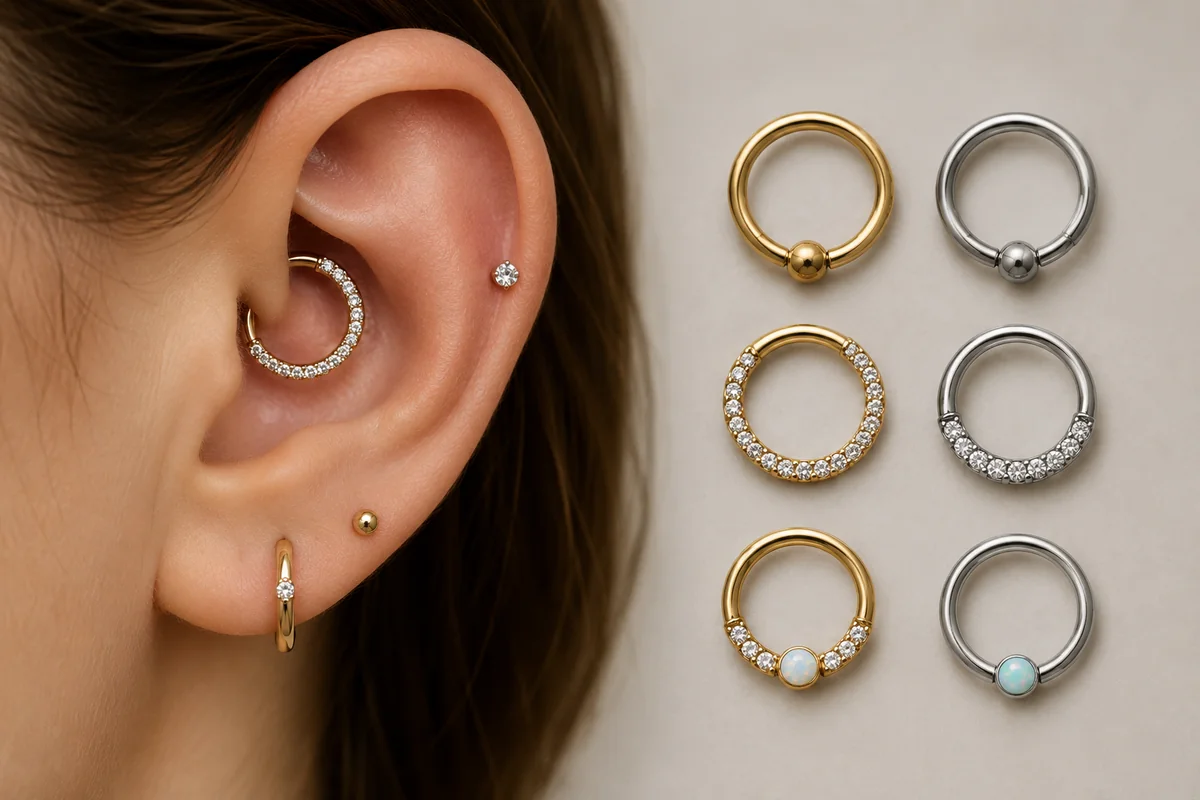
Almost all daith jewelry is some form of ring, because a ring follows the inner curve of the fold. The differences come down to how the ring opens, how it sits, and how easy it is to live with while you heal.
Clicker hoops
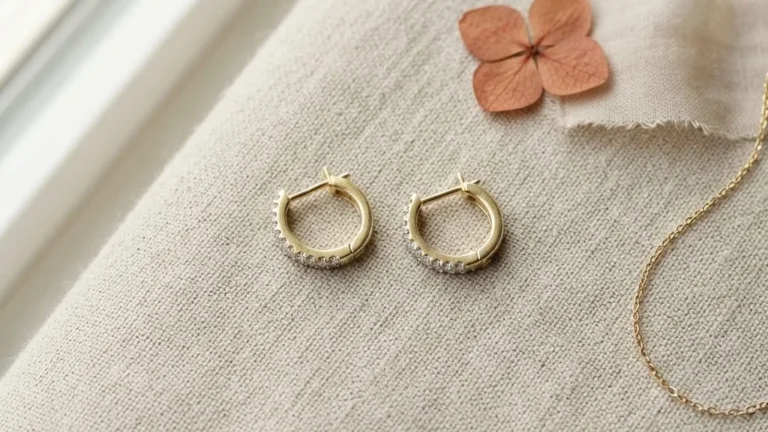
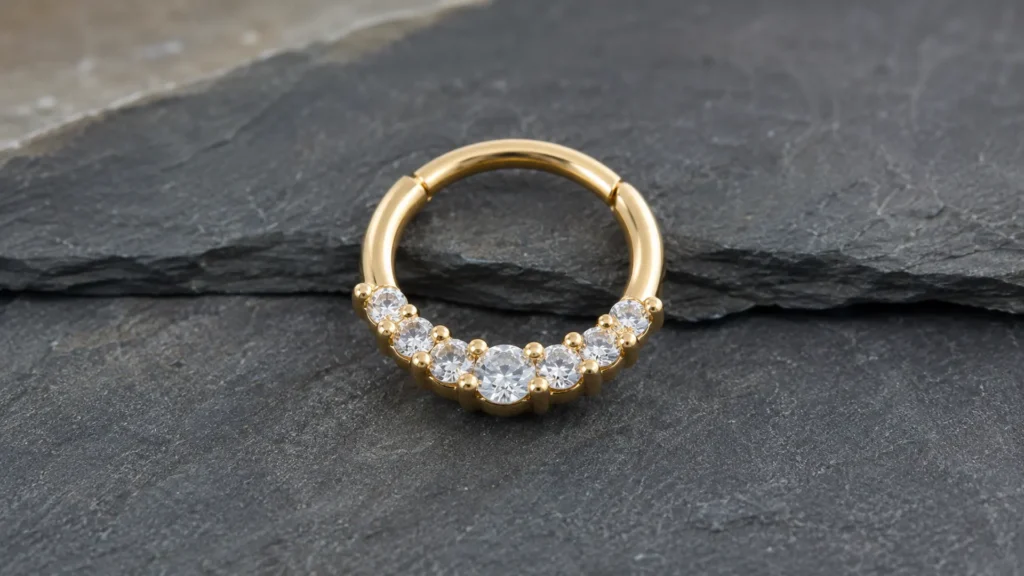
A clicker is a hinged ring with a segment that clicks open and shut, and it is the crowd favorite for a daith once it is healed. The hinge makes it easy to put in and take out without wrestling tiny parts, and clickers come in beautiful decorative fronts, from plain bands to gem-set arcs. The catch is that elaborate clickers have more surface and detail for debris to collect on, so most piercers do not heal a daith in a fancy clicker. They are a reward for a healed piercing, not a starter.
Seamless and segment hoops
A seamless ring is a smooth circle with a tiny gap you gently open and close, and a segment ring is similar with a removable piece. Both give a clean, minimal look with very little surface for debris, which makes a smooth seamless or segment hoop a sensible healing option. The trade-off is that opening and closing them without the right tools can be fiddly, so changes are best left to your piercer.
Captive bead rings
A captive bead ring (CBR) is a circle held closed by a small bead that sits in tension between the two ends. It is a classic, sturdy look, and the bead adds a little decorative interest. CBRs can be slightly trickier to insert than a clicker, but they are a solid, low-profile choice.
Curved barbells
A curved barbell is a curved bar with a bead on each end, and it conforms neatly to the daith curve while showing two small beads rather than a full ring. Not every anatomy suits one, but for some daiths a curved barbell is a comfortable, understated alternative to a hoop. Your piercer will tell you whether your fold takes a barbell well.
Healing jewelry vs healed jewelry
This is the single most useful distinction to hold onto. The jewelry you heal in and the jewelry you eventually show off are often not the same piece, and that is normal. While a daith heals, you want the simplest, smoothest, most biocompatible ring that fits, because every gem setting and seam is a place for debris to gather and for the channel to get irritated. Once your piercer confirms the daith is fully healed, the door opens to detailed clickers, gem arcs, and the pieces that made you want a daith in the first place.
| Style | Best for | Notes |
|---|---|---|
| Seamless or segment hoop | Healing and everyday wear | Smooth, minimal surface, easy to keep clean |
| Captive bead ring | Healing or healed | Sturdy classic; slightly fiddly to insert |
| Clicker hoop | Healed daith, decorative looks | Easy hinge, but detailed fronts collect debris |
| Curved barbell | Some anatomies, understated look | Only if your piercer says your fold suits one |
Why your anatomy decides the jewelry, not a catalog
Here is the part online shopping guides gloss over: the right daith jewelry is the piece that fits your particular fold, and no website can measure that for you. Daith anatomy varies a lot. Some folds are deep and tightly curled, some are shallow and open, and the angle of the piercing changes how a ring or barbell sits. That is why two people can love completely different styles for the same placement, and why a ring that looks perfect in a photo can swing, pinch, or sit crooked on your ear. A good piercer fits the starter jewelry to your fold and the small amount of swelling to expect, then downsizes you to a snugger piece once that swelling settles. Trust that process over any size you read online, and you will avoid the most common cause of a fussy daith: jewelry that simply does not fit. The same hands-off patience that fitting rewards is the patience our guide to gentle saline aftercare asks for during the months a daith takes to settle.
Materials: what is safe for a healing daith
Material is not a style choice; it is a safety choice. For a fresh or healing daith, use implant-grade titanium (ASTM F-136) or solid 14k or higher gold, full stop. Titanium is the gold standard for healing cartilage because it is biocompatible, light, and rarely reactive, and its smooth surface is easy to keep clean. Solid gold is a fine alternative as long as it is genuinely solid and not plated.
What to avoid in a fresh daith: cheap “surgical steel” of unknown grade, nickel-containing alloys, and anything plated. Plating wears and exposes reactive metal to the wound, and nickel is a common allergen that can cause a reaction looking a lot like a piercing problem when the real culprit is the metal. The Association of Professional Piercers spells out safe materials and aftercare in its aftercare and jewelry guidance, and it is worth reading before you buy anything for a daith. If a shop cannot tell you the exact grade of metal, treat that as a reason to shop elsewhere for a fresh piercing.
Gauge and size: getting the fit right
A daith is most commonly pierced at 16 gauge, which is the thickness of the bar or ring. Some piercers use 18 gauge or 14 gauge depending on your anatomy and the jewelry, so the safest move is to match whatever gauge your piercer used; putting a thinner ring in a thicker channel (or forcing a thicker one) causes problems.
Diameter is the other key number. For a daith hoop, a diameter around 8 mm to 10 mm fits most ears, with your exact fold dictating the right size. A ring that is too large swings and catches; too small pinches. For a curved barbell, a post length around 6 mm to 8 mm is typical. These are starting points, not prescriptions, because daith anatomy varies a lot from ear to ear, which is exactly why your piercer measures and fits you rather than letting you guess online.
| Measurement | Typical range | What it controls |
|---|---|---|
| Gauge (thickness) | 16g (sometimes 18g or 14g) | Bar or ring thickness; match your piercer |
| Hoop diameter | 8 mm to 10 mm | How the ring sits in the fold |
| Curved barbell length | 6 mm to 8 mm | Fit of a barbell to your curve |
When can you change daith jewelry?
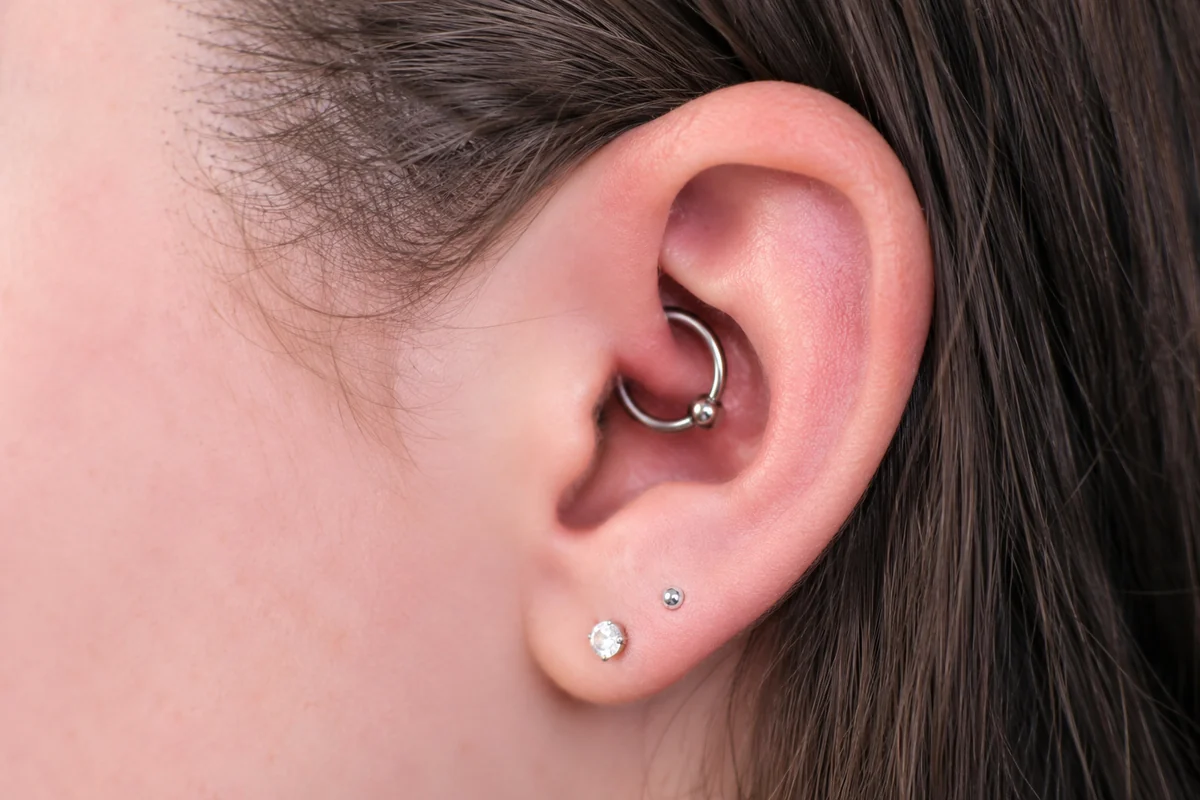
Wait until your piercer confirms the daith is fully healed, which for cartilage usually means several months, not weeks. A daith heals on the slow cartilage clock, often 6 to 12 months, because cartilage has limited blood flow. Changing too early can tear the channel, trigger an irritation bump, or even let it start to close. The temptation to swap in a pretty clicker hits early and is the most common cause of a setback.
When the time comes, the safest first change is done by your piercer, especially because the daith is awkward to reach and the jewelry can be fiddly to open. If you change it yourself later, work with clean hands and clean jewelry, do it after a warm shower when tissue is supple, and never force a piece that will not seat easily. If it resists, stop and see your piercer rather than pushing. The same gentle, consistent care that gets a daith to the finish line is laid out in our saline cleaning routine for cartilage piercings, which applies just as well to a daith as to a tragus.
Caring for the jewelry and the piercing
Good daith jewelry only helps if you treat it gently while you heal. Clean the piercing twice a day with sterile saline (a 0.9 percent sodium-chloride wound wash), sprayed on or applied with saline-soaked gauze, then pat dry with clean disposable paper. Do not rotate or twist the ring, do not over-clean, and skip alcohol, hydrogen peroxide, and antibacterial ointments, all of which damage healing tissue and can dull or corrode some finishes. Keep in-ear headphones out during healing, since they press right on the daith, and be careful with anything that snags the ring. The smoother and simpler your healing jewelry, the easier all of this is, which is the whole argument for a plain hoop first and the gem-set clicker later.
Risks and when to see a professional
Most daith piercings heal without drama when the jewelry is right, but cartilage carries real risks. Ill-fitting or reactive jewelry can cause irritation bumps, and people prone to keloids may develop one; the American Academy of Dermatology explains the difference in its overview of keloids. A small irritation bump often calms once you fix the cause (a better-fitting or better-metal ring) and stick to plain saline. Infection is the more serious risk, and because cartilage has poor blood supply, a daith infection can be stubborn.
Normal early healing means mild redness at the hole, light swelling that settles, tenderness, and clear or whitish crusties. Warning signs that call for action include spreading redness or heat, increasing swelling after the first week, throbbing or worsening pain, thick yellow or green pus, bleeding, or feeling feverish. If you see those, do not remove the jewelry yourself, since that can trap an infection; keep up gentle saline and get help. A piercer handles irritation and bad fit, but a suspected infection is a medical issue. The Cleveland Clinic’s guide to an infected ear piercing explains when to see a doctor, and cartilage infections sometimes need prescription treatment.
Styling a healed daith
Once your piercer clears the daith as fully healed, the fun part begins, because this is the placement people pick precisely for its jewelry. A healed daith takes detailed clicker hoops with gem-set fronts, smooth heart-shaped or arrow-shaped clickers that follow the curve, and captive bead rings with a colored or crystal bead. Because the daith sits at the front of the inner ear, the front of the jewelry is what shows, so clickers with a decorative face read beautifully. You can mix metals across a curated ear now that everything is healed, pairing a gold daith clicker with titanium studs elsewhere, though staying within one tone often looks more deliberate.
A practical tip for swapping styles: build a small collection of pieces in the same gauge and diameter your piercer fitted, so any of them drops in without forcing. Keep the original healing hoop as a backup, since it is the easiest piece to reinsert if you ever need to leave the jewelry out briefly and put something back in quickly. And keep cleaning gently even after healing; an occasional saline rinse after workouts or travel keeps a healed daith comfortable and keeps detailed clickers free of buildup.
Bottom line
Daith piercing jewelry is a fit problem before it is a fashion problem. Heal in a smooth, implant-grade titanium or solid gold hoop sized to your fold, usually 16 gauge at an 8 mm to 10 mm diameter, and leave it alone through the full cartilage healing window. Once your piercer confirms it is healed, the beautiful clickers, gem arcs, and captive bead rings are yours to enjoy and swap as you like. Buy quality, match your piercer’s gauge, clean gently with saline, and let your piercer handle the early changes, and your daith will reward you with a comfortable piercing that shows off whatever jewelry you fell for.
Frequently Asked Questions
What is the best jewelry for a new daith piercing?
For a healing daith, the best choice is a smooth, implant-grade titanium (ASTM F-136) or solid gold seamless, segment, or captive bead ring sized to your fold. Smooth surfaces collect less debris and irritate less. Save detailed clicker hoops and gem-set pieces for after your piercer confirms the daith is fully healed.
What gauge and size is a daith piercing?
A daith is most often pierced at 16 gauge, though some piercers use 18 or 14 gauge depending on anatomy. A daith hoop diameter around 8 mm to 10 mm fits most ears, and a curved barbell post is typically 6 mm to 8 mm. Match whatever gauge and size your piercer fitted you with.
Can I wear a clicker hoop in a healing daith?
It is better to wait. Decorative clicker hoops have more surface and detail where debris collects, which can irritate a healing daith. Most piercers heal a daith in a smooth, simple hoop and reserve clickers for once the piercing is fully healed and cleared.
What metal is safest for a daith piercing?
Implant-grade titanium (ASTM F-136) is the safest for a healing daith because it is biocompatible, light, and smooth. Solid 14k or higher gold is a good alternative if it is genuinely solid and not plated. Avoid unknown-grade “surgical steel,” nickel alloys, and plated jewelry in a fresh piercing.
When can I change my daith jewelry?
Wait until your piercer confirms the daith is fully healed, usually several months, since cartilage heals slowly (often 6 to 12 months). Changing too early can tear the channel, cause a bump, or let it close. The safest first change is done by your piercer.
Why does my daith jewelry seem to cause a bump?
A bump near a daith is often a reaction to ill-fitting or low-quality jewelry, pressure, or harsh products rather than infection. Switching to a better-fitting, implant-grade hoop and sticking to plain saline often settles it. If it grows or hardens, see your piercer, and a dermatologist for a suspected keloid.