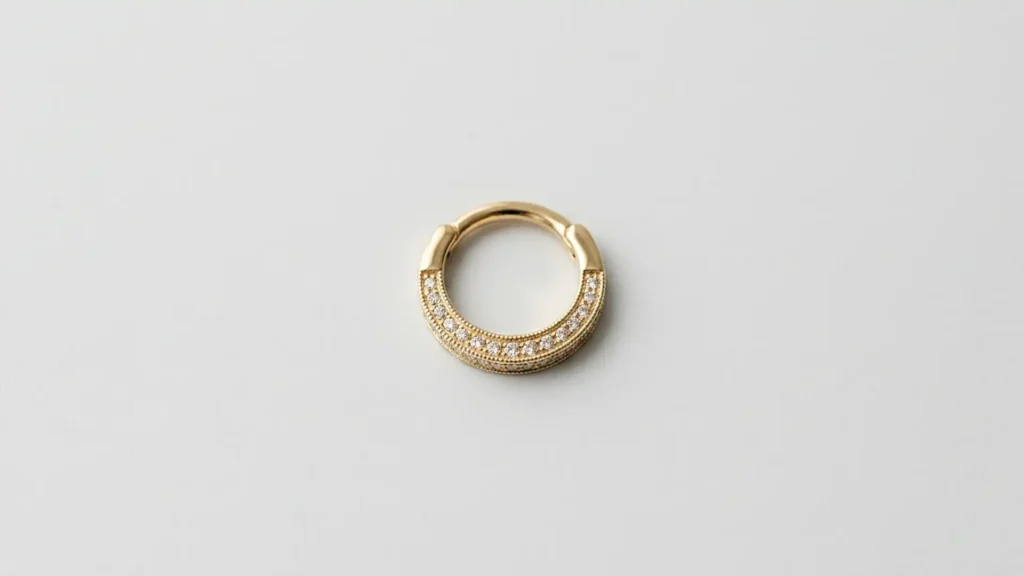
The conch is one of the most satisfying piercings to dress, and also one of the easiest to get wrong if you shop by picture instead of by fit. I see it constantly: someone falls for a big statement hoop they saw online, orders it in the wrong size, and ends up with jewelry that either swallows their ear or sits at an awkward angle. The conch is a broad, flat canvas in the middle of your ear, and that openness is exactly why jewelry choice matters so much. The right piece looks effortless. The wrong one looks like an afterthought.
This guide is the jewelry conversation I have with clients sitting in my chair, written out in full. We will cover what the conch actually is and the difference between an inner and outer conch, the jewelry styles that suit each one, the sizing details that trip people up online, the materials worth your money, and the timing question that causes the most trouble, namely when you can finally swap your healing stud for the hoop you really want. By the end you will be able to shop for conch jewelry like someone who knows what they are doing.
What the Conch Is, and Why Inner Versus Outer Matters
The conch is the large, shell-shaped expanse of cartilage in the middle of your ear; its name comes from the conch shell it resembles. Because it is a wide area, it actually supports two distinct piercings, and knowing which one you have or want determines your jewelry.
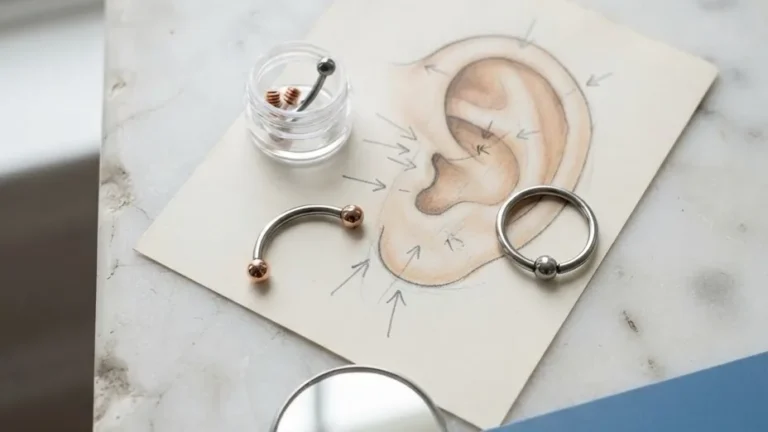
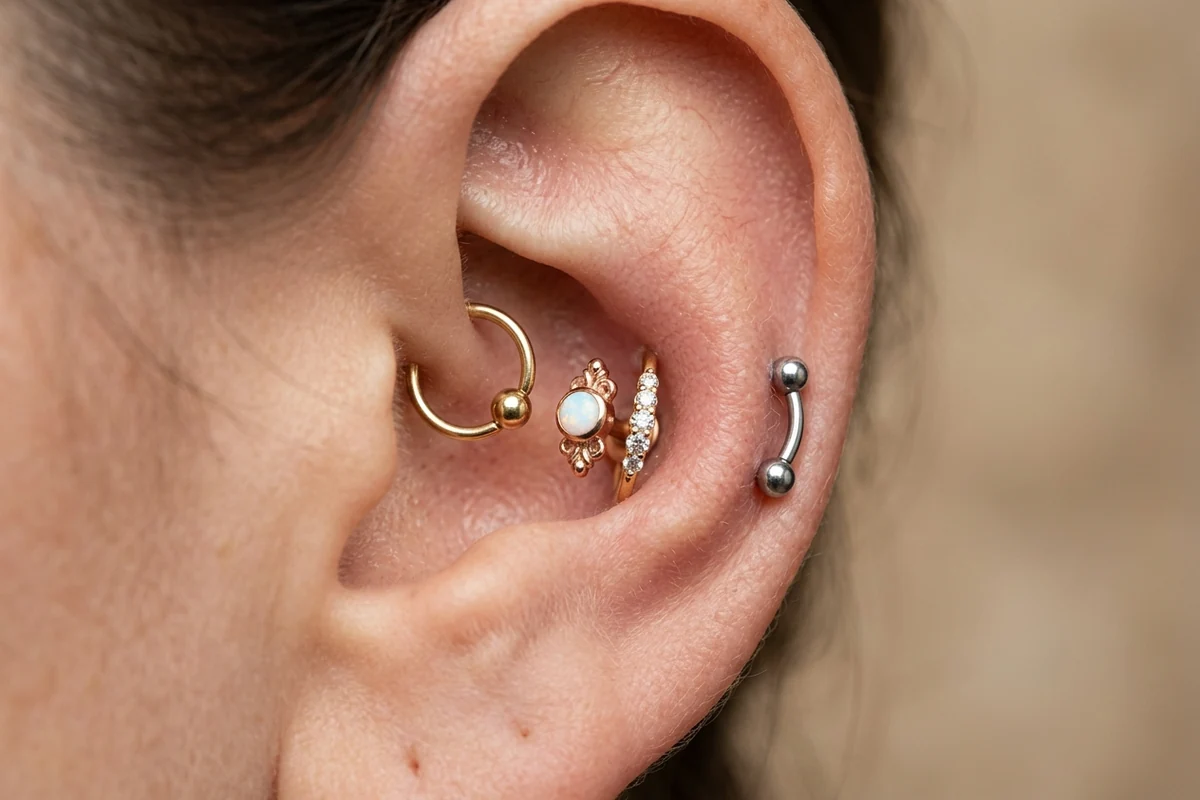
The inner conch sits in the deeper, central bowl of the ear, closer to the ear canal. It is the classic spot for a single statement stud or a large hoop that wraps the outer rim of the ear. The outer conch sits higher and flatter, toward the upper edge of the cartilage, and tends to suit a flat-back stud beautifully. Some people get both, or combine a conch with helix and lobe pieces for a curated ear.
Because the conch is solid cartilage, it heals on the slower cartilage timeline, generally several months to look settled and up to a year for full maturation. That healing reality shapes which jewelry is safe at which stage, which is the thread running through this entire guide. If you want to see how the conch sits relative to every other placement, our overview of the types of ear piercings maps the whole ear.
The Main Jewelry Styles for a Conch
Flat-Back Studs (Labret Studs)
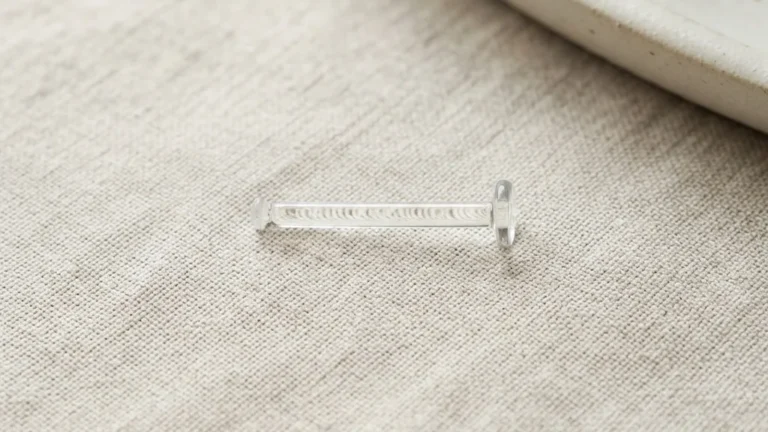
A flat-back stud is the single best choice for a healing conch, and a gorgeous choice for a healed one too. It has a smooth flat disc that rests against the back of your ear and a decorative front, which might be a plain bead, a gem, or a small cluster. The flat back is the key feature: it sits comfortably against the skin, does not snag, and minimizes irritation. For a fresh conch, this is almost always what your piercer will start you in. As a long-term piece, a flat-back stud reads as understated and elegant, the quiet luxury of ear jewelry.
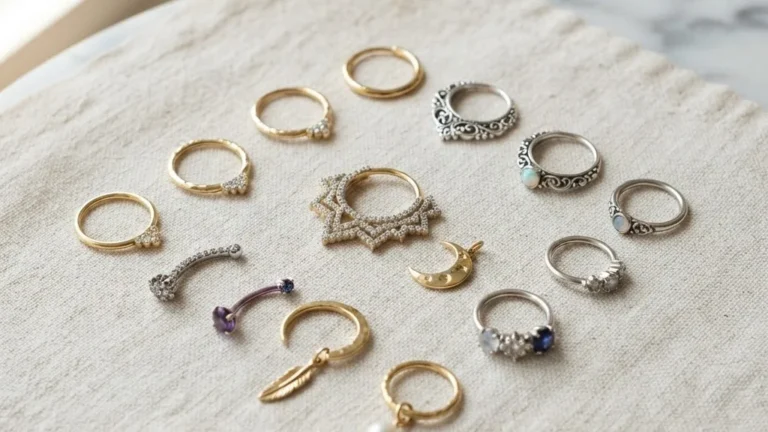
Hoops and Rings
The big conch hoop, a ring large enough to wrap around the outer edge of the ear, is the look that sends most people to the piercer in the first place. It is striking and unmistakable. The honest caveat is that a hoop is a healed-piercing piece. A ring moves with every turn of your head and catches on hair, masks, and pillows, and that movement is exactly what a fresh cartilage piercing cannot tolerate. Seamless rings, clickers, and captive bead rings all work on a conch, with clickers being the easiest to put in and take out. Save them for a fully healed piercing.
Circular Barbells
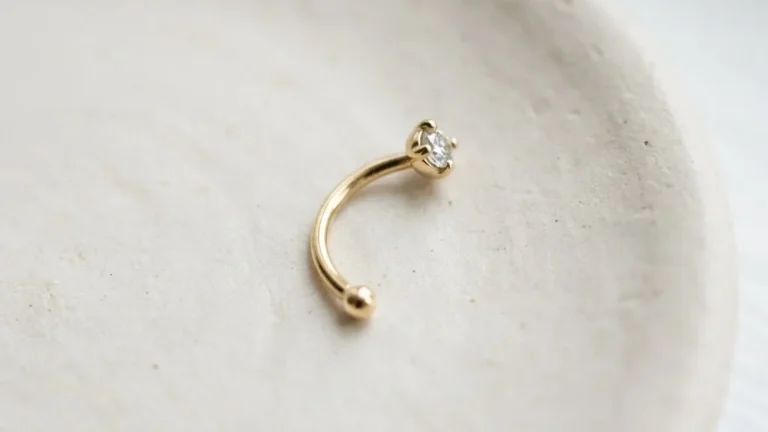
A circular barbell, the open horseshoe shape with a bead on each end, is a middle-ground option that some people love on a conch for its slightly edgier look. Like full hoops, it is best on a healed piercing.
Conch Jewelry Sizing: The Numbers That Matter
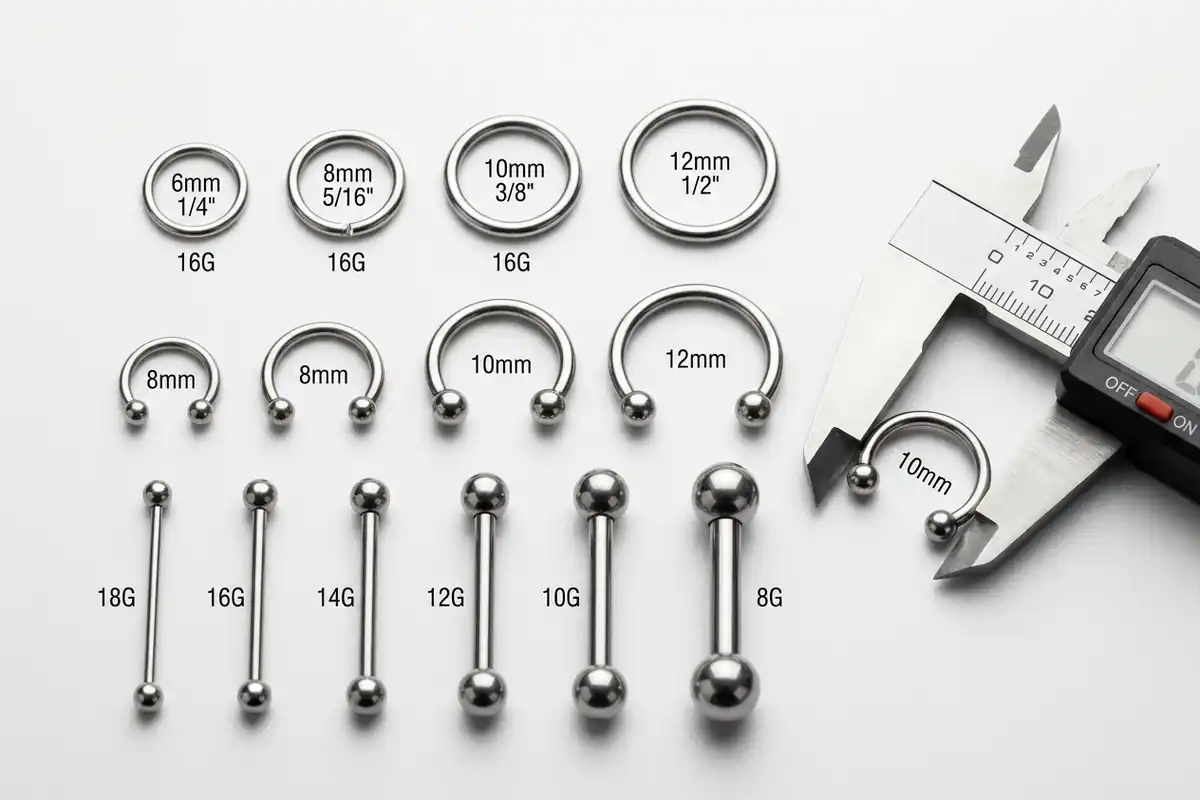
This is where online shopping goes sideways, so let me make the sizing concrete. A conch is typically pierced at 16 gauge, which is roughly 1.2 millimeters of bar thickness. Beyond gauge, the measurement you need depends on whether you are buying a stud or a hoop.
For a flat-back stud, the number that matters is the bar length, often called post length: the distance between the flat disc and the front. On a healed conch this usually runs about 5 to 8 millimeters. Too short and the jewelry presses into the ear; too long and it wobbles and catches. During healing your piercer fits you with a slightly longer post to allow for swelling, then downsizes once the swelling passes, an important step many people skip.
For a hoop, the number that matters is the inner diameter: the width across the inside of the ring. A conch hoop that wraps the ear typically needs a larger inner diameter, commonly in the 10 to 14 millimeter range, depending on your ear’s size and where the piercing sits. This is genuinely hard to guess from a photo, which is why measuring your ear or asking your piercer beats ordering blind.
The table below puts the standard conch sizing in one place so you can shop without second-guessing.
| Jewelry type | Key measurement | Typical value (healed) |
|---|---|---|
| Gauge (both styles) | Bar thickness | 16g (about 1.2 mm) |
| Flat-back stud | Post / bar length | About 5 to 8 mm |
| Conch hoop (wraps ear) | Inner diameter | About 10 to 14 mm |
| Fresh piercing | Starter post length | Slightly longer, to allow swelling |
| After swelling subsides | Downsize step | Shorter post so it sits snug |
| Best material | Metal | Implant-grade titanium |
Materials Worth Your Money
For a piercing that takes the better part of a year to fully heal, material is not a place to economize. The metal sits against living tissue for months, and a cheap, reactive metal can stall healing or trigger an allergy that masquerades as an infected piercing.
- Implant-grade titanium is the top recommendation, especially for fresh piercings and anyone with sensitive skin. It is hypoallergenic, free of accessible nickel, lightweight on the ear, and available anodized in colors that do not flake off.
- Implant-grade steel is acceptable for many people but contains nickel; if you are nickel-sensitive, choose titanium.
- Solid 14-karat gold or higher is a safe and luxurious choice for a healed conch. Insist on solid gold, never plated or filled, because plating wears through against the constant contact of an ear piece.
- Niobium is another inert, body-safe option.
Avoid gold-plated jewelry, sterling silver in a fresh piercing, and anything sold without a stated material. The Association of Professional Piercers maintains standards for initial jewelry that spell out exactly which materials belong in a healing piercing, and any quality studio stocks to them. The same material logic applies to other cartilage placements; if you are also dressing a daith piercing, the safe-metal rules carry straight over.
The Timing Question: When Can I Switch to a Hoop
This is the most common conch question I get, and the answer disappoints people: not yet, and probably later than you hope. A conch needs to be fully healed before you move from your starter flat-back stud to a hoop, and full cartilage healing commonly takes six months to a year. Looking healed on the surface at three or four months is not the same as being healed inside the channel.
Switching too early is the single biggest cause of conch trouble: irritation bumps, prolonged healing, and in the worst cases migration, where the piercing shifts because the heavier, more mobile hoop stresses an immature channel. There is also a practical sizing step in between. Once your initial swelling subsides, usually within the first couple of months, your piercer should downsize your stud to a shorter post so it sits snug instead of wobbling. That downsize protects the piercing during the long middle stretch of healing. When the time finally comes for your first jewelry change, having a piercer do it ensures the channel is genuinely ready and the new piece is the right size.
Aftercare While You Wait
Good jewelry only does its job if the piercing underneath is cared for. The routine is simple and the same one professional piercers recommend across the board: clean with sterile saline two or three times a day, pat dry with clean disposable paper, and otherwise leave the piercing alone. Do not rotate or twist the jewelry, do not pick at crust, and skip alcohol, peroxide, and antibacterial ointments, all of which are too harsh for healing tissue.
The conch has its own particular hazards worth flagging. Headphones press directly on a conch stud, so over-ear headphones are a real irritant during healing; switch ears or use earbuds carefully. Sleeping on a conch is uncomfortable and irritating, so protect that side with a travel pillow. And keep the piercing out of pools, hot tubs, and natural water until it is well along. For warning signs that cross from ordinary irritation into something needing medical attention, MedlinePlus from the National Institutes of Health keeps a clear, plain-language guide to piercing care and complications.
Common Conch Jewelry Mistakes, and How to Sidestep Them
After years of fitting and re-fitting conch jewelry, the same handful of mistakes come up again and again. Knowing them in advance saves money, time, and a lot of avoidable irritation.
The first is buying the dream hoop before the piercing is ready. I understand the pull, but a heavy ring on an immature conch is the express route to a migration or a stubborn bump. Buy the stud first, wear it for the long haul, and treat the hoop as the reward at the end.
The second is guessing post length. A flat-back stud that is too long wobbles, rotates, and catches on everything, which keeps a piercing angry; one that is too short presses the disc into the back of the ear and traps fluid. The fix is the downsize step, and it is worth a quick visit to your piercer rather than a blind reorder. The third is skipping the threading question entirely. Quality flat-back studs come as either internally threaded or threadless, meaning the post is smooth where it passes through your ear, with no exposed screw threads dragging across healing tissue. Externally threaded jewelry, where the threads sit on the part that goes through the piercing, is cheaper and far more irritating; it is one of the clearest tells of low-quality jewelry. Ask, or buy only from studios that stock internally threaded or threadless pieces.
The fourth mistake is mixing metals carelessly during healing. Stick with one body-safe metal in the conch while it settles; chasing a coordinated look with a plated accent piece is what derails plenty of otherwise smooth heals. The fifth, and most human, is touching and turning the jewelry to check on it. A conch heals best when you leave it completely alone between cleanings. If you need to confirm it is fine, look in a mirror, do not poke.
Avoid those five and you have sidestepped the overwhelming majority of conch jewelry problems I see in the studio.
One more worth its own line, because it costs nothing and prevents a lot of heartache: keep the box and the spec card your jewelry came with, or at least write down the gauge, post length, and material somewhere you will find it. When you want a second piece or a replacement back, you will know exactly what fits instead of guessing or paying for a studio visit just to measure what you already own. Quality jewelry is an investment, and treating it like one, with a record of sizes and a habit of buying only clearly specified pieces, is how people end up with a conch collection they actually wear rather than a drawer of near-misses.
Putting Together a Healed Conch Look
Once your conch is fully healed, it becomes one of the most flexible anchors for a curated ear. A single bold flat-back stud in the inner conch is a statement on its own. A wrapping hoop pairs with smaller helix and lobe pieces for a layered effect. An outer conch stud sits cleanly alongside a row of lobe studs. The conch’s central position means it ties the whole ear together, which is why piercers often think of it as the keystone of an ear curation.
Long healing stretches go easier when you feel good, and the steady habits that support tissue repair, including rest, hydration, and decent meals, quietly help. People who like to keep eating simple during a busy healing month often lean on quick wins, whether that is a tray of air fryer snacks for fuss-free evenings or a stash of gluten-free snacks and sides to graze on. It is not aftercare, but feeling well makes the patient months less of a slog.
The conch rewards a little knowledge. Start with a quality titanium flat-back stud, get your sizing right with help rather than guesswork, resist the hoop until you are genuinely healed, and treat the piercing gently the whole way through. Do that and the conch becomes exactly what drew you to it: a striking, versatile piece right at the center of your ear.
Frequently Asked Questions
What jewelry is best for a new conch piercing?
A flat-back stud, also called a labret stud, in implant-grade titanium. Its smooth flat disc rests against the back of the ear, which is comfortable, snag-resistant, and gentle on healing cartilage. Your piercer will usually fit a slightly longer post at first to allow for swelling, then downsize it once the swelling subsides. Save hoops for a fully healed conch.
What size jewelry does a conch piercing need?
A conch is typically 16 gauge, about 1.2 millimeters thick. For a flat-back stud, the post length on a healed conch usually runs about 5 to 8 millimeters. For a hoop that wraps the ear, you generally need a larger inner diameter, commonly 10 to 14 millimeters depending on your ear. Because hoop sizing is hard to judge from a photo, measure your ear or ask your piercer.
When can I change my conch piercing to a hoop?
Only once it is fully healed, which for cartilage commonly takes six months to a year, not the few months it may appear healed on the surface. Switching to a hoop too early is the leading cause of irritation bumps, prolonged healing, and migration, because a hoop moves and catches far more than a stud. Have a piercer confirm the channel is ready and fit the new piece.
What is the best metal for conch jewelry?
Implant-grade titanium is the best all-around choice: hypoallergenic, free of accessible nickel, and ideal for both fresh and sensitive ears. Implant-grade steel is acceptable for non-nickel-sensitive people, and solid 14-karat or higher gold is a safe luxury option for healed piercings. Avoid gold-plated jewelry, sterling silver in a fresh piercing, and anything with no stated material.