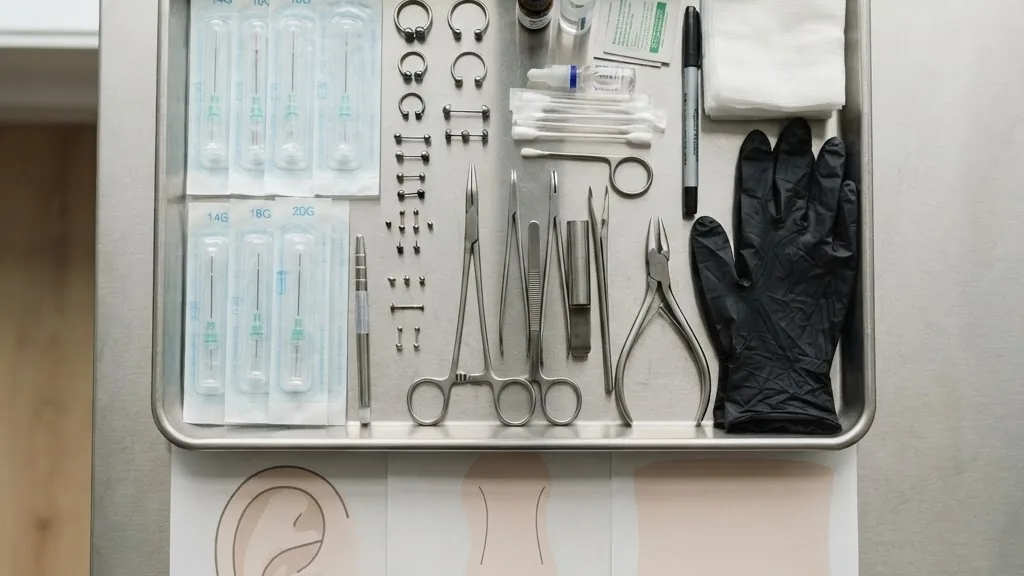
Piercing pain chart questions almost always come down to one worry: is the placement I want going to hurt more than I can handle? A standard earlobe sits at 1 to 3 out of 10 while nipple and genital piercings climb to 7 to 9, and the gap between those numbers is not luck or bravado. It is anatomy. Fatty tissue with sparse nerve endings behaves nothing like dense cartilage or a zone packed with nerves, and a genuine pain chart has to explain why before it hands you a number. That is what the ranking below does, placement by placement, tied to the healing window each one carries.
Quick Answer: How the Pain Numbers Break Down
On a 0-10 piercing pain chart, earlobes rank lowest at 1 to 3 out of 10 because the tissue is fatty with few nerve endings, and they heal in 4 to 8 weeks. Ear cartilage placements like the helix or conch land at 4 to 8 out of 10 since dense tissue needs more force, with healing running 3 to 12 months. Nipple and genital piercings sit highest at 7 to 9 out of 10 due to concentrated nerve density. The score reflects tissue type first, personal tolerance second.
Why Fatty Tissue, Cartilage, and Nerve Zones Hurt So Differently
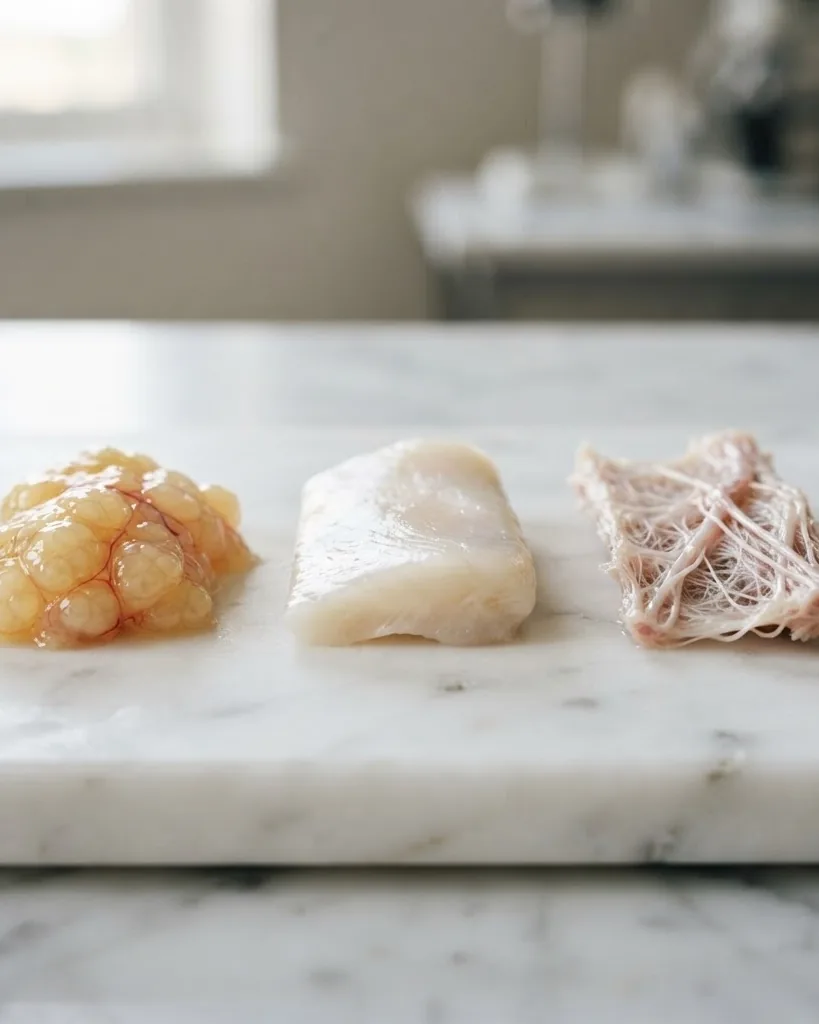
Pain scores on any honest piercing chart trace back to three tissue types, and understanding them turns arbitrary numbers into something you can predict for your own body. The needle has to cross skin and whatever sits beneath it, and what sits beneath changes everything. Fatty, well-supplied tissue gives way easily. Dense cartilage resists. Nerve-rich zones flood the brain with signal. A single scale hides these differences, so the smarter move is to read the number alongside the tissue it describes.
- Fatty, vascular tissue (earlobe, navel): soft, forgiving, quick to knit back together because blood flow is generous.
- Dense, avascular cartilage (helix, conch, tragus): stiff and slow, with poor blood supply that stretches healing into months.
- Nerve-dense zones (nipple, genitals): loaded with sensory endings that report every stage of the puncture at full volume.
Blood supply matters twice. It shapes how sharp the initial puncture feels, and it decides how fast the wound closes afterward. A vascular earlobe delivers oxygen and repair cells fast, so soreness fades in weeks. Cartilage, starved of that same supply, stays tender far longer even though the needle moment itself was over in a second. The Mayo Clinic and the American Academy of Dermatology both frame piercing as a controlled wound, and a wound in poorly supplied tissue simply takes its time.
The distinction matters most when comparing an erogenous zone to a cartilage placement, because the two hurt for entirely different biological reasons. A nipple or genital piercing hurts primarily because of nerve density, the sheer concentration of sensory endings packed into the tissue, not because the tissue itself is hard to penetrate. A conch or industrial piercing, by contrast, hurts primarily because of tissue density, the toughness and lack of give in cartilage that makes the needle work harder to pass through. Confusing the two leads people to assume a painful cartilage spot must also be nerve-dense, when the discomfort actually comes from resistance rather than sensation.
The Master 0-10 Piercing Pain Chart by Body Placement
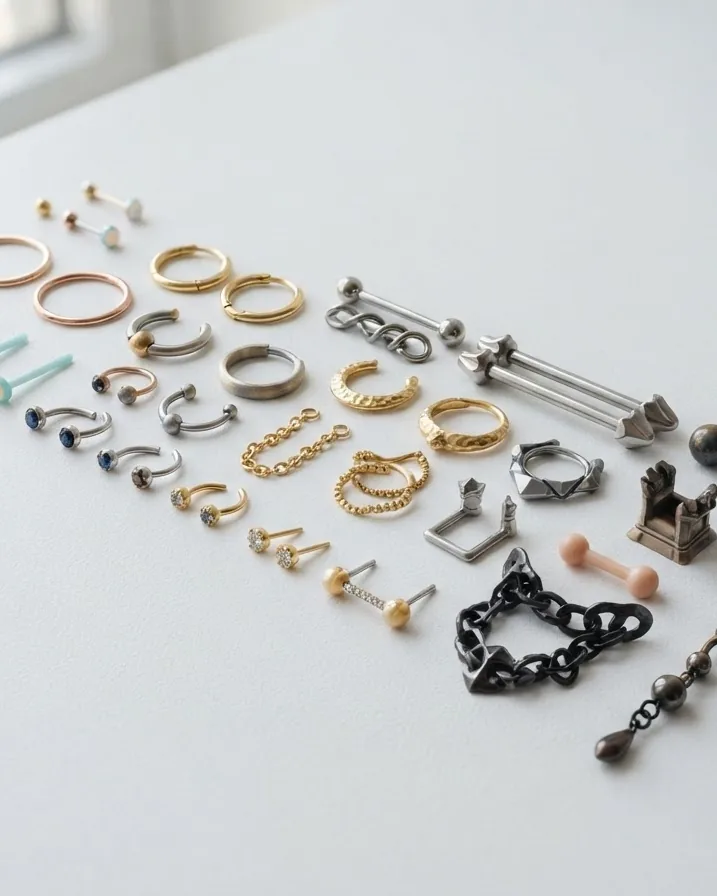
Here is the ranking most people come looking for: a piercing pain chart that sorts major placements from mildest to most intense, grounded in documented tissue behavior rather than one person’s memory. Earlobes anchor the bottom at 1 to 3 out of 10. Ear cartilage occupies the broad middle at 4 to 8. Nipple and genital piercings top the scale at 7 to 9. Use it as a first filter, then read the anatomy above to understand why your chosen spot lands where it does.
| Placement | Pain (0-10) | Tissue type | Healing window |
|---|---|---|---|
| Earlobe | 1 to 3 | Fatty, vascular | 4 to 8 weeks |
| Ear cartilage (helix, conch) | 4 to 8 | Dense, avascular | 3 to 12 months |
| Nipple / genital | 7 to 9 | Nerve-dense | Extended |
The jump from a lobe at 1 to 3 to a nipple at 7 to 9 is not gradual. It reflects a shift in tissue category, not just a harder push. A beginner reading a most painful ear piercing chart should notice that even the roughest cartilage placement tops out around 8, still short of the nerve-dense peak. That framing keeps expectations honest.
Kosiner Jewelry documents the lobe and cartilage figures, while Stylecraze records the 7 to 9 range for nipple and genital work. Numbers from separate sources converging on the same tiers is a good sign the chart holds.
Within that broad 4 to 8 cartilage band, placement still matters. A forward helix or a simple helix tends to sit toward the lower end because the tissue is thinner there, while a tragus, conch, rook, daith, or snug tends to push toward the upper end because the cartilage is thicker or the angle is more awkward for the needle to clear. The table above is a starting filter, not a substitute for asking a piercer which specific cartilage spot you are considering.
The Dedicated Ear Piercing Pain Chart: Lobe Versus Cartilage
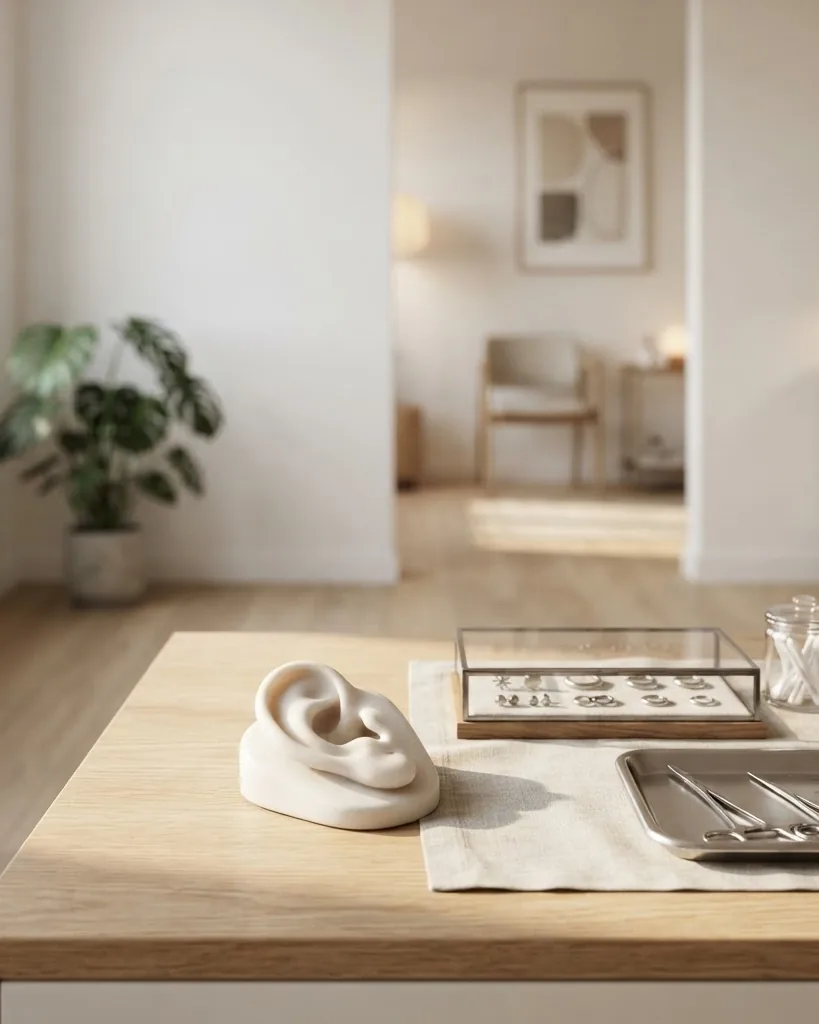
The ear deserves its own pain ear piercings chart because a single organ spans nearly the entire scale. Your soft lobe at 1 to 3 out of 10 and a dense cartilage spot at 4 to 8 sit centimeters apart yet feel like different worlds. The lobe heals in 4 to 8 weeks; cartilage stretches to 3 to 12 months. Anyone deciding between placements needs those two facts side by side, because the phrase “ear piercing” flattens a range that actually runs from barely noticeable to genuinely sharp.
Cartilage placements are not interchangeable either. The helix rim, the forward helix, the tragus flap in front of the canal, the deep conch bowl, the rook fold, the daith curl, and the industrial bar that spans two holes each meet the needle at a slightly different tissue thickness and angle.
- Helix and forward helix: thin outer-rim cartilage, on the milder end of the 4 to 8 band.
- Tragus and conch: firmer, thicker tissue that pushes toward the upper end.
- Rook and industrial: awkward angles and, for the industrial, two punctures in one sitting.
If a cartilage placement is on your list, the jewelry you leave in it changes the healing experience as much as the puncture does. Our breakdown of how to size a curved barbell for a rook piercing walks through why fit and metal choice keep a fold-of-cartilage placement from staying angry. For the deeper anatomy of that spot, the complete guide to rook jewelry sizing and metal covers the pieces that actually heal without dragging on the tissue.
The Most Painful Placements: Nipple, Genital, and Industrial
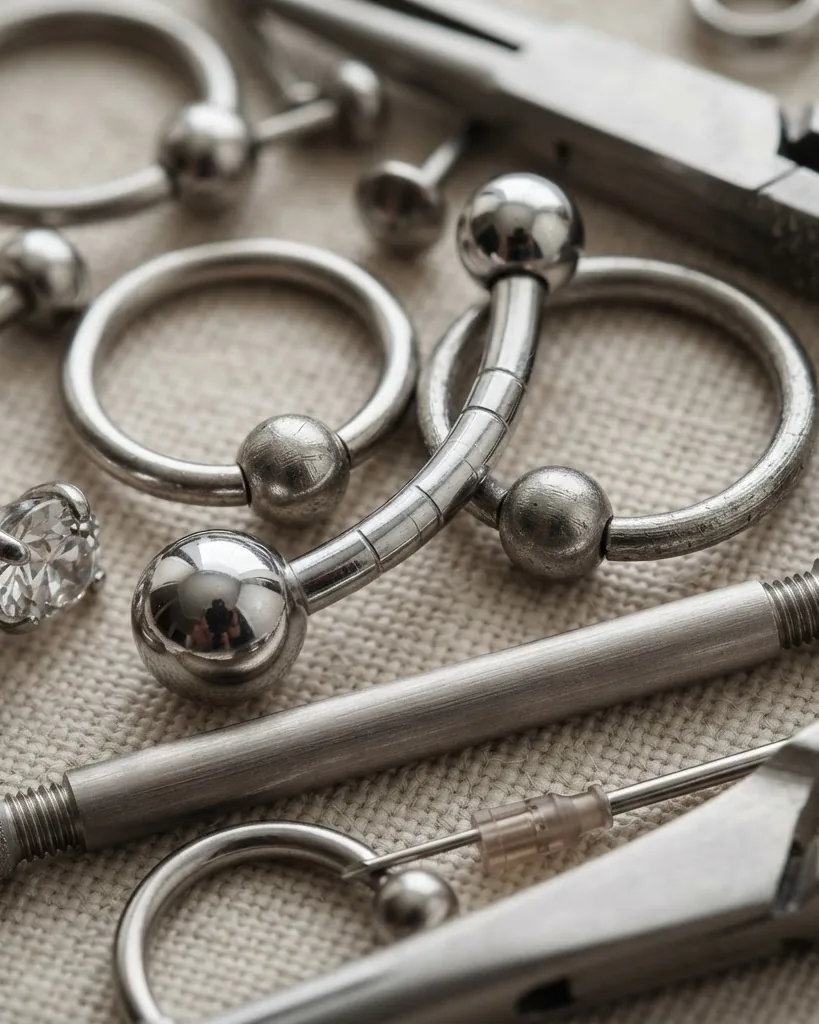
At the top of any piercing pain chart sit the nerve-dense placements, and they earn their 7 to 9 out of 10 rating honestly. Nipple and genital piercings are the most consistently documented high-pain areas because sensory nerve endings crowd together there more tightly than almost anywhere on the body. The needle does not just cross tissue; it crosses a region built to register sensation. Stylecraze records the 7 to 9 range for these placements, and the physiological reason is concentration of nerve endings, not tissue toughness alone.
The ear contributes its own contenders. The industrial, which links two cartilage holes with a single straight bar, means two punctures in one appointment through firm tissue, so the total sensation stacks. The snug, tucked into a tight inner ridge, is another placement enthusiasts flag as brutal because of the dense, compressed cartilage the needle must clear.
Higher pain also tends to travel with longer healing. Nerve-dense and dense-cartilage placements both keep you in the sore window far longer than a lobe, which is where careful aftercare stops being optional. The Association of Professional Piercers ties healing pain directly to how the wound is treated, meaning a top-tier placement mishandled during healing can hurt well past the appointment itself.
The Least Painful Placements for First-Timers
If you are nervous, the bottom of the piercing pain chart is genuinely reassuring, and the earlobe leads it at 1 to 3 out of 10. Fatty, well-supplied tissue with fewer nerve endings makes the puncture brief and the recovery quick, healing in 4 to 8 weeks per the figures Kosiner Jewelry documents. It is the standard first piercing for a reason: low pain, fast healing, and a wide margin for small aftercare mistakes.
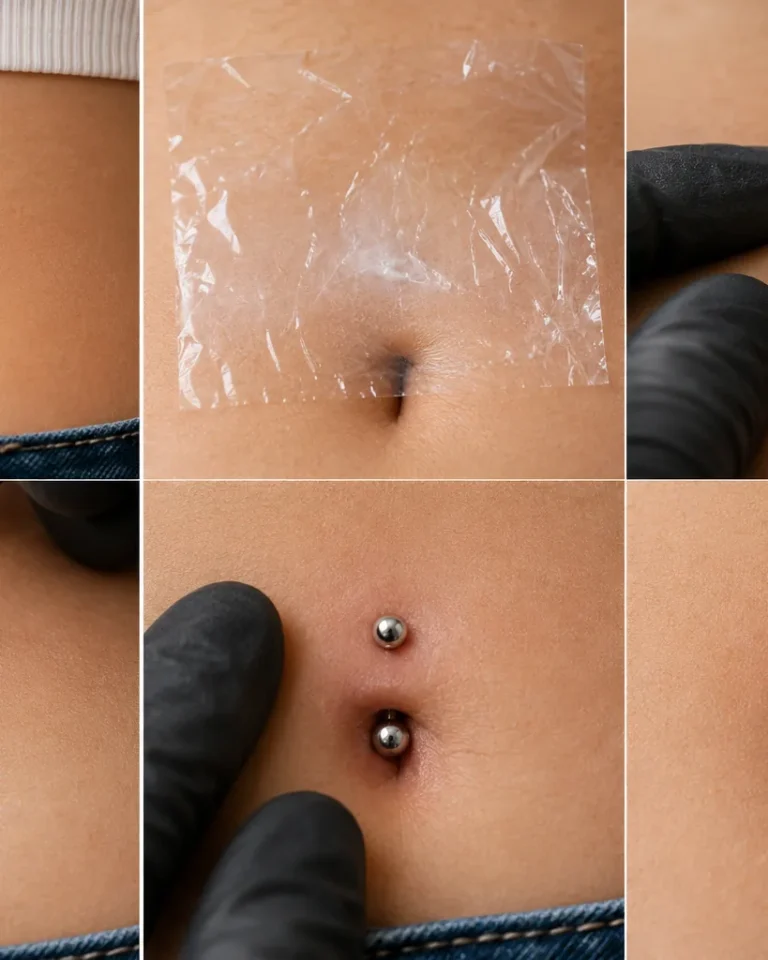
The bottom tier is not limited to the ear. Septum, eyebrow, and navel piercings round out the gentler end of the piercing pain chart because each one passes through tissue that behaves like the lobe: fatty, vascular, and comparatively sparse in nerve endings. The navel in particular sits in the same fatty, well-supplied category as the earlobe, which is part of why it heals without the prolonged tenderness that cartilage demands. Beginners weighing a first or second piercing beyond the ear can treat these placements as a similarly forgiving starting point, provided they still follow the same aftercare discipline that protects any fresh wound.
Lobes are also where most people build up to more. A second hole is a small step because the tissue behaves the same way the first time did.
Our guide to a health-grade second lobe hole covers spacing and healing for exactly that move, and if you are planning a fuller layout, the walkthrough on placement and how many piercings to get at once maps out which combinations heal comfortably together. Starting low on the scale and climbing is the sane way to learn your own tolerance rather than guessing at the top.
Needle Versus Piercing Gun: How Method Changes the Hurt
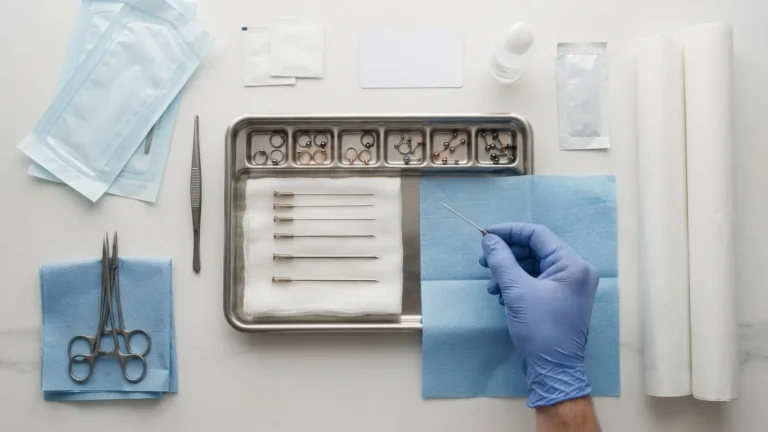
Two people can get the same placement and rate the pain differently, and often the reason is the tool. A piercing gun forces blunt, unsharpened jewelry through tissue by pressure, crushing a path rather than cutting one, which raises blunt-force trauma and can worsen healing complications. A sterile needle slices a clean channel, so the tissue is displaced less violently. The placement’s score on the chart assumes a clean needle; a gun can push the felt pain and the healing pain upward regardless of where the spot ranks.
Cartilage suffers most from blunt force because it does not compress and rebound like fatty tissue. A gun aimed at a helix or conch can shatter or fracture the cartilage, turning a routine 4 to 8 placement into a drawn-out, painful heal. This is why professional standards center on the needle.
Beyond the sharper initial pain, the crushed channel a gun leaves behind is also more prone to the kind of healing complications piercers warn about, including prolonged swelling and a higher chance the jewelry migrates or the tissue never fully closes around it cleanly. A clean needle channel, by contrast, gives the tissue a smoother path to heal along, which is part of why professional studios standardize on needles for anything beyond a basic lobe.
If you want the mechanics before you book, our sourced explainer on how a piercing needle is sized and why it works lays out the difference in tissue trauma between a cut and a crush. The tool is one of the few pain variables you fully control by choosing where you go.
How APP Aftercare Rules Keep the Healing Pain Down
The number on a pain chart captures the appointment, but the ache that follows for weeks or months is governed by aftercare, and here the Association of Professional Piercers sets the standard. The organization explicitly states that rubbing alcohol and hydrogen peroxide must be avoided because these products damage healthy cells and prolong healing and the pain that comes with it. Reaching for a harsh disinfectant feels responsible, yet it actively works against the wound. Following documented guidance is the cheapest pain reduction available.
The Association of Professional Piercers (APP) is the international non-profit organization dedicated to disseminating vital health and safety information about body piercing to piercers, healthcare professionals, and the public, and its published protocols are the closest thing this industry has to a single trusted rulebook. Two of its documents matter most for pain: the official aftercare guidelines governing how a fresh piercing should be cleaned and healed, and the initial jewelry standards that specify safe materials and threading. Reading both before an appointment turns aftercare from guesswork into a checklist, and citing the source directly at safepiercing.org is worth doing whenever a piercer’s advice sounds different from what the organization actually publishes.
Jewelry choice belongs in the same category. The Association of Professional Piercers specifies that initial jewelry should be internally threaded, meaning the exposed post is completely smooth, rather than externally threaded where a screw thread drags across the fresh channel. That rough thread tears tissue on insertion and removal, which is avoidable pain built into the wrong piece of metal.
A few protective habits sit inside the professional guidance:
- Keep harsh disinfectants off the site; they punish healthy cells and stretch the sore window.
- Choose internally threaded initial jewelry so nothing rough passes through the wound.
- Watch for infection signs and see a medical professional if they appear.
The FDA regulates the metals and materials that go into body jewelry, and the Centers for Disease Control and Prevention track the infection risks tied to piercing, so the caution around materials and cleaning is not one hobbyist’s opinion. If a healing piercing turns hot, swollen, streaked, or produces thick discharge, that is the moment to stop self-treating and consult a doctor rather than push through.
Reading Pain Alongside Healing Time Before You Book
A pain chart read in isolation misleads, because a low number can still mean a long commitment and a high number can pass quickly. The lobe proves the friendly version: 1 to 3 out of 10 and healed in 4 to 8 weeks. Cartilage flips the logic. A helix might register a moderate 4 to 8 at the needle, but it stays sore and vulnerable for 3 to 12 months, so the total discomfort you actually live with outlasts the sharper-feeling lobe by far.
That trade-off should shape your decision as much as the peak number. Ask two questions before booking: how much does the puncture hurt, and how long will I baby it afterward. A placement that scores lower but heals in weeks may suit your life better than one that scores similarly but demands a year of care around sleep, clothing, and cleaning.
Put concretely: a helix piercing scoring around 4 out of 10 at the moment of the needle can still feel tender to the touch for months afterward, while a lobe scoring around 2 out of 10 is often fully comfortable within weeks. The peak pain number and the total discomfort over time are simply not the same measurement, and conflating them is the most common mistake people make when they compare placements using a chart alone.
Metal is the quiet third factor. The materials the FDA governs and the smooth, internally threaded pieces the Association of Professional Piercers requires determine whether the healing months are tolerable or a constant irritation. If imaging or surgery is on your horizon during that long heal, our guide to a glass piercing retainer for MRI and everyday wear covers keeping a channel open without metal in the way.
Frequently Asked Questions
What is the most painful ear piercing?
On a most painful ear piercing chart, the toughest cartilage placements like the industrial and snug rank near the top of the 4 to 8 out of 10 band. The industrial means two punctures through firm tissue in one sitting, and the snug passes through a tight, dense inner ridge. Both hurt more than a helix and heal within the 3 to 12 month cartilage window.
Is an earlobe piercing really that painless?
The earlobe ranks at just 1 to 3 out of 10 because the tissue is fatty with fewer nerve endings, and it heals fast at 4 to 8 weeks. Most people describe a brief pinch rather than lasting pain. Its generous blood supply speeds recovery, which is why it remains the standard first piercing for anyone unsure about their pain tolerance.
Why do nipple and genital piercings hurt the most?
Nipple and genital piercings rank at 7 to 9 out of 10 because these areas carry a highly concentrated density of nerve endings, as Stylecraze documents. The needle crosses a region built to register sensation intensely, so the pain reflects nerve concentration rather than tissue thickness. Careful aftercare matters because the sore window in these zones runs long.
Does the piercing gun hurt more than a needle?
A piercing gun can raise the pain and healing complications because it forces blunt jewelry through by pressure, crushing tissue instead of cutting a clean channel. Cartilage is especially vulnerable since it can fracture under blunt force. A sterile needle displaces tissue less, which is why professional standards favor it. The tool is one pain variable you control by choosing a reputable studio.
Can aftercare products actually make a piercing hurt more?
Yes. The Association of Professional Piercers states that rubbing alcohol and hydrogen peroxide must be avoided because they damage healthy cells and prolong healing and the pain that accompanies it. Choosing internally threaded jewelry with a smooth post also prevents tissue tearing. Following documented aftercare guidance is one of the simplest ways to shorten the sore window rather than extend it.