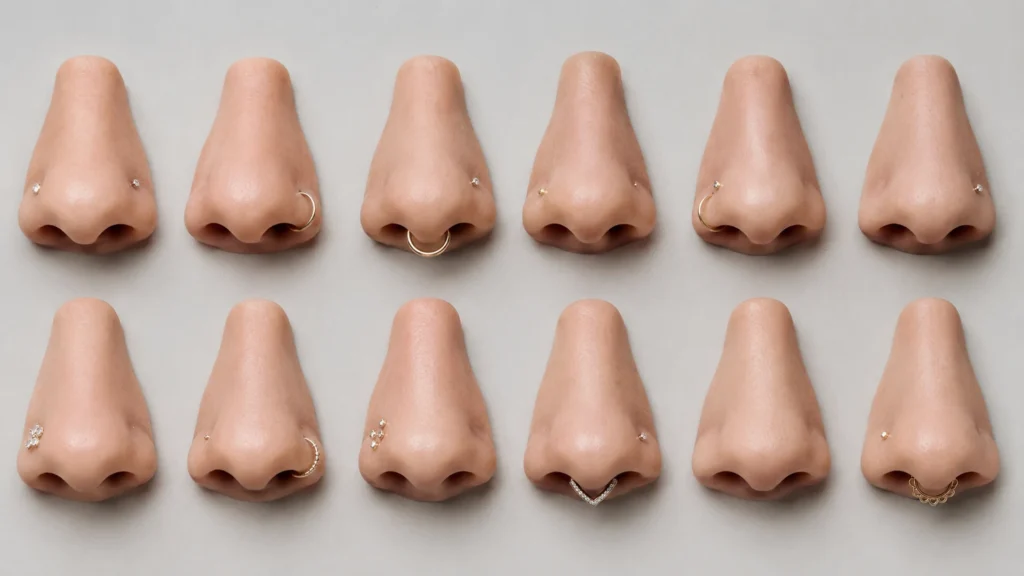
Types of noses for nose piercing matter more than most people realize, because the same stud or hoop that flatters a straight nose can look off on a button nose or a hooked profile. The good news is that there is a flattering nose piercing for essentially every face; the trick is matching the placement to your nose shape rather than copying a photo of someone whose nose is built differently from yours. This guide walks through the common nose shapes (straight, button or upturned, hooked or Roman, wide, long, and small), pairs each with the placements that tend to suit it, and then covers how placement, healing, and jewelry actually work so you can have a confident conversation with your piercer. Your piercer’s eye for your specific anatomy is the final word, but this gets you most of the way there.
One thing up front: there are no hard rules here, only tendencies. A skilled piercer can make almost any placement work, and personal taste beats any chart. Use the matches below as a starting point for what tends to harmonize with each shape, then trust a good piercer to fine-tune the exact spot on your face.
First, the placements you are choosing between
Before matching anything to a nose shape, it helps to know the options. A standard nostril piercing sits on the curve of the nostril, usually near the crease where the nostril meets the cheek, and it is by far the most common and the most versatile. A high nostril sits higher up the side of the nose, closer to the bridge, for a more subtle, elevated look. A low nostril sits closer to the tip. A double nostril stacks two piercings on one side or places one on each nostril. A septum piercing passes through the soft sweet spot at the front of the septum, centered between the nostrils, and shows a ring or horseshoe under the nose rather than a stud on the side.
Each of these reads differently depending on the canvas, which is the whole point of matching them to your nose shape.
Matching nose shapes to flattering placements
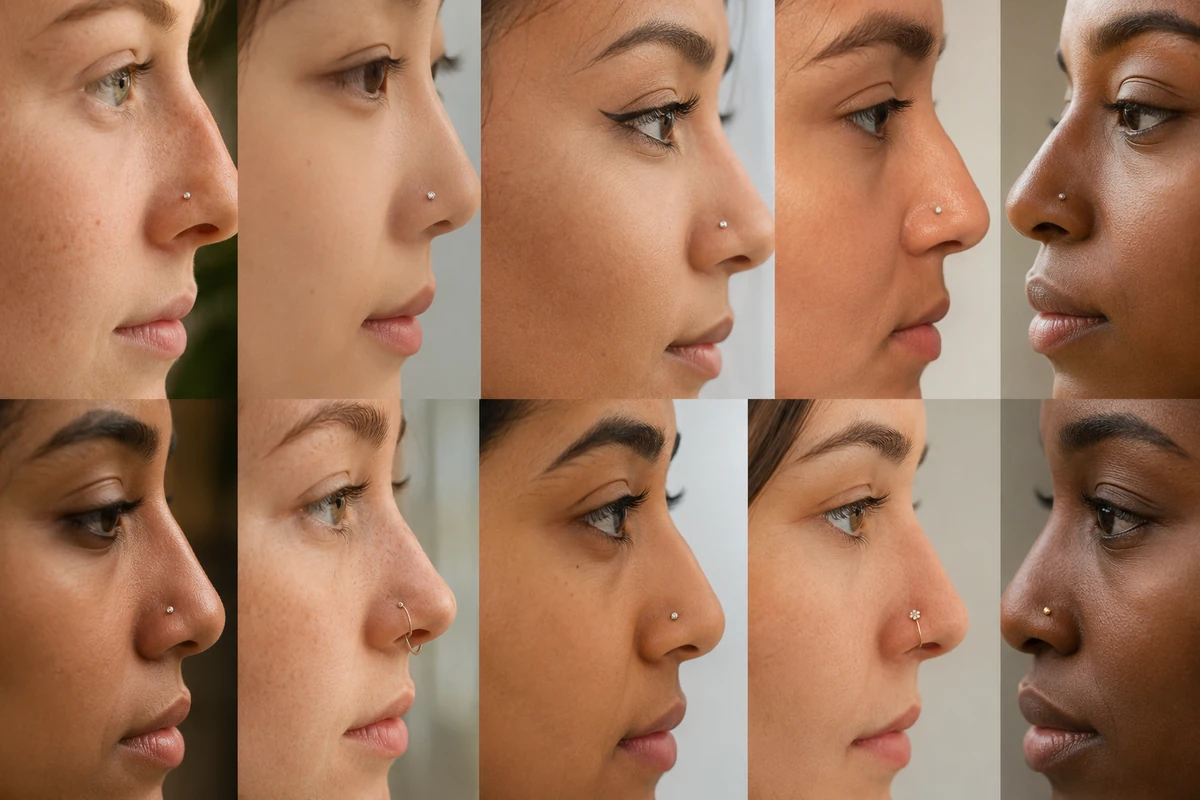
Below are the common shapes and the placements that tend to suit them. Find the closest match to your own nose, but remember these are tendencies, not laws.
| Nose shape | Tends to suit | Why |
|---|---|---|
| Straight | Standard nostril, high nostril, septum | Versatile; a clean side stud or a centered septum both balance a straight bridge |
| Button / upturned | Low nostril, small stud | A lower placement and a delicate stud flatter a fuller, rounded tip |
| Hooked / Roman / hump | Side nostril stud or ring | A side accent draws the eye away from the center and harmonizes the profile |
| Wide / broad | Septum, double nostril | A centered or balanced placement adds symmetry across a broader nose |
| Long | High nostril, standard nostril | A higher placement adds interest without lengthening the look |
| Small / petite | Small standard nostril stud | A dainty stud suits the scale; oversized rings can overwhelm |
Straight noses
A straight nose has a smooth, linear bridge with little curve, which makes it the most versatile canvas. Almost anything works, so the decision comes down to taste. A small side stud reads clean and minimal, a delicate hoop adds a little movement, and a septum ring sits perfectly centered. If you cannot decide, a standard nostril stud is the safe, flattering default.
Button and upturned noses
A button nose is shorter with a rounded, sometimes upturned tip. A low nostril placement closer to the tip and a smaller, delicate stud tend to flatter the rounder shape, where a high placement or a large hoop can look out of proportion. Keep the jewelry scaled to the nose and the effect is sweet rather than busy.
Hooked, Roman, and hump noses
A nose with a prominent bridge or a hump often looks most balanced with a side accent, a nostril stud or ring placed on the curve, because it draws the eye to the side and softens the focus on the center line. A septum can also work, but a side placement is the classic harmonizing choice for these profiles.
Wide and broad noses
Broader noses tend to suit placements that add symmetry. A centered septum ring balances the width nicely, and double nostril piercings (one on each side) create a symmetrical frame. A single small stud can get a little lost on a wider nose, so do not be afraid of a slightly more present piece.
Long and small noses
On a longer nose, a high nostril placement adds interest near the bridge without drawing the eye downward and lengthening the look further. On a small or petite nose, scale is everything: a dainty standard nostril stud suits the proportions, while a large ring can overwhelm a small canvas. A useful rule of thumb for any size is to match the jewelry to the nose, not the trend. A piece that looks striking on a larger nose in a photo can dominate a smaller one, and a delicate stud that suits a petite nose can disappear on a broad one. When in doubt, start smaller and more understated; you can always size up to a bolder piece once the piercing is healed and you have lived with it for a while.
Which side should you pierce?
People often agonize over left versus right, and the honest answer is that it is almost entirely down to preference. There is no medical reason to favor one side, and the old claims about a particular side carrying meaning are cultural and personal rather than rules. What actually matters is practical. Pick the side you do not sleep on, because pressure on a fresh nostril piercing is a common cause of irritation bumps. Consider which side your hair falls on, whether you wear glasses that sit closer to one side, and which profile you photograph or see in the mirror most. If you genuinely have no preference, stand in front of a mirror and have your piercer hold a marker dot on each side so you can see both before deciding. It is a small choice, but seeing it on your own face beats guessing.
Double nostrils and stacking
A double nostril piercing means two studs or rings on the same side, or one on each side, and it is a popular way to add interest once you know you love a single piercing. The usual advice is to heal them one at a time rather than getting both at once, since piercing two spots together means healing two wounds and doubling the chance that one gets bumped or irritated. Spacing also matters: a piercer plans where the second hole goes so the two pieces sit in proportion, whether stacked vertically up the nostril or balanced across both sides. If a curated, symmetrical look is your goal, tell your piercer the whole plan at the first appointment, even if you add the second piercing months later, so the first one is placed with the future in mind. The same patience that a single nostril asks for applies double here, and the gentle, consistent care in our saline aftercare walkthrough is what keeps both piercings on track while they heal on their own schedules.
When can you change a nose piercing?
The temptation to swap your starter stud for a pretty ring hits early, and changing too soon is the most common cause of a setback. Wait until your piercer confirms the piercing is healed, which for a nostril usually means several months, not weeks, and for a septum often a bit sooner. Changing before the channel is healed can tear it, trigger a bump, or let it start to close. A nostril is also fiddly to change yourself, especially with a screw or L-post, so the safest first change is done by your piercer. If you change it yourself later, wash your hands, use clean jewelry, do it after a warm shower when tissue is supple, and never force a piece that will not seat. If it resists, stop and see your piercer. Many piercers also downsize the starter jewelry once initial swelling settles, swapping a slightly longer post for a shorter one so it sits flush and snags less, which is a normal, worthwhile step rather than an upsell.
How a nostril piercing is done and what it feels like
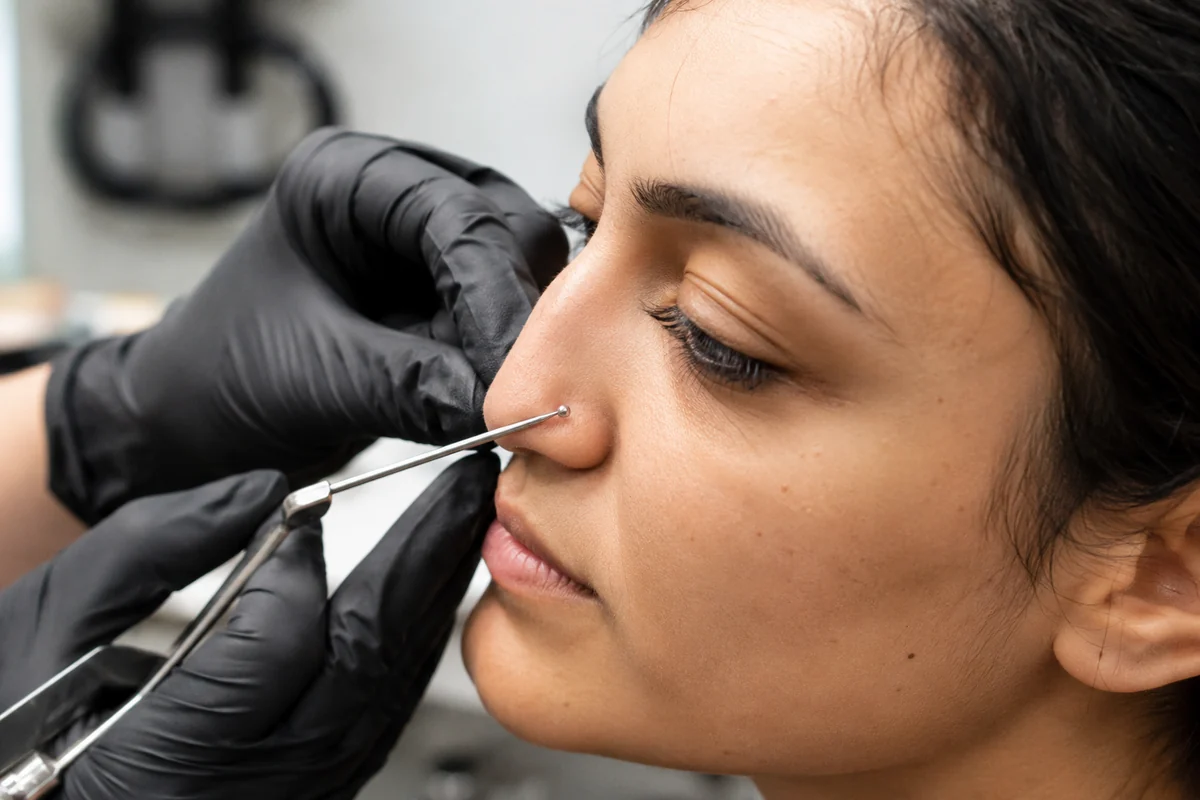
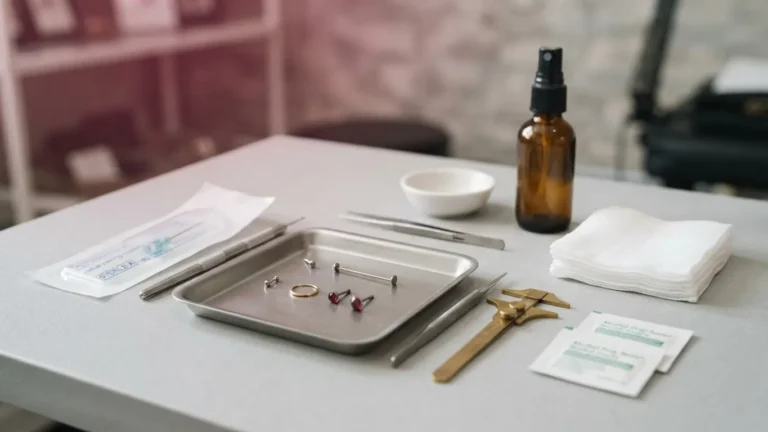
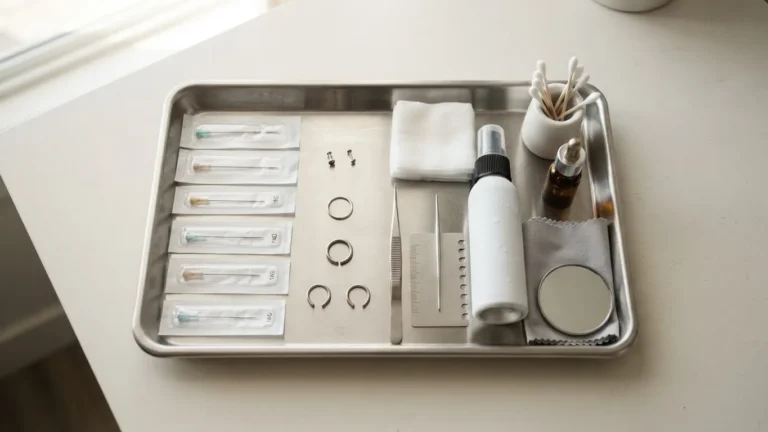
A nostril piercing should be done with a sterile, single-use hollow needle, not a piercing gun. A needle makes a clean channel and lets the piercer control the angle, while a gun forces blunt jewelry through tissue, raises the risk of complications, and cannot be properly sterilized between clients. The Association of Professional Piercers sets the standard for safe studios and aftercare; their aftercare and safety guidance is the reference worth reading before you book. A reputable studio uses needles, an autoclave, single-use supplies, and gloves.
Pain-wise, most people rate a nostril piercing a brief, sharp pinch around a 3 to 5 out of 10, often with watering eyes and maybe a sneeze reflex, both of which are normal and pass in seconds. A septum, when placed correctly through the soft sweet spot rather than cartilage, is usually a quick, intense pinch that is over fast. Pain tolerance varies, so your experience may land higher or lower.
Healing and aftercare for a nose piercing
A nostril piercing passes through tissue and a bit of cartilage, so it heals on the slower side: plan on roughly 4 to 6 months, and sometimes longer, for full healing. A septum through the sweet spot often heals a bit faster, around 2 to 3 months, because it goes through soft tissue. As with ear cartilage, it can look healed long before the channel inside is done, so do not rush a jewelry change.
The aftercare is simple and mirrors the routine for any healing piercing. Wash your hands first, then clean twice a day with sterile saline (a 0.9 percent sodium-chloride wound wash), spraying it on or applying it with saline-soaked gauze, and pat dry with clean disposable paper. Do not rotate or twist the jewelry, do not over-clean, and avoid alcohol, hydrogen peroxide, and antibacterial ointments. The same method we lay out in our saline cleaning routine for sensitive piercings works for a nose piercing, with one nose-specific note: be patient with crusties around a nostril stud and resist picking at them dry.
Jewelry for a healing nose piercing
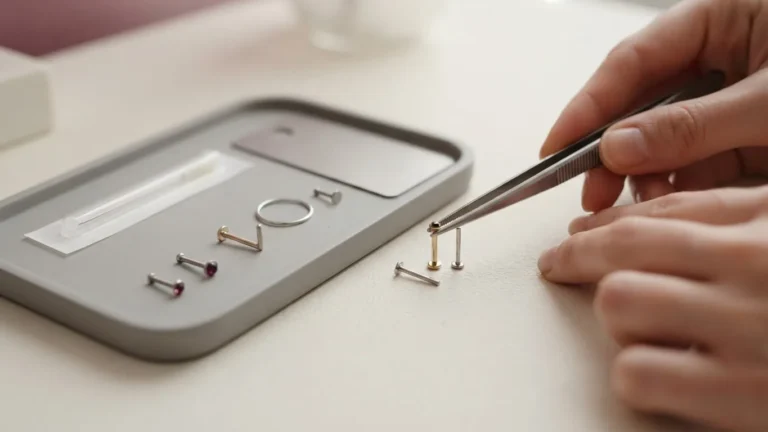
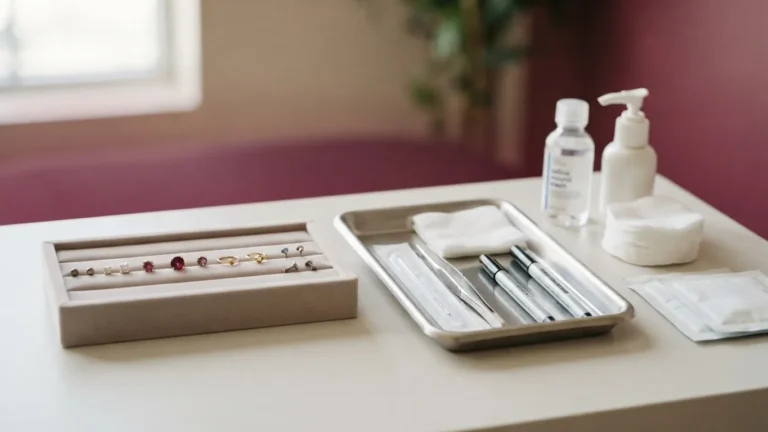
Heal with implant-grade titanium (ASTM F-136) or solid 14k or higher gold, the same biocompatible metals that suit healing ear cartilage. For a nostril, a nostril screw, an L-shaped post, or a flat-back labret stud are common starters because they stay put; a ring can move and snag while fresh. For a septum, a smooth horseshoe (circular barbell) is the usual starter. Avoid unknown-grade “surgical steel,” nickel alloys, and plated jewelry in a fresh piercing, since plating wears and nickel commonly irritates. Save decorative hoops and gem-set pieces for after your piercer confirms the piercing is healed.
Risks and when to see a professional
Nose piercings carry the usual risks: irritation bumps, infection, and, in people prone to them, keloids. A small bump beside a healing nostril piercing is common and usually a response to a snag, pressure (glasses are a frequent culprit), or harsh products rather than infection; it often calms once you remove the cause and stick to plain saline. A firmer, growing scar may be a keloid, which the American Academy of Dermatology covers in its overview of keloids.
Normal early healing includes mild redness, light swelling that settles, tenderness, and clear or whitish crusties. Warning signs that call for action include spreading redness or heat, increasing swelling after the first week, throbbing or worsening pain, thick yellow or green pus, bleeding, or feeling feverish. The nose sits near the sinuses, so do not ignore a spreading infection. Do not remove the jewelry yourself, which can trap an infection; keep up gentle saline and get help. A piercer handles irritation, but a suspected infection is a medical issue, and the Cleveland Clinic’s guidance on an infected piercing explains when to see a doctor.
Bottom line
The types of noses for nose piercing fall into a handful of shapes (straight, button, hooked, wide, long, and small), and each has placements that tend to flatter it: straight noses suit almost anything, button noses suit a low delicate stud, hooked profiles suit a side accent, wide noses suit a centered septum or double nostril, long noses suit a high nostril, and small noses suit a dainty stud. Use those as a starting point, then let a reputable piercer fine-tune the exact spot for your face. Heal with implant-grade titanium or gold, clean twice a day with saline, and respect the months-long timeline, and you will end up with a nose piercing that looks like it was made for your nose, because it was.
Frequently Asked Questions
Which nose piercing suits my nose shape?
As a starting point: straight noses suit almost any placement, button or upturned noses suit a low nostril stud, hooked or Roman noses suit a side nostril accent, wide noses suit a septum or double nostril, long noses suit a high nostril, and small noses suit a dainty standard stud. A skilled piercer can fine-tune the exact spot for your face.
What is the most versatile nose piercing?
The standard nostril piercing is the most versatile, sitting on the curve of the nostril near the crease and flattering nearly every nose type. If you are unsure where to start, a small standard nostril stud is the safe, widely flattering default.
Does a nostril or septum piercing hurt more?
Both are brief. A nostril piercing is usually a sharp pinch around a 3 to 5 out of 10, often with watering eyes. A septum placed through the soft sweet spot is a quick, intense pinch that passes fast. Pain tolerance varies, so your experience may differ.
How long does a nose piercing take to heal?
A nostril piercing typically takes about 4 to 6 months to heal fully, sometimes longer, while a septum through the sweet spot often heals faster, around 2 to 3 months. It can look healed before the channel inside is done, so keep up saline care and do not change the jewelry too early.
What jewelry should I heal a nose piercing with?
Heal with implant-grade titanium (ASTM F-136) or solid 14k or higher gold. For a nostril, a screw, L-post, or flat-back labret stud stays put while a ring can snag; for a septum, a smooth horseshoe is standard. Avoid unknown-grade steel, nickel alloys, and plated jewelry in a fresh piercing.
Why do I have a bump next to my nose piercing?
A bump beside a healing nostril piercing is usually irritation, not infection, often from snagging, glasses pressure, or harsh products. It tends to calm once you remove the cause and stick to plain saline. If it grows, hardens, or will not settle, see your piercer, and a dermatologist for a suspected keloid.