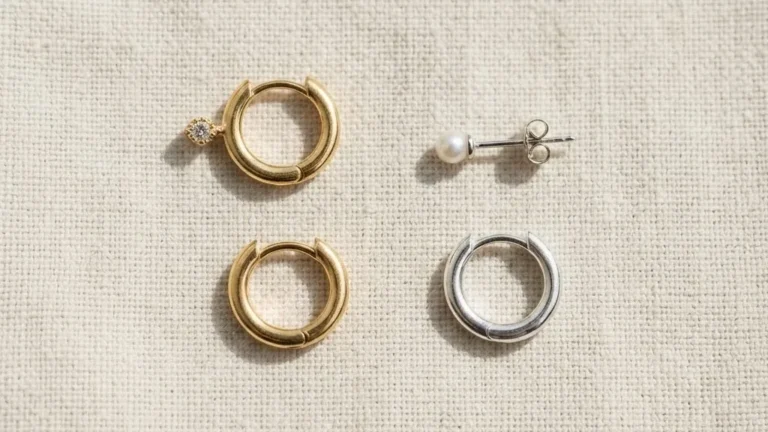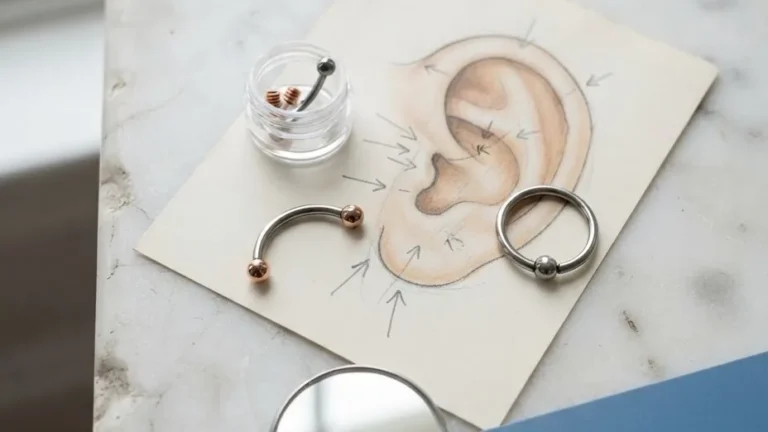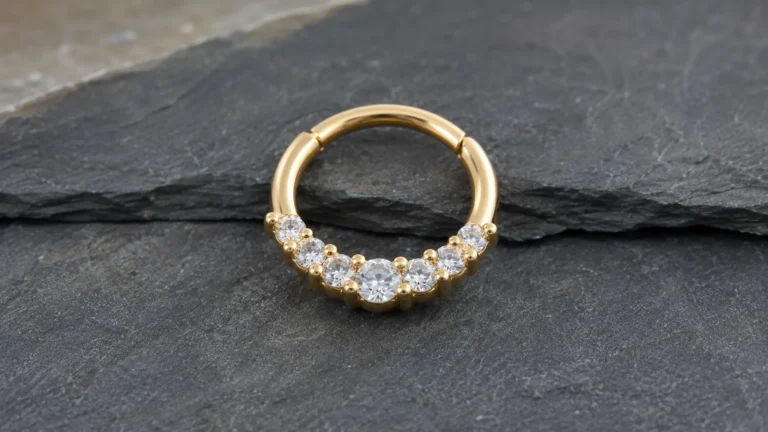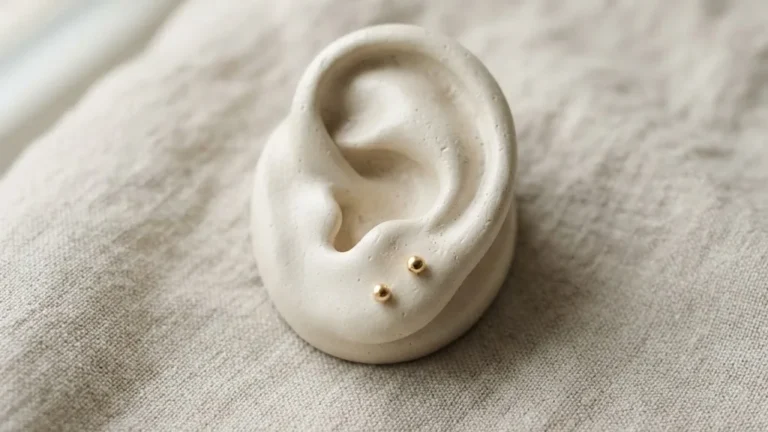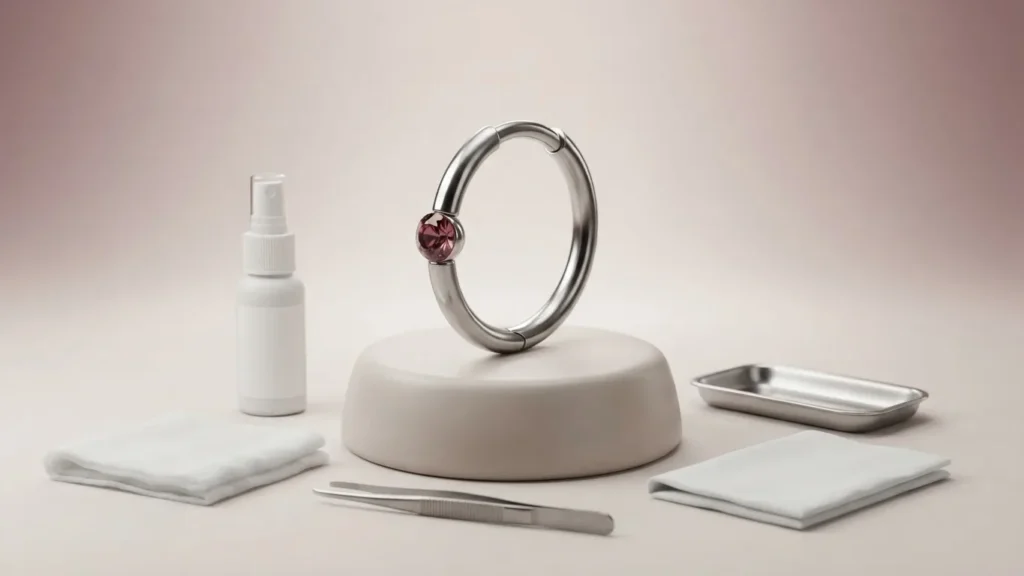
A conch does not take a hoop the day it is pierced. The ring most people picture – threaded through the flat bowl of cartilage in the middle of the outer ear – is jewelry for a piercing that has finished healing, and that finish line sits further out than the calendar on a studio wall suggests. The studio Astrid & Miyu only recommends moving to a conch piercing hoop once the piercing is fully healed, and “healed” here means months, not weeks. How many months is where even careful sources part ways, and sorting that out is the first job before buying a ring or booking a jewelry change.
A conch piercing hoop goes into a fully healed piercing, never a fresh one. Cartilage in the conch heals slowly – the range runs from several months to roughly a year, depending on whose data you read – so a decorative ring waits until swelling, tenderness and any discharge have stopped for good. Diameter is set by your own anatomy and where the piercing sits, which is why a single quoted figure is a starting point and not a universal measurement. For a healed conch, implant-grade titanium or solid 14k-or-higher gold are the materials a cautious piercer reaches for. When anything looks wrong, a piercer or clinician makes the call, not a date on a chart.
The healing gate: why the hoop waits for a fully closed conch
The conch is cartilage, not the soft flesh of the lobe, and that single difference drives the whole timeline. Cartilage has far less direct blood supply than the lobe, so it rebuilds and seals more slowly and stays vulnerable to irritation longer. A hoop moves. It rotates against the channel, carries weight on one side, and gives a healing piercing something to snag on. Put one in before the tissue has closed and you invite the two problems that stall cartilage piercings most often: irritation bumps and infection.
This is why Astrid & Miyu frames the hoop as an after-healing decision rather than a style you choose at the counter. Their guidance is that the swap to a hoop happens once the conch is fully healed – the ring is a reward for a finished piercing, not part of the healing setup. The flat-back labret you leave the studio with is doing a specific job during those months: it sits flush, moves little, and keeps pressure off the forming channel. Trading it early undoes that.
Here is the honest gap, and it matters. No source ties a single, confirmable “you are done” signal to a calendar date. The full-healing requirement exists, and a healing window exists, but the bridge between them – a test you can run at home to prove the inside of the channel has sealed – does not. That means the decision cannot be made from a date alone. It is made from how the piercing looks and feels, confirmed by the person who pierced it.
To keep that judgment honest rather than hopeful, the Lobecraft desk uses a short readiness check before any hoop goes in a conch:
- No active symptoms. No swelling, no tenderness when pressed, no crusting or discharge – and none that comes back after a long day or a night sleeping on that side.
- Past the window, not just inside it. You have cleared the slow end of the published healing range, not the fast end, because cartilage that feels fine on the surface can still be unfinished underneath.
- Your piercer confirms it. They look at the channel, not just the surface, and they do the swap. A confirmed finish beats a guessed one every time.
Treat all three as required, not as a menu. The first two can look satisfied weeks before the piercing is actually ready, which is exactly why the third exists.
How long a conch takes to heal – and why two trusted numbers disagree
Ask how long before you can switch to a hoop and you run straight into a disagreement between reliable sources. It is worth seeing clearly, because flattening it into one tidy number is how people switch too early.
On the specific placement, wildfawnjewellery.com states that conch piercings typically take between 5 and 12 months to heal. That is a conch-specific figure, drawn from the single spot you are asking about.
Clinician-reviewed guidance pitches it differently. The Cleveland Clinic, writing about cartilage piercings in general, says they may take up to six months or a year to fully heal. That figure covers cartilage across the ear, not the conch alone.
These two numbers are not in conflict, and they should not be averaged. One describes the conch; the other describes cartilage as a category. They overlap at the long end – both point past half a year, both reach toward twelve months – and that overlap is the useful signal. The reasonable reading is this: plan for the back half of those ranges, not the front. If you are counting on five months because that is the lowest number on offer, you are planning around the best case for a tissue type that routinely does not deliver it. Aim closer to a year and let the piercing tell you if it finished sooner.
Healing is also not linear, which trips people up. A conch can look settled at the surface – no crust, no obvious swelling – while the channel inside is still soft. That is the trap behind an early hoop: the outside signals “done” before the inside agrees. For how these timelines sit against other cartilage placements, see also our upper ear piercing guide.
Sizing a conch piercing hoop: why 10mm is a starting point, not a rule
The most common question after “when” is “what diameter,” and it has no universal answer – not because nobody has looked, but because the correct size is anatomical.
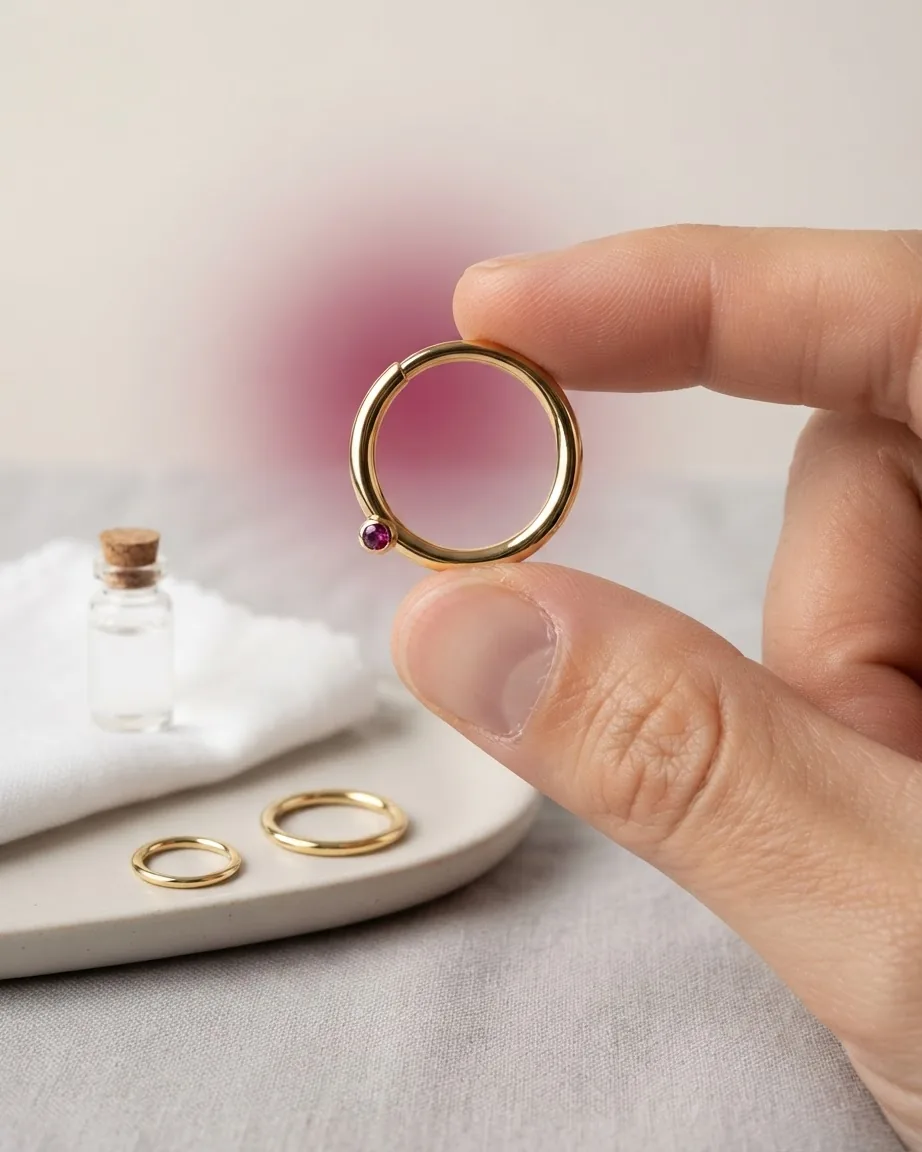
Astrid & Miyu offers a concrete figure: for a conch, “we’d recommend 10mm+”, with the instruction to make sure the diameter is sized correctly for the placement. That is a real, usable number from a studio that pierces conches – and it is a floor, signaled by the plus sign, not a prescription.
The Association of Professional Piercers resolves the same question from the other direction. On jewelry for initial piercings, the APP’s position is that appropriate jewelry size depends on each person’s unique anatomy and the placement of the piercing. In plain terms: the right diameter is the one that clears your conch’s depth and the exact spot the ring passes through, with room for the tissue but not so much slack that the ring flops or snags.
So how do you read a 10mm floor against “it depends”? Not as a contradiction to pick a winner from. The 10mm+ figure tells you which side of the dial you are on – conch hoops run larger than the small rings people associate with a helix or a nostril, because the ring has to span a wide, recessed bowl and still sit cleanly. The APP’s principle tells you that the exact number within “10mm and up” is yours alone. A deep conch set toward the center of the bowl needs more diameter to clear the ridge of the ear than a shallower one set near the edge. There is no validated, one-size conch-hoop protocol in the sourced material, and anyone handing you a single “correct” millimeter figure without looking at your ear is guessing.
Diameter is also not the same measurement as gauge, and conflating them causes bad orders. Diameter is how wide the ring is across – that is the 10mm-plus figure. Gauge is the thickness of the bar that passes through the piercing. The sourced material sets no universal conch gauge number, which is consistent with the APP’s whole stance: thickness, like diameter, is matched to your channel by the person fitting it. The practical move is to let your piercer measure and state both, rather than ordering a ring online to a number you found in an article.
Downsizing versus switching to a hoop: two decisions people blur into one
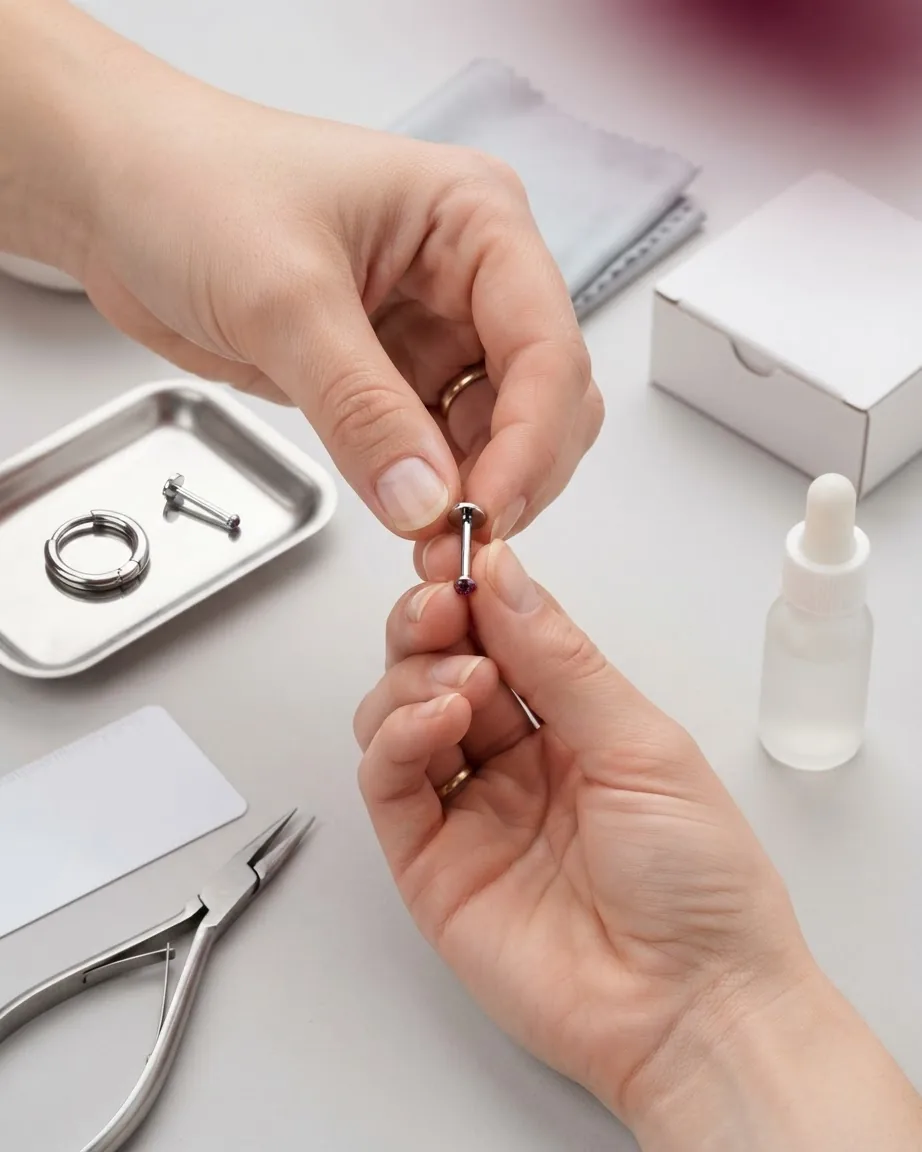
“Changing my jewelry” hides two different events, and treating them as one is a frequent, avoidable mistake.
The first is downsizing. A fresh conch is often fitted with a longer post to leave room for swelling. As that swelling settles over the first weeks and months, the extra length becomes a liability – a long bar rocks, catches on hair and pillows, and keeps the piercing agitated. Downsizing swaps that initial bar for a shorter flat-back that sits closer to the ear. It is a healing-phase adjustment, done while the piercing is still working, and it is usually done by the piercer who assesses how much swelling has gone.
The second is installing a decorative hoop. That is a post-healing event, governed by the readiness check above, done for appearance once the channel is sealed. It is not a continuation of downsizing; it is a separate milestone that happens later.
Why the distinction earns its place: downsizing is part of a healthy heal and may happen more than once, while the hoop is the finish line. People who assume “my piercer shortened my bar, so I can put a ring in now” have confused a swelling adjustment with a healing confirmation. A shorter flat-back means the swelling has gone down. It does not, on its own, mean the inside of the channel has closed. Keep them separate and you stop yourself from reaching for a hoop months too early.
Materials for a conch hoop: titanium, gold grades, and what to leave on the shelf
Material is the one area where the standards are specific, strict, and worth following to the letter – and where the sourced guidance is scoped carefully enough that it is worth knowing what it does and does not cover.
The APP’s standards for initial-piercing jewelry name two acceptable metal families. For titanium, the APP points to two acceptable titanium routes: the implant-certified alloy Ti6Al4V ELI, which must satisfy ASTM F-136, ASTM F1295 or ISO 5832-3, or commercially pure titanium meeting ASTM F-67. Those code numbers are not marketing; they are the specifications that certify the metal is biocompatible enough to sit inside healing tissue. For gold, the APP’s condition is that yellow, rose or white gold is appropriate only when it is 14k or higher, nickel- and cadmium-free, and alloyed for biocompatibility.
The flip side is what the standards exclude, and the exclusions matter more than they look:
- Gold-plated, gold-filled and vermeil. These are a thin gold surface over a base metal. The coating wears, and once it does, the tissue meets whatever is underneath – often an alloy you would never have chosen. For anything sitting in a piercing, plated and filled pieces are off the list.
- Gold below 14k. Lower-karat gold carries more alloy metal, which is where nickel and other irritants ride in. The 14k floor exists to cap that.
- Unmarked or uncertified “titanium.” Without the ASTM or ISO designation, you do not actually know what the metal is.
Here is the scope caveat, stated plainly so you can weigh it. The APP material standards above are written for initial and fresh piercings – the moment when tissue is open and least forgiving. The sourced material does not separately certify which metals are acceptable specifically for a hoop in a fully-healed conch. A sealed channel is more tolerant than an open one, which is why some people wear a wider range of jewelry in old, settled piercings. But “more tolerant” is not “anything goes,” and the implant-titanium and solid-14k-or-higher benchmarks remain the safest reference points, healed or not. If you react to metals, there is no reason to drop below them just because the piercing is old. For the same metal logic applied to another cartilage placement, see our rook jewelry guide, and the broader piercing jewelry section covers pieces by placement.
One thing the sourced material does not give is a price. There is no universal figure for a conch hoop, and the honest reason is that cost tracks the material and the studio more than the placement. A solid 14k-or-higher gold ring from a reputable source sits well above implant-grade titanium; region, studio labor for a fitting, and whether you are buying jewelry alone or jewelry plus an appointment all move the number. Rather than anchoring to a figure from an article, ask your studio to quote the specific ring and fitting for your ear – that is the only number that will actually apply to you.
Flat-back studs, hoops, and retainers: what each piece is actually for
The conch wears three broad jewelry types, and each answers a different need. Knowing which is which keeps you from asking for the wrong one at the wrong time.
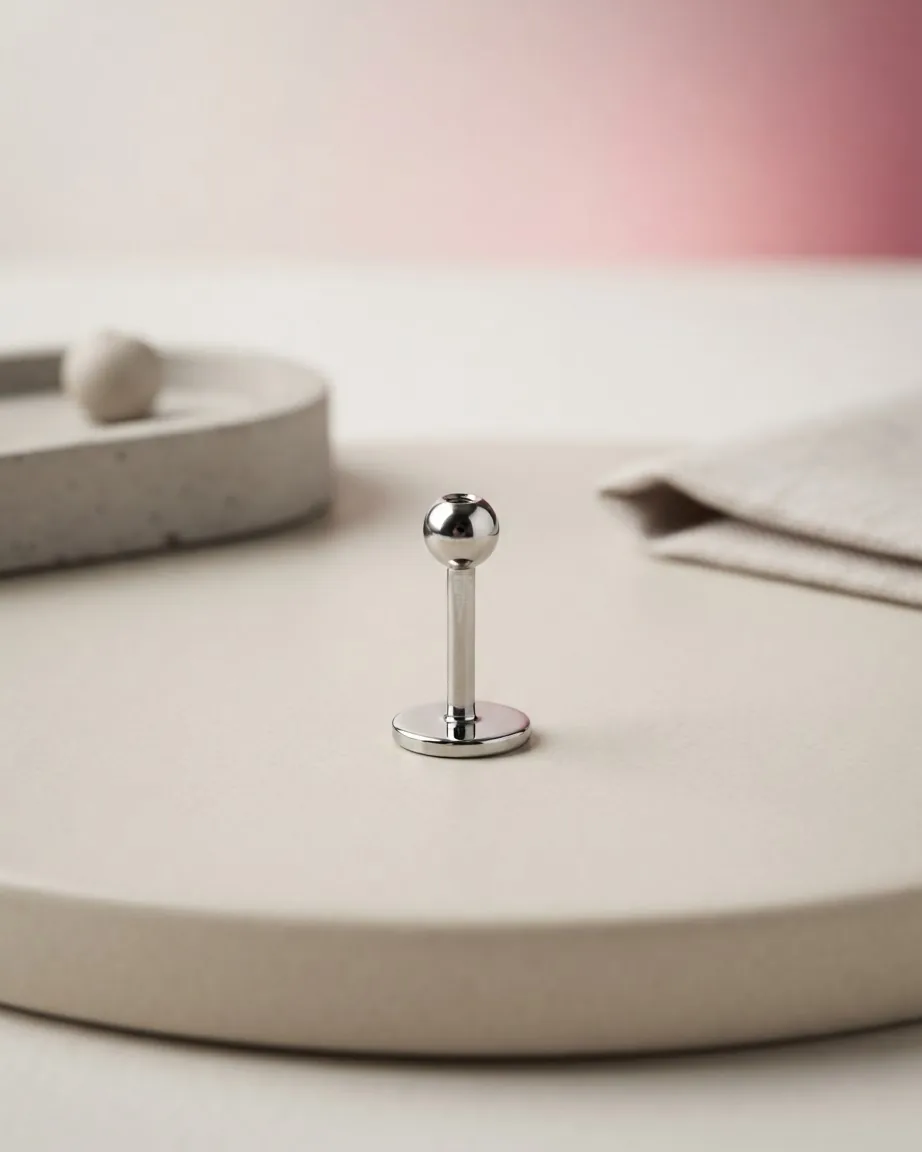
A flat-back stud – sometimes called a labret – has a flat disc on the inside of the ear and a decorative end on the outside, joined by a straight post. The flat disc is the point. It sits flush against the back of the ear, moves very little, and keeps pressure off the forming channel. That stability is why it is the standard fitting for a fresh conch and through the healing months. It is the least dramatic piece and the one that heals best.
A hoop is a ring that passes through the piercing and closes on itself. It rotates, it carries its weight unevenly, and it gives the piercing far more to catch on – all fine in a healed conch, all a liability in a fresh one. The flat-back-versus-hoop choice is really a timing choice: flat-back while healing, hoop once healed. The ring is not a safer or riskier version of the stud so much as a later one.
A retainer is a low-profile, often clear or skin-toned piece whose job is to keep the channel open while staying as invisible as possible. It helps in the specific situations where a visible ring or stud is a problem but you do not want the piercing to start closing – certain workplaces, contact sports, a medical scan. A retainer is a hold, not a destination; it keeps your options open rather than finishing the look.
Warning signs that send you back to your piercer or a clinician
Because the conch is cartilage, the cost of getting a warning sign wrong is higher than on the lobe, and this is the section to take most seriously. Cartilage infections have their own name – perichondritis – and the Cleveland Clinic covers them precisely because they are more stubborn and more consequential than a simple lobe infection. The reason is the same one that makes the conch heal slowly: limited blood supply means the body, and antibiotics, reach the tissue less easily.
Normal early healing includes some tenderness, mild swelling, and light crusting that eases over time. The signals that call for a professional look are the ones that escalate or persist rather than settle:
- Swelling, redness or warmth that spreads outward or returns after it had gone.
- Throbbing or pain that worsens rather than fades, especially past the early weeks.
- Thick yellow or green discharge or pus, as opposed to the light clear-to-pale crusting of ordinary healing.
- A bump that grows, or a lump that does not settle.
- Fever, or redness tracking away from the piercing – signs an infection may be moving beyond the site.
None of this is a self-diagnosis checklist, and it is not a substitute for being seen. Clinician-reviewed health libraries – the Mayo Clinic and the Cleveland Clinic among them – exist so that people can check symptoms against a medical source rather than a forum, and the consistent message across them is to have a suspected infection looked at rather than waited out. For a cartilage piercing, “wait and see” is the wrong default. If the signs above appear, the move is to stop touching or changing the jewelry, keep the area clean, and get it assessed by your piercer or a clinician – your piercer for jewelry and irritation issues, a clinician for anything that looks infected.
This feeds directly back into the hoop decision. Every one of those warning signs is also a reason to hold off on switching jewelry, and an irritation bump that appears after an early hoop is the clearest evidence the swap came too soon. If a ring you have just put in brings tenderness, swelling or a bump back, that is the piercing telling you the channel was not as finished as it looked – return to a flat-back, and have it checked. The deeper risk picture for cartilage is laid out in our inner conch piercing guide.
Faire le calcul: où tombe la “seconde moitié” de la fenêtre de cicatrisation
L’article dit de viser la fin de la fourchette, pas le début. Voici ce que ça donne en chiffres, à partir des deux seules fourchettes citées dans les sources: 5 à 12 mois pour le conch, 6 à 12 mois pour le cartilage en général.
- La fourchette conch couvre 7 mois. 12 − 5 = 7. Entre le lecteur le plus rapide et le plus lent, l’écart est de sept mois – ce n’est pas une marge d’arrondi.
- Poser un anneau à 5 mois, c’est n’avoir laissé que 42 % du temps maximal. 5 ÷ 12 = 0,42. Tu changes ta boucle alors que le cartilage a parcouru moins de la moitié de la durée la plus longue publiée pour ce type de tissu.
- La “seconde moitié” commence à 8,5 mois. (5 + 12) ÷ 2 = 8,5. Tant que tu n’as pas dépassé ce point, tu es dans la première moitié de la fourchette – exactement la zone que l’article conseille d’éviter pour décider.
- Les deux sources se recoupent sur 6 mois. Elles finissent toutes les deux à 12 mois; le conch démarre à 5, le cartilage à 6. Le terrain commun va donc de 6 à 12 mois (12 − 6 = 6). C’est cette zone haute, partagée par les deux, qui est le signal le plus fiable.
Aucun de ces chiffres ne remplace l’avis du perceur, qui regarde l’intérieur du canal. Mais ils fixent le cadre: viser 8,5 mois et plus, pas 5.
Frequently asked questions
Can my conch be pierced with a hoop from the start?
The sourced guidance does not settle this. Astrid & Miyu only addresses moving to a ring after the conch has fully healed, and neither it nor the APP endorses a specific starting piece for a brand-new conch. Given that a hoop rotates and catches far more than a flush stud, the cautious default is a flat-back for the opening months. Ask your piercer what they fit for a fresh conch.
Does a smaller-diameter hoop heal better?
This question usually arrives too late to matter, since the hoop goes in after healing is done. During the swap itself, too tight a ring pinches the bowl of cartilage and too loose a ring flops and snags – neither is about speed, both are about fit. The workable range starts around 10mm and climbs based on how deep your conch is. A piercer measuring your ear beats any number from a page.
Can I wear a gold-plated hoop once my conch is old and settled?
The metal benchmarks were written for open tissue, so a long-healed channel is more forgiving. That tolerance is not a guarantee. Plated and gold-filled pieces shed their surface with wear, exposing a base alloy you did not pick – a real problem if you are nickel-sensitive. Solid 14k-or-higher gold or implant-grade titanium stay the safer choice whether the piercing is new or years old.
How do I actually know healing is finished?
You cannot confirm it from a date alone, and that is the honest limit. Surface calm – no crust, swelling or tenderness, including after sleeping on that side – is necessary but not sufficient, because the inside of the channel can lag behind the outside. Clear the long end of the healing range, not the short end, and have your piercer inspect the channel before any ring goes in.