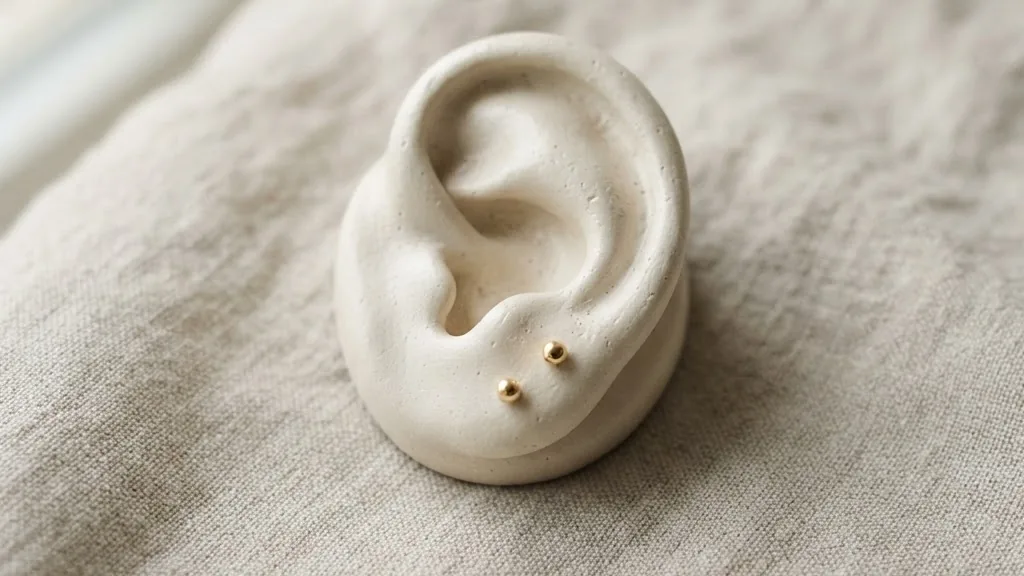
Double piercing earrings are the studs, hoops, and connected pieces designed to be worn across two holes in the earlobe, most often a second lobe piercing stacked just above the first. They open up a whole layer of styling, from two matching studs to graduated sizes to a single chain that links both holes, but they also come with a practical reality: a second piercing is a second fresh wound, and how you choose and wear the earrings affects how well it heals. This guide covers the spacing, gauge, metals, and styling that make a double lobe work, framed neutrally with the health details traced to published guidance.
A second lobe is one of the more forgiving piercings to get, because the lobe is soft, vascular tissue rather than dense cartilage. That is good news for both comfort and healing, but it does not mean the jewelry choices are trivial. Spacing set by your piercer, the right gauge, nickel-free metal, and the discipline to keep the first earrings light and simple all decide whether your double lobe settles cleanly or fights you with irritation.
Every measurement, gauge, healing window, and aftercare detail below is drawn from piercing-industry standards and published health guidance, and cross-checked against current retail listings.
Quick answer: A second lobe hole is usually placed 5 to 8 mm above the first, and double piercing earrings are typically 18G (1.0 mm) or 20G (0.8 mm). A second lobe heals in about 6 to 8 weeks and matures fully over 4 to 6 months, so keep the original studs in and wait 2 to 3 months before switching. While it heals, wear light flat-back studs in implant-grade titanium and save connected, chain, or dangly styles for after the piercing has settled.
What double piercing earrings are
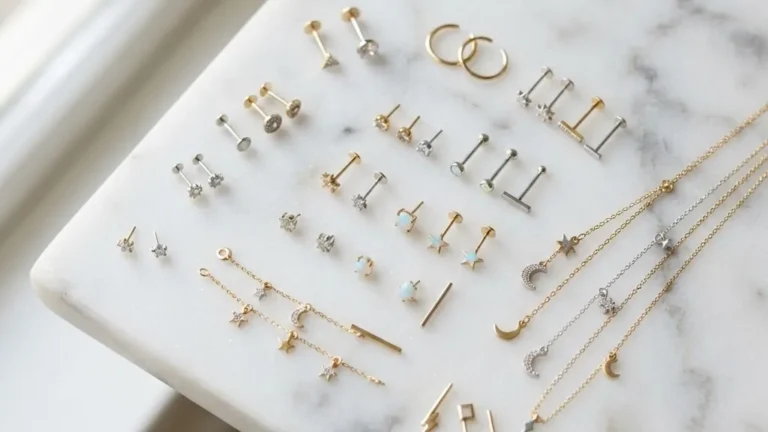
The term covers two overlapping ideas. First, it describes any earrings worn in a double lobe setup, which is a second hole pierced above the original lobe piercing. Second, it describes styles built specifically to span two holes, such as a chain that connects an upper and lower earring, or a coordinated pair meant to be seen together. Either way, the appeal is the same: two holes give you more surface to design with, and a stacked lobe reads as put-together without needing cartilage placements.
Because the second hole sits on the lobe, it shares the lobe’s advantages. Compared with cartilage, it is less painful and heals faster, which is part of why the second lobe is the usual next step after a first piercing. If you are weighing it against other placements, our overview of the types of ear piercings shows where a second lobe fits, and our ear piercing pain chart ranks it near the bottom of the pain scale alongside the first lobe.
It is worth being clear about what double piercing earrings are not. They are not a single novelty product you buy once; they are a way of thinking about two holes as a small canvas. That distinction matters when you shop, because a lot of listings labeled as double earrings are really just ordinary studs sold in a coordinated pair, while others are genuine two-piece connected designs. Both are valid, but they call for different timing. A coordinated pair of simple studs is fine to build toward from day one, whereas a connected piece that physically links the holes belongs to the healed phase. Knowing which kind you are looking at saves you from putting a piece meant for a settled ear into a fresh one.
Placement and spacing
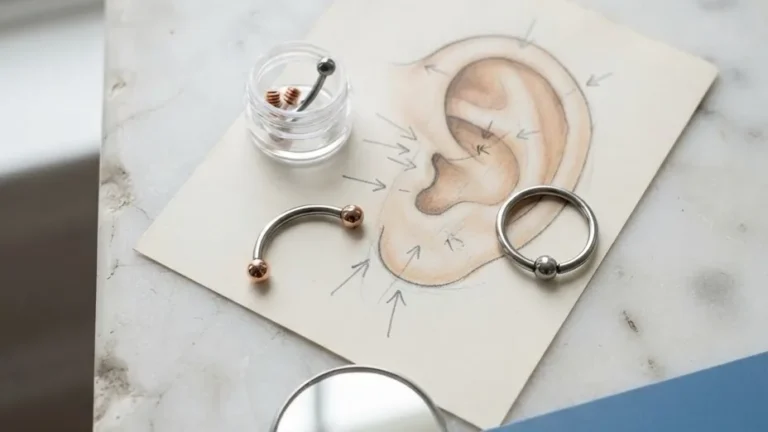
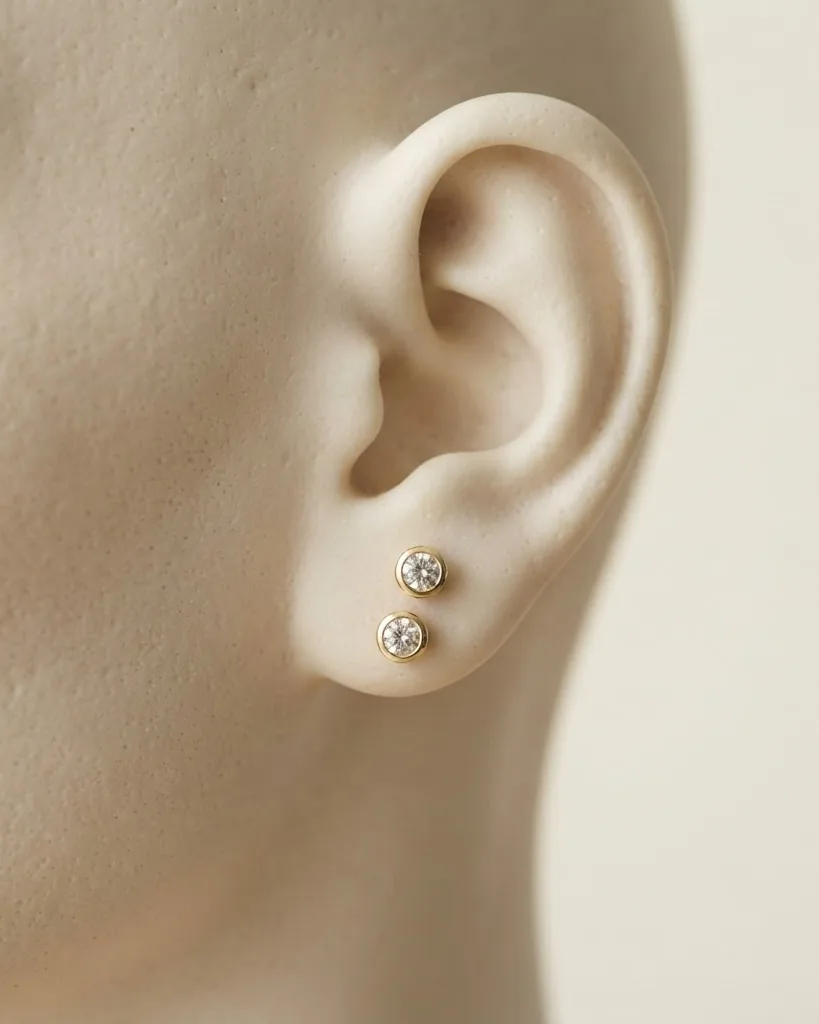
Good double piercing earrings start with good placement, and that is a decision to make with your piercer rather than a marker at home. The second hole is typically placed 5 to 8 mm above the first, aligned to the natural curve of your lobe so the two earrings sit parallel and balanced. A common recommendation is to aim for 6 to 8 mm between holes, which leaves enough room that the two piercings do not crowd each other, share crust, or press together while they heal, yet stays close enough to layer neatly.
| Factor | Typical | Why it matters |
|---|---|---|
| Spacing above first hole | 5 mm to 8 mm | Prevents crowding; keeps earrings parallel |
| Preferred gap | 6 mm to 8 mm | Room to heal and to layer jewelry |
| Alignment | Along the lobe’s curve | Earrings sit balanced, not skewed |
Spacing is not purely cosmetic. Holes placed too close together give each piercing less healthy tissue to heal against and can make the earrings pinch, while holes spaced along the lobe’s curve let each one settle independently. This is exactly why a professional marks the spot and checks it with you in a mirror before piercing.
Your lobe size and shape factor in as well. A larger lobe comfortably carries the wider end of the spacing range and leaves room to add a third hole later, while a smaller lobe may suit the tighter end so the two piercings stay balanced and do not crowd the edge. A good piercer reads your anatomy and places the second hole where it will both heal well and look intentional, rather than defaulting to a fixed number. If you plan to keep building a curated lobe, mention it at the first appointment so the placement leaves you options.
Gauge for a double lobe
Double lobe earrings are usually 18G (1.0 mm) or 20G (0.8 mm), the same standard sizes used for a first lobe. Remember that the gauge scale runs backwards, so 18G is thicker than 20G. A 20G post gives a finer, daintier look, while an 18G post is slightly thicker and sturdier, which makes it a little harder to irritate if the earring is knocked or tugged, and it opens up a wider range of thread-style tops if you plan to swap decorative ends later.
For a fresh second hole, a slightly sturdier gauge has a small practical advantage: a thicker post is less bothered by an accidental snag than a very fine one. Whichever you choose, be pierced at the gauge your piercer recommends and keep that gauge until the hole has healed, rather than downsizing to something very thin too early.
Styling ideas for double piercing earrings
Once the piercing is healed, this is where double earrings get fun, because two holes multiply your options. A few combinations that work well:
- Two matching studs for a clean, symmetrical stack.
- A mismatched or asymmetric pair, such as a star over a moon, for a playful look.
- A stud in the upper hole with a small huggie hoop in the lower, mixing shapes.
- Graduated sizes, with a larger stone in the lower hole and a smaller one above.
- A connected or chain earring that links the two holes into a single piece.
There is one timing rule that matters for health, not style: while the second hole is still healing, keep the jewelry light and simple, ideally a flat-back stud, and save connected, chain, and dangly styles for after it has fully settled. A heavy or linked earring tugs on a fresh piercing every time you move, and that constant pull can irritate the channel or drag it out of shape. Simple now buys you elaborate later.
Once you are healed, weight and balance are the details that separate a comfortable stack from an annoying one. Heavier lower earrings can gradually stretch a lobe over years of daily wear, so if you love a substantial piece, consider reserving it for occasions rather than everyday use. Balancing a slightly larger piece in the lower hole with a smaller one above tends to read as intentional and keeps the weight sensible. And when you do wear a connected style that links both holes, make sure the spacing of the piece matches the spacing of your piercings, since a chain sized for holes farther apart than yours will bow or pull.
Getting a second lobe pierced
A second lobe is usually pierced the same way a first one should be: with a single-use sterile needle by a trained piercer, not a reusable gun. The needle makes a clean channel and lets the piercer place the hole precisely against the mark you both agreed on, which matters more with a second hole because it has to line up with the first. The piercing itself is quick, and because the lobe is soft tissue it ranks near the bottom of any pain scale, comparable to the original lobe piercing rather than to cartilage.
Fresh jewelry is fitted at the time, typically a flat-back stud on a post long enough to allow for the small amount of swelling a lobe produces. From there the healing clock starts, and the rest is aftercare and patience. Choosing a reputable studio for this step pays off in placement accuracy and sterile technique, both of which are harder to guarantee at a mall counter working with a gun.
The best metals for double piercing earrings
Metal matters as much on a lobe as anywhere, because the post is in contact with a healing wound. Nickel is the most common cause of allergic contact dermatitis, and Mayo Clinic identifies jewelry as a frequent trigger of nickel allergy, which is estimated to affect around 10 to 20 percent of people and is lifelong once it develops. A nickel reaction in a fresh double lobe can look like an infection, so nickel-free metal is simple prevention.
For a fresh second hole, implant-grade titanium graded ASTM F-136 is the strong default: nickel-free, lightweight, and biocompatible. Mayo Clinic’s guidance on preventing piercing complications also lists nickel-free stainless steel, surgical-grade stainless steel, solid 18-, 22-, or 24-karat gold, nickel-free white gold, and sterling silver as safer choices. Choose solid gold rather than plating for a fresh piercing, because plating wears; the FDA regulates jewelry as a consumer product but does not certify any piece as safe for a fresh wound, so verifying the metal is on you.
Healing a second lobe and when to change
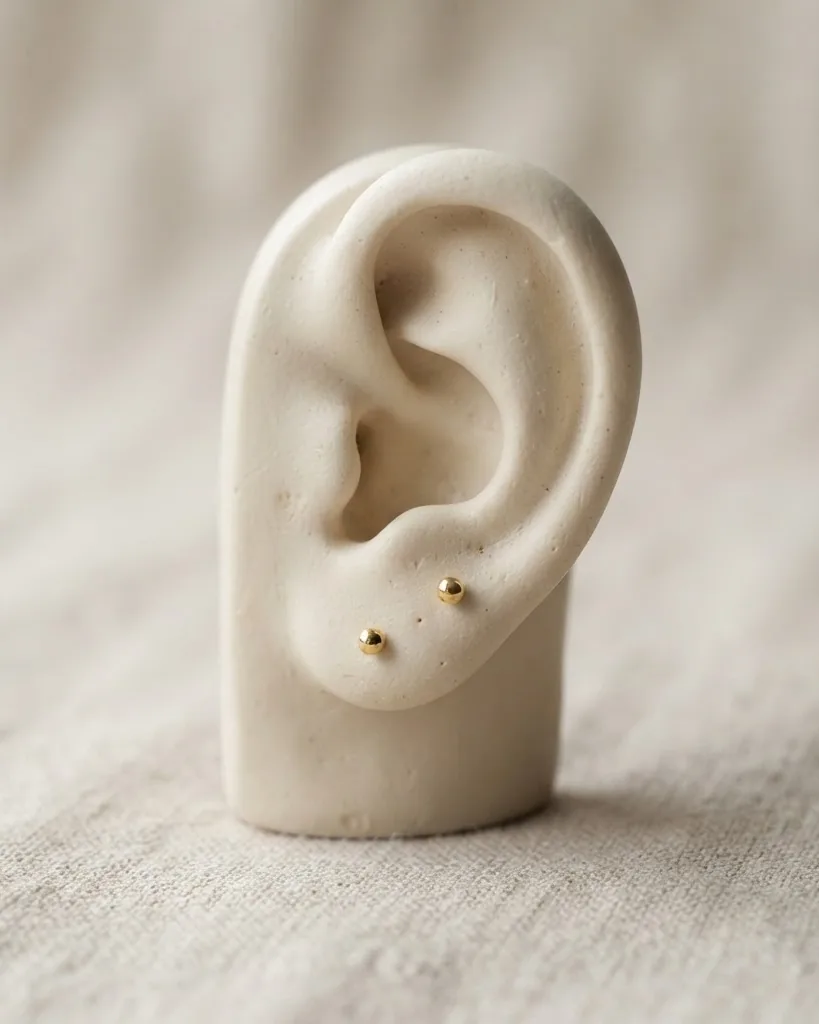
A second lobe heals faster than any cartilage piercing, but faster is not instant. It usually feels healed in about 6 to 8 weeks, and can take 8 to 12 weeks if it is irritated along the way. Full cellular maturation of the channel takes longer, roughly 4 to 6 months, which is why piercers advise waiting at least 2 to 3 months before switching out the starter jewelry. Changing too early is one of the most common causes of irritation, bumps, and dragged-out healing.
Keep the original studs in through that initial window, even overnight, because removing starter jewelry too soon can let a fresh hole start to close. When you do change, choose something light first and give the piercing a chance to tolerate it before moving to heavier or connected styles. For a placement-by-placement view of timelines, see our guide to how long ear piercings take to heal. If you like the smooth, pressure-free profile of a flat-back for healing, our guide to flat piercing jewelry explains why that style is so kind to a fresh piercing.
Aftercare for two fresh holes
Two piercings close together need the same routine as one, applied to both. Irrigate with sterile 0.9 percent saline, keep your hands off, and avoid hydrogen peroxide and antibacterial soaps, which the American Academy of Dermatology notes can damage healing skin in its guidance on caring for new piercings.
- Step 1 – Wash your hands with soap and water before touching either piercing.
- Step 2 – Spray sterile 0.9 percent saline over the front and back of both holes, once or twice a day.
- Step 3 – Let it sit, then gently loosen any crust around each earring so the two do not stick together.
- Step 4 – Pat dry with clean disposable gauze, never a shared cloth towel.
- Step 5 – Leave the jewelry alone; do not twist or remove it, and avoid pressure from sleeping on it or tight headphones.
Because the holes sit close, take care that crust from one does not bind to the other, and be mindful of pressure, since sleeping on that side or wearing over-ear headphones presses on both at once. Keep the fresh double lobe light, clean, and undisturbed, and it typically settles without drama.
Infection warning signs and when to see a professional
Mild soreness, light redness, and a little clear or whitish crust are normal in the first days after any piercing. Signs that point toward infection include spreading redness, warmth, throbbing pain that worsens after the first few days, and yellow or green discharge. Mayo Clinic advises applying a clean, warm compress for about 15 minutes up to four times within 24 hours for irritation, and seeing a professional if the skin becomes sore, red, or puffy, or a hole oozes yellowish fluid.
The lobe clears infections more readily than cartilage because it has a better blood supply, but that is no reason to ignore worsening symptoms or a fever. Do not remove the jewelry yourself if you suspect an infection, since taking it out can trap the infection as the surface closes; keep it in and see a doctor or an experienced piercer. If a persistent bump appears, it is often irritation from a heavy earring or pressure rather than infection, and switching to a light flat-back stud plus protecting the piercing at night usually helps.
With two fresh holes close together, a little extra observation goes a long way. Check both piercings when you clean them, since one can be settling nicely while the other is irritated, and treat each on its own terms rather than assuming they are in the same state. Be especially mindful of anything that presses on both at once, like sleeping on that side or resting a phone against your ear, because a single habit can hold back the whole stack. Kept clean, unpressured, and lightly jeweled, a double lobe is one of the more drama-free piercings to heal, and the caution here is simply about not undoing that easy start with an avoidable snag or a too-early jewelry change.
Frequently asked questions
How far apart should double lobe piercings be?
A second lobe hole is typically placed 5 to 8 mm above the first, aligned with the natural curve of the lobe so the earrings sit parallel. A gap of about 6 to 8 mm is a common target, close enough to layer neatly but far enough that the two piercings do not crowd or press on each other while healing.
What gauge are double lobe piercing earrings?
Double lobe earrings are usually 18 gauge (1.0 mm) or 20 gauge (0.8 mm), the same as a first lobe. A 20G post is finer and daintier, while an 18G post is slightly sturdier and less easily irritated by a knock, and it gives access to more thread-style tops.
Can I wear connected double earrings on a fresh second piercing?
It is best to wait. Connected, chain, and dangly styles tug on a fresh piercing every time you move, which can irritate the channel or pull it out of shape. Wear a light flat-back stud while the second hole heals, and save linked styles for after it has fully settled, usually a few months.
How long does a second lobe piercing take to heal?
A second lobe usually feels healed in about 6 to 8 weeks, sometimes 8 to 12 weeks if it is irritated, and matures fully over roughly 4 to 6 months. Wait at least 2 to 3 months before switching the starter jewelry, since changing too early is a common cause of irritation and bumps.
What metal is safest for double piercing earrings?
Implant-grade titanium graded ASTM F-136 is the safest default for a fresh double lobe: nickel-free, lightweight, and biocompatible. Nickel-free surgical steel and solid 14k or higher gold are also acceptable. Avoid nickel and gold-plated pieces on a fresh piercing, since nickel is the most common contact allergen and plating can wear.
The bottom line
Double piercing earrings are one of the easiest ways to build a styled ear, and a second lobe is a comfortable, relatively fast-healing piercing to base them on. The fundamentals are simple: let a piercer place the second hole 5 to 8 mm above the first, be pierced at 18G or 20G, and start with a light flat-back stud in implant-grade titanium rather than a heavy or connected piece. Keep both fresh holes clean with sterile saline, wait out the 6-to-8-week healing and full 4-to-6-month maturation before you change anything, and hold the chains, dangles, and graduated stacks until the piercing is fully settled. Do that, and the fun part, the endless mixing and matching across two holes, is yours to enjoy without setbacks.