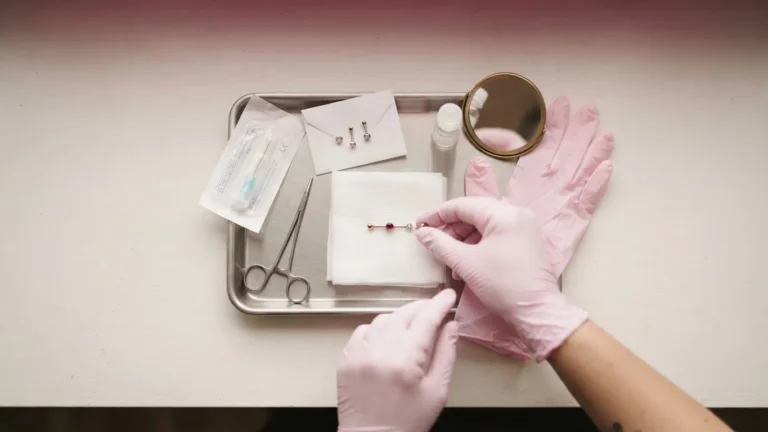
You feel the needle twice. A helix double piercing places two holes in the outer rim of upper ear cartilage, usually in one sitting, and the second pass tends to register sharper than the first because the tissue beside it is already reacting. That one detail reshapes how you plan the appointment, the aftercare, and the decision to stage the two piercings instead of taking them together. The rim cartilage you are asking a piercer to pass through has no direct blood supply of its own, which is the reason the aftercare here is stricter than anything a lobe ever demanded.
According to the retailer guide published by Impuria, a double helix is two cartilage piercings set along the upper curve of the ear; the name borrows from the paired strands of a DNA molecule. A double forward helix moves the same pairing to the front ridge of cartilage near the face. Both sit in avascular tissue, which is why the numbers below matter more than they would on a lobe.
In short: A double helix piercing is two cartilage piercings in the upper ear rim, rated around 5 out of 10 for pain and healing in 6 to 12 months. Expect to feel the pinch twice in one sitting. A piercer typically uses a 16G needle with an internally threaded or threadless flat-back stud about 6mm long, or a hoop 6mm to 8mm across. Cost runs $80 to $160 for the pair. Clean with sterile saline only. Because upper-ear cartilage has poor blood supply, infection here is more serious than on a lobe, and any spreading redness, heat, or fever means a clinician, not a wait-and-see.
Where the Double Helix and Double Forward Helix Actually Sit
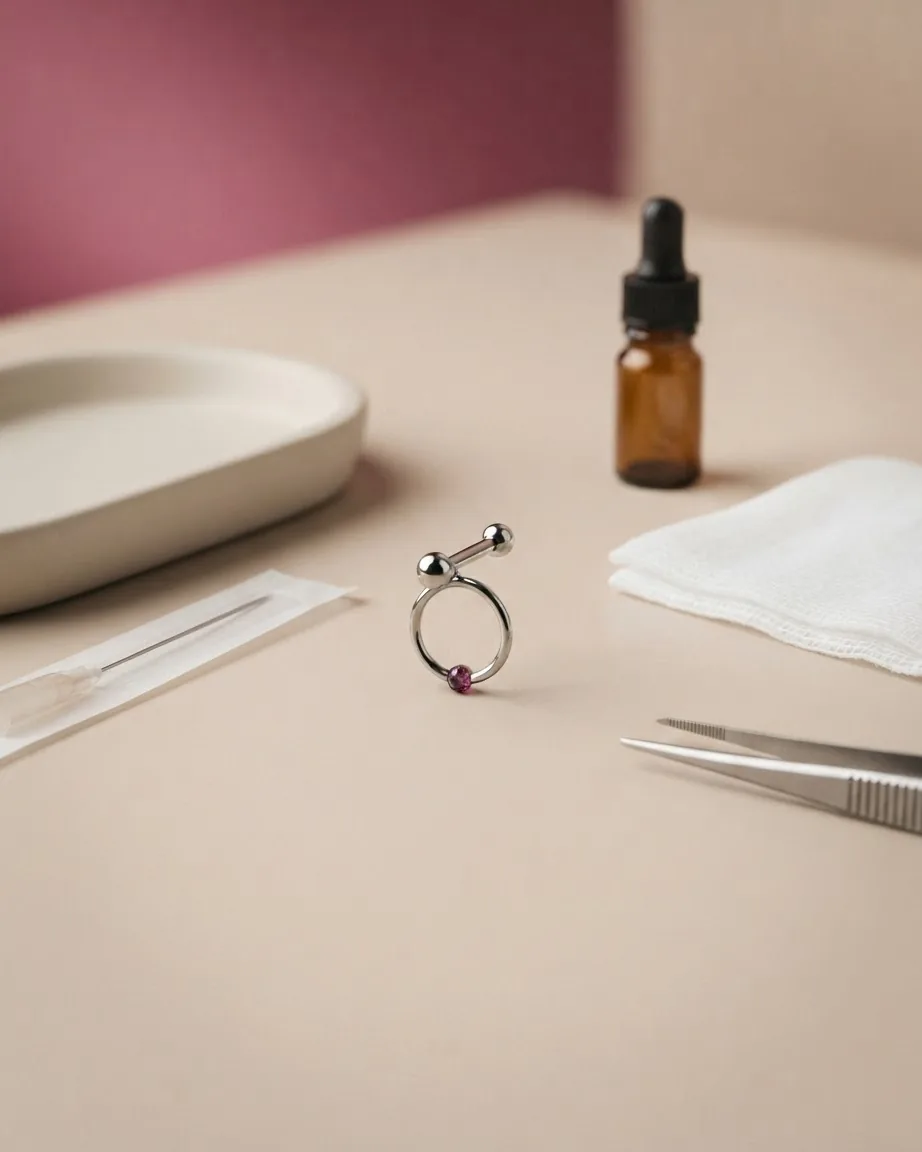
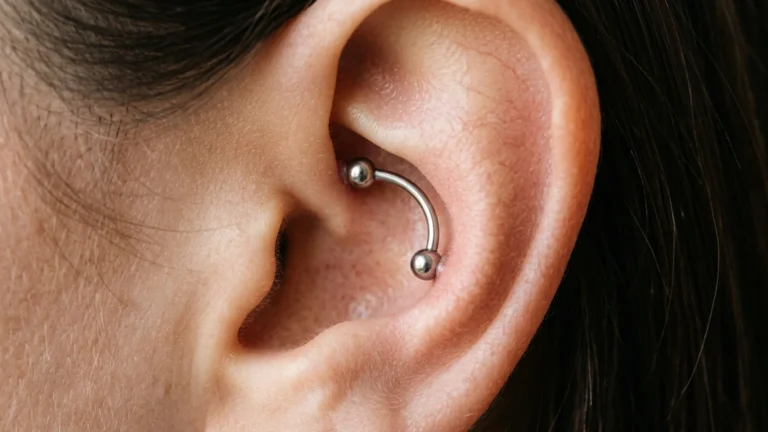
The helix is the curved outer rim of your ear. A double helix stacks two piercings along that rim, one above the other, on the upper cartilage. Impuria describes the standard double helix as two holes on the outer cartilage of the upper ear, and the double forward helix as two holes set closely together on the forward ridge of cartilage, the band that runs toward your face above the tragus.
Placement is anatomy, not preference alone. The rim has to be thick and flat enough to seat two fixtures without crowding, and the piercer reads your ear before marking anything. If the two marks land too close, the piercings share the same irritated zone and the whole area stays reactive longer. The forward helix version sits on a narrower shelf, which limits how much jewelry the spot can carry.
If you are weighing this against other upper-ear placements, the broader ear piercings category maps each spot to the tissue it occupies. See also our faux rook piercing guide.
How Much a Double Helix Piercing Hurts, and Why the Second Pass Feels Worse
On the self-reported 1-to-10 scale used in the Impuria guide, a double helix piercing rates about 5 out of 10. The sensation is a sharp pain that fades quickly. Because the procedure involves two piercings, you feel that pinch twice, and the close spacing can make the second helix register more intensely than a single helix would on its own.
For a single helix, the studio guide at Pierced Addiction puts the procedure at 4 to 6 out of 10, a sharp pinch lasting 1 to 2 seconds as the needle passes through cartilage. Relative to a lobe, cartilage hurts more both during the pass and for weeks afterward, because cartilage has no give and stays tender under pressure.
One honest caveat: these are vendor-defined scales. A 5 from one source and a 4-to-6 from another were not measured against each other under a shared method, so read them as rough bands, not precise rankings. What holds across sources is direction: a double helix hurts more than a single, and both outrank a lobe.
Cartilage Healing Time for a Double Helix: 6 to 12 Months
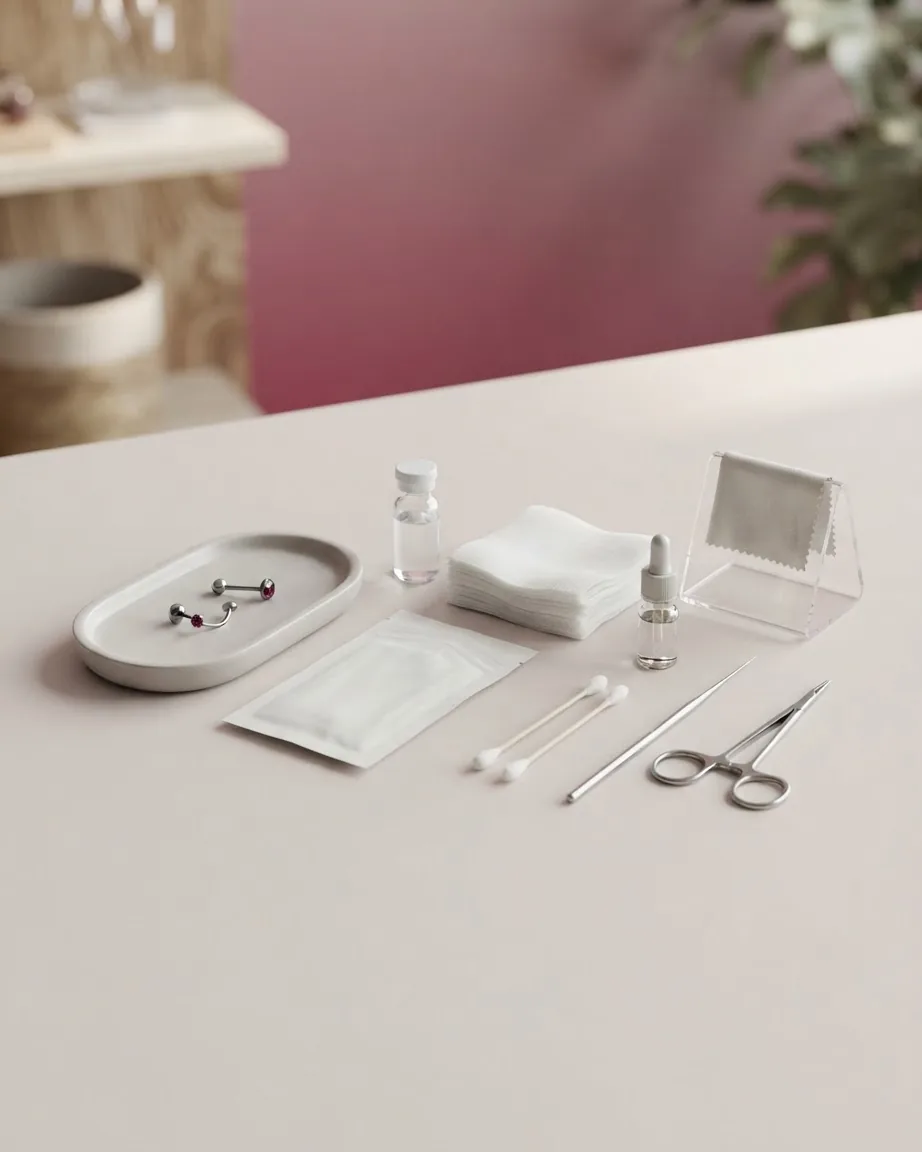
Impuria gives a double helix piercing a healing window of 6 to 12 months to fully heal. That is longer than many people expect, and it is the figure to plan around. Impuria notes the timeline tracks a single helix closely unless the two piercings sit very close together, in which case healing can stretch further.
The sources diverge here in a way worth preserving rather than smoothing over. Impuria’s 6-to-12-month figure describes the double helix. Pierced Addiction gives a single helix 6 to 9 months, during which the cartilage stays reactive to pressure and trauma. These are different placements, not a disagreement about the same one, so the practical read is: a double helix lands at the longer end, 6 to 12 months, because you are healing two cartilage wounds at once. By contrast, Pierced Addiction puts a lobe at 6 to 8 weeks with minimal soreness.
The gap between looking healed and being healed is the trap. Pierced Addiction notes tenderness for 2 to 4 weeks after the piercing, with occasional sensitivity lasting up to 3 months. That surface tenderness fading does not mean the channel inside has closed. For the full cartilage timeline, see our time for cartilage piercing to heal guide.
Aftercare: Sterile Saline, and the Cleaners to Keep Away From It
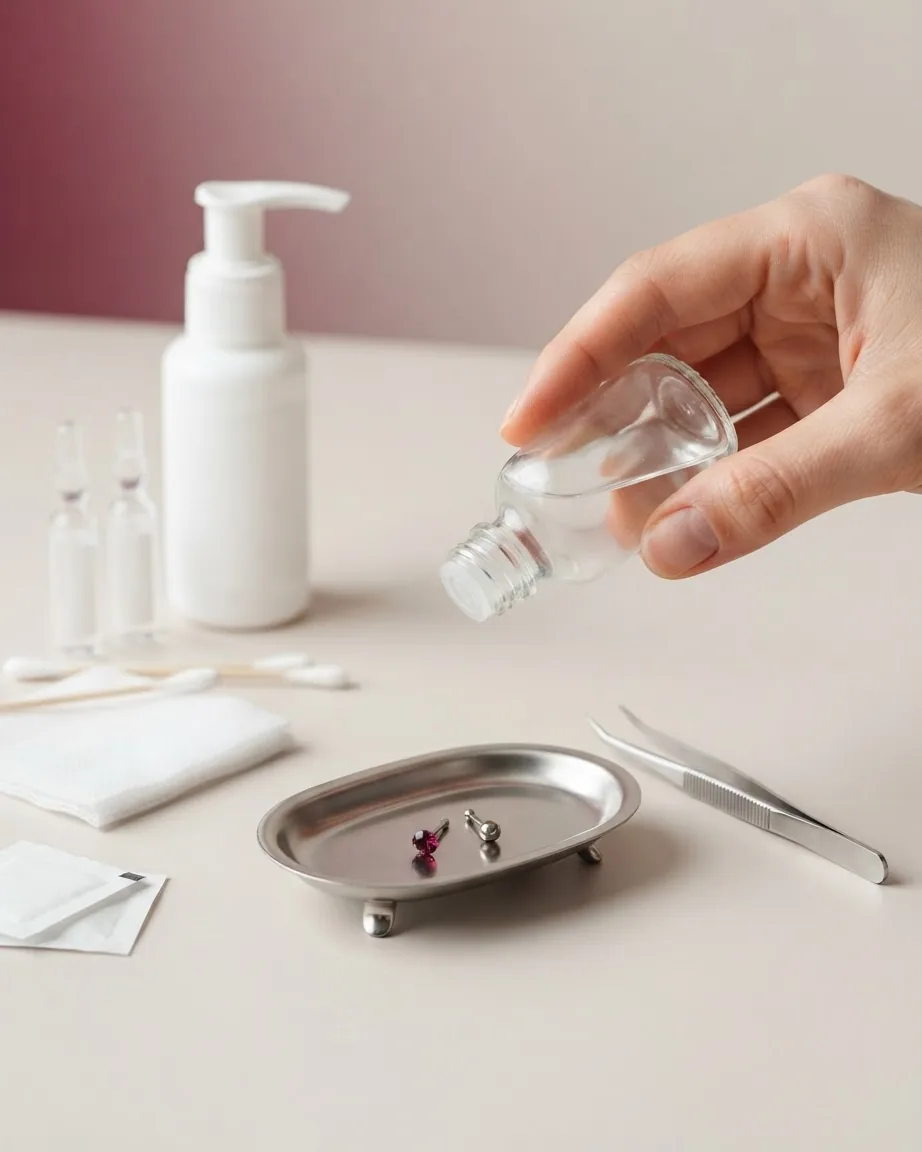
Cartilage aftercare is minimalist on purpose. The routine compiled from professional body-modification standards is a sterile saline rinse once or twice daily, clean hands only, and no rotating or twisting of the jewelry. Rotating a fresh cartilage piercing drags scabbing and bacteria through the channel and is one of the fastest ways to extend an already long heal.
Avoid the harsh agents people reach for by habit. Alcohol, hydrogen peroxide, and antibacterial ointments are too aggressive for healing cartilage and can dry or irritate the tissue. Worth knowing from the clinical literature: the case report in Pediatric Medicine notes that Pseudomonas aeruginosa, the dominant pathogen in ear-cartilage infection, is resistant to many common antiseptics, including alcohol and benzalkonium chloride. That is a reason to lean on sterile saline rather than an improvised cleaning product.
For a warm compress on an irritated, swollen piercing, Mayo Clinic advises applying a clean, warm, damp cloth to the site until the cloth is no longer warm, usually about 15 minutes. Keep submersion to a minimum while healing: pools, hot tubs, lakes, and long baths expose an open cartilage wound to bacteria it cannot fight off well.
None of this is a diagnosis or a treatment plan. If something looks wrong, a piercer or a clinician decides, not a cleaning routine.
Jewelry, Gauge, and Threading: The Spec a Piercer Would Hand You
Here is the shopping checklist that merges vendor sizing with the material standard a professional body would enforce.
- Gauge: Impuria lists 16G as the recommended gauge for double helix piercings. A thinner post risks the body treating the jewelry like a splinter.
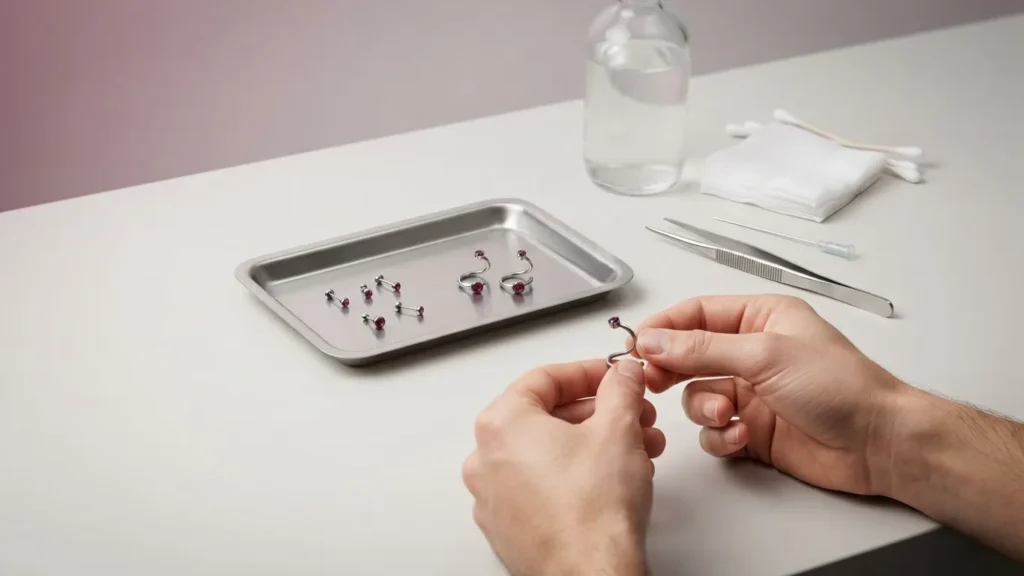
- Style and length: a flat-back stud for the healing phase, with a barbell length around 6mm per Impuria, which keeps the post from snagging hair. A clicker hoop is an option once things settle, in a 6mm to 8mm diameter so the two hoops do not overlap.
- Material and threading: the Association of Professional Piercers specifies implant-certified titanium (Ti6Al4V ELI) compliant with ASTM F-136, ASTM F1295, ISO 5832-3, or commercially pure titanium compliant with ASTM F-67. The APP standard also calls for internally threaded or threadless jewelry, so the part passing through your skin is smooth and no screw threads scrape the healing channel.
The threading point is not cosmetic. Externally threaded jewelry drags a cut thread pattern through fresh tissue on insertion and removal; internally threaded and threadless pieces keep that surface smooth. For a double helix specifically, two smooth flat-backs beat two external-thread studs every time during the heal.
Needle vs. Gun: Why a Piercer Uses One and Not the Other on Cartilage
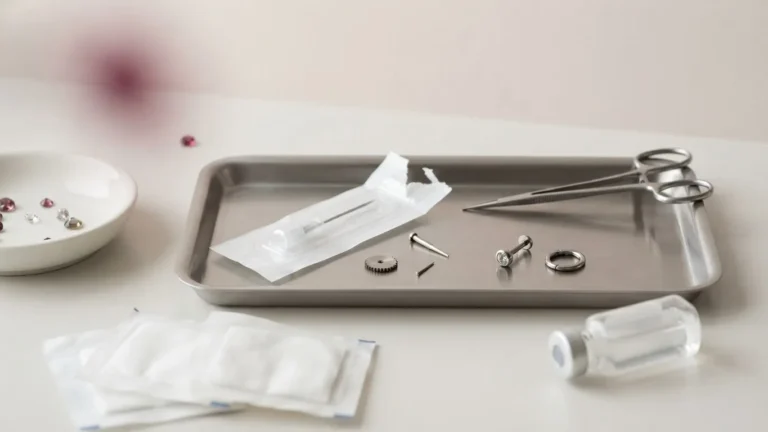
A single-use needle makes a clean cut and lets the piercer place the jewelry precisely at the angle your anatomy needs. A spring-loaded gun forces a blunt stud through cartilage by pressure, crushing tissue rather than cutting it, and most guns cannot be fully sterilized between uses.
This is not only a comfort argument. The Pediatric Medicine case report cites earlier work finding that ears pierced with an open piercing gun in the upper cartilage carry a higher risk of perichondritis. The same report describes a United States cohort of 118 ears pierced in a commercial shop, in which 7 developed P. aeruginosa cartilage infection and 18 more showed signs suggestive of infection. The procedure guidance from the studio guide at Pierced.co reflects the standard of needle piercing for cartilage placements for the same reason. For a double helix, choose a studio that pierces with a needle.
What a Double Helix Piercing Costs: $80 to $160 for the Pair
Impuria puts a double helix piercing at $80 to $160. The figure runs higher than a single piercing because you are paying for two piercings in one sitting and for two pieces of starter jewelry. That range is the piercing-plus-jewelry quote; it is not necessarily your final checkout total once studio fees and jewelry upgrades are added.
No reliable itemized split of that $80-to-$160 range exists to break out, so treat it as a band rather than a precise quote and confirm what is included before you book. For how a quoted cartilage price turns into a real total, see our cartilage piercing cost guide.
One Sitting or Staged? How Close Placement Changes the Call
You can get both piercings in one appointment, which is the common route, or stage them, letting the first heal before adding the second. The deciding variable is spacing and swelling room. Impuria notes that when the two piercings sit very close together, healing can stretch beyond the usual window, and the jewelry has to allow room for swelling or it embeds.
If your anatomy forces the two marks tight against each other, staging has a real argument: heal one cartilage wound at a time, so the whole zone is not inflamed at once. If the rim gives the piercer comfortable spacing, one sitting is reasonable and spares you a second round of early tenderness. The piercer reading your ear is better placed to make this call than a rule of thumb. When you do add a second piercing to a stacked ear, the standing guidance is to wait for the first to heal before piercing beside it, which for cartilage means months, not weeks. The spacing logic for stacked lobes is covered in our double lobe piercing guide.
Infection Signs and Perichondritis: Why Cartilage Is Not a Lobe
Cartilage has almost no blood supply of its own, and that single fact drives the risk. Cleveland Clinic describes perichondritis as a bacterial infection of the tissue around ear cartilage, most commonly caused by high ear cartilage piercing. Because the immune system reaches cartilage poorly, an infection that a lobe would shrug off can progress here.
The Pediatric Medicine case report sets out the timeline and the worst case. Perichondritis typically begins 3 to 4 weeks after piercing with dull pain, redness, and localized heat. P. aeruginosa is the dominant organism, found in up to 87% of cases. Left to progress, it can destroy cartilage and leave a permanent “cauliflower ear” deformity. The report documents a 14-year-old patient who presented with redness, warmth, swelling, moderate pain, and fever just 2 days into worsening symptoms after a right helix piercing; culture confirmed P. aeruginosa, and her antibiotic regimen was escalated to cefepime at 2 g every 8 hours for 10 days.
Know the warning line. Early tenderness and mild pinkness in the first days are expected. What is not expected: spreading redness, heat that grows, swelling that worsens past the first week, pus, or any fever. Mayo Clinic’s guidance on ear piercings that are not healing well treats those as reasons to be seen. Spreading or systemic signs around a cartilage piercing are a same-day clinician matter, not a saline-and-wait one.
This section is informational, not a diagnosis. If your piercing shows any of these signs, see a clinician or your piercer rather than self-treating.
How Often Cartilage Piercings Go Wrong, by the Numbers
Allergen warning
The complication rate for upper-ear piercings is high enough to take seriously, and two source lineages land near the same figure from different definitions. The Pediatric Medicine report states that ear piercings beyond the earlobe are particularly prone to complications, with up to 35% of individuals experiencing one or more adverse events. Among those, it lists localized infections at 77%, allergic reactions at 43%, and keloid scarring at 2.5%. Those three are overlapping categories, not slices of a pie, so they are not meant to be added together.
From a separate line, the dermatology review indexed on PMC puts the incidence of complications from transcartilaginous piercing at approximately 35%, attributing the rate to the avascular nature of auricular cartilage. The two 35% figures describe overlapping but not identical populations, “beyond the earlobe” versus “transcartilaginous,” so they corroborate the magnitude without being the same statistic. Either way, roughly a third is the number to carry, and it is the strongest argument for a needle, a clean studio, and strict saline aftercare.
When You Can Safely Change a Double Helix
Do not downsize or swap the jewelry on a feel-better schedule. Because a double helix sits in cartilage, the inside of the channel can still be open and fragile while the outside looks settled. Changing too early can tear the channel and reset the heal. Given the 6-to-12-month cartilage window, an early change here means months in, not weeks, and only once the piercing is non-tender, free of discharge, and stable, ideally with your piercer confirming it is ready. The guide on changing an ear piercing covers the readiness check in detail.
Who Is Getting Cartilage Piercings
Context on how common this has become: the Pediatric Medicine report cites Pew Research Center data finding that among people aged 18 to 29, 38% have at least one tattoo and 23% have piercings in areas other than the earlobe. Non-lobe piercing is now a mainstream choice for younger adults, which is part of why clinicians increasingly flag cartilage complications as a public-health matter rather than a rare event. The prevalence does not make the procedure safer; it makes choosing a careful studio and following aftercare more important, not less.
Is a double helix safe to get in one appointment?
Often, yes, and it is the usual route. The exception is tight spacing: when the two fixtures crowd each other, inflammation concentrates in one zone and the heal can run past 12 months. If your rim is narrow, staging the second piercing after the first settles spares that doubled-up irritation. Let the piercer judge your ear’s room before committing.
Can I wear a hoop in a fresh double helix?
Not during early healing. A flat-back stud around 6mm holds steady and resists snagging while cartilage knits. Hoops, in a 6mm to 8mm diameter, suit the placement once it is stable, but a ring moves more and tugs the channel, which prolongs an already lengthy cartilage heal. Save the hoop swap for a confirmed, settled piercing.
Why is a cartilage infection more dangerous than a lobe infection?
Cartilage carries almost no blood supply, so immune cells and antibiotics reach it poorly. An infection that a lobe clears can instead spread to the surrounding tissue as perichondritis, and P. aeruginosa, the organism behind most such cases, resists many drugstore antiseptics. Untreated, the process can dissolve cartilage and leave a lasting deformity, which is why spreading symptoms warrant a clinician fast.
What does the second helix pass feel like compared with the first?
Slightly sharper. The tissue beside the first hole is already irritated when the needle makes the second pass, so the nerves there are primed. The overall rating still sits around 5 out of 10, and each pinch is brief, but expect the back-to-back nature to feel more pointed than a single cartilage piercing done alone.
Mentions of infection, perichondritis, and antibiotics here describe published clinical cases for your awareness; they are not medical advice. For anything that looks or feels wrong on your own ear, see your piercer or a clinician.
Double Helix vs. Lobe: The Real Healing Math (and the False-Finish Gap)
Every figure here comes straight from the sources in this guide, run through one piece of arithmetic each source leaves to you. Converting the double helix’s 6-to-12-month window into weeks at 4 weeks per month puts full healing at 24 to 48 weeks. Set that against Pierced Addiction’s lobe figure of 6 to 8 weeks and the gap stops being abstract: a double helix takes between 3 times longer (fastest helix vs. slowest lobe) and 8 times longer (slowest helix vs. fastest lobe) to fully heal than a lobe.
- 24 to 48 weeks – the 6-to-12-month double-helix window expressed in weeks, so it’s comparable to the lobe figure.
- 3x longer, best case – 24 weeks (fastest full heal) divided by the lobe’s slowest 8 weeks.
- 8x longer, worst case – 48 weeks (slowest full heal) divided by the lobe’s fastest 6 weeks.
- 22 weeks of hidden healing – even in the fastest case (24 weeks), surface tenderness can fade as early as 2 weeks, leaving roughly 22 weeks where the piercing feels done but the cartilage channel is still closing.
That last line is the whole point of planning around this placement. The moment it stops hurting is not the moment it’s safe to change jewelry, sleep on it, or stop the saline routine. Note that the lobe and tenderness figures come from Pierced Addiction’s single-helix/lobe guide while the 6-to-12-month window is Impuria’s double-helix figure; they describe different placements measured by different vendors, so treat these as directional bands, not lab-precise rankings.