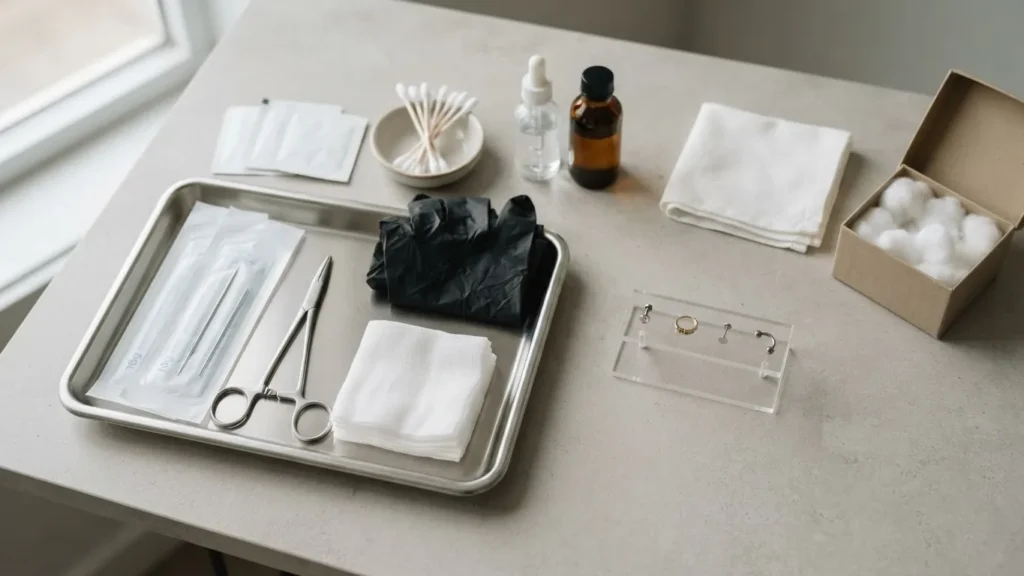
A quoted price almost never equals your checkout total. Across the studios that publish their menus, the piercing service fee and the jewelry are two separate line items, and the fee is the smaller one. So when you ask how much does a cartilage piercing cost, the honest answer starts with a correction: the number on the price board is the labor, not the earring. At Baron Art Studio, cartilage service fees run $15 – $50 depending on placement and location, and that figure explicitly excludes the jewelry. Add the jewelry and the real spend climbs.
There is a second complication worth naming early. “Cartilage piercing” is not one piercing. It is a category covering the helix, forward helix, tragus, conch, rook, daith and snug, and at least one studio prices those placements differently from one another. No single standard cartilage price exists in the figures published by the studios cited here.
The short answer: service fee plus jewelry, billed apart
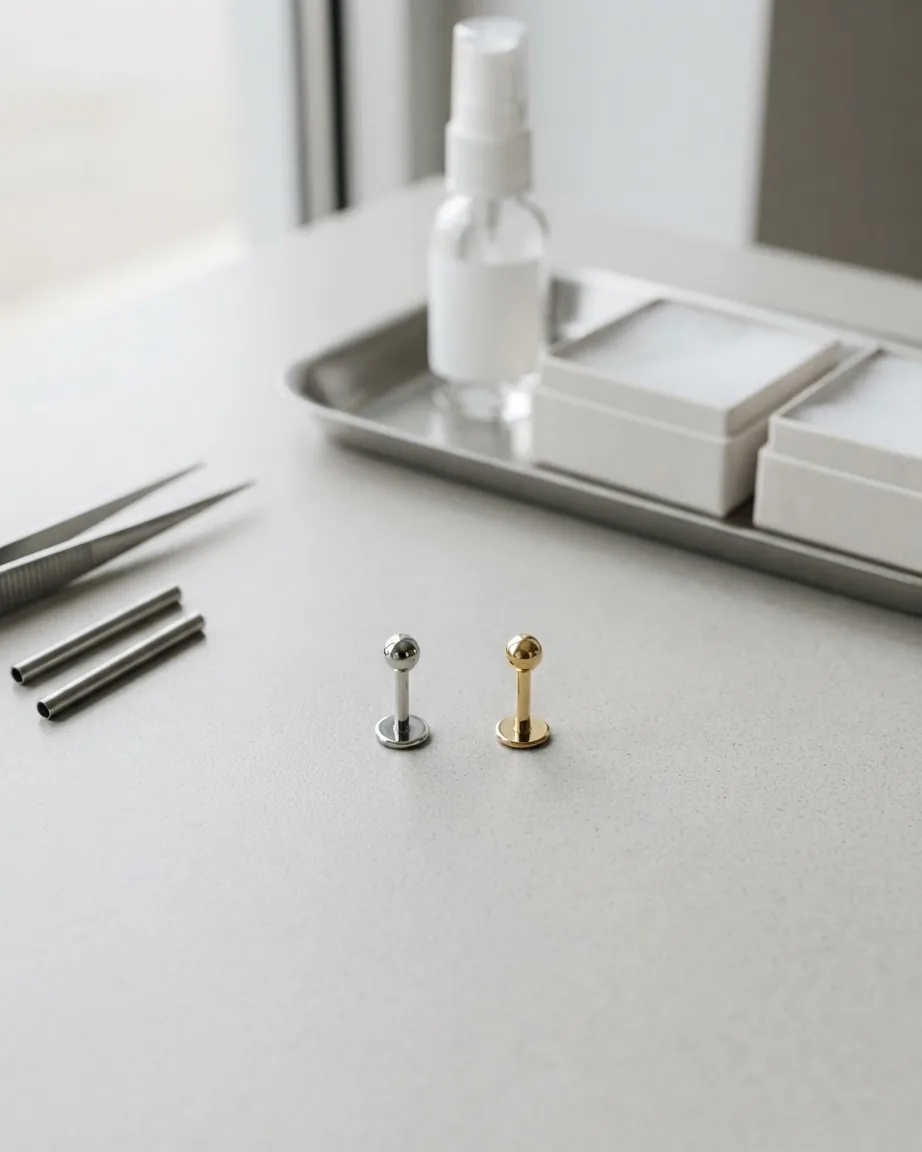
A cartilage piercing service fee runs roughly $15 – $50 per placement, and that fee does not include the earring. Starter jewelry is priced on its own: titanium from about $15 – $35 per piece at the studios below, and 14k gold from roughly $65 – $85. So a realistic all-in for one healed-ready cartilage piercing lands somewhere between a low-end titanium setup near $30 and a gold setup well over $100, depending on the studio, the placement and the metal you pick. Expect the jewelry to cost as much as, or more than, the piercing itself. Budget for both, not one.
Why the service fee and the jewelry are two different numbers
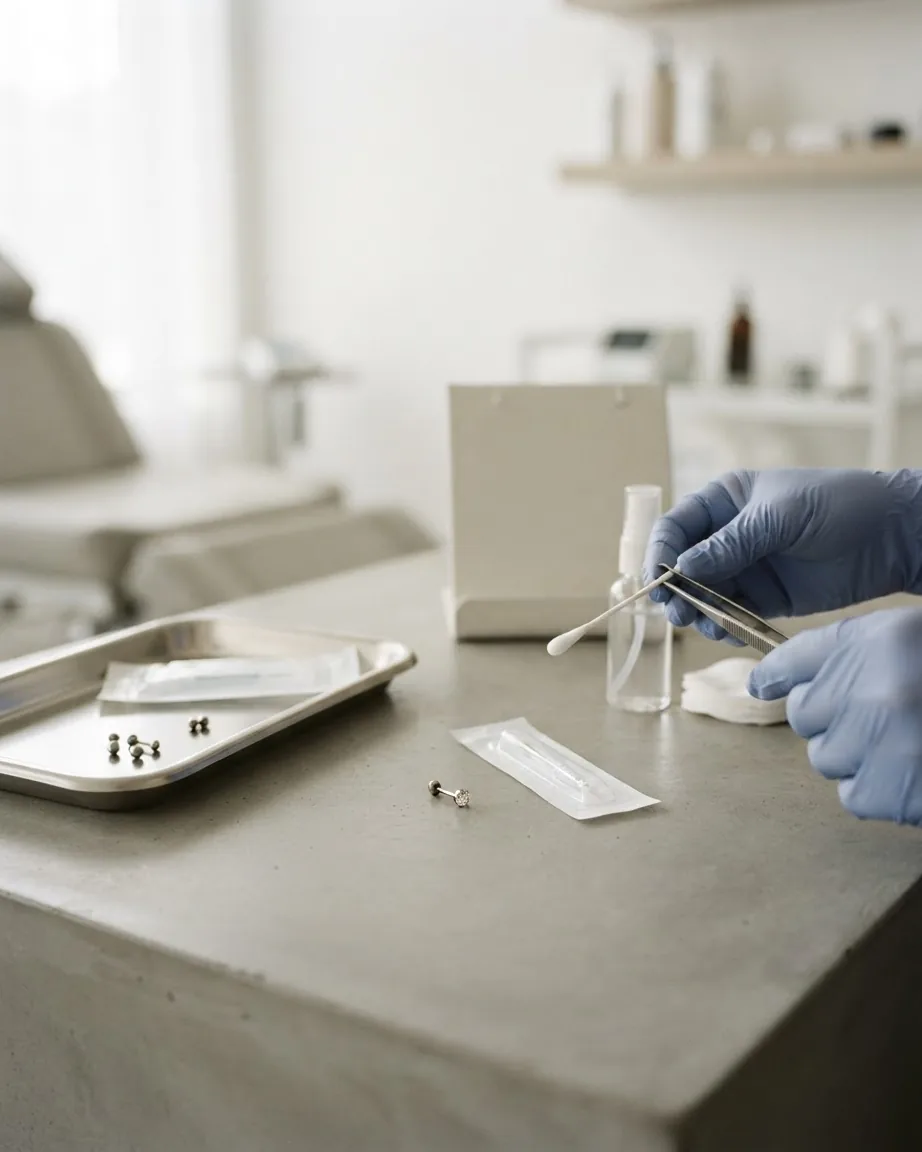
Four studios that post their prices – Baron Art Studio, Peridot Studio, Skynn and Rowan – keep the piercing service and the jewelry on separate lines, and that structure is the thing most first-time clients misread. Baron Art states it plainly: fees are per placement and never include jewelry. Peridot charges $40 for one ear-piercing service and prices jewelry separately on top. Skynn posts a $40 fee per piercing, $80 per pair, with the earring extra. Rowan charges $35 per needle piercing, listed as “+cost of piercing jewelry.”
The practical consequence: a $40 board price is the floor, not the total. The number that actually matters to your wallet is fee plus jewelry, and the jewelry half swings the widest. For a fuller map of this gap across placements, see our pain cost section.
Placement-specific pricing inside the cartilage category
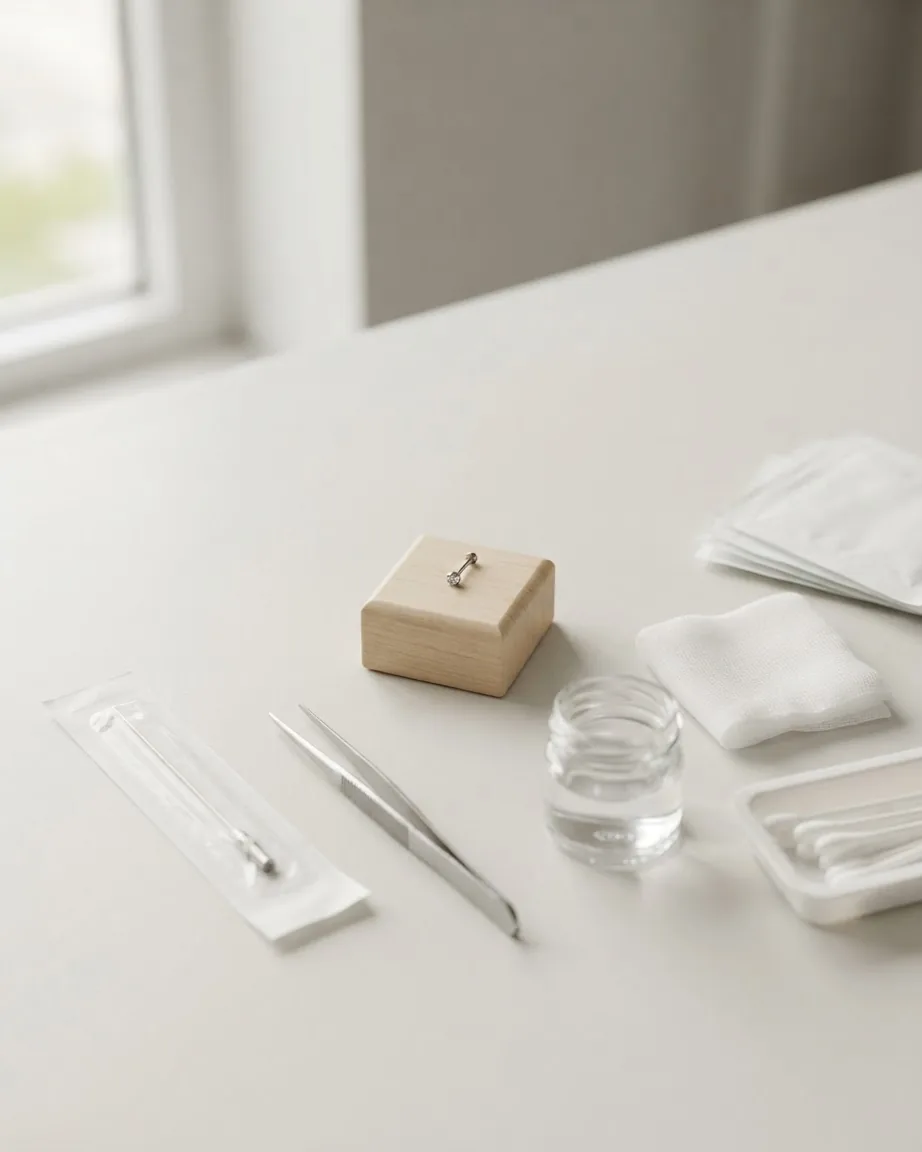
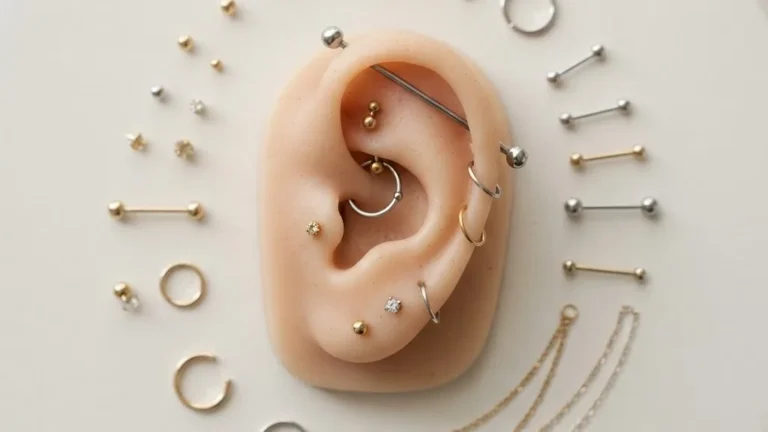
There is no flat “cartilage” rate, because the ear has many surfaces and studios price them individually. Baron Art Studio publishes a placement-by-placement breakdown within the cartilage category, and the spread is real:
- Helix: $15 – $40, depending on the studio location.
- Forward helix: $40.
- Flat: $40.
- Tragus: $40.
- Conch: $40.
- Rook: $40.
- Daith: $40 – $50.
- Snug: $40 – $50.
Every one of those is the service fee only, per placement, jewelry excluded. The helix is the outlier on the low end at $15 – $40; most of the structured cartilage sits at $40, and the daith and snug top out the service side at $40 – $50. Peridot groups helix, forward helix, tragus, rook and conch under one ear-piercing service billed at $40 for one piercing, a flatter structure than the placement-tiered list. That difference between studios is not a mistake on either side; it is two legitimate ways to price the same part of the body.
If you are weighing one placement against another on pain and healing rather than price alone, our Faux Rook Piercing guide addresses one of the trickier spots on the ear.
What starter jewelry costs: titanium, 14k gold and needle jewelry
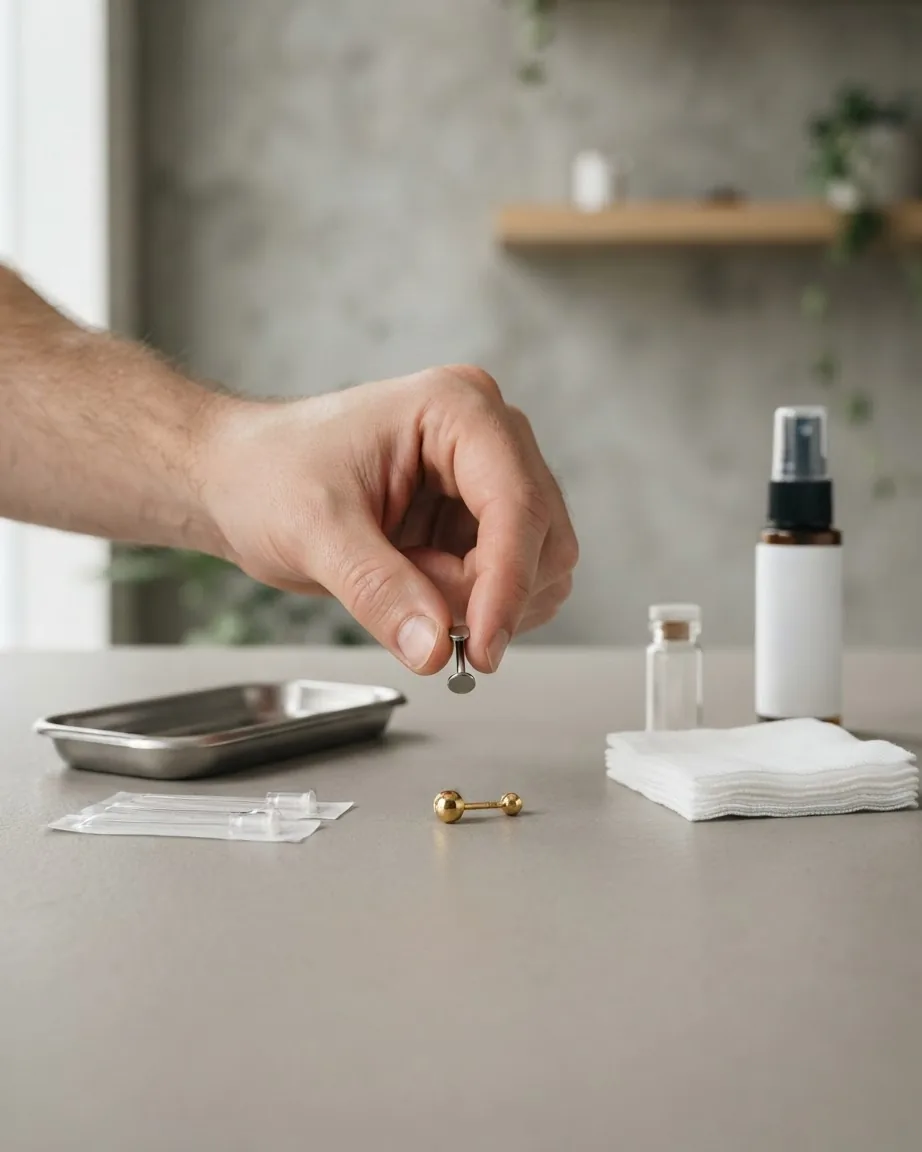
This is where the budget moves. Starter jewelry is priced by material and quality, and the studios post starting figures – not fixed quotes – because the final piece depends on the exact end you choose.
- Baron Art Studio: titanium starts at $15 – $25; 14k gold starts at $65 – $70, depending on the studio.
- Peridot: titanium starts around $35 and up per piece; gold starts around $85 and up per piece.
- Skynn: starter jewelry for lobes, helix, forward helix, tragus and conch starts at $30 per piercing.
- Rowan: needle-piercing jewelry starts at $68.
These are not like-for-like quotes. Baron Art gives a studio-dependent range, Peridot gives approximate “and up” starting points, Skynn gives a placement-grouped floor, and Rowan gives a single needle-jewelry starting price. You cannot line them up and declare one studio cheaper; the conditions behind each number differ. What they share is direction: titanium is the entry tier, gold roughly doubles it, and the jewelry alone can exceed the service fee.
Price is not proof of safe metal
A higher jewelry price does not, by itself, confirm the material is safe to heal in. The Association of Professional Piercers ties the question to a standard rather than a dollar figure: its Initial Jewelry Standard allows jewelry made from any material that meets ASTM and/or ISO standards for the manufacture of surgical implants. In plain terms, ask whether the metal is implant-grade titanium or appropriately rated gold – not whether it looks expensive. Cleveland Clinic lists 14K gold, medical-grade steel and titanium among the safest choices for ears. Match the two: an implant-standard titanium end at $15 – $35 can be a better heal than a pricier piece that carries no such certification.
Per-session caps and piercing more than one spot at once
If you plan to stack two or three cartilage piercings in a single visit, the service fee may not multiply the way you expect. Baron Art caps the piercing service charge per session for up to 3 piercings – $40 at most of its studios, and $60 in Berkeley. That cap covers the labor side only; dermal, surface and genital piercings are excluded, and each location’s current piercing special sets the exact conditions. The jewelry, as everywhere else, is still charged per piece.
The Berkeley $60 figure is the single data point on geographic variation in these published menus. One city running a higher cap than the others tells you location moves the price, but it is not enough to chart a regional map. Treat it as a reminder to read the specific studio’s menu rather than assume a national rate.
Age restrictions change which placements are even available
Cost is moot if the studio will not perform the piercing at your age, and the cutoffs vary by placement. Peridot sets these policies: age restrictions for helix and facial piercings are 13 years old; any piercing on the torso, such as a navel piercing, is 16 years old; and private piercings, such as nipple piercings, must be 18 years old. Rowan sits at the other end of accessibility for ears specifically, stating it provides an ear piercing experience for everyone from 2 months to over 100 years old. These are each studio’s own stated policy, not a universal rule – confirm the cutoff with the studio you intend to visit, and expect proof of age and, for minors, guardian consent.
The follow-up cost nobody quotes: downsizing
The initial appointment is not always the complete cost. Cartilage piercings are set with a slightly longer post to leave room for swelling, and once that swelling settles, the jewelry often needs swapping for a shorter one. The Association of Professional Piercers describes this as downsizing – switching a piercing to a shorter post once initial swelling has subsided – and notes many piercings need it before they are fully healed.
That step can carry a price. Skynn says its checkups are free, but a downsize will cost the new post or barbell, generally $15 – $20 per piercing. So a cartilage piercing you budgeted at fee-plus-jewelry may pick up another $15 – $20 some weeks later. One caveat the sources support and we will not overstate: no cited studio establishes that every client incurs an identical downsizing cost or timing. Whether your specific placement needs a paid downsize, and when, is a studio-specific call combined with how your swelling resolves. Ask your piercer at the time of booking whether downsizing is included or billed.
Why needle piercing drives both the price and the safety case
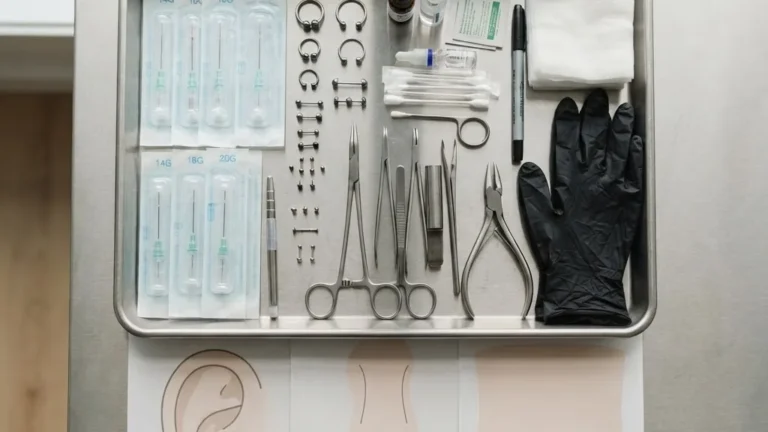
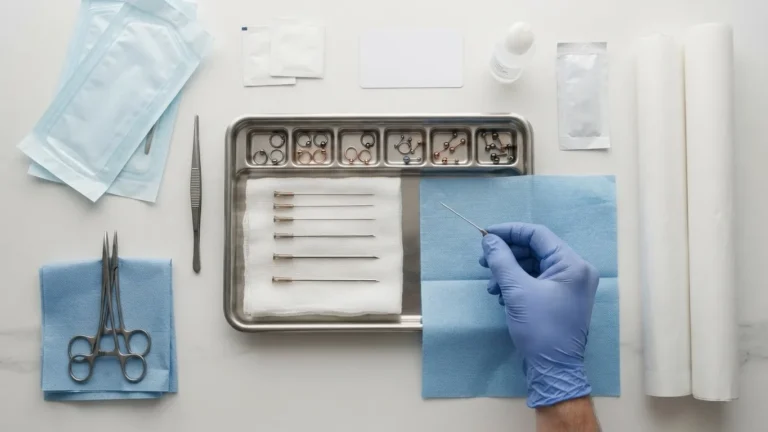
The method behind the fee matters for how well the piercing heals, and the reasoning favors the needle. Rowan performs its piercings with a single-use, sterilized hollow-bore needle and recommends needle piercings for placements across the ear from conch to helix. Cleveland Clinic makes the clinical case directly: it is often said that piercing needles may hurt less than piercing guns, and family medicine physician Shannon Thompson, DO, recommends needles – in part because piercing guns are not always sterilized between uses, as noted in its guidance on getting your ears pierced. For cartilage specifically, a gun forces blunt trauma through dense tissue; a hollow needle removes a clean channel. That is the safety argument in a sentence, and it is why a reputable cartilage studio quotes a needle service, not a gun.
How much a cartilage piercing hurts, relative to a lobe
Pain is part of the decision, and the honest ranking is anatomical. Earlobes are fatty tissue with few nerves, so they hurt the least. The rest of the ear is cartilage – thicker, with more nerves – so those piercings tend to be more painful. Set your expectation there: a cartilage piercing sits above a lobe on the discomfort scale, not off the chart.
What the healing timeline does to your total budget
Price and time are linked, because the longer the heal, the more follow-up visits and jewelry decisions you face. Cleveland Clinic reports that earlobe piercings heal in about six to eight weeks, while cartilage piercings take longer and may take up to six months or a year to fully heal – cartilage gets less blood supply than soft tissue, so it repairs slowly. The window for daith, rook, conch, helix and tragus piercings runs six to 12 months. For a deeper look at what that channel is actually doing, see our Time for Cartilage Piercing to Heal guide.
That long window is why the jewelry you start with matters more than the money suggests. You will wear the initial piece for months, so paying for an implant-standard metal up front is a healing decision, not a vanity one.
When it is safe to change the jewelry – and why rushing costs more
Changing the starter jewelry too early is the mistake that turns a healthy cartilage piercing into an expensive repair. The timeline above sets the floor: with a six-to-12-month heal on cartilage, a piece that looks settled at two months is usually not done healing inside. Cleveland Clinic lists the signs of a piercing that is actually healed – it does not hurt, it is not red or swollen, it is not crusty or scabbing, and you can rotate the jewelry easily – and advises waiting until all of those hold before switching earrings.
Two further points keep the channel intact. Rotating the jewelry on a schedule is no longer advised; a piercing is a puncture wound, and disturbing it complicates healing. And a planned jewelry change for fit – downsizing – is different from a cosmetic swap: it belongs with your piercer, early, once swelling drops, not with you at home months in. For the lobe-specific version of this timing question, the Change My Ear Piercing guide covers the shorter heal.
Know the signs that send you to a clinician, not back to the shop
Some redness, swelling or pain for a couple of days after a cartilage piercing is normal healing. The problem is when those symptoms do not improve, or clear up and then return. The signs of an infected piercing include redness, inflammation, pus or bloody discharge, crusty or flaky skin, and pain, itchiness or sensitivity. If you suspect an infection, seek care from a healthcare professional – a primary care physician, dermatologist or urgent care facility – rather than treating it yourself. Nothing here is a diagnosis or a treatment plan; it is a prompt to get eyes on anything that looks wrong early, when it is cheapest and simplest to resolve. A $40 piercing is not worth a complication you sat on.
The real all-in: service fee + jewelry (+ a possible downsize)
Because the service fee and the jewelry are always separate line items, the board price is never your checkout total. Running Baron Art’s own published figures together shows what you actually pay for one cartilage piercing, and how much of the swing is the jewelry rather than the labor.
- Low-end all-in: lowest service fee $15 + lowest titanium starter $15 = $30 for one healed-ready titanium piercing.
- Gold high-side all-in: top service fee $50 + 14k gold starter high end $70 = $120 – crossing the $100 mark entirely on the metal upgrade.
- The jewelry is what moves the bill: $70 gold minus $15 titanium = $55 of difference from the earring alone, more than the entire low-end service fee.
Takeaway: budget at least $30 for a bare-minimum titanium cartilage piercing, expect well over $100 if you choose gold, and set aside another $15 – $20 for the downsize many piercings need before fully healing.
FAQ
Is a cartilage piercing more expensive than a lobe?
Usually, yes – on both lines. A helix service fee can start as low as $15 at Baron Art Studio, matching a basic lobe, but structured cartilage like a daith or snug reaches $40 – $50. The starter jewelry for cartilage also tends to start higher. A lobe might take an entry titanium stud, whereas cartilage spots are often set with implant-standard ends that push the piece toward the $30 – $68 starting tiers.
Can I bring my own jewelry to lower the cost?
Not reliably for a fresh piercing. The jewelry worn during a six-to-12-month heal has to meet surgical-implant material standards, per the Association of Professional Piercers, and a reputable studio will decline to install a piece it cannot verify as implant-grade. Supplying your own earring to dodge the $15 – $85 jewelry charge usually fails on safety grounds. Save outside jewelry for after the channel is fully healed.
Does the per-session cap apply if I pierce two different cartilage spots?
On the labor, often yes. Baron Art Studio caps the service charge for up to 3 piercings in one session – $40 at most studios, $60 in Berkeley – which can cover two cartilage placements done together. The jewelry stays per piece, so two ends are two charges. Dermal, surface and genital piercings fall outside the cap, and each location’s current special sets the exact terms.
Will I definitely pay for a downsize later?
Not definitely. Downsizing is common but not universal, and the cited studios do not establish that every client incurs it. Where it applies, Skynn prices the replacement post or barbell at $15 – $20 per piercing even though its checkups are free. Whether your placement needs one, and when, depends on how your swelling resolves. Ask at booking whether a downsize is folded into the price or billed on its own.
How young can someone get a cartilage piercing?
It depends entirely on the studio’s stated policy. Peridot Studio sets helix and facial piercings at 13 years old. Rowan, by contrast, offers ear piercing from 2 months to over 100 years old, though its approach to young children leans on device methods for lobes rather than cartilage. Always confirm the age cutoff and consent requirements with the specific studio; these are house policies, not a single national rule.