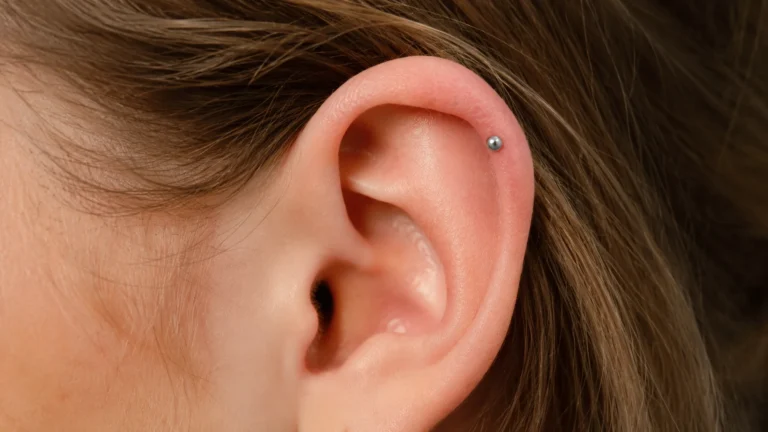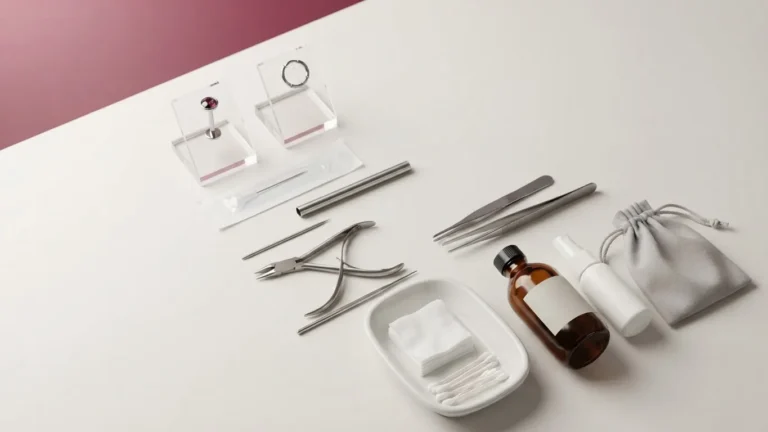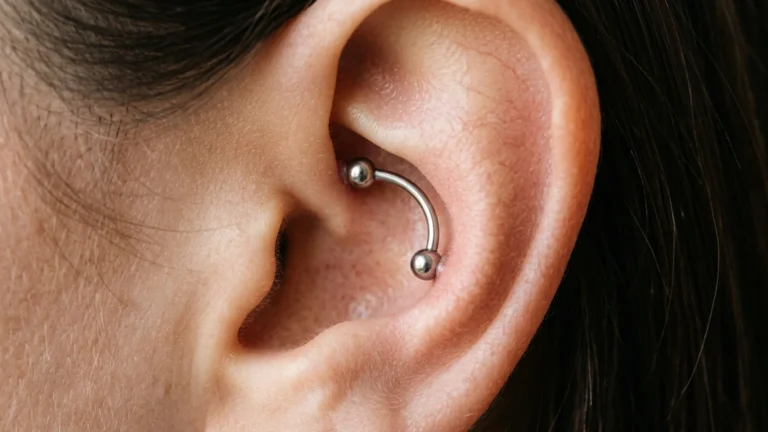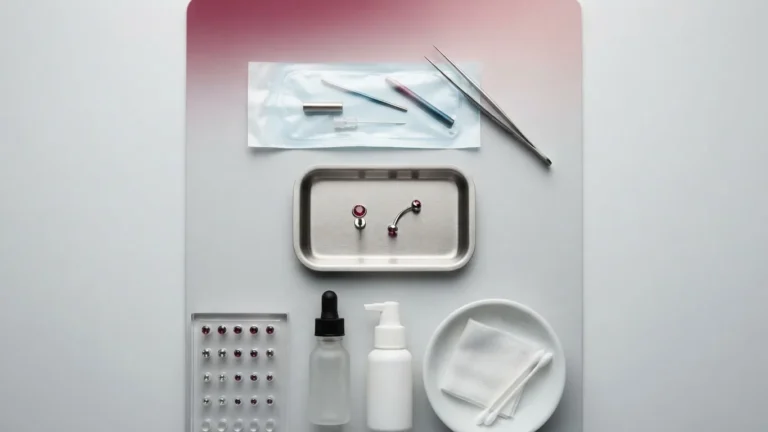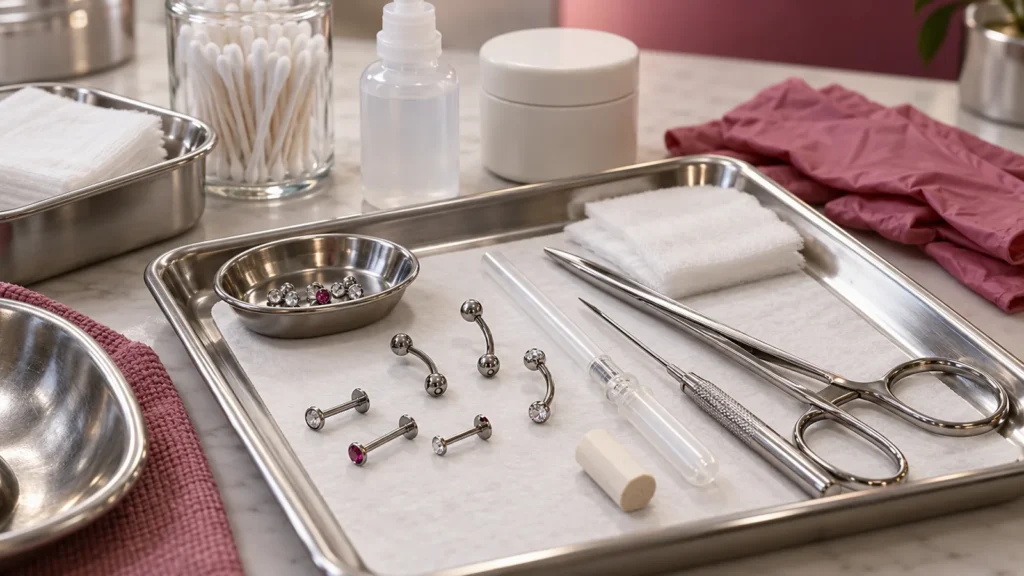
A faux-rook sits in the upper flat cartilage of the ear, the broad shelf near the triangular fossa, and the needle runs through that one flat plane. A true rook crosses the raised ridge folded inside the antihelix, a thicker piece of cartilage set deeper in the ear. That path difference is what separates a faux rook piercing from a true rook, and it decides whether your ear can take one at all. According to Clementine Piercing, a studio staffed by APP-certified piercers, the placement is meant to resemble a rook while passing through that flatter upper region. There is no single standardized clinical definition for the term, so the exact spot varies with the studio and the ear.
A faux rook piercing runs through the upper flat cartilage of the ear rather than the vertical rook ridge, which is why some ears can take one and others cannot. Plan for a long heal: a specialist studio puts the range at 6 to 12 months. Most studios start with a 16g bar, though 18g or 14g may fit certain ears better. Clean it with sterile 0.9% sodium-chloride saline, leave the jewelry still, and have a piercer or clinician look at any heat, spreading redness, or pus without delay.
Faux-rook versus true rook: where the needle actually goes
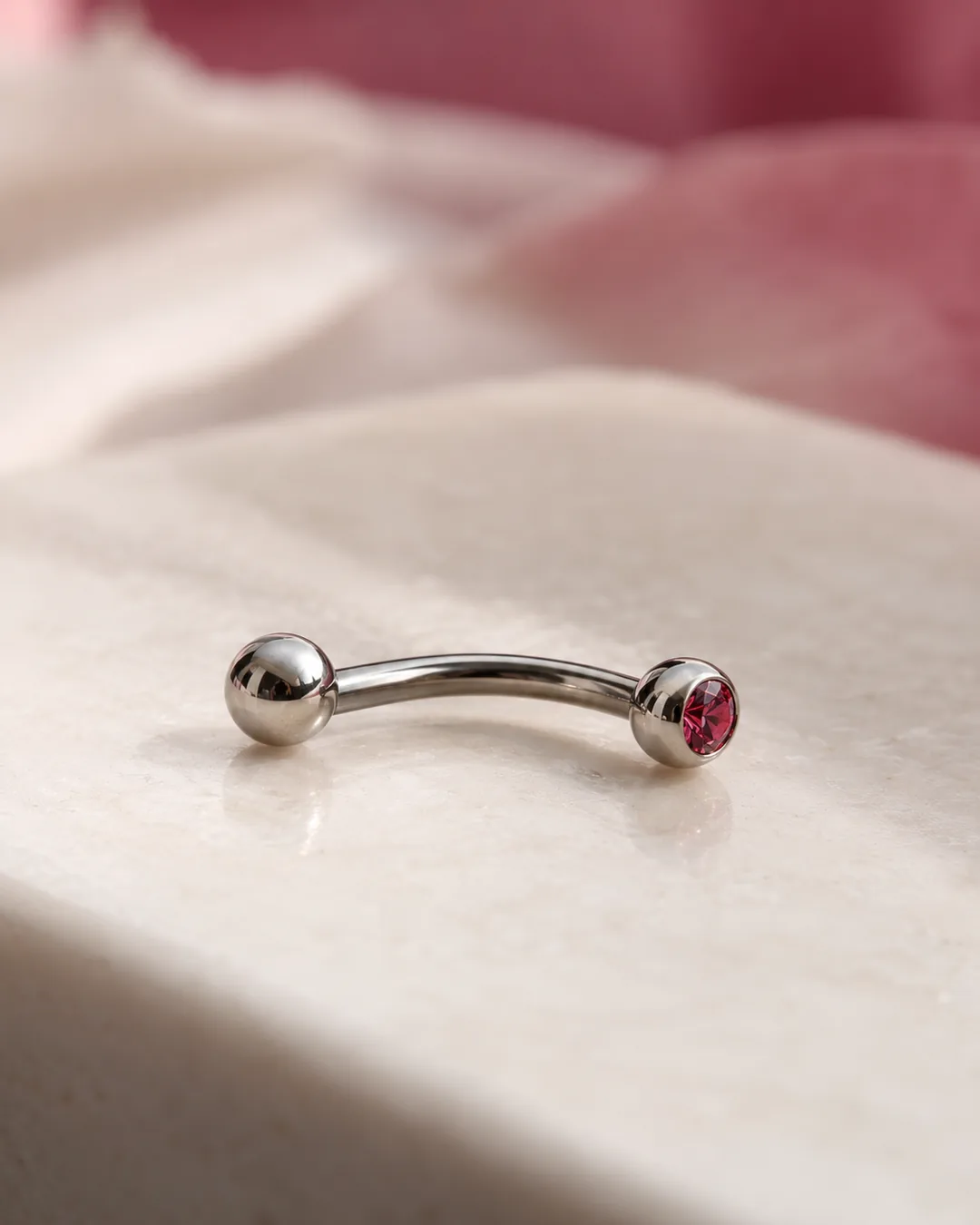
The visual target is the same for both: a small curved bar tucked into the upper ear so the two ends face outward. The tissue underneath is not. A true rook threads vertically through the rook ridge, the raised fold of the antihelix. A faux-rook takes the flatter cartilage above and around that ridge, nearer the triangular fossa. Clementine Piercing frames the faux-rook as a lookalike that uses that flat region instead of the ridge path.
Whether your ear suits one is an anatomy question a piercer answers in person. Some ears have a generous flat shelf; others have almost none, and forcing a bar into thin or awkward cartilage invites migration and pressure problems. No chart decides this for you. It belongs to the upper-ear group within ear piercings, and a hands-on assessment matters more here than a reference image.
One honest caveat: there is no peer-reviewed data showing a faux-rook is intrinsically safer, less painful, or quicker to heal than a traditional rook. Studios may prefer it for a given ear on practical grounds, but a comparative clinical advantage over the true rook has not been established.
How long a faux rook piercing takes to heal
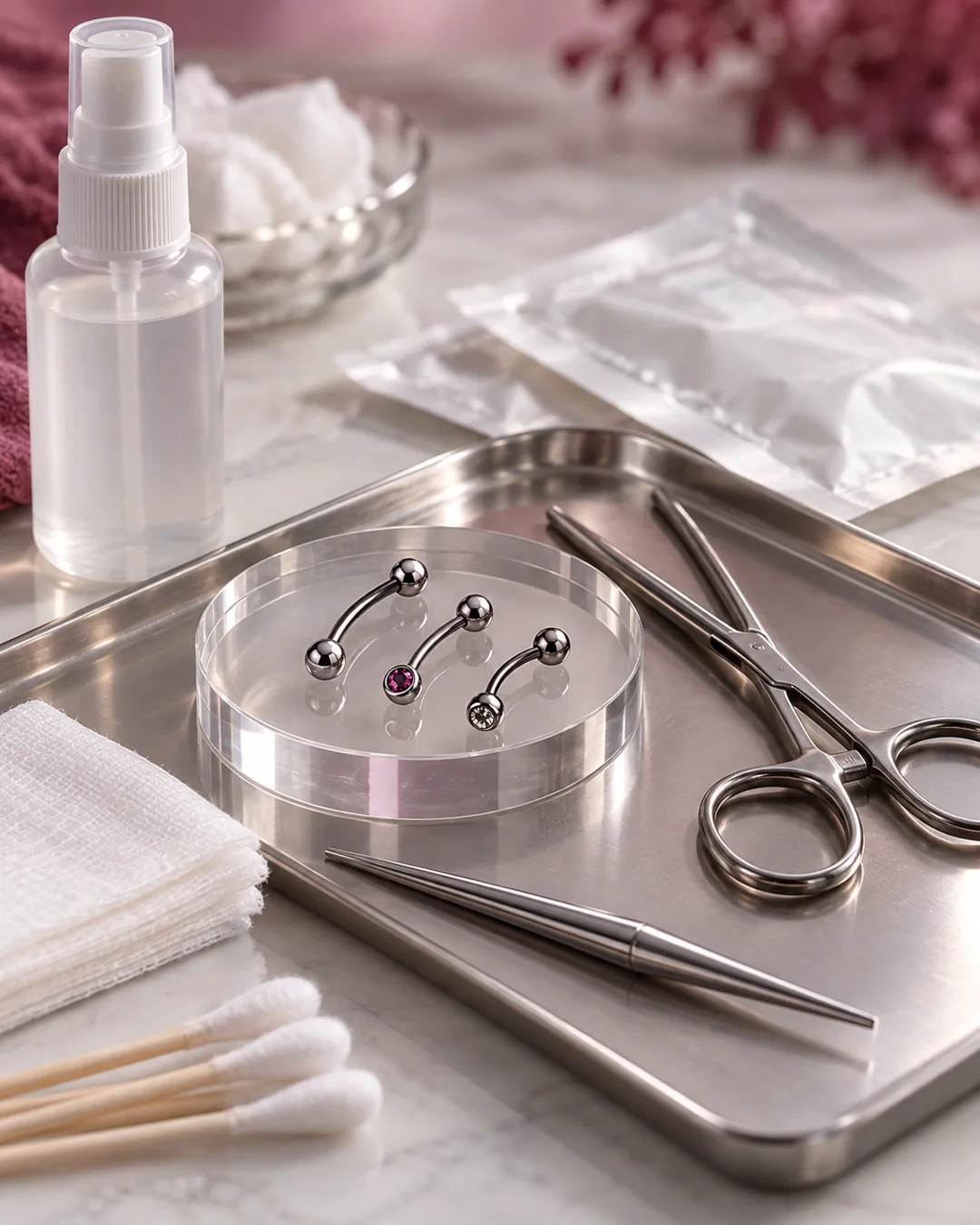
Cartilage heals slowly and unevenly, and the upper ear is among the slower spots. Clementine Piercing gives a typical full-healing range of 6 to 12 months, with wide individual variation. That 12-month outer figure is not a deadline you can rush; it reflects how long the cartilage channel can keep remodeling after the surface looks calm.
The trap with any cartilage piercing is reading the outside and assuming the inside matches. A faux-rook can look settled, stop aching, and shed its crusts while the channel running through the cartilage is still forming and still fragile. Comfort is not proof of a closed, stable tract. Over a 12-month window, expect flare-ups after knocks, sleep pressure, or a cold, even months in. See also: our guide on the cartilage piercing to heal.
Gauge and metal: why 16g is common, not a rule

Most studios start a faux-rook at 16g, per Clementine Piercing, though some piercers choose 18g or 14g depending on the ear and the jewelry. Treat 16g as the common opening gauge, not a medical standard. There is no professional consensus fixing a universal faux-rook gauge, and self-selecting one from a web page misses the only input that matters: your cartilage.
That is why fit comes before any number. The Association of Professional Piercers stresses that initial jewelry must suit the individual’s anatomy and placement, because both undersized and oversized pieces cause problems – the first strangles swelling, the second drags and angles the channel. A piercer sizes the bar and its length to leave room for the swelling you will have in the first weeks.
On material, the same APP guidance names implant-certified titanium meeting specified ASTM or ISO standards as an appropriate option for a fresh piercing. Solid gold can work for initial jewelry only when it meets stated quality conditions. Plated, gold-filled, overlay, and vermeil pieces are not considered suitable for fresh piercings, because the thin outer layer can wear and expose the base metal inside a healing wound.
Does a faux-rook hurt more than a lobe?
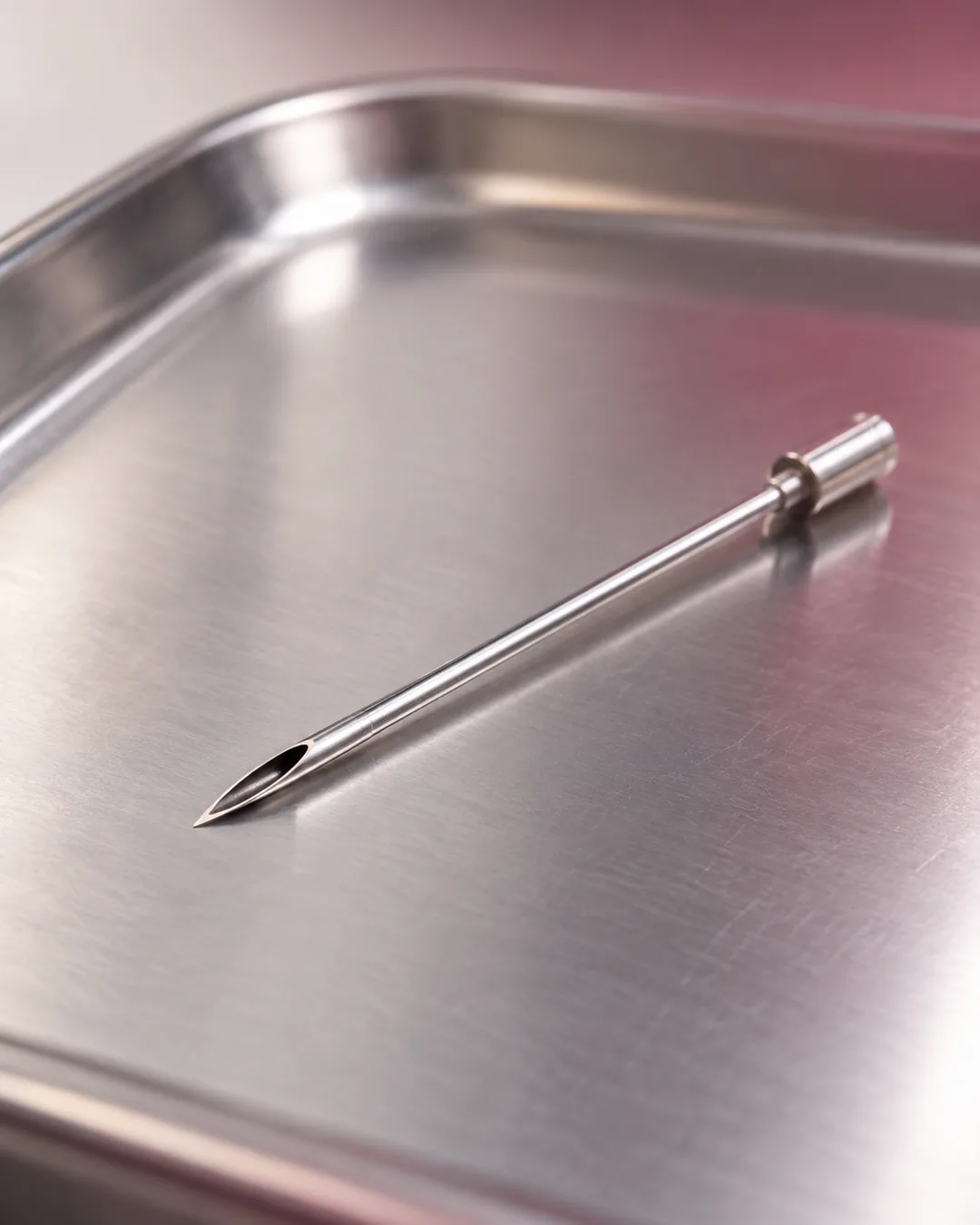
A soft earlobe is the baseline most people know, and cartilage sits above it on effort and ache. Pushing a needle through the firmer upper-ear tissue is generally felt more sharply than a lobe, and the dull soreness afterward tends to last longer and show up again when the spot gets bumped. That much is consistent across cartilage placements.
Beyond that, be skeptical of precise pain claims. No study ranks a faux-rook’s pain against a lobe or against a true rook, and personal reports scatter widely with tolerance, technique, and the exact cartilage crossed. If you want a sense of where upper-ear placements sit relative to each other, see our ear piercing pain scale. Expect a short, firm pinch, not a lobe tap, and expect the healing ache, not the needle, to be the longer story.
Cleaning a healing faux-rook: where APP and the NHS split
This is where generic advice fails, because two credible authorities give different routines, and merging them produces a protocol neither recommends. Follow one source consistently – ideally the one your piercer backs – rather than stitching the two together.
The Association of Professional Piercers recommends a sterile wound-wash saline containing 0.9% sodium chloride rather than a homemade salt mix, and says moving or rotating healing jewelry is unnecessary and can irritate the piercing. In that model you rinse, you leave the bar alone, and you do not twist it.
The NHS guidance differs: it suggests warm salty water to soften crusting and says to gently turn the jewelry while cleaning. For a fresh cartilage piercing, the no-rotation, sterile-saline approach is the more cautious of the two, but defer to the piercer who placed the jewelry.
One point both lines of advice allow: pressure matters. Sleeping directly on a healing faux-rook irritates the cartilage and can shift the piercing angle, so keep the ear off the pillow while it settles. A travel pillow with a hollow center or sleeping on the opposite side helps more than any cleaning tweak.
When a faux-rook is infected, and who to call
Normal early healing includes tenderness, light swelling, and some crusting. Infection reads differently, and the signs to act on are spreading or intense redness or darkening around the site, heat, worsening pain, swelling that climbs rather than fades, blood or pus, and any systemic illness such as fever or chills. The NHS advises urgent medical assessment when you suspect a piercing is infected, and – this is the part people get wrong – not to remove the jewelry unless a doctor tells you to, because an early hole can close over and trap the infection inside.
The red flags worth memorizing:
- Redness or darkening that spreads outward instead of shrinking.
- Heat and rising, throbbing pain days after the piercing.
- Swelling that increases rather than settling.
- Discharge of blood or pus.
- Fever, chills, or feeling unwell – seek care the same day.
Upper-ear cartilage infections are not a cosmetic nuisance when they turn serious. An outbreak investigation reported in JAMA traced Pseudomonas aeruginosa infections to commercial piercing of upper-ear cartilage, with cases severe enough to involve hospitalization and surgery. A systematic review in The Laryngoscope found that delayed treatment tracked with worse outcomes, and that Pseudomonas aeruginosa was the predominant pathogen reported.
That review also noted Pseudomonas aeruginosa accounted for 87.2% of the infections it analyzed. Read that figure carefully: it describes which germ dominated among ears that were already infected, not the probability that your faux-rook becomes infected. It is a map of the pathogen, not of your personal risk. There is no published absolute infection rate specific to the faux-rook, so no one can quote you a percentage chance for this placement. What the evidence does support is acting early, since the cost of waiting is the one thing the data agrees on. For anything that looks wrong, a piercer or a clinician should see it – not a search result.
When it’s safe to change a faux-rook’s jewelry, and what it costs
Change the jewelry when the piercing is healed, not when it looks healed. On a faux-rook that distinction can span months: the outside may read settled while the cartilage channel is still open enough to tear or close during a swap. Swapping early can split the tract, restart swelling, and set healing back toward the far end of that 6 to 12 month range. The safe move is to wait for the piercer’s confirmation, or at least the back end of the healing window, before any downsize or style change. See also: our guide on when you can change your ear piercing.
On cost, there is no honest single number to give. Price is driven mainly by the jewelry material – implant-certified titanium versus solid gold meeting the quality conditions APP describes – and by the studio’s own rate, which varies by region and piercer. A quoted range built on none of those inputs would mislead more than it helps. Ask the studio to price the service and the specific piece together, and expect a quality titanium initial piece to sit well below a solid-gold one. Book the first downsize at the studio rather than doing it at home; a piercer can check the channel before touching the jewelry.
What the 6-to-12-month range really means for your heal
The studio range looks like a casual estimate, but run the numbers and it tells you how little the timeline is pinned down. The slow end isn’t a bit longer than the fast end – it’s a clean multiple of it, and the gap between them is as long as the fastest realistic heal.
- 12 ÷ 6 = 2 – the slow-end heal is twice the fast-end heal. Plan as if yours could take double the minimum, not a few extra weeks.
- 12 − 6 = 6 months – that’s the width of the uncertainty window, and it’s equal to the entire fast-end timeline. You can be fully healed, or only halfway, at the same calendar point.
This is why comfort isn’t proof the tract is closed: the band where the cartilage channel may still be remodeling is as wide as the shortest heal itself. Treat the 12-month figure as live, not as a worst case you’ll beat.
Frequently asked questions
Can a faux-rook migrate or reject?
Any cartilage piercing placed in thin or poorly suited tissue can shift or work its way out over time, and a faux-rook is no exception. No data isolates a rejection rate for this specific placement. Your defense is an anatomy-appropriate spot and correctly sized jewelry chosen in person; if the bar starts sitting shallower or the holes look stretched, see your piercer promptly.
Why does the new bar feel tight after a few days?
Early swelling can make a correctly fitted piece feel snug, which is why piercers leave extra length at the start. If the ends press hard into the skin or the ball sinks in, the jewelry may be undersized for your swelling – do not wait it out or swap it yourself. Return to the studio so a piercer can fit a longer bar without disturbing the channel.
If it still aches past a year, is something wrong?
Healing varies, and mild sensitivity can linger near the upper edge of the timeline. Persistent pain, recurring discharge, or a bump that will not settle is a reason to be seen, not to keep cleaning harder. Book your piercer for a check, and see a clinician if there is heat, spreading redness, or any fever – those point to infection rather than slow healing.
The takeaway before you book
A faux-rook lives or dies on two things you cannot settle from a screen: whether your upper-ear cartilage has the flat shelf to hold one, and whether the jewelry is sized to your ear rather than to a number you read online. Both are in-person calls. Pick a studio with certified piercers, let them assess the anatomy, and agree the material and length with them before anything goes through the skin.
After that, the job is patience and vigilance. Leave the bar still, keep the ear off the pillow, rinse the way your piercer tells you to, and resist the urge to swap jewelry the moment it looks calm. If heat, spreading redness, discharge, or fever show up, treat it as a reason to be seen the same day, not a reason to clean harder or pull the bar. The evidence is thin on this exact placement, but it is clear on one point: acting early beats waiting.