Drafted with AI language models. How this page was made
A transverse lobe piercing runs horizontally through the earlobe, side to side, so both the entrance and the exit holes sit on the same lobe rather than passing front to back like a standard stud. Because the channel travels the long way through the tissue, it heals slower and demands more watching than a conventional lobe. Expect a curved barbell, an indicative price near the lower end of face-piercing work, and a healing window that sources place anywhere from a couple of months to a full year. Your own lobe shape decides whether this placement sits well at all.
The short answer: A transverse lobe piercing is a horizontal channel through the fleshy part of the earlobe, fitted with a curved barbell that follows the lobe’s shape. Pain runs moderate, roughly 4 points on a 1-to-10 scale. Healing estimates vary: Monster Piercing cites 6 to 12 months for complete healing, while Gthic lists at least 2 months. Expect to pay around $50 per ear or $100 for both, jewelry sometimes separate. A detached, fuller lobe suits it best; thin or heavily stretched lobes may not.
How the Procedure Runs and Where It Sits
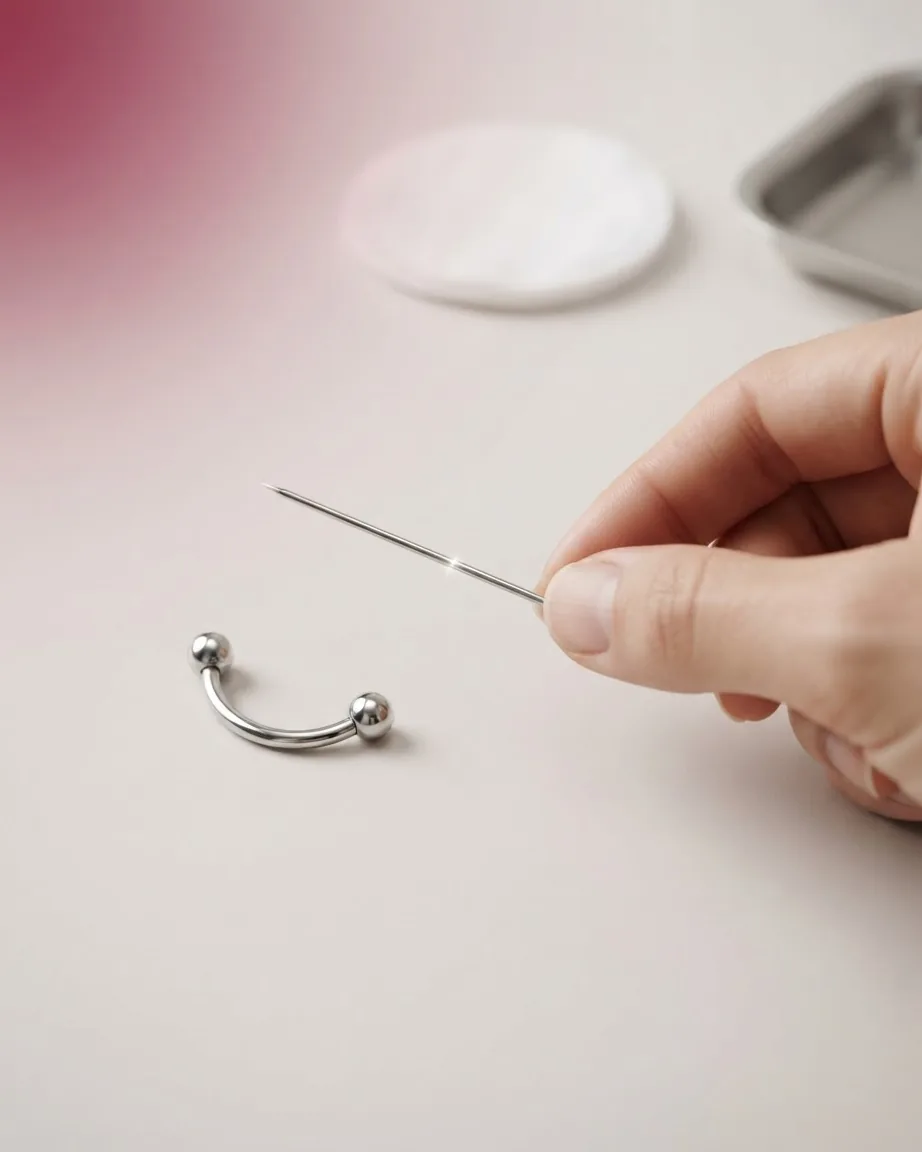
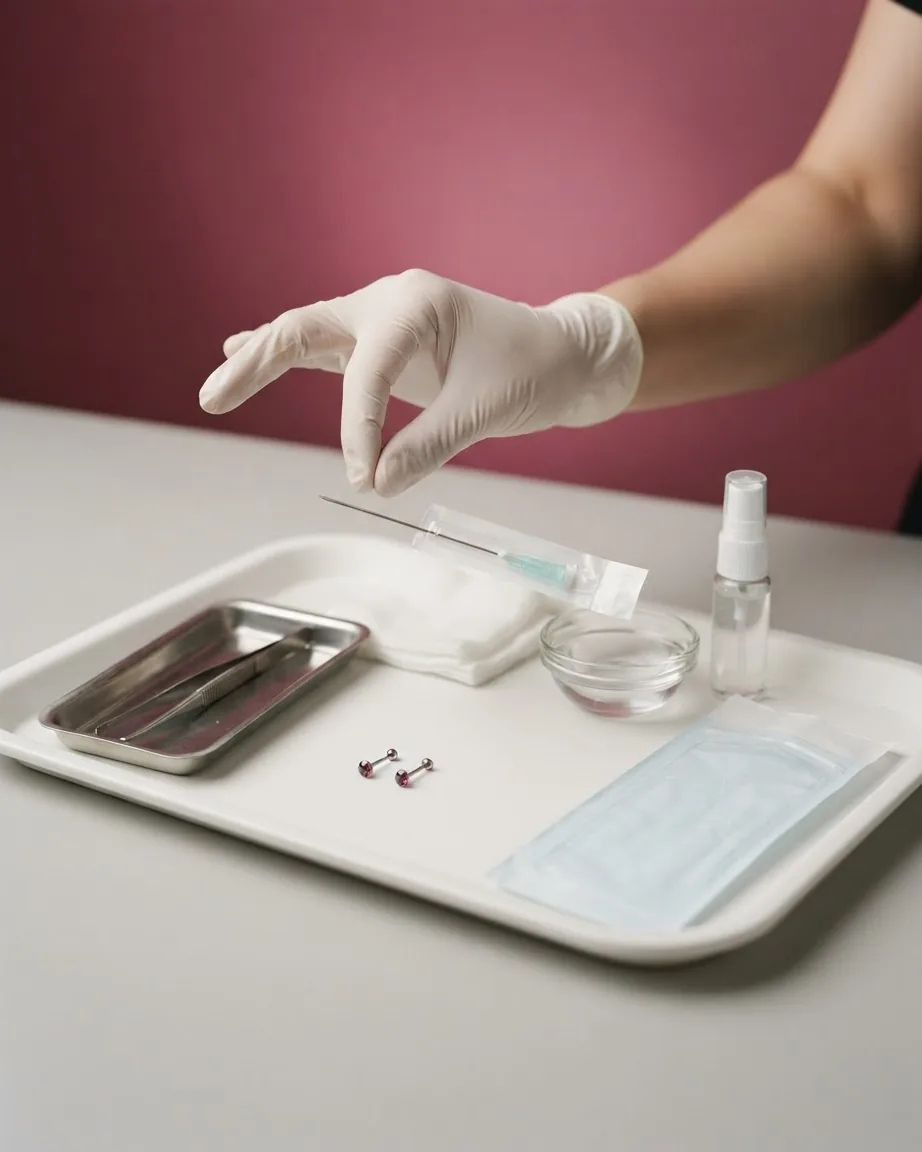
The piercer marks an entry and exit point across the width of the fleshy lobe, then passes a hollow needle horizontally through the tissue in one motion and threads a curved barbell to follow the lobe’s natural arc. Unlike a front-to-back stud, both beads end up visible on the lobe’s edges. The Association of Professional Piercers and the Mayo Clinic both caution against piercing guns: they cannot be fully sterilized between clients, so insist on a single-use needle. For the wider family of placements, see our ear piercings section.
Pain, and the Healing Window You Should Plan For
The earlobe carries more fat and fewer nerve endings than cartilage, which keeps the sting moderate. Gthic puts the pain level at roughly 4 points out of 10. It is sharper than a basic lobe stud because the needle travels farther through tissue, but it is not cartilage-level pain.
Healing is where the sources genuinely split, and the gap matters because it changes when you stop babying the piercing.
| Source | Stated duration | What it measures |
|---|---|---|
| Monster Piercing | 6, 12 months | To set in place with complete healing |
| Gthic | At least 2 months | Minimum, two channels, horizontal |
| Torbay Council | 6, 8 weeks | Earlobe generally, not transverse-specific |
These are not the same measurement. Gthic’s two months is a floor; Monster Piercing’s 6 to 12 months describes full consolidation of a longer channel. Torbay Council’s 6 to 8 weeks covers ordinary lobes and carries no transverse-specific figure, and the council warns healing varies with the piercing’s type and position and from person to person. Treat the longer end as your real planning horizon and do not call it healed at eight weeks.
Does It Hurt
Moderately. The lobe’s fatty tissue dulls the sensation, and Gthic rates the pain near 4 points on a 10-point scale. It stings more than a single front-to-back lobe stud because the needle passes the long way through the tissue, yet it stays well below cartilage placements. Most people describe a brief pinch and pressure rather than lasting pain.
What a Transverse Lobe Piercing Costs

Prices vary by studio and by whether jewelry is bundled, so compare carefully.
- FreshTrends: $50 for one piercing, around $100 for both.
- Monster Piercing: usually $50; $100, depending on studio and jewelry.
- Gthic: $30, $60.
These figures are not strictly comparable: some quote per ear, some per pair, and jewelry inclusion differs. Ask for an all-in quote that names the piercing fee and the jewelry separately before you book, so a $30 headline price does not become double at the counter.
Can You Get One With Stretched Ears
Suitability is anatomy-led, not universal. A transverse lobe piercing needs enough intact flesh to hold a horizontal channel through the width of the lobe. A fuller, detached lobe gives a piercer room to work; a very thin lobe offers less. Heavily stretched lobes change the picture: stretching thins and redistributes the tissue, which can leave too little solid flesh for a stable transverse channel, and a thinned lobe raises migration risk. There is no single rule here. A piercer has to assess the lobe in person and may decline if the remaining tissue cannot support the jewelry safely. If you have stretched ears, bring that to the consultation first rather than assuming either way.
Do Transverse Lobe Piercings Reject
They can migrate, and this placement is more exposed to it than a plain lobe stud for a mechanical reason. The channel is long and sits across the edge of the lobe, so side-sleeping pressure presses on the jewelry night after night, and a healing channel under constant pressure can shift toward the surface. A gauge that is too thin for the tissue adds to that risk, which is why sizing is set by the piercer’s read of your lobe, not a default barbell. The same long channel also traps debris more readily, so an abscess is a documented failure mode here beyond ordinary surface irritation. If the jewelry starts visibly moving toward the skin’s surface or the tissue over it thins, that is migration in progress; see your piercer promptly, and a clinician if infection is possible.
Should You Twist the Jewelry
This is where respected bodies openly disagree, so here is the conflict laid out rather than averaged.
| Authority | Instruction on moving jewelry |
|---|---|
| Association of Professional Piercers | Do not twist, spin, or rotate during healing |
| NHS | Gently turn the jewellery while cleaning |
| UC Berkeley UHS | Rotate the jewelry while the area is wet |
The APP position is the one aligned with current professional body-modification standards: leave it alone. As the APP aftercare guidance puts it, “Moving or rotating jewelry is not necessary during cleaning/rinsing and may actually irritate the piercing.” The daily “gentle twist” advice you may read elsewhere runs against that. When authorities split like this on a healing wound, the safer default is the one that does the least to the channel. If you are unsure which your own piercer recommends, ask them directly.
Jewelry, Material, and When to Change It
A curved barbell is standard because it follows the lobe. Gauge and length are set to your lobe’s thickness; a bar too thin for the tissue can encourage migration, so there is no universal size to copy.
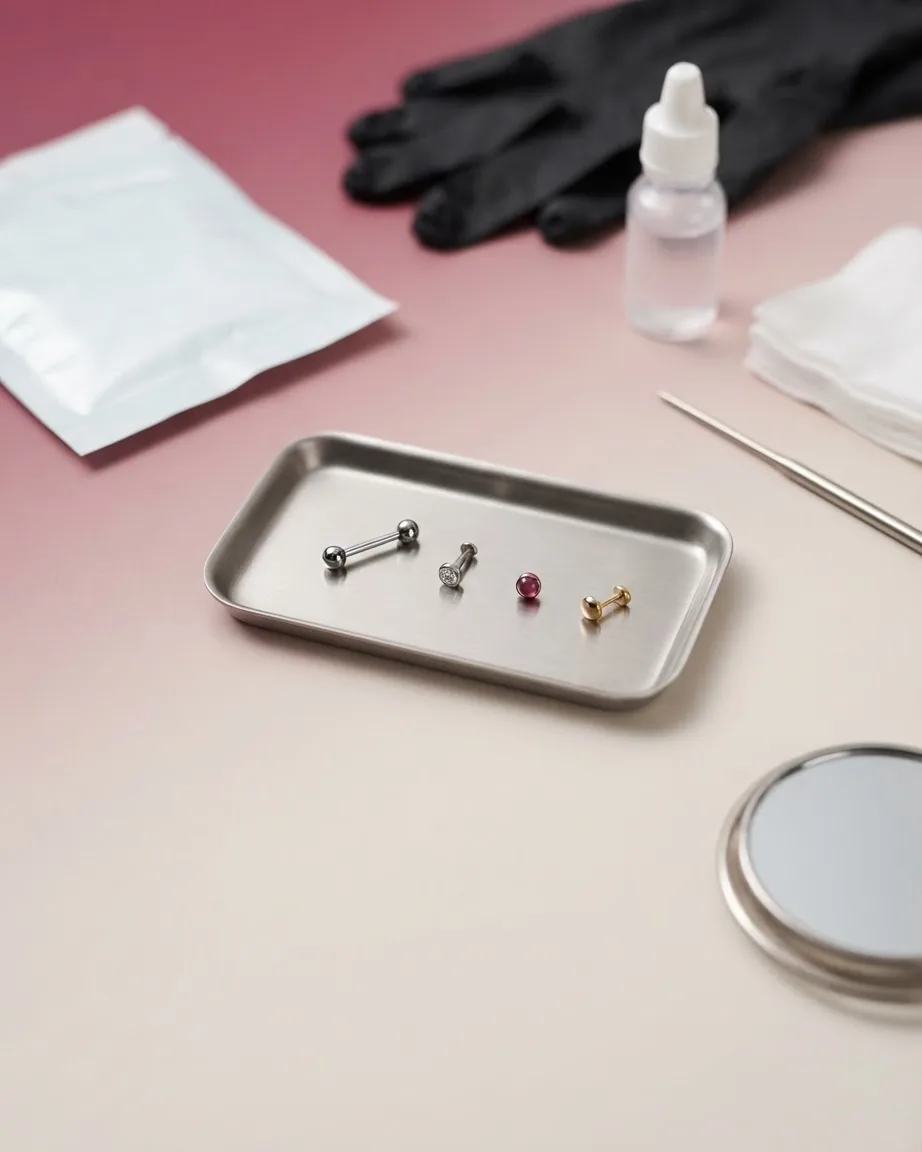
Material is a safety decision, not a label. The Mayo Clinic lists hypoallergenic options as surgical stainless steel, titanium, niobium, or 14- or 18-karat gold. For initial jewelry, the APP notes gold is appropriate only if it is 14k or higher and alloyed for biocompatibility, since above 18k is too soft. Florida’s body-piercing rules require implant-grade stainless steel to meet ASTM F138 and implant titanium to meet ASTM F136, with gold of at least 14K weight among accepted materials.
One caveat on steel: Byrdie notes “Surgical steel does contain nickel, so anyone who’s allergic or sensitive to nickel should stay away from this metal” (Byrdie). A study record in the National Library of Medicine found pierced ears associated with higher nickel reactivity (p = 0.031, odds ratio 2.8) in a cross-sectional study of children aged 0 to 12 in Brazil: an association in that group, not a universal adult figure. If nickel is a concern, titanium or niobium sidesteps it. Do not change jewelry until a piercer confirms the channel is healed, and given the 6 to 12 month window Monster Piercing describes, that is later than most people expect.
Aftercare and the Warning Signs That Need a Professional
Keep aftercare simple and clean. The APP advises sterile saline whose ingredients list 0.9% sodium chloride as the only ingredient, labeled as a wound wash. FreshTrends suggests a saline soak 2 to 3 times daily. The APP no longer recommends mixing your own sea-salt solution, while UC Berkeley publishes a home recipe of a measured amount of salt dissolved in 8oz of warm water: another point where authorities differ; the simplest safe route is pre-made sterile saline.
General guidance cannot replace an in-person assessment. Use the signs below to decide who to contact.
- Jewelry visibly moving toward the surface, or the covering tissue thinning: possible migration or rejection. Action: see your piercer; do not remove jewelry on your own.
- Spreading redness, heat, swelling, pus, or fever, possible infection. Action: see a clinician; the NHS advises leaving jewelry in unless a doctor says otherwise, because removing it can trap infection inside.
- Itching, a rash, or a widening halo around the site: possible allergic reaction, often to nickel. Action: see a clinician about the reaction and discuss a titanium or niobium switch with your piercer.
- A firm raised lump that keeps growing, possible keloid. Action: see a clinician for assessment.
Allergen warning
Sterile technique is not only cosmetic. The CDC notes that piercing with unsterile equipment can transmit bloodborne infection including hepatitis C, which is why a licensed studio and single-use needles matter. A piercer, vet, or shop is not a substitute for a clinician when infection or an allergic reaction may be involved. For the broader comparison of placements, see our guide to different types of ear piercings, and for the stud-color question our note on black ear piercing studs.
How Many Saline Soaks You’re Signing Up For
Aftercare advice is usually given as a frequency, but the real commitment only becomes clear when you multiply that frequency by Monster Piercing’s 6-to-12-month healing window. FreshTrends suggests a saline soak 2 to 3 times daily; carried across the full consolidation period, that is not a two-week chore but a months-long routine worth planning for before you book.
A middle-of-the-road case, 2 to 3 soaks a day across a 9-month average, lands near 675. Whichever end your own healing falls toward, you should expect several hundred cleanings, which is precisely why sources warn against treating the piercing as healed at eight weeks.
- Maximum effort, longest window: 3 soaks/day over 12 months is about 1,080 soaks.
Frequently Asked Questions
What is a transverse lobe piercing?
It is a horizontal channel through the fleshy earlobe, entering one side and exiting the other on the same lobe, so both barbell ends show along the edges. Because it crosses the full width of the lobe, Gthic counts it as two channels in one piece, which is why Gthic sets a minimum of at least 2 months to heal.
Can lobe piercings migrate?
Yes. A horizontal lobe channel is exposed to side-sleeping pressure and traps debris along its length, both of which can push jewelry toward the surface over months. A gauge too thin for your tissue adds risk. Given Monster Piercing’s 6 to 12 month healing window, watch for movement well past the first weeks and consult your piercer early.
What is a lobe piercing?
A standard lobe piercing passes front to back through the soft lower ear and is among the quickest to heal. Torbay Council lists ordinary earlobe healing at 6 to 8 weeks, shorter than the horizontal version, and warns the exact time varies by position and by person.