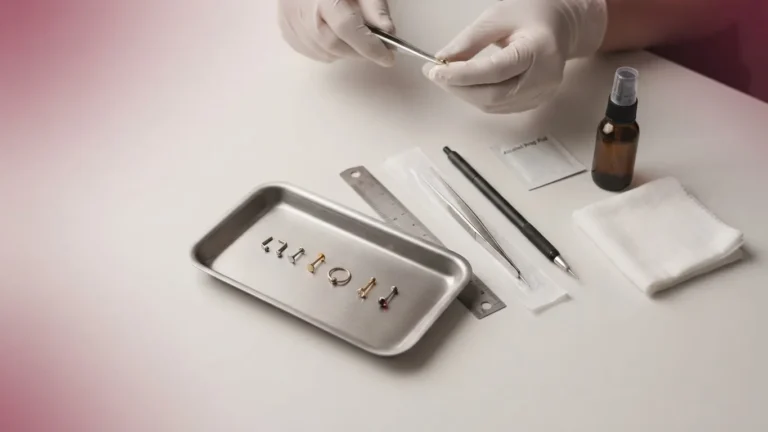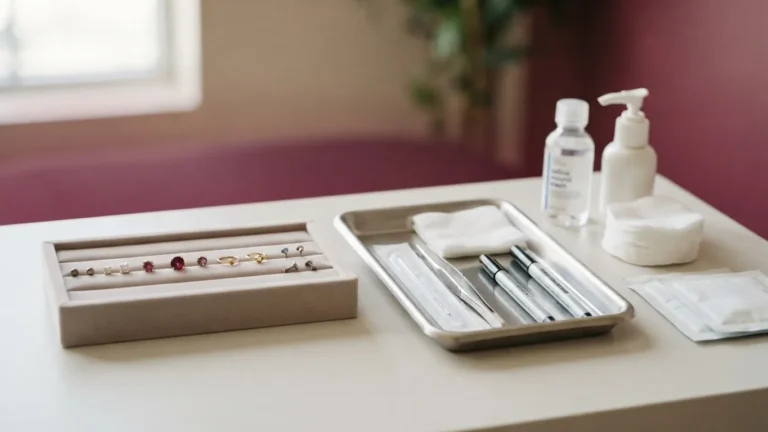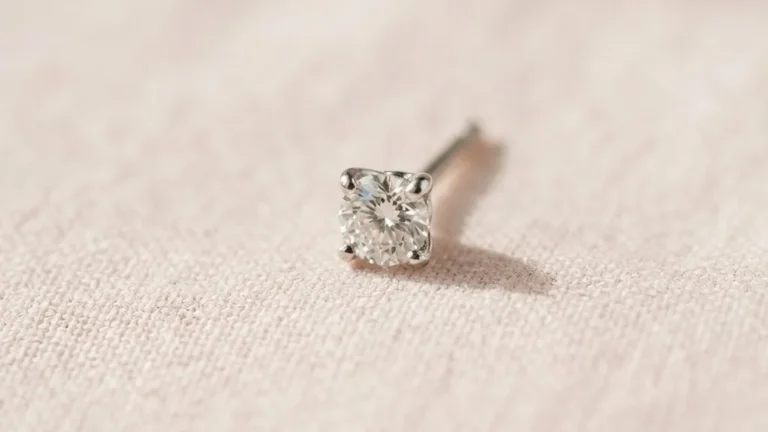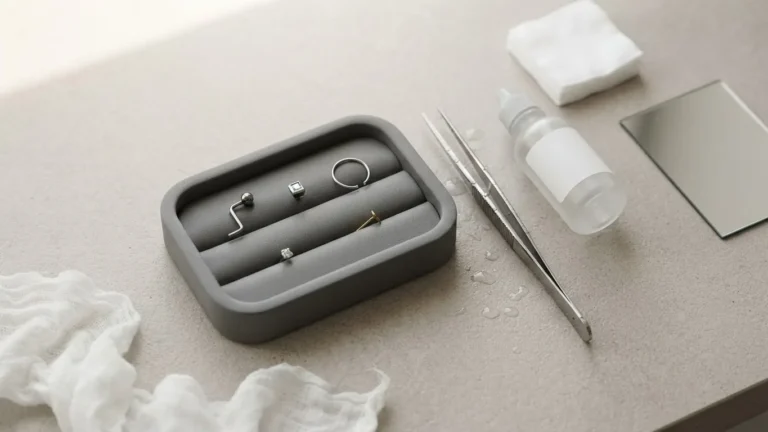
How much is a septum piercing once you add up everything, not just the number written on the studio’s price board? That is the question people actually mean when they ask me at the counter, and the honest answer is a small stack of line items rather than a single figure. In the studio I quote the piercing fee first, then the jewelry, then remind people about a tip and a bottle of saline. Miss those and the “cheap” quote you saw online turns into a surprise at checkout. This guide breaks down every piece so you can walk in knowing the real number.
Quick answer: In the US in 2026, a professional septum piercing usually runs $40 to $90 for the piercing service, with jewelry billed separately at $10 to $50 for a basic titanium or steel ring and $30 to $100 or more for a nicer clicker or solid gold. Add a bottle of sterile saline at $10 to $15 and a customary tip of 15 to 20 percent, and most people spend $50 to $150 all in. Big-city studios sit at the top of that range, small-town shops at the bottom. The gun-at-the-mall option is not cheaper in the end, and it cannot even do a septum.
What a septum piercing actually costs in 2026
The service fee, meaning the piercer’s time, the sterile single-use needle, gloves, and setup, is the number most shops advertise. Across the country that fee lands between $40 and $90, and the full spread from budget shops to premium studios runs roughly $40 to $100. That is for the procedure only. Jewelry is almost always a separate line, which is exactly where people get caught out.
Location moves the number more than anything else. In major metro markets like New York City, Los Angeles, and Chicago, the septum service fee commonly runs $60 to $120 because studio rent and overhead are high. In mid-size cities such as Denver, Kansas City, or Indianapolis, expect $45 to $95. In smaller towns and rural areas the same service can be $35 to $70. None of those ranges include jewelry, tax, or a tip, so treat the advertised fee as a floor, not a ceiling.
Here is the mental model I give clients: think in four buckets. Bucket one is the piercing fee. Bucket two is the jewelry. Bucket three is aftercare. Bucket four is the tip. When you price all four before you book, the total stops feeling like a surprise and starts feeling like a plan. Most reputable studios will happily read you the itemized total over the phone, and if a shop dodges that question, that itself tells you something.
The full cost breakdown, line by line
Let me walk the receipt the way it prints out. The piercing fee covers the practitioner, a sterile hollow needle, and the disposables. That is your $40 to $90 in most of the country. It buys skill and safety, not jewelry, which is the single most common misunderstanding I correct at the desk.
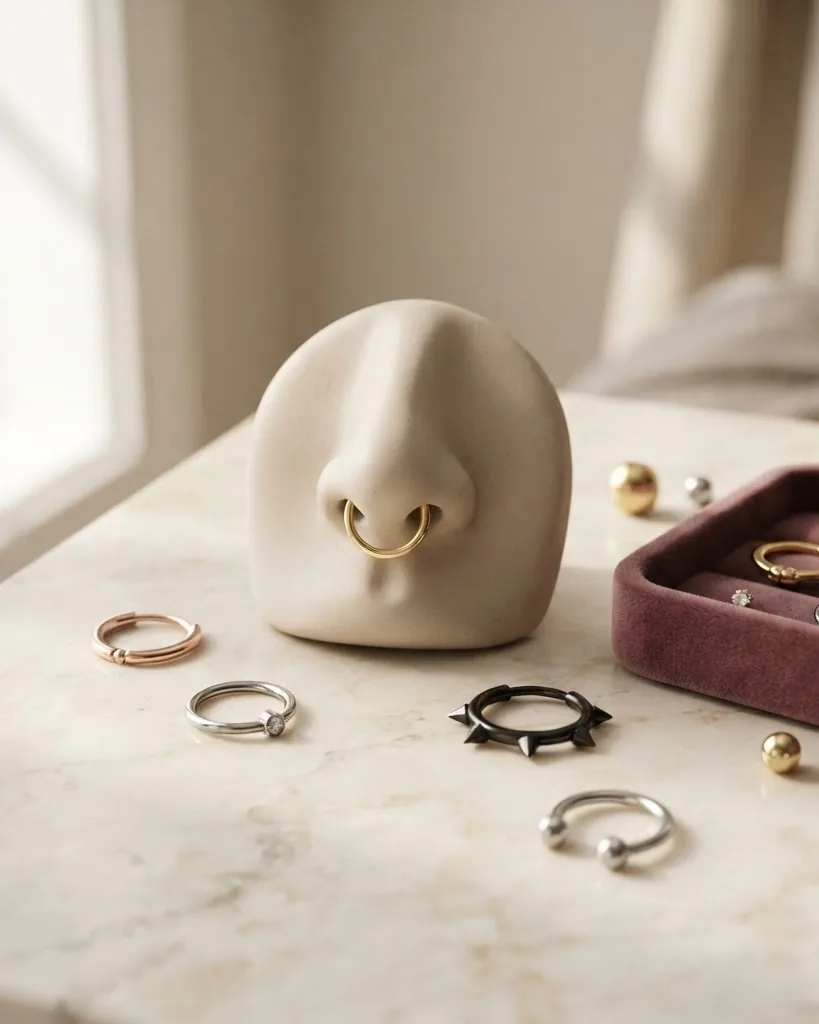
Jewelry is the second line and it is separate on purpose. A basic captive bead ring, circular barbell, or simple clicker in implant-grade titanium or surgical steel usually runs $10 to $50. Step up to a machined titanium clicker with a hinged closure or a solid gold piece and you add $30 to $100 or more. Studios require you to start in their in-house sterilized jewelry so the material grade meets safety standards for a fresh wound. If you want to explore the shapes and styles you can wear later, our guide to choosing the right septum ring style covers the tradeoffs.
Aftercare is the third line and it is cheap but not free. A bottle of sterile wound-wash saline runs about $10 to $15 and usually lasts the whole heal. You do not need a drawer of specialty products, and I would rather you skip the “piercing cleaner” upsells entirely. Plain sterile saline sprayed two to three times a day does the job. Our breakdown of the right sterile saline solution for a nose piercing explains what to look for on the label.
The fourth line is the tip, and it is real. Piercing is a skilled service and gratuity is customary in US studios at 15 to 20 percent of the service fee, with 20 percent being the norm for a job done well. On a $70 piercing that is $14. Tip on the piercing service, not on the retail jewelry markup, and cash is always appreciated. Add it all up and a typical honest total is $50 to $150.
What actually drives the price up or down
Five things move your number, and knowing them lets you predict a quote before you even call. First is location, which I covered above and which can swing the fee by $50 or more between a rural shop and a downtown flagship. Second is the piercer’s reputation and experience. A busy artist with a long portfolio and a clean track record charges more, and for a spot as visible as your septum, that premium usually pays for itself in placement and comfort.
Third is the studio’s standard. Shops that only stock implant-grade, internally threaded or threadless jewelry with a mirror-polished finish carry higher costs than a kiosk selling mystery metal, and that shows up in the fee. Fourth is the jewelry you choose. The same piercing can cost $55 with a plain titanium ring or $160 with a solid gold clicker set with stones. Fifth is your anatomy. If your sweet spot is unusual or you want a specific gauge or diameter fitted, that can add a few minutes and sometimes a few dollars.
One thing that should not change the price is safety. Sterile single-use needles, autoclaved tools, and gloves are non-negotiable baseline, not a premium tier. If a shop frames basic sterility as an upgrade, walk out. You are paying for a wound to be opened in your face, and cutting that corner is never the place to save $15.
Timing and add-ons can nudge the total too. Booking a septum alongside another piercing in the same sitting sometimes earns a small multi-piercing discount, since the piercer sets up once and prices the second spot a little lower. On the flip side, walk-in weekend rushes at popular studios occasionally carry a premium, and holiday or convention pricing can run higher. None of these are large swings, but if you are watching every dollar, a quiet weekday appointment at a shop you called ahead is usually the most economical way to book the exact fee you were quoted.
Why the cheap mall or piercing-gun option is a false economy
Here is the blunt truth I give everyone who asks whether they can just get it done cheap at a kiosk: a piercing gun physically cannot pierce a septum, and you should not let one try. Guns are built for earlobes. They work by driving a blunt stud through tissue with spring force, which is the wrong tool for the thin membrane sweet spot inside your nose. A septum needs a hollow needle guided by a trained hand. That is not gatekeeping, it is anatomy.
There is a hygiene problem too. Most guns have plastic bodies that cannot go in an autoclave, so they cannot be fully sterilized between clients the way a single-use needle and forceps can. That raises the risk of cross-contamination. The American Academy of Dermatology and the Mayo Clinic both flag infection, allergic reaction, and scarring as the main piercing risks, and blunt-force placement with poorly sterilized equipment stacks all three. For the full mechanical comparison, see our piece on why a needle beats a piercing gun.
Then there is the jewelry. Cheap kiosk starter studs are frequently nickel-heavy mystery metal, not implant-grade titanium or steel. In a fresh wound that invites contact allergy, prolonged healing, migration, and outright rejection. When a piercing rejects or gets infected, you pay again: a re-pierce fee, new jewelry, sometimes a doctor visit, plus weeks of lost healing and a possible scar. The $20 that looked cheap becomes the most expensive route on the board. Spending $70 once with a professional is the actual budget move.
Jewelry: what you are really paying for
The jewelry line confuses people because a titanium ring and a steel ring can look identical while one costs three times the other. What you are paying for is material grade, machining, and finish, and for a healing wound those are safety features, not vanity. The Association of Professional Piercers sets clear standards for initial jewelry, and it is worth knowing them so you can tell a fair price from an upsell.
The APP approves implant-grade titanium meeting ASTM F-136 or F1295 and ISO 5832-3, commercially pure titanium meeting ASTM F-67, surgical steel meeting ASTM F-138, niobium, and solid gold from 14k up to 18k. It specifically excludes plated, filled, and vermeil gold because the coating can wear and expose base metal. Gold above 18k is too soft to hold up in a piercing. The APP also requires internally threaded or threadless press-fit ends so no screw threads drag across raw tissue, plus a polished mirror finish with no nicks or burrs. You can read the standard directly at the Association of Professional Piercers.
Size matters as much as metal. A septum is typically started at 16 g, which is slightly thinner and more delicate, or 14 g, which is the more common standard. The APP warns that jewelry too thin in gauge can be treated by the body like a splinter, which encourages migration or rejection, so this is not the place to go tiny for looks. The ring’s inner diameter usually falls between 8 and 10 mm, and 8 mm fits most average anatomy. A good piercer measures you rather than guessing, and that fitting is part of what your fee buys.
An honest note on pain and healing
People ask about pain and price in the same breath, so here is the straight version. Most clients describe a septum piercing as more strange than sharp. When the piercer hits the thin soft-tissue sweet spot, the flexible cartilage-free membrane just below the harder cartilage, it is a quick pinch and your eyes may water reflexively. The actual procedure takes about 1 to 2 minutes. It is not the cartilage-crunch some people fear, provided the placement is correct, which again is a reason to pay a skilled piercer. For context on how different spots compare, our ear piercing pain chart by placement is a useful yardstick.
Healing is where your real investment sits. Initial healing runs about 2 to 3 months, and full healing can take 6 to 8 months, per guidance echoed by Healthline and consistent with what I see in the studio. During that window you clean with sterile saline two to three times a day and you leave the jewelry alone. If you take the ring out too early in the heal, the channel can shrink or close in as little as 2 months, so downtime jewelry matters if you need to hide it.
A quick healing reality check saves money too. A little crusting is normal. A funky smell can happen and usually points to trapped debris and skin oils rather than a true infection, which our note on why a nose piercing sometimes smells explains. Genuine warning signs are spreading redness, heat, swelling, green or yellow pus, and fever. The American Academy of Dermatology publishes clear aftercare and infection guidance at the AAD, and if you see those signs you call a professional rather than pulling the jewelry.
How to budget without overpaying
Set your budget by the four-bucket total, not the advertised fee. If you are in a mid-size city, a realistic plan is roughly $70 for the piercing, $30 for a solid starter ring, $12 for saline, and a $14 tip, which lands near $126 out the door. In a small town you might do the same for closer to $80 total. In a major metro, budget $150 or a little more if you want nicer jewelry. Padding your plan by $20 keeps you from being surprised by tax or a jewelry upgrade you fall in love with at the case.
Do not chase the lowest fee. A shop advertising a $25 septum is either using inappropriate equipment or planning to make it back on overpriced mystery-metal jewelry. The mid-range professional quote is almost always the true value. Ask three questions when you call: is the fee separate from jewelry, is the starting jewelry implant-grade titanium or steel, and do they use single-use sterile needles. Clear answers to all three mean you are in the right place, and a fumble on any of them means keep dialing.
Watch the jewelry markup, because that is where the total quietly balloons. Studio retail on a solid gold clicker can run well past $100, and it is easy to say yes at the case when you are excited and already committed. There is nothing wrong with a nice piece, but decide your ceiling before you sit down. Starting in a clean $30 to $50 titanium ring is completely proper and safe, and it lets you route the fancier money into a healed-and-styled upgrade later. Your septum does not heal faster in gold than in implant-grade titanium.
One more money tip. Buy your everyday and downsized jewelry later, once you are fully healed, when you can shop styles and prices at leisure instead of paying studio retail in the moment. Your initial fitting has to be studio jewelry for safety, but months three through eight open up the fun part. Different nose shapes suit different ring diameters, and our guide to picking a nose piercing for your nose type helps you spend that budget well.
Septum piercing cost breakdown at a glance
If you want the whole receipt in one place before you call a studio, here is how the line items usually stack up. These are typical US ranges for 2026, and they match the numbers walked through above, just laid out so you can total your own budget in one pass.
| Line item | Typical US price | Notes |
|---|---|---|
| Piercing fee | $40-90 | Covers the piercer’s time, sterile needle, gloves, and setup. Metro studios sit near the top of the range. |
| Basic jewelry (titanium or steel) | $10-50 | Implant-grade captive ring or simple clicker. This is the minimum safe starting jewelry. |
| Premium jewelry (gold or fancy clicker) | $30-100+ | Solid 14k to 18k gold or a hinged designer clicker. Optional, not required for a safe heal. |
| Sterile saline aftercare | $10-15 | One bottle of wound-wash saline usually lasts the full healing window. |
| Tip | 15-20% of the piercing fee | On a $70 fee that is about $11-14. Tip on the service, not the jewelry markup. |
| Downsize or check-in visit | $0-30 | Some studios include a free downsize at 3 to 6 months; others charge a small return fee. |
| Total (all in) | $50-150 | Small-town shops land near the bottom, major-metro studios near the top. |
Tip: Call ahead and ask the studio to read you the piercing fee and the starting jewelry price separately, then add roughly $12 for saline and a 15 to 20 percent tip on the fee. That five-second phone call gets you a number that matches your actual checkout total instead of the smaller figure on the price board.
Frequently asked questions
Is jewelry included in the septum piercing price?
Usually not. In most US studios the $40 to $90 fee covers the piercer’s time, the sterile needle, and setup, while jewelry is a separate line at $10 to $50 for basic titanium or steel and $30 to $100 or more for premium pieces. Always ask whether the quoted price includes jewelry before you book so the checkout total does not surprise you.
Should I tip my piercer, and how much?
Yes. Piercing is a skilled service and a tip is customary in US studios. The norm is 15 to 20 percent of the service fee, with 20 percent standard for good work. On a $70 piercing that is $14. Tip on the piercing service rather than the retail jewelry markup, and cash is always welcome and appreciated by the artist.
Why is a mall or piercing-gun septum so cheap?
It is cheap because it skips the things that make a piercing safe, and it usually is not even possible. Guns are made for earlobes, cannot be fully sterilized, and cannot properly pierce a septum. Cheap kiosk studs are often nickel-heavy mystery metal that invites rejection and infection, which costs more to fix than doing it right once with a professional.
What gauge and size will my septum be pierced at?
Most septums are started at 16 g or the slightly thicker 14 g, with 14 g being the more common standard. The ring’s inner diameter typically runs 8 to 10 mm, and 8 mm fits most average anatomy. Going too thin risks migration because the body can treat very thin jewelry like a splinter, so let your piercer measure and fit you.
How long until my septum piercing heals?
Plan on 2 to 3 months for initial healing and 6 to 8 months for full healing. Clean with sterile saline two to three times a day and avoid changing the jewelry early, because the channel can shrink or close in about 2 months if you remove it before it settles. Some crusting is normal; spreading redness, heat, or pus is not.
What is the total realistic cost all in?
For most people, $50 to $150 covers the piercing fee, starter jewelry, a bottle of saline, and a tip. Small-town shops sit near the bottom of that range and major-metro studios near the top, with your jewelry choice being the biggest swing factor. Budgeting $120 to $130 in a mid-size city is a safe, realistic target.
The bottom line
How much is a septum piercing really? Budget $50 to $150 total: $40 to $90 for the piercing itself, $10 to $50 or more for implant-grade jewelry, about $10 to $15 for saline, and a 15 to 20 percent tip. Location and jewelry choice explain almost all of the spread. Skip the gun and the kiosk, because for a septum they are riskier and usually a false economy. Pay a skilled piercer once, start in proper titanium at 16 g or 14 g, clean with saline, and give it the healing time it needs. That is the version you never pay for twice.