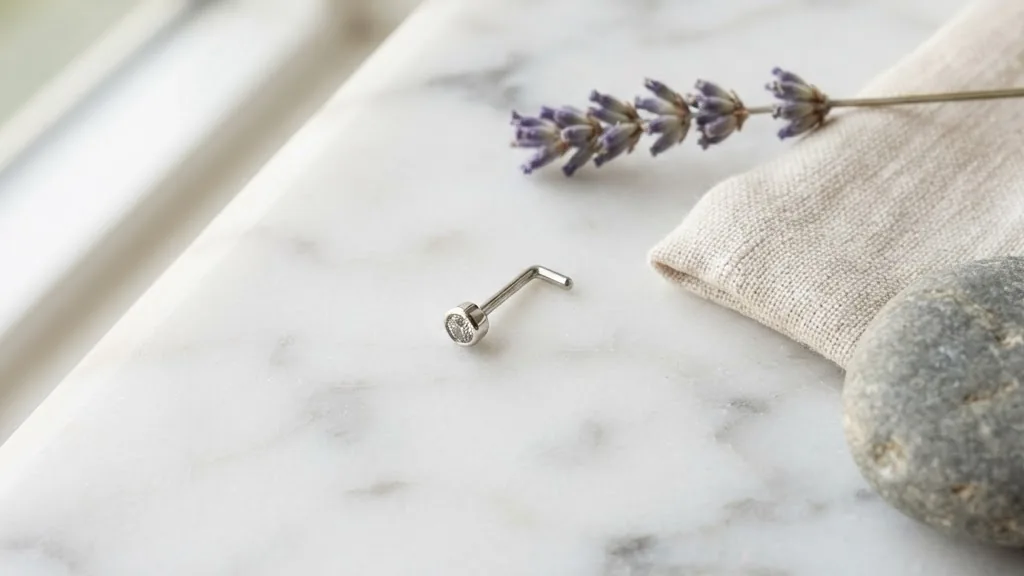
What gauge is a nose piercing? For a standard nostril it is almost always 20g (0.8mm) or 18g (1.0mm), and a septum sits thicker at 16g (1.2mm) or 14g (1.6mm). That is the whole answer most people are chasing, and I give it to clients before they even sit in the chair. The confusing part is not the sizes themselves, it is the scale behind them, because gauge numbers run backwards from what your brain expects. I have been sizing nostrils and septums in the studio for years, and the same two or three questions come up every week. This guide settles them for good.
Quick answer: a standard nostril piercing is done at 20 gauge (0.8mm) or 18 gauge (1.0mm), with 20g favored for dainty studs and nose screws and 18g preferred by many US piercers for durability. A septum piercing starts thicker, usually 16 gauge (1.2mm) or 14 gauge (1.6mm). The gauge scale is inverse, so a higher number means thinner jewelry: 20g is thinner than 18g, which is thinner than 16g and 14g. If you only remember one thing, remember that smaller numbers mean thicker posts, and match your new jewelry to the exact gauge your piercer used.
The gauge scale, explained in plain English
The single biggest source of confusion is that gauge runs the wrong way. A larger gauge number means a thinner piece of jewelry. So a 20g nose stud is thinner than an 18g stud, and an 18g stud is thinner than a 16g one. People expect “bigger number, bigger jewelry,” and the reverse trips up almost everyone standing at my counter for the first time.
The reason is historical. Body jewelry inherited its sizing from American Wire Gauge, a manufacturing standard for drawn metal wire. In that system, a wire was pulled through a shrinking series of dies, and the gauge number counted the number of passes. More passes meant a thinner wire and a higher number. Body jewelry kept the convention, which is why the scale still feels upside down today.
For nose jewelry you will only ever deal with the thin end of that scale. Nostrils and septums use even numbers, and the range that matters for your face runs from 22g at the delicate end to 14g at the sturdy end. Ear and lobe work goes much thicker, but a nose almost never needs it. Once you accept the backwards logic, every chart and every product page suddenly makes sense.
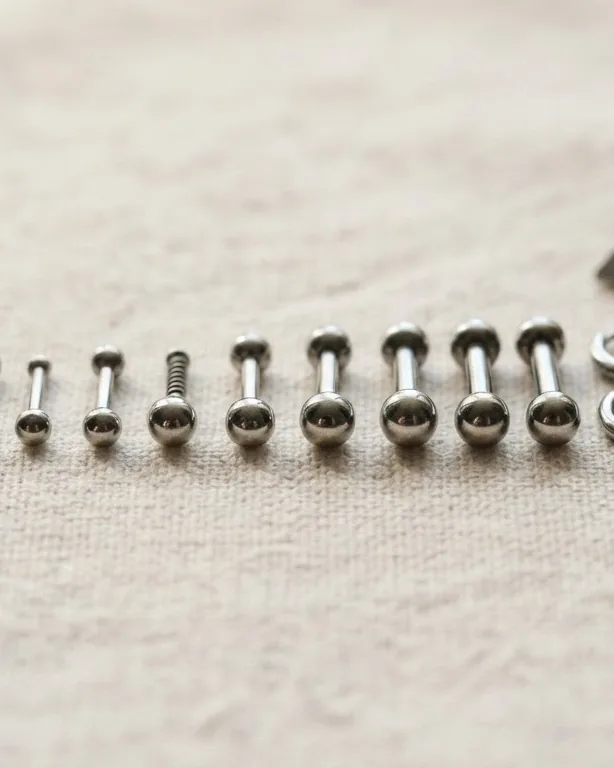
Standard nostril gauges: 20g and 18g
A nostril is the most common nose piercing, and it lives in a narrow band. The two sizes you will meet are 20 gauge, which measures 0.8mm, and 18 gauge, which measures 1.0mm. Both are considered correct by professional piercers, and the choice comes down to anatomy, jewelry style, and studio preference rather than one being right and the other wrong.
20g (0.8mm) is the thinner of the two. It suits fine, dainty jewelry like small bones, L-shape nose studs, and nose screws, and it leaves a smaller mark if you ever retire the piercing. The trade-off is that a thinner post is a little more delicate. It can flex, and a very fine hole is slightly quicker to shrink if you leave the jewelry out. I reach for 20g when a client wants the most discreet look possible.
18g (1.0mm) is the workhorse. It is the most common professional nostril gauge in the United States, and it is my default for a fresh piercing unless someone specifically asks for something finer. The extra 0.2mm of thickness makes the channel a touch more stable during healing, holds a wider range of decorative ends, and resists snagging on a towel or a mask. If you are unsure which to pick, 18g is the safe middle.
If your studio pierces at 18g, buy 18g replacement jewelry, not 20g, or your new stud will feel loose and can pull on the hole. If you want to see how nostril placement interacts with your face, our guide to choosing a nose piercing for your nose type pairs well with this sizing breakdown.
Septum gauges: 16g and 14g
A septum is a different animal. It passes through the soft “sweet spot” of cartilage-free tissue between the harder cartilage and the tip of your nose, and it carries more jewelry weight, so it is pierced thicker. The standard starting gauge is 16 gauge, which is 1.2mm. Many piercers and clients also go with 14 gauge, or 1.6mm, especially if they want a heavier ring or plan to stretch later.
16g (1.2mm) is the common baseline for a first septum. It supports a circular barbell, a clicker, or a retainer comfortably, and it is thick enough to sit securely without cheese-wiring the delicate tissue. 14g (1.6mm) gives you a bolder look and a stronger anchor for weightier clickers, and it is the more popular jumping-off point if you already know you want a substantial ring.
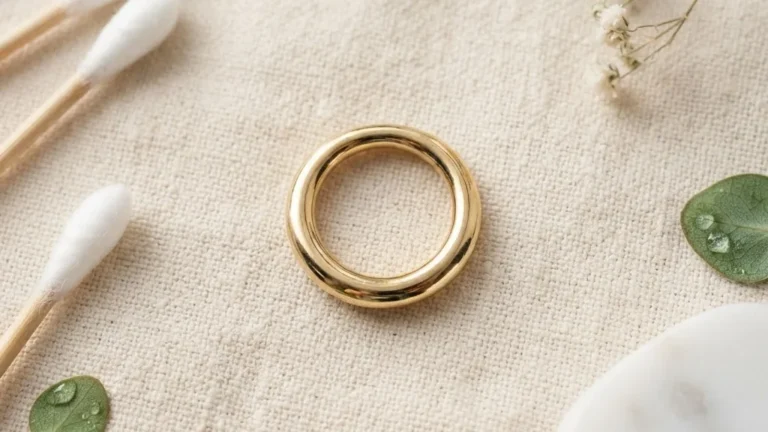
The mistake I see is people buying a 20g “nose ring” for a septum because it says nose ring on the label. A 20g hoop is a nostril size and will look and sit wrong in a septum. If you are shopping specifically for that placement, start with the right thickness and browse pieces built for it, like the styles in our roundup of septum rings and how to wear them. Match the gauge your piercer used, not the marketing word on the tag.
Gauge to millimeter conversions worth memorizing
Numbers settle arguments, so here is the short conversion set that covers every nose piercing you will realistically get. These are the figures I quote at the counter, and they line up with standard body-jewelry charts.
22g equals 0.6mm. This is the thinnest size, seen mostly on very fine, delicate jewelry. 20g equals 0.8mm, the standard slim nostril size. 18g equals 1.0mm, the sturdier nostril size and a common US default. 16g equals 1.2mm, the usual septum starting gauge. 14g equals 1.6mm, a thicker septum or stretched-nostril size. If you ever go bigger, 12g equals 2.0mm, though that is stretching territory, not a first piercing.
Those six conversions cover nearly every decision you will face. Notice the pattern once more: as the gauge number falls from 22 to 12, the millimeter measurement climbs from 0.6mm to 2.0mm. If you are the kind of person who wants every size laid out at a glance, our full body piercing size chart maps gauges to millimeters across the whole body, not just the nose.
One practical note on why this matters worldwide. In the United States, jewelry is labeled in gauge. In Europe and most of the rest of the world, the same jewelry is labeled directly in millimeters. So a European site listing a “0.8mm nose stud” is selling you a 20g piece, and a “1.0mm” stud is 18g. Knowing both languages means you can shop anywhere without guessing.
Gauge is not the same as diameter or length
Half the sizing errors I fix come from mixing up three different measurements. Gauge is only the thickness of the metal, the part that passes through your skin. It is not how wide a hoop is, and it is not how long a stud post is. A nose ring listing might read “20g, 8mm,” and those are two separate numbers doing two separate jobs.
Diameter is the width of a hoop or ring, measured across the inside, usually 6mm to 10mm for a nostril. A common nostril hoop is 8mm across at 20g or 18g thick. Length applies to studs and barbells and describes how far the post travels through the tissue, which matters because a fresh nostril is fitted a touch long to allow for swelling. So a single piece can have a gauge, a diameter or length, and a decorative end size, all independent of one another.
When you shop, read the gauge first because it decides fit, then choose diameter or length for comfort and look. If you get the gauge right but the diameter wrong, a hoop just looks too big or too tight and you can swap it freely. If you get the gauge wrong, the piece will not sit correctly no matter how good the other numbers are. Thickness is the non-negotiable one.
Why regional and studio differences exist
Gauge is standardized, but preference is not. What counts as “normal” shifts by country, by studio, and by tradition, and none of it is wrong as long as the piercer is using implant-grade jewelry and a clean technique.
In many studios across India, the Middle East, and select shops in the US, UK, Europe, and Australia, nostrils are pierced at 22 gauge, or 0.6mm, the tiniest option. That reflects a long tradition of very fine, delicate nose jewelry. In much of North America the default drifts thicker, with 18g and 20g doing the bulk of the work. Neither region is doing it incorrectly, they are just anchored to different jewelry cultures.
Studio habit matters too. Some piercers pierce every nostril at 18g for consistency and stability. Others start finer at 20g and let the client size up later if they want. This is exactly why you should never assume a gauge from a photo or a friend. Ask your piercer what they used and write it down, because that single number decides which replacement jewelry will actually fit your hole.
Why gauge matters for healing and jewelry fit
Gauge is not just a number on a receipt. It shapes how your piercing heals and whether your next piece of jewelry slides in or gets stuck. Getting it right is part of a smooth heal, and getting it wrong is a common cause of irritation bumps.
Start with healing timelines, because they set the schedule. A nostril typically heals on the surface in about 2 to 4 months, with full internal healing taking up to 6 months, and some anatomy needing 9 to 12 months before it is truly settled. A septum is usually quicker, often around 6 to 8 weeks to a couple of months. Nostrils also swell for roughly the first 4 to 6 weeks, which is why initial jewelry is fitted a little long.
That swelling is where gauge and length interact. Because the tissue puffs early, many piercers downsize your jewelry to a shorter post around 10 to 12 weeks once the swelling settles. Downsizing changes length, not gauge, but it teaches the key lesson: a piece that fits at week two may be wrong by week twelve, and jewelry that sits close to the skin heals cleaner and snags less.
Now the fit problem itself. If your replacement jewelry is thinner than your channel, say a 20g stud in an 18g hole, it can slide around, pull on the tissue, and let the fistula partially close. If it is thicker than your channel, forcing an 18g post into a 20g hole tears at the walls, stretches the piercing without your consent, and triggers angry bumps. The channel wants the exact gauge it was made at.
Gauge also changes how a hoop behaves. A thin 20g ring is light and springy but can flex out of round if you knock it, while a 16g or 14g ring holds its shape and anchors heavier ends without dragging on the tissue. This is part of why septums are pierced thicker: the placement carries more visible hardware, and a fuller gauge distributes that weight instead of concentrating it on a thin line of skin. On a nostril, the reverse logic applies, since a lighter 0.8mm or 1.0mm post is all the delicate tissue needs to stay stable.
Material rides alongside gauge for healing. The Association of Professional Piercers recommends implant-grade metals for fresh piercings, and the standouts are implant-grade titanium (ASTM F-136), implant-grade steel (ASTM F-138), and solid 14k or 18k gold. Titanium is my first pick because it is nickel-free, lightweight, and gentle on reactive skin. A correct gauge in a cheap, nickel-heavy metal will still irritate, so the two decisions go together. For general aftercare, the American Academy of Dermatology and the Mayo Clinic both stress keeping the site clean and leaving healed-looking piercings alone until they truly settle.
How to measure and size safely
You can figure out your gauge at home well enough to shop, but the gold standard is still a two-minute visit to a piercer with proper calipers. Here is how I walk clients through it.
The easiest and most reliable method is simply to ask the studio that pierced you and save the number. If you no longer have it, take an existing piece of jewelry you know fits and compare the post thickness to a labeled gauge chart, or measure the post with a millimeter ruler or digital calipers. A post that measures 0.8mm is 20g, 1.0mm is 18g, 1.2mm is 16g, and 1.6mm is 14g. Measure the straight post, not a decorative end.
If you are buying online and genuinely cannot tell, default to the common size for the placement: 20g or 18g for a nostril, 16g for a septum. Then confirm with your piercer before you commit to a full jewelry haul. Guessing one size off is the most frequent fit complaint I hear, and it is entirely avoidable.
When a healed piece will not pass through anymore, do not force it. That usually means the fistula has shrunk slightly, common if the jewelry has been out for a while. A piercer can use a gentle insertion taper to ease jewelry back in, or size you correctly if the hole has genuinely tightened. Forcing metal through a resistant channel is how people tear a piercing and restart the whole healing clock. Keep the site clean with a proper wound-wash while you sort it out, and if you want the full routine, see our breakdown of sterile saline solution for nose piercings. The UK’s NHS gives sensible baseline hygiene guidance if you want a neutral medical reference.
Nose piercing gauge reference chart
Keep this chart handy the next time you are staring at a product page trying to decode a listing. It lines up every gauge you will realistically meet on a nose, in both measurement systems, with the placement and a quick note on what that size is actually good for.
| Gauge | Millimeters | Inches | Typical placement | Notes |
|---|---|---|---|---|
| 22g | 0.6mm | 0.024 in | Nostril, fine and delicate | Common in traditional South Asian and Middle Eastern piercing; the thinnest practical size for a nose stud. |
| 20g | 0.8mm | 0.032 in | Nostril | Standard slim nostril size; fits most nose screws and L-shape studs. |
| 18g | 1.0mm | 0.040 in | Nostril | Most common US professional nostril gauge; sturdier and more snag-resistant. |
| 16g | 1.2mm | 0.048 in | Septum | Standard starting gauge for a septum; holds circular barbells and clickers. |
| 14g | 1.6mm | 0.063 in | Septum | Bolder septum size; a stronger anchor for heavier rings and clickers. |
| 12g | 2.0mm | 0.079 in | Stretched nostril or septum | Not a starter size; reached only through gradual stretching once fully healed. |
Tip: right after your appointment, snap a photo of the jewelry package or receipt your piercer hands you and save it in your phone. That label is the fastest way to reorder the exact gauge months later without measuring anything or guessing from memory.
Frequently asked questions
Is a 20g or 18g better for a nose piercing?
Neither is universally better. 20g (0.8mm) is thinner and suits dainty studs and the most discreet look, while 18g (1.0mm) is sturdier, holds more jewelry styles, and is the common US default for durability. The right choice is whatever your piercer used, so match your replacement jewelry to that exact gauge rather than switching sizes on your own.
What gauge is a septum piercing usually done at?
Septum piercings are pierced thicker than nostrils, typically 16 gauge (1.2mm) as a starting point or 14 gauge (1.6mm) for a bolder ring or planned stretching. Avoid buying 20g nostril hoops for a septum even if the label says nose ring, because that thickness is wrong for the placement and will sit and heal poorly.
Does a smaller gauge number mean thicker jewelry?
Yes. Gauge runs inverse, so a smaller number means thicker jewelry and a larger number means thinner jewelry. A 14g post is thicker than a 16g, which is thicker than an 18g and a 20g. The scale comes from American Wire Gauge, where a higher number originally meant more passes through the die and therefore a thinner wire.
Can I put a thicker gauge in without stretching?
Not safely into a fresh or exact-fit hole. Forcing an 18g post into a 20g channel tears tissue, stretches the piercing without proper tapering, and often causes irritation bumps. If you want to size up, wait until the piercing is fully healed and have a piercer do it gradually with an insertion taper rather than muscling in a bigger post yourself.
How do I know what gauge my nose piercing is?
Ask the studio that pierced you and record the number, since that is the most accurate answer. Otherwise, measure the straight post of a piece that fits with a millimeter ruler or calipers: 0.8mm is 20g, 1.0mm is 18g, 1.2mm is 16g, and 1.6mm is 14g. When unsure, default to 20g or 18g for a nostril and confirm with a piercer.
Why does gauge matter for healing?
The channel heals around the exact thickness it was pierced at, so matching that gauge keeps the fit snug and the tissue calm. Jewelry that is too thin slides and pulls, letting the hole partially close, while jewelry that is too thick stretches and irritates. Correct gauge, paired with implant-grade metal, gives a nostril its best shot at healing cleanly within 2 to 4 months.
The bottom line
A standard nostril is 20g (0.8mm) or 18g (1.0mm), and a septum is 16g (1.2mm) or 14g (1.6mm). Remember the backwards scale, where a higher number means thinner jewelry, and you will read any chart correctly. Match your replacement jewelry to the exact gauge your piercer used, lean on implant-grade titanium or steel while you heal, and never force a thicker post through a resistant hole. When a size will not go in, that is a piercer’s job, not a home project. Get the gauge right and the rest of your nose piercing gets a lot easier.