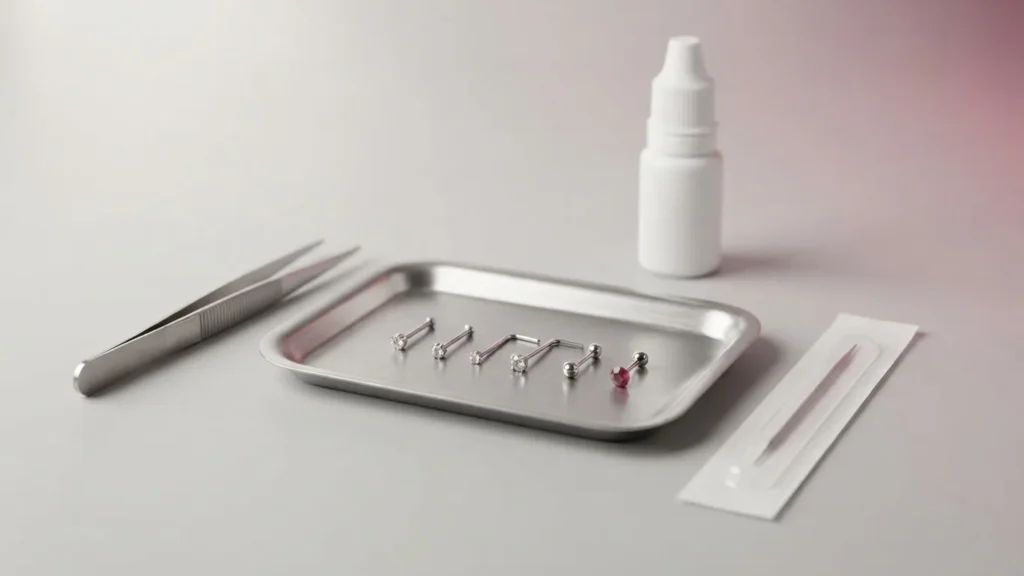
Ask what the average gauge nose piercing is and a number arrives fast – usually 18G or 20G – long before anyone mentions the part that actually protects your piercing: no single figure fits every nose. Those two gauges measure roughly 1.0 mm and 0.8 mm of post thickness, and both appear constantly in studios and jewelry listings. The one that belongs in your nose is set by the piercing you already have, so the popular answer and the correct answer are not always the same number.
Gauge is a measure of wire thickness, written as a number that runs backward: a higher gauge number means a thinner post. That reversed scale is where most sizing mistakes start, because “going up a size” on paper often means going thinner in the nostril. Before you buy a stud or hoop, it helps to separate what gauge actually controls from the two other measurements that decide whether a piece sits correctly.
Quick answer: The average gauge nose piercing in the US and UK is commonly 18G or 20G, about 1.0 mm and 0.8 mm thick, yet there is no universal size that suits everyone. Gauge describes post thickness only. Whether a piece fits also depends on stud post length or hoop internal diameter, both tied to your anatomy and the exact placement. The safest pick is the gauge your piercing was performed at, rather than the most common number online. A gauge that runs too thin can work loose in the channel and be pushed out instead of held.
Is there an average gauge nose piercing that fits everyone?
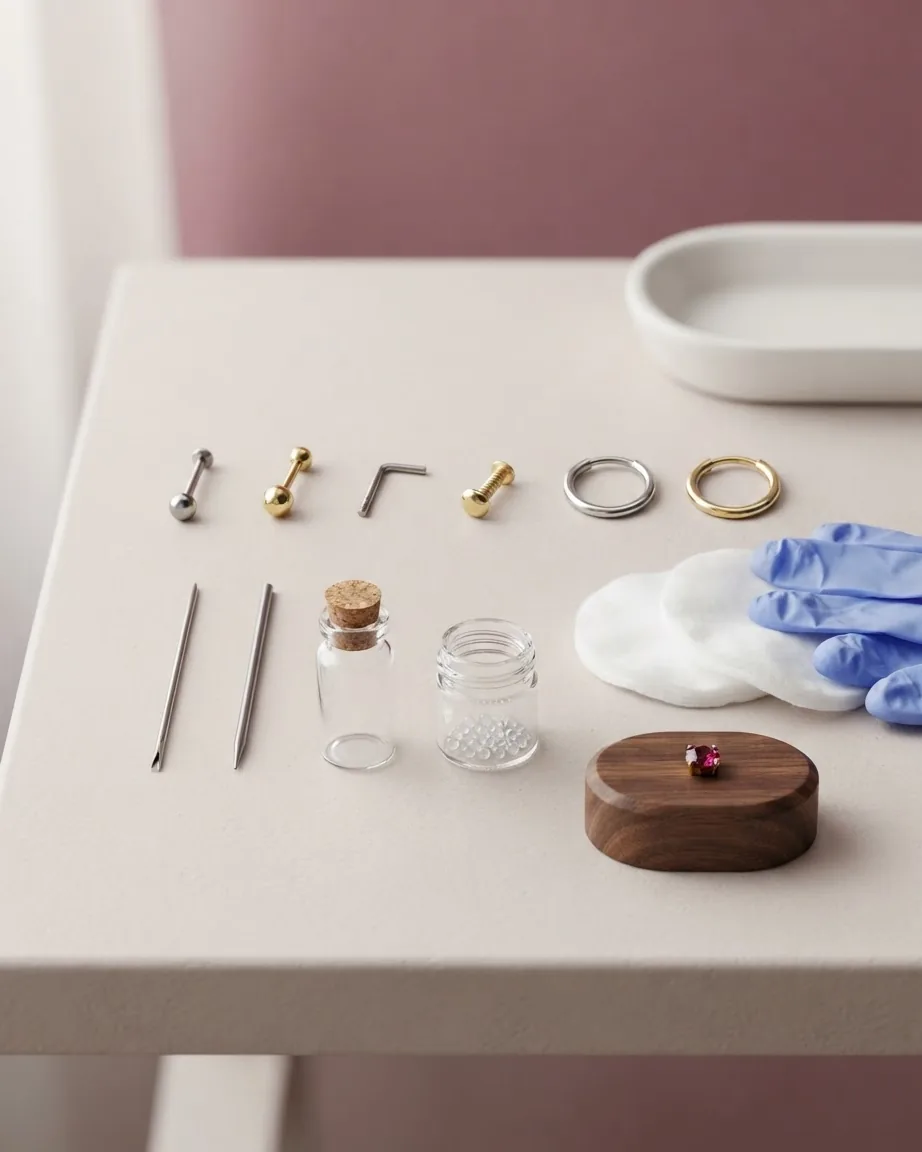
No. The sizing guide published by Gauge to MM puts the two common nostril gauges at 18G, around 1.0 mm, and 20G, around 0.8 mm, while stating directly that no universal size fits every nose. Those figures describe the thickness of the metal that passes through the piercing – nothing more. Two people can both wear “18G” and still need different jewelry, because thickness is only one of the dimensions that has to match.
The reversed numbering trips people up. On the gauge scale, 20G is thinner than 18G, so the slightly larger hole belongs to the lower number. A 1.0 mm 18G post and a 0.8 mm 20G post look almost the same in a photo, but they do not pass through the same channel without consequence. Pushing a thicker gauge into a piercing made at a thinner one forces the tissue; dropping to a thinner gauge leaves the post loose in a wider channel.
So “average” here is a description of what turns up most often, not a size you can assume sight unseen. For the wider topic and related placements, see our nose septum section.
18G or 20G: choose by the piercing, not by popularity

Once you know both sizes are common, the question becomes which one is yours. Vital Piercing points out that 18G and 20G look nearly identical in a product image yet are not interchangeable, and that replacement jewelry should match the gauge the piercing was actually made at. That turns the buying decision away from “pick the popular size” and toward “confirm the size I already have.”
Why it matters in practice: a nostril pierced at 18G has a channel sized for a 1.0 mm post. Order 20G because it reads as the more delicate option and the thinner wire sits loose, moves more, and can irritate the piercing. Order up from a 20G piercing to a thicker 18G and the post has to stretch the channel to seat. Neither direction is a safe default. The established gauge is the reference point, and everything else works around it.
If your piercing is older and fully settled, you have a little more room to experiment with look, but the starting assumption is still the gauge on record. See also: our standard nose piercing gauge guide.
Gauge is thickness only: why length and diameter decide the fit

Knowing you wear 18G or 20G is not enough to buy a piece that fits. Gauge covers the thickness of the wire. A stud also has a post length; a hoop also has an internal diameter. Both of those have to suit your nose, and both are set independently of the gauge number.
The Association of Professional Piercers states that initial jewelry must be an appropriate length or diameter for your anatomy and the placement of the piercing, not thickness alone. A piece that sits too tight restricts the air and blood circulation a healing channel needs and blocks the normal drainage a settling piercing produces. A post that is too long, by contrast, gives the jewelry room to snag and shift. You can order the correct gauge and still end up with a stud that presses or a hoop that gaps, because the measurement that failed was length or diameter.
Practically, this means two numbers travel with every gauge: thickness, and either post length (for a stud) or internal diameter (for a hoop). A correctly gauged piece with the wrong length or diameter is still the wrong piece.
When a thinner gauge becomes a liability
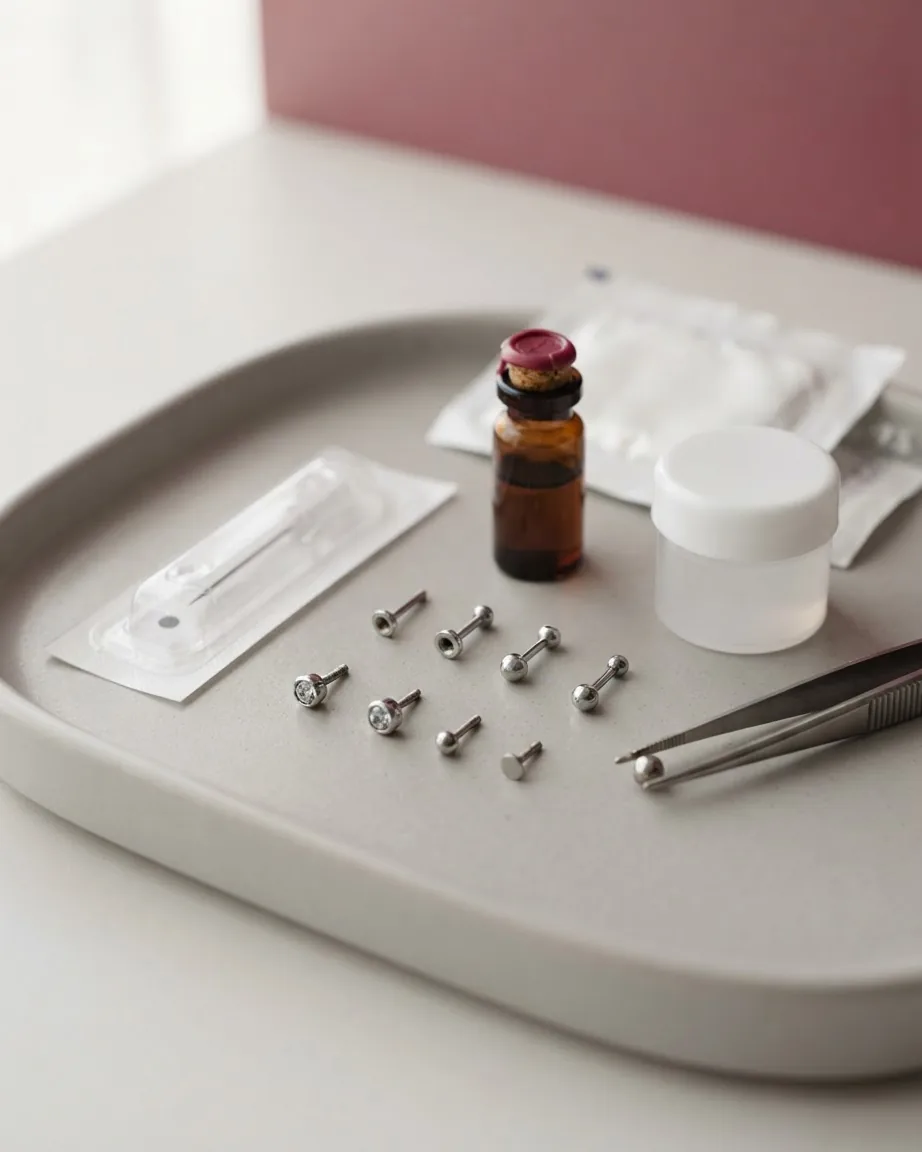
Thinner looks lighter, so it is easy to assume a slimmer gauge is the gentler, safer pick. For a fresh or settling piercing, that assumption can backfire. The same professional association warns that when a gauge runs too thin, the body can treat the jewelry like a splinter, which pushes the piece toward migration – the jewelry drifting out of position – or outright rejection, where the tissue expels it entirely.
That turns “20G is daintier, so it must be kinder” into a real risk rather than a style choice. A simple 18G-versus-20G chart cannot tell you this, because it ranks the two sizes by appearance and availability, not by how a piercing responds to a post that is too fine for it. The takeaway is narrow and useful: thinner is not automatically safer, and dropping below the gauge your piercing was built for is a known failure mode, not a shortcut to comfort.
Why US and UK guides name different standard gauges
Search two sizing guides and you may see one call 18G the standard and another treat 18G and 20G as equally standard. That reads like a contradiction. It mostly reflects geography and the stage of the piercing.
Vital Piercing describes 18G as the more common gauge for fresh nostril piercings in the US, with 20G also widely sold, especially for healed piercings and a slimmer, more delicate look. A UK retailer, London Loves Body Jewellery, treats both 18G and 20G as standard for nostril jewellery and says that if an experienced piercer used a needle, you were very likely pierced at one of those two sizes – and that your existing jewelry is the best clue to what you need.
So the “disagreement” is really two true statements about different places and different moments: 18G leaning common for fresh US work, both sizes standard in the UK, and 20G more associated with healed piercings. None of that generalizes into a single worldwide number, which is exactly why a one-size answer misleads.
How nostril and septum placement change the size you need
Placement is one of the fit variables, not a separate topic. Because the professional guidance ties correct length and diameter to where the piercing sits, the same person can need different jewelry for a nostril and for a septum.
A nostril piercing passes through the fleshy wall of the nose; side is a cosmetic preference, and the stud post length or hoop diameter has to clear that wall without pressing or standing proud. A septum piercing is placed through the soft tissue below the nasal cartilage – the thin strip some piercers call the sweet spot – rather than through the hard cartilage itself, and its hoop or circular barbell is sized by internal diameter to sit flush at that spot. Different wall thickness, different placement, different length or diameter, even when the gauge number is shared.
Anything that looks wrong during healing – spreading redness, heat, swelling that worsens, or discharge that changes in color or smell – is a reason to see your piercer or a clinician rather than to self-diagnose. Studio fees and jewelry prices are a separate question from gauge entirely. See also: our septum piercing cost guide, and our nose types guide.
A three-measurement check to confirm your gauge before buying
Because the correct size is the one your piercing already carries, the reliable move is to confirm it rather than copy an average. Work through three measurements in order:
- Gauge (thickness) first. Check the record from your piercing appointment or the original jewelry you were sent home in. If it says 18G, that is roughly 1.0 mm; if 20G, roughly 0.8 mm. This is the number every replacement must match.
- If the gauge is unknown, have it read. London Loves Body Jewellery’s point is the practical one here: your current piece is the best evidence. Bring it to a studio and ask a piercer to gauge it rather than guessing between 18G and 20G from a photo.
- Then length or diameter. For a stud, confirm post length; for a hoop, confirm internal diameter. These are set by your anatomy and placement, and a correct gauge with the wrong length or diameter still does not fit.
How you know it worked: a correctly matched stud seats without pressing into the tissue and without a long run of exposed post; a correctly matched hoop closes flush at the piercing without gaping or pinching. If a piece you ordered by gauge alone presses, gaps, or moves loosely, the measurement that failed was length or diameter – go back to the second and third checks before blaming the gauge.
Common questions about nose gauge sizing
Does 18G or 20G leave the bigger hole?
18G does. On the reversed gauge scale a lower number means thicker wire, so 18G, at about 1.0 mm, sits a step up from 20G at about 0.8 mm. The practical catch for shoppers: the size that sounds “bigger” numerically – 20G – is actually the finer one, which is the opposite of how most measurements behave.
Will a nostril pierced outside the US match jewelry sold here?
Possibly, but confirm rather than assume. Both 18G and 20G are treated as standard nostril sizes in the UK, while 18G leans more common for fresh work in the US. Cross-border, the safe step is to have your existing piece measured at a studio so you buy to that reading instead of a regional default.
Can I order 20G to be gentler on a brand-new piercing?
Dropping to a finer gauge than your piercing was made at is a documented risk for fresh work, since tissue can reject jewelry that sits too thin. Stage matters: 20G is more associated with healed piercings and a slimmer look, while a settling piercing is safest at the exact gauge it was created with.
Turning the average into a size you can verify
The pattern holds across every question: a common gauge is a starting clue, not a prescription. Match the thickness your piercing was made at, confirm the post length or internal diameter for your own nose and placement, and treat the popular number as a cross-check rather than the answer. Do that and “average gauge” stops being a size you guess and becomes a size you verify.
Treat this guide the way you would treat the sizing note tucked into a jewelry listing: a map of what the numbers mean, not a stand-in for the record of your own piercing. The common gauges are worth knowing because they narrow the field to two likely answers, and knowing that 18G runs near 1.0 mm and 20G near 0.8 mm lets you sanity-check whatever a shop or a studio tells you. Past that, the work is confirmation, not recall.
When the gauge on record and the length or diameter for your anatomy both line up, a nose stud or hoop stops being a gamble and starts being a measurement you can repeat every time you reorder.
18G vs 20G: the real thickness gap in numbers
Both guides say the two posts look nearly identical in a product photo, but the measurements they quote don’t agree. An 18G post is 1.0 mm thick and a 20G post is 0.8 mm. Run the arithmetic on those two figures and the gap stops being a matter of appearance:
- Absolute difference: 1.0 mm − 0.8 mm = 0.2 mm more metal through the channel on 18G.
- Relative difference: 1.0 ÷ 0.8 = 1.25, so an 18G post is 25% thicker than a 20G post.