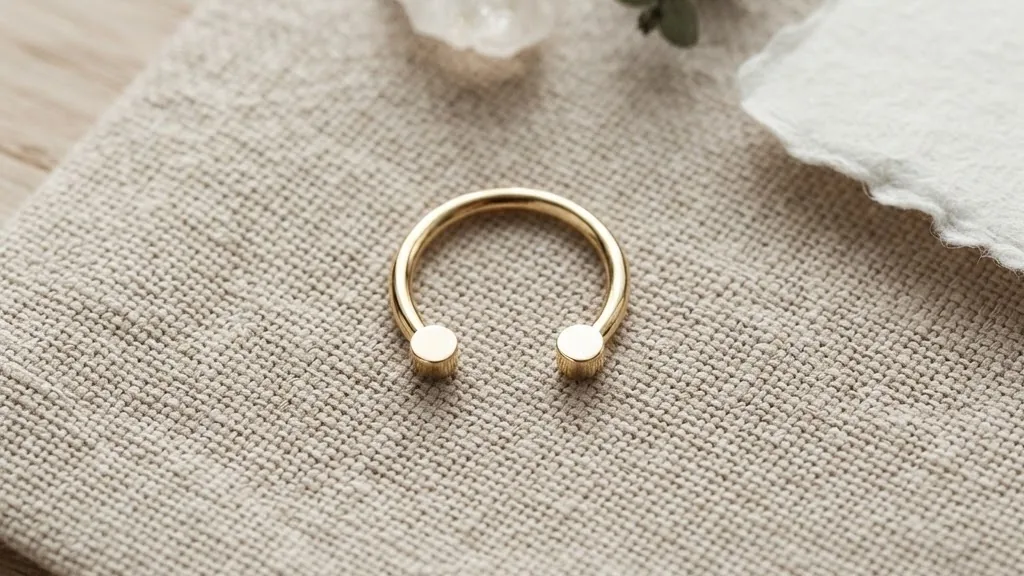
Septum retainer shoppers usually want one thing that no product listing answers cleanly: which piece is actually safe to wear right now, given how long ago the piercing was done. A septum retainer is a small U-shaped staple or short horseshoe worn flipped up inside the nostrils so the channel stays open while the jewelry disappears from view. The trouble is that the cheapest, best-selling version is made of the one material professional standards bodies exclude from unhealed piercings. That gap is what this guide closes, with named specifications and real numbers instead of adjectives like healthy acrylic or surgical steel.
Below you will find the material safety picture, the sizing math, the healing gate that decides whether you may flip anything at all, and the medical-imaging protocol that the marketplace copy gets flatly wrong. If you are still deciding on a base piece, the differences between rings, studs and staples are covered in the companion guide to piercing retainers that hold a channel open.
Quick answer: A septum retainer is a low-profile staple or slim horseshoe you flip up into the nostrils to conceal the piercing without letting it close. Choose implant-grade titanium (ASTM F136 or F67) or lead-free borosilicate glass for anything not fully healed, and treat clear acrylic as a healed-piercing-only option. Do not flip or swap a septum piercing done less than 6 to 8 weeks ago. Standard sizing runs 16G (1.2mm) with a 6mm wearable length. Before any MRI or surgery, call the department first; material alone does not decide the outcome.
Anatomy and the Concealment Mechanic
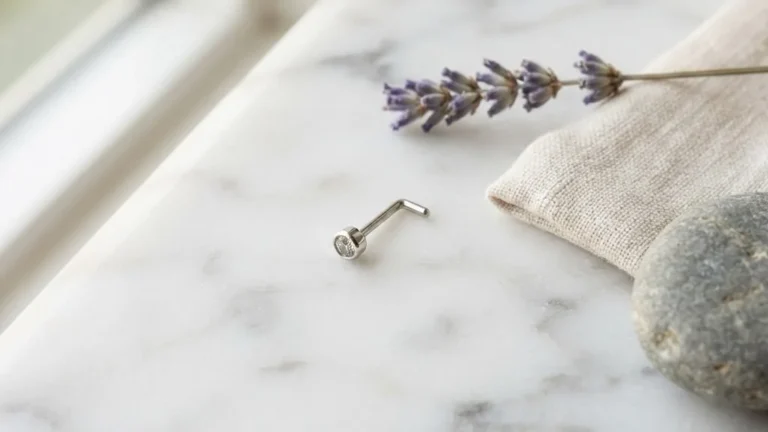
A septum retainer is a specific piece of body jewelry shaped to sit inside the nostrils rather than hang below the nose. Most take the form of a U-shaped staple or a very short horseshoe barbell. You conceal the piercing by pushing the piece up and slightly back so each end tucks into a nostril cavity. When fitted correctly, the channel stays open, but nothing shows from the front. The anatomy of the nose does all the heavy lifting.
The septum is arguably the easiest facial piercing to conceal precisely because of this internal cavity space. Unlike a nostril screw or a lip stud, you do not need skin-tone tape, makeup, or flesh-colored tops. The jewelry simply rotates out of the visible field. However, this relies entirely on having enough room inside the nasal tip to house the ends of the jewelry without them constantly resting against the sensitive inner lining.
Some styles are manufactured to be worn both ways. Anatometal, a highly regarded body jewelry manufacturer, ships septum retainers that are completely wearable post-up for hiding or post-down as visible jewelry. Therefore, a retainer is not automatically a hidden-only piece. A beautifully polished titanium or gold staple looks distinctly architectural when worn down, providing a totally different aesthetic from a standard ring.
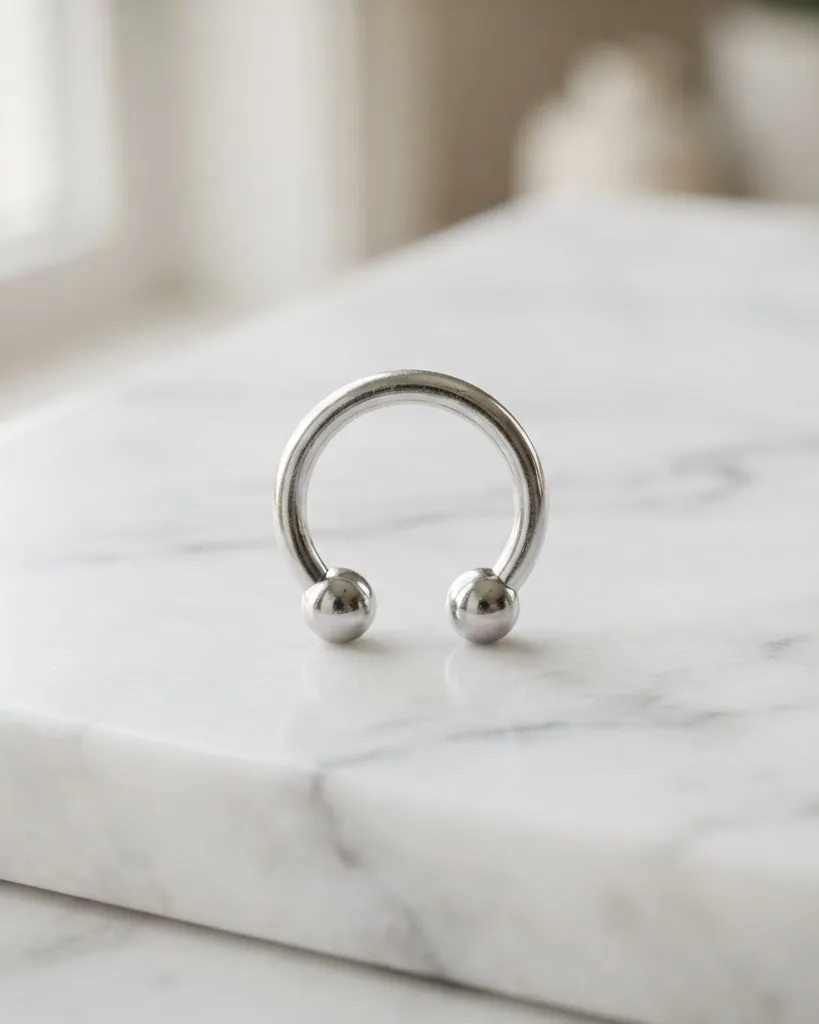
Retainer vs. Horseshoe vs. Clicker: The Comparison
Retailers frequently file all septum jewelry under one massive category, but the mechanics vary wildly. The right call depends on how healed you are and how strictly you need to hide the metal.
- Flipped-up horseshoe: This is a circular barbell rotated up into the nostrils. It is cheap, reversible, and very common. However, the threaded balls add bulk, which can tickle the inside of the nose or restrict airflow slightly.
- Dedicated retainer: A smaller, snugger piece specifically built for hiding. These are usually glass, steel, titanium or acrylic. They feature a flatter profile across the bottom and lack the bulky screw-on balls, making them flip up cleanly and stay put securely.
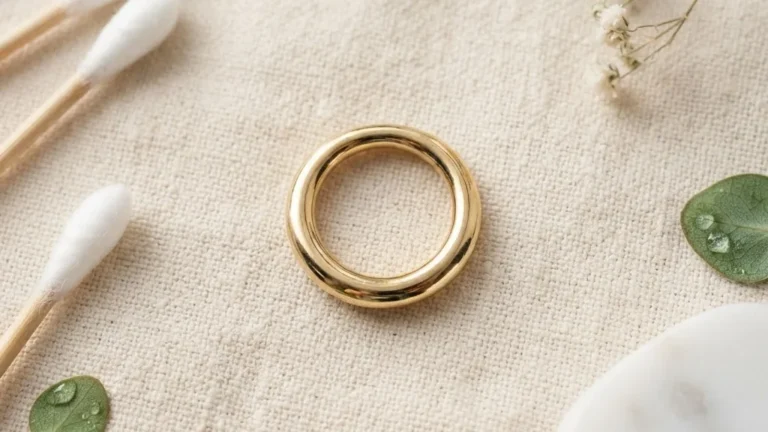
- Clicker or seamless hoop: These are decorative rings, generally worn down and completely visible. They are not built for hiding and cannot be flipped up into the nose.
Treating these as interchangeable is a mistake. If your workplace demands absolute zero visibility, a horseshoe might betray you if the balls slip down, whereas a dedicated U-staple retainer will stay locked in the upper nasal cavity all day.
The Healing Gate: When You May Flip Anything At All
The single most consequential rule in this entire topic is a timing gate that most product pages bury in one vague sentence. A fresh septum piercing needs roughly 6 to 8 weeks of initial healing when it is placed in the membranous sweet spot below the cartilage. During that specific window, you should not flip the jewelry up, and you definitely should not swap the piece yourself.
Urban Body Jewelry, one of the most visible informational pages on the subject, states plainly that you should leave a new septum piercing alone for 6 to 8 weeks before changing or flipping up the jewelry. The tissue in that early stage is incredibly fragile. Flipping the jewelry tears away the delicate crusts of dried lymph that form around the entry and exit holes. Doing it early risks severe irritation, internal tissue tearing, and subsequent infection.
The physical mechanics of flipping a fresh piercing introduce massive trauma. When you rotate a horseshoe or a retainer, you drag whatever bacteria and microscopic debris have gathered on the exposed metal directly through the raw wound channel. You also disturb the fistula, which is the fragile tube of scar tissue the body is trying to build. Interrupting that process resets your healing clock.
Full Healing Timelines and Cartilage Deviations
While the initial sealing takes 6 to 8 weeks, full internal healing runs much longer, and the published figures diverge significantly. Mantra Tattoo cites 3 to 6 months for full internal healing. Other piercer sources cite a minimum of 2 to 3 months before a safe jewelry change. A widely cited Healthline article from 2020 and BodyArtForms guidance from 2023 both support the 2 to 3 month minimum.
Looking further across the web, Wikipedia suggests 1.5 to 2 months for a septum, while retailer PlugYourHoles warns that full structural healing can take up to 6 to 8 months. The reality is a spectrum. Do not pick a single full-heal number and treat it as gospel. Treat the 6 to 8 weeks as the reliable initial figure, and defer to your piercer on the rest.
Anatomy also changes the math. If the needle did not hit the sweet spot and instead passed through the tough alar cartilage, healing extends drastically. Cartilage has far less blood flow than the membranous tissue. Piercings placed there can take several additional months to settle, and flipping them is notoriously painful and stubborn.
What to Do If You Need to Hide a Fresh Piercing
What this timeline means in practice is that you cannot get pierced on Friday and buy a retainer to flip up for work on Monday. If you were pierced under 6 to 8 weeks ago, do not flip the jewelry, do not self-swap it, and go talk to your piercer.
The absolute correct fix for early concealment is a retainer fitted at the exact time of the initial piercing. You must tell your piercer before the needle goes in if hiding it is non-negotiable. They will pierce you, immediately insert a safe retainer, and flip it up while the area is still numb and sterile. You will then heal with the jewelry in the flipped-up position for the entire 8-week duration.
Repeated flipping while healing prolongs the whole process and invites hypertrophic scarring or irritation bumps. You cannot negotiate with the healing tissue. Either heal it completely down, or heal it completely up.
Materials, Standards and the Acrylic Contradiction
Material is where the marketplace listings fail a health-conscious reader, and where naming actual specifications changes the answer entirely. When a channel is unhealed, the metal must be flawless. Implant-grade titanium sold to ASTM F136 is the premier choice. This specification designates the Ti-6Al-4V ELI alloy, which is commonly referred to as Grade 23. The alloy contains roughly 90 percent titanium, 6 percent aluminum, and 4 percent vanadium, with the ELI standing for extra low interstitial.
If ASTM F136 is unavailable, the Association of Professional Piercers also accepts ASTM F67, which covers unalloyed or commercially pure titanium across Grades 1 through 4. A third accepted titanium specification is ASTM F1295, detailing the Ti-6Al-7Nb alloy. Titanium can be safely anodized to a color without compromising safety, utilizing the ASTM F86 specification for surface preparation.
Steel is more complicated. ASTM F138 is the standard specification for wrought 18Cr-14Ni-2.5Mo stainless steel, heavily used in surgical implants and often called 316LVM. It is highly durable, but it carries nickel in the alloy by design. The name itself explicitly carries the 14Ni designation, and some studio sources state 316 steel contains roughly 15 percent nickel by volume. The APP explicitly notes that surgical stainless steel has no formal regulatory definition, so the phrase alone tells you nothing about its safety.
The Danger of Clear Acrylic Retainers
Here is the massive contradiction the top marketplace sellers completely avoid. The highest-volume septum retainer product on the market is the clear acrylic multipack. Yet, clear acrylic (PMMA) is the one material the professional standards bodies explicitly exclude from unhealed piercings.
First, acrylic cannot be autoclaved. It physically cannot withstand temperatures above 80 degrees C without melting or warping. Therefore, a piercing studio cannot run it through a standard steam autoclave cycle to achieve true medical-grade sterility before insertion. Furthermore, Wikipedia notes that some acrylics may begin to degrade at temperatures as low as 21 degrees C, which is well below normal human body temperature.
Second, acrylic degrades rapidly on contact with alcohol. If you attempt to wipe down an acrylic retainer with standard isopropyl alcohol, the surface dulls, cracks, and crazes. You simply cannot safely disinfect it at home using standard medical cabinet supplies.
Elayne Angel places acrylic firmly in the Jewelry for Healed Piercings chapter of The Piercing Bible, deliberately keeping it out of the initial jewelry section. BodyArtForms explicitly flags their acrylic products as great for healed piercings only. Also, glow-in-the-dark plastic jewelry is generally considered unsafe for wear inside the body.
Safe Polymers and Glass Options
If you need a non-metallic option but your piercing is still healing, you are not entirely out of luck. The APP material list for initial piercings does include safe polymers and glass, provided they meet exact laboratory specifications.
For plastics, PTFE is accepted if it meets the ASTM F754 standard. Any other polymer or plastic must be ISO 10993-6, 10993-10, or 10993-11 compliant, or hold a USP Class VI designation. These rigorous biological evaluation tests check for implantation safety, irritation, sensitization, and systemic toxicity. You will occasionally see safe plastics sold under trade names like Bioflex or Bioplast, but you still need to verify their material compliance.
Glass is a phenomenal, heavy-duty alternative to plastics. Fused quartz, lead-free borosilicate, and lead-free soda-lime glass are all APP-accepted for initial piercings. Glass can be fully autoclaved, it is completely non-porous, and it does not harbor bacteria the way scratched plastic does. The only minor drawback is weight; acrylic is roughly half the weight of glass, which gives acrylic a slight comfort advantage for fully healed piercings.
APP Processing Standards and Gold
Material composition is only half the battle; the physical manufacturing matters just as much. The APP states that all threaded or press-fit jewelry used in a fresh piercing must be internally tapped. This means there are no exposed external threads on the posts or barbells that can act like a tiny saw blade against your fragile tissue during insertion. Surfaces and ends must be perfectly smooth and completely free of nicks, scratches, burrs, stamps, hallmarks, and polishing residues.
Metals must have a consistent mirror finish on all tissue-contact surfaces. Additionally, all jewelry used for initial piercing on people above age 12 must be ASTM F2999 compliant, which is a broader consumer safety specification.
Gold is also widely accepted, provided it is 14k or higher, is totally nickel-free, is completely cadmium-free, and is alloyed strictly for biocompatibility. Niobium is another excellent, totally safe metal option accepted by the APP, though no formal implant-grade medical classification currently exists for it in the piercing context. You can read the full material list on the APP page on jewelry for initial piercings.
The Material Comparison At a Glance
| Material | Standard | Autoclavable | Healing piercing? |
|---|---|---|---|
| Titanium Ti-6Al-4V ELI | ASTM F136 / ISO 5832-3 | Yes | Yes |
| Steel 316LVM | ASTM F138 / ISO 5832-1 | Yes | Contains nickel |
| Borosilicate glass | Lead-free, APP-accepted | Yes | Yes |
| Acrylic (PMMA) | None named | No | Healed only |
Nickel Limits and Why Hypoallergenic Is Not Enough
Nickel is the reason so many cheap retainers cause raging skin reactions, and the legal picture surrounding it is far more specific than any marketplace listing admits. Under the European Union REACH regulation, specifically Annex XVII Entry 27, a post inserted into a pierced part of the body cannot legally be placed on the market unless it meets a strict nickel release threshold.
That legal limit is extremely low: the metal must release less than 0.2 micrograms per square centimeter per week. For context, all other metal articles in direct and prolonged skin contact, such as fashion rings, bracelets, and watch straps, have a looser limit of 0.5 micrograms per square centimeter per week. The 0.2 figure for piercings is the strictest nickel limit in the entire regulation.
This is not a uniquely European quirk. China adopted GB 28480-2012 in 2012, restricting nickel release in body piercing jewelry to the exact same 0.2 micrograms per square centimeter per week limit, and keeping the 0.5 limit for other prolonged skin contact items.
Testing Methods for Nickel Release
The reference test method used to prove compliance with these strict EU limits is EN 1811. The current active version is EN 1811:2023, which superseded the older EN 1811+A1:2015 standard. For jewelry items that have an external coating over a base metal, the EN 12472 standard is also applied to simulate wear and corrosion before the nickel test is run.
The origin of these laws traces back to Directive 94/27/EC, famously known as the Nickel Directive, which was later folded into the larger REACH Annex XVII framework. Nickel allergic contact dermatitis is one of the most common causes of skin reactions to jewelry globally. You can read the American Academy of Dermatology guidance on nickel allergy for a deeper clinical perspective.
REACH also aggressively caps other toxic heavy metals. Lead must remain under 0.05 percent by weight in any individual part of a jewelry article. Cadmium is restricted to under 0.01 percent by weight, which is 100 milligrams per kilogram. This heavily impacts the safety of cheap, plated retainers bought in bulk.
The APP Stance on Biocompatibility
The crucial distinction that no top-ranking seller makes is this: the APP explicitly states that meeting the old EEC Nickel Directive alone is not sufficient to satisfy its initial-jewelry standards. A release-rate cap simply limits how much nickel escapes the metal during laboratory testing.
Limiting release does not categorically prove the material itself is biologically safe to wear deep inside a human wound for months on end. That distinction is a massive differentiator. If you react strongly to metal, your best path is to completely bypass steel described vaguely as surgical. Choose implant titanium or lead-free borosilicate glass instead. If you want to explore other metals that genuinely keep irritants out, review this breakdown of hypoallergenic nose piercing jewelry.
Sizing a Septum Retainer Without Guesswork
Sizing is the second place buyers go horribly wrong, entirely because gauge, wearable length, and inner diameter measure three totally different physical dimensions, and online listings constantly mix them up. You cannot buy a retainer on guesswork.
Gauge refers to the thickness of the metal bar that actually passes through your tissue. Standard septum sizing is 16G, which equals 1.2mm exactly. Retainers on the wider market are commonly manufactured from a tiny 18ga all the way up to a massive 8ga for stretched piercings. You must match the gauge of the retainer perfectly to the gauge you were pierced with. Downsizing the gauge will shrink the hole, while forcing a larger gauge will stretch and tear the fistula.
Wearable length refers to how much of the straight bar sits horizontally inside the piercing channel before the metal curves downward. The industry standard wearable length for a U-shaped septum retainer is 6mm, commonly written as 1/4 inch. If the wearable length is too short, the retainer will violently pinch the center of your septum. If it is too long, the piece will slide back and forth, dragging crust and bacteria through the nose.
Inner Diameter and Flip-ability
Inner diameter is the measurement of the empty space horizontally across the inside of the U-shape or horseshoe. This dimension strictly decides how easily the piece flips backward and whether the metal peeks out of your nostrils once tucked away.
A typical U-shape dedicated retainer inner diameter sits closely around 6mm, or 1/4 inch. A horseshoe or circular barbell usually requires an inner diameter of at least 8mm, or 5/16 inch, to give the threaded balls enough physical clearance to wrap around the septum tissue. An 8mm circular barbell in 16g is widely reported as easy to flip and relatively comfortable when worn hidden all day.
However, bigger is absolutely not better for hiding. Diameters of 11mm and above are frequently reported to peek out of the bottom of the nostrils. When the circle is that large, the arc of the metal simply exceeds the vertical height of the nasal cavity. The balls will drop into plain view, totally defeating the purpose of the retainer.
How to Measure Your Current Jewelry
Always measure what you already own before you click buy. Take out your most comfortable horseshoe or ring. Lay it flat against a piece of paper. Use a metric ruler to check the bar thickness against a standard gauge chart. Then, measure the widest horizontal empty space across the inside of the circle to find your inner diameter.
Real product data proves these ranges are standard. Urban Body Jewelry sells a very popular clear acrylic retainer ranging from 16G to 10G, all standardized at a 6mm wearable length. They also carry a borosilicate glass version in 16G, 14G, and 12G, again with a 6mm wearable length, which holds a 4.87 out of 5 rating across 23 reviews. Anatometal builds custom retainers from 18ga to 8ga in steel, titanium, niobium, and 18K gold.
If you want to see the wider sizing picture across all types of nose jewelry, consult the complete standard nose piercing gauge guide and review the breakdown of the typical gauge for nose piercings by size.
Use Cases: Work, School and Sports
The reason people buy retainers usually boils down to strict organizational policies or physical safety. For work and school, the best advice is to read the actual written dress code policy first. Many modern offices have relaxed their facial piercing rules, so you may be suffering through flipping an uncomfortable horseshoe for a rule that no longer exists on paper.
If the policy strictly forbids visible metal, a dedicated glass or titanium U-staple is your best defense. For job interviews and formal family events, you want absolute zero visibility. An 8mm horseshoe might slip down if you sneeze or wipe your nose. A perfectly fitted 6mm wearable length staple will stay lodged securely out of sight.
Contact sports introduce a massive snag and tear risk. A horseshoe hanging out of your nose during a wrestling match, rugby game, or martial arts spar is a catastrophic injury waiting to happen. The jewelry can easily hook onto a jersey or an opponent’s hand, tearing the septum tissue violently. Tucking a low-profile retainer up into the nasal cavity completely neutralizes this risk while keeping the channel open during the game.
Septum Retainer for MRI, Surgery and X-ray
Medical imaging is the specific scenario where a wrong answer on a product page has real-world consequences. Amazon listings frequently claim that acrylic and steel retainers are good for work, surgery and more. This is dangerously misleading. The medical reality is entirely dictated by hospital department policy, not just material science.
The reference source on body-piercing jewelry in the magnetic-resonance environment is Shellock R&D Services, published extensively at mrisafety.com. According to the physics, high-grade implant titanium is entirely non-ferromagnetic. It does not interact with the MRI magnet in a way that causes extreme pulling or tearing.
However, titanium being non-ferromagnetic absolutely does not mean you automatically get to keep it in during a scan. Radiology departments commonly instruct the immediate removal of all body piercings as a strict precautionary measure, regardless of the material. Hospital MR safety manual addenda routinely document this blanket ban.
Risks in the Medical Environment
The named risk mechanisms in the MRI environment include displacement or movement. This can cause uncomfortable sensations ranging from mild to moderate, depending heavily on the specific site and the jewelry’s mass and magnetic susceptibility. In extreme cases, real injury occurs. For electrically conducting jewelry, severe MRI-related heating is possible, which can burn the inside of the nose.
Some medical facilities will demand absolute proof of material composition before considering any exception. This means handing the technician a certified mill certificate from the jewelry manufacturer. Most people do not keep mill certificates in their wallets.
X-rays and CT scans present a different problem. The primary issue there is not magnetism, but artifacting. A piece of dense metal will create a bright, starburst-like artifact on the final image, completely obscuring the anatomical read if the jewelry sits in the visual field of the scan.
Electrocautery and Pre-Appointment Preparation
Surgery presents its own distinct set of hazards. Removal is very often requested by the anesthesiologist for intubation safety. You do not want a loose piece of metal falling into your airway while you are unconscious. Furthermore, electrocautery tools used in the operating room can arc to metal piercings, causing severe local burns.
The practical, unbreakable rule for medical appointments is to call the imaging department or surgical coordinator directly before the appointment date. State exactly what the exam is, the area being scanned, the specific piercing site, and the material of your jewelry. Follow their instruction to the letter.
If you have a fresh piercing that you cannot safely remove, or if you have a piece of stuck jewelry, you must arrange for a non-metallic retainer via your piercer well in advance. Pure glass and silicone are generally accepted without hesitation in hospital environments where metal is completely banned.
How to Flip, Clean and Troubleshoot a Retainer
Handling a retainer is incredibly straightforward once the tissue is fully healed, but ignoring the small details prevents the bumps and stuck-jewelry situations that send desperate people back to a piercing studio. Wash your hands with hot water and antibacterial soap before and after every single time you touch the piece.
To insert the retainer, lubricate the tip slightly with sterile saline or clean water. Find the channel opening gently, without scraping the internal wall. Push the straight bar smoothly through until an equal amount of leg shows on both sides of the septum.
To flip it up, place a finger under the U-curve. Push the jewelry firmly up and slightly back toward your face. Guide the ends deeply into each nostril cavity. Once it is tucked, check for immediate comfort. The piece should feel totally secure, but it should never feel like it is pinching the tissue or restricting your normal breathing.
Cleaning Routines and Mechanical Failures
To clean a metal or glass retainer, rely exclusively on sterile saline wound wash. Spray it directly onto the site or soak clean non-woven gauze and compress it against the nose. Material heavily dictates the rest of your cleaning routine. Acrylic must never be cleaned with rubbing alcohol or hydrogen peroxide, as the harsh chemicals will rapidly dull and crack the plastic surface, turning it into a porous breeding ground for bacteria.
When something goes wrong with a retainer, the fixes are usually purely mechanical rather than medical. If the retainer simply will not stay flipped up and constantly drops down onto your lip, the inner diameter is highly likely too large for your specific nasal tip. Alternatively, your anatomy might be exceptionally narrow, meaning you need a snugger dedicated retainer rather than a standard horseshoe. Everyone’s internal anatomy differs wildly, so no single piece will perfectly fit every nose.
Handling Stuck Jewelry
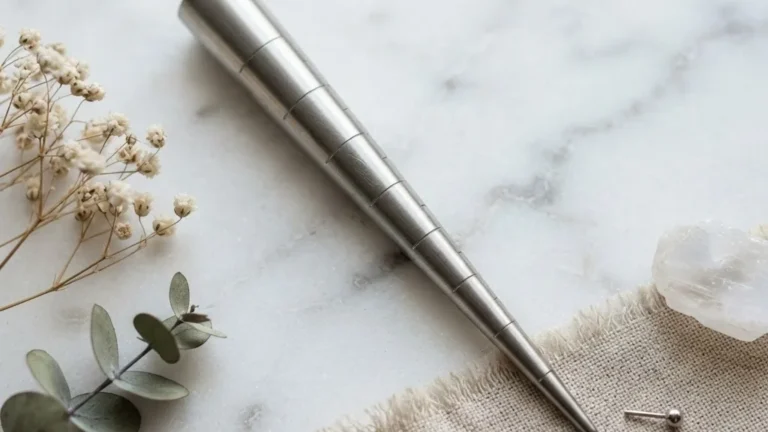
If a piece of jewelry absolutely will not go in, stop forcing it immediately. Forcing a blunt metal post against a tight fistula will tear the channel, causing bleeding and resetting your healing time. See your piercer, who can use a smooth insertion taper to guide the jewelry safely through without causing trauma.
If you have stuck or non-removable jewelry right before a strict medical appointment, do not wait until you are sitting in the waiting room to deal with it. Have a professional piercer remove or swap the piece a day or two ahead of time. Piercers have specialized ring-opening pliers and hemostats to remove stubborn metal safely.
Retainers exist precisely to prevent the piercing channel from permanently closing during a forced removal. Preventing closure is their entire operational reason for being.
Recognizing Irritation Versus Infection
Knowing when to stop troubleshooting mechanical issues and see a professional is a critical health matter, not a styling one, so it deserves its own distinct section. Mild irritation bumps and a faint, slightly funky odor from dried lymph are incredibly common during the long healing phase. These minor issues usually resolve themselves with a strict sterile saline care routine and a commitment to stop fiddling with the jewelry.
What is absolutely not routine is escalating, throbbing pain, spreading visible swelling around the tip of the nose, rapidly increasing redness, or thick, dark discharge. These symptoms point aggressively toward a bacterial infection rather than the ordinary settling of the tissue. The faint odor of dried lymph is not the same biological signal as the foul odor of an active infection. The primary difference lies in whether the symptoms are steadily getting worse over a timeline of days.
You must See a doctor immediately if pain, severe swelling, or colored discharge escalate. You should see your piercer for mechanical jewelry problems, such as a piece that will not seat correctly or a dropped ball, but a piercer is not a doctor and cannot prescribe antibiotics.
Expanding Your Piercing Knowledge
General wound-care principles and broad infection information are widely available through the FDA guidance on tattoos and body art safety. If you want to dig into the deeper medical literature regarding piercing complications, extensive peer-reviewed studies are indexed directly at PubMed.
If you are still in the planning stages and are weighing the full commitment of the piercing before you commit to the needle, you need to look at the financial reality. The real numbers, including the cost of high-grade initial jewelry and subsequent retainers, are laid out clearly in this cost breakdown of a septum piercing.
Buying Checklist and Marketplace Red Flags
Buying a retainer well comes down to correctly matching the material grade to your exact healing stage, and aggressively refusing listings that hide their core specifications. You have to read the fine print on Amazon and specialty retailer sites.
Skip acrylic entirely. For a fully healed, years-old piercing worn only for occasional hiding, acrylic and glass both work perfectly well. Your sizing target should default to a 16G bar at a 6mm wearable length, with an inner diameter sitting around 8mm to ensure easy flipping.
Watch out for massive red flags in the product copy. If a listing boasts surgical steel but provides no ASTM F138 or ISO grade, do not buy it. If the copy leans heavily on marketing adjectives like healthy acrylic or hypoallergenic metal with absolutely no regulatory designation behind those words, move on.
Verifying Standards and Moving Forward
The biggest red flag of all is a complete lack of sizing data. If a listing provides no gauge measurement at all, you cannot safely put that metal in your body. If you are unsure, message the seller directly. Ask them to provide a verified mill certificate confirming the exact alloy specification of the metal they are selling.
Always note that the APP sets strict material standards, but the organization does not certify or approve individual products. Any marketplace listing aggressively claiming official APP approval of a specific mass-market item is overstating the reality. Reputable piercing studios self-commit to the standards and keep the mill certificates on file behind the counter.
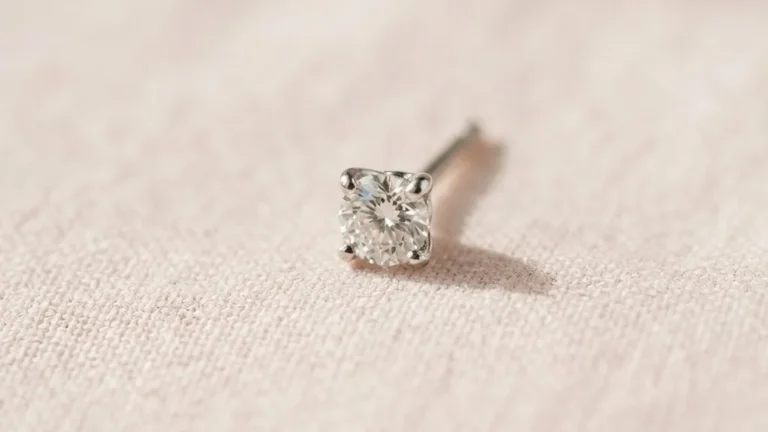
If you are eventually shopping the decorative end of the market rather than the hiding end, you will face a totally different set of choices. The complexities of studs, stone settings, and precious metals are covered heavily in the guide to choosing a diamond nose piercing stud and safe metal.
Frequently Asked Questions
Is an acrylic septum retainer safe?
Acrylic is considered safe only for a fully healed, long-established septum piercing. It cannot be safely autoclaved above 80 degrees C without degrading, and it rapidly breaks down on contact with common alcohol. Therefore, it cannot be reliably sterilized or disinfected at home. Elayne Angel deliberately places acrylic under jewelry for healed piercings, and reputable retailers flag it strictly as healed-only. For a raw, healing channel, you must choose implant titanium or lead-free borosilicate glass instead.
Can I wear a septum retainer during an MRI?
Not by default, regardless of what the online listing claims. Titanium is indeed non-ferromagnetic, meaning it does not react violently to the magnet. However, radiology departments commonly require the immediate removal of all body piercings as a strict precaution. Always call the imaging department before your appointment, state the exact exam and the material, and follow their instruction. If the piercing is recent or the jewelry is stuck, arrange to have a glass or silicone retainer fitted through your piercer well in advance.
How long before I can flip up a new septum piercing?
You must leave a new septum piercing entirely alone for roughly 6 to 8 weeks of initial healing before attempting to flip or change the jewelry. Urban Body Jewelry explicitly gives this exact same window. Flipping the jewelry early risks severe irritation, internal tissue tearing, and subsequent infection by dragging crust into the wound. Full internal healing runs much longer, frequently cited between 3 and 6 months by multiple sources, so always defer to your piercer before attempting any swap.
What size septum retainer should I buy?
The vast majority of people wear a 16G bar, which equals 1.2mm exactly, paired with a 6mm wearable length. For easy flipping and clean hiding, aim for an inner diameter hovering around 8mm. Keep in mind that inner diameters of 11mm and above tend to visibly peek out of the bottom of the nostrils. Always measure the bar thickness and inner diameter of jewelry you already own against a standard gauge chart before placing an order.
Can I use a horseshoe barbell to hide my piercing?
Yes, a standard circular horseshoe barbell can be flipped up into the nasal cavity for concealment. However, the threaded balls on the ends make the jewelry bulkier than a dedicated U-shaped retainer. This added bulk can tickle the inside of the nose, restrict airflow slightly, or slowly slide down into view during the day. A dedicated, ball-free retainer offers a much more secure and comfortable fit for all-day hiding.