Not on a fixed calendar date: a nostril usually needs 3-4 months and a septum 6-8 weeks of healing before an elective change, and even then only if there is no tenderness, discharge, or crusting around the jewelry. Reaching the number is necessary but not sufficient. A piercing can look calm from the outside while the tissue running through the channel is still raw, which is why a date on the calendar is the start of the decision, not the end of it. If you are asking when can you change your nose piercing, the useful version of the answer separates the minimum waiting period from the healing signs you check on the day itself, and it treats a nostril and a septum as two different clocks.
The decoration itself is ancient. Nose jewelry predates almost every other piercing in the record, with WebMD placing the practice at more than 46,000 years old. The modern question is narrower and more clinical: not whether to wear it, but when the hole is ready to accept something new without setting healing back.
Quick answer: You can change your nose piercing once two conditions are both met. First, the minimum healing window for your specific placement has passed, roughly 3-4 months for a nostril and 6-8 weeks for a septum, with some people needing longer. Second, on the day you plan to swap, the piercing shows no tenderness when pressed, no secretion, and no fresh crusting. Initial jewelry is meant to stay in for 8 to 12 weeks, but hitting the lower end of that range is not a clearance to change the jewelry yourself. If anything looks or feels off, leave the current jewelry in place and get it checked before you touch it.
The two-part readiness test: time passed, plus no tenderness, secretion, or crusting
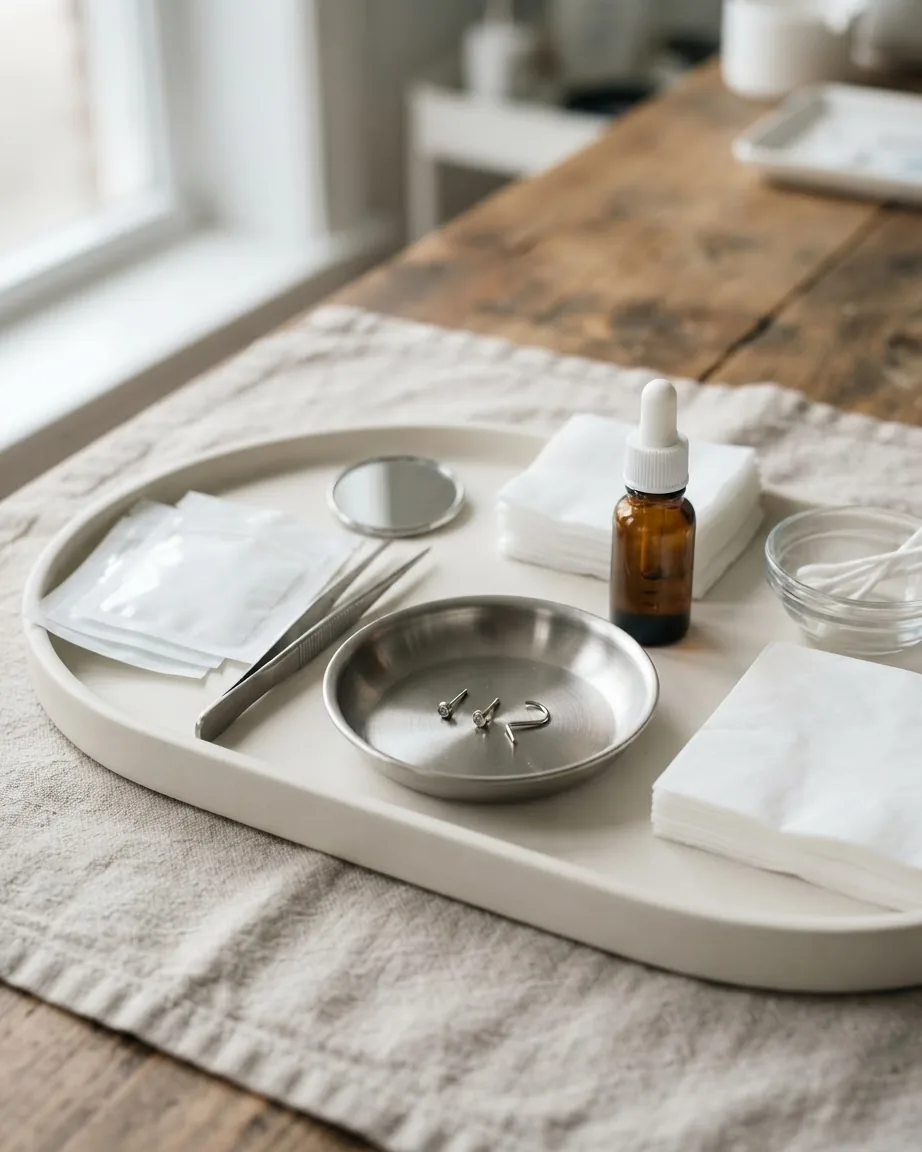
Most people treat the change date as a countdown. The waiting period is only half the test. The Association of Professional Piercers frames elective replacement around a minimum healing interval combined with the absence of active irritation, which means the calendar sets a floor, not a green light.
Run both checks before you reach for new jewelry. The first is simple arithmetic: has your placement’s minimum window actually elapsed? The second is a physical read of the piercing on the day:
- Tenderness. Press gently near the entry and exit points. A healed channel should feel neutral. Soreness, throbbing, or a bruised sensation means the tissue is still working.
- Secretion. Any discharge, whether clear, yellow, or thicker, signals that the wound is still open on the inside.
- Crusting. Fresh crust forming at the jewelry is the piercing still producing lymph and debris. A settled piercing stops crusting almost entirely.
Pass the clock but fail the physical check, and the answer is wait. A piercing that has reached its minimum interval but still weeps or stings is telling you the internal wound has not closed, regardless of what the date says. The reverse also holds: feeling fine at week six on a nostril is not permission, because the tissue deep in the channel heals slower than the surface you can see.
Why 8-to-12-week starter jewelry does not mean the piercing is healed

One number gets misread more than any other. WebMD advises that your initial jewelry should stay in for 8 to 12 weeks. That figure is often treated as the healing deadline, as though the piercing is done at week eight and the jewelry is fair game. It is a different statement.
On the same page, WebMD gives a separate milestone: a pierced nose takes 2 to 4 months to completely heal. The 8-to-12-week figure describes how long the first piece of jewelry should remain undisturbed. The 2-to-4-month figure describes full healing. These two numbers are not interchangeable, and collapsing them is where people get into trouble. Keeping the starter in for 8 to 12 weeks is a minimum you honor; full healing is the condition you verify. You can satisfy the first and still be short of the second.
The gap exists because a piercing heals from the outside in. The visible rim of the hole seals and settles well before the lining of the channel does. External calm is the thing you can observe, so it becomes the thing people trust, which is exactly the trap. A nose that looks healed can still have a fragile internal tract that tears if you push new jewelry through it too early. That is why the readiness test leans on tenderness, secretion, and crusting rather than appearance alone.
Nostril piercings: which side, which jewelry, and the 3-to-4-month window
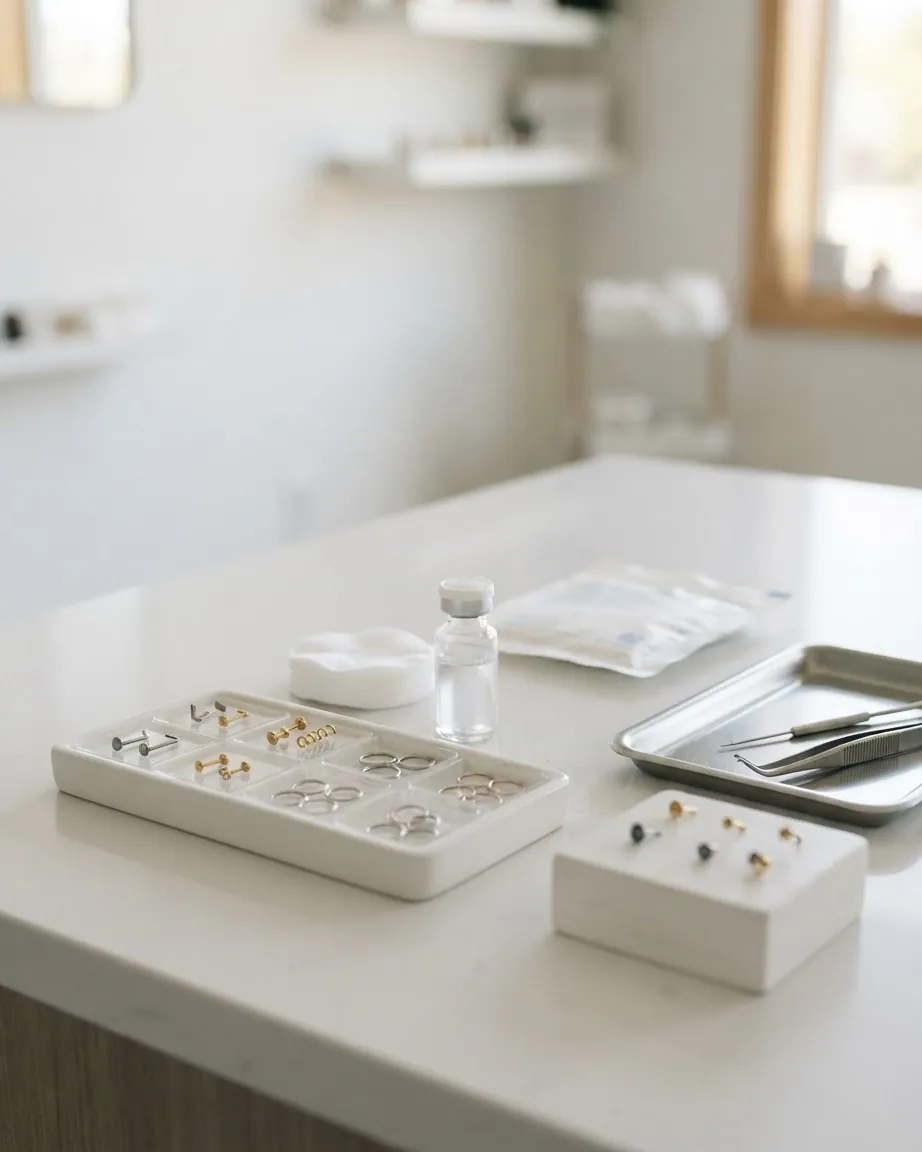
A nostril piercing passes through the soft flesh of the outer nose, usually along the crease where the wing of the nostril meets the cheek. Side is cosmetic, not clinical. Left or right makes no difference to healing; it comes down to which profile you prefer and which side a hoop or stud sits better on for you. There is no medical reason to favor one over the other.
Healing is where a nostril earns its reputation for patience. The APP’s 2013 Procedure Manual lists a nostril at 3-4 Months or longer. WebMD puts complete healing of a pierced nose at 2 to 4 months. These come from two different organizations measuring over different periods, and they are not directly comparable clinical figures, so treat neither as a personal guarantee. The honest reading is a band: plan for somewhere in the three-to-four-month region, accept that some channels take longer, and let the physical signs decide the exact day rather than the lower edge of either range.
Starter jewelry for a nostril is typically a stud rather than a ring. Studs come as an L-shape, a bend or screw that curls against the inside of the nostril, or a flat-backed labret style with a disc inside. A piercer picks one that holds position while the channel settles and that leaves room for the initial swelling. A hoop as a first piece moves more, catches more, and gives the fresh wound less rest, which is why studs dominate the healing phase.
On pain, a nostril is a brief, sharp pinch, firmer than a lobe because you are passing through tougher tissue rather than soft fat, but it is over in a moment. The sting fades quickly; the slow part is the months of healing that follow, not the piercing itself.
Septum piercings: the sweet spot, the pain, and the 6-to-8-week floor
A septum piercing does not go through cartilage when it is done well. It passes through the thin strip of soft tissue between the bottom of the cartilage wall and the tip of the nose, a flexible band piercers call the sweet spot or the columella. Hit that band and the piercing sits comfortably and heals on the shorter end. Miss it, into the harder cartilage above, and both pain and healing climb. The placement is the whole reason a septum can heal faster than a nostril despite sitting deeper in the nose.
The timelines reflect that softer tissue. The APP’s 2013 manual lists a septum at 6-8 Weeks or longer. WebMD states that a pierced septum heals in about 1 1/2 to 2 months. The two figures land close together but come from different sources, so hold them side by side rather than averaging them into one number. Six to eight weeks is a floor to respect, not a finish line you cross automatically, and the “or longer” matters as much as the number.
Pain is where the septum surprises people. Through the sweet spot it is a quick, intense pressure, often described as making the eyes water, followed almost immediately by relief, because the soft tissue has little of the grinding ache that cartilage produces. It reads as more dramatic than a lobe in the instant and calmer afterward. If the pinch is a deep, bony ache rather than a fast sting, the placement may be sitting too high.
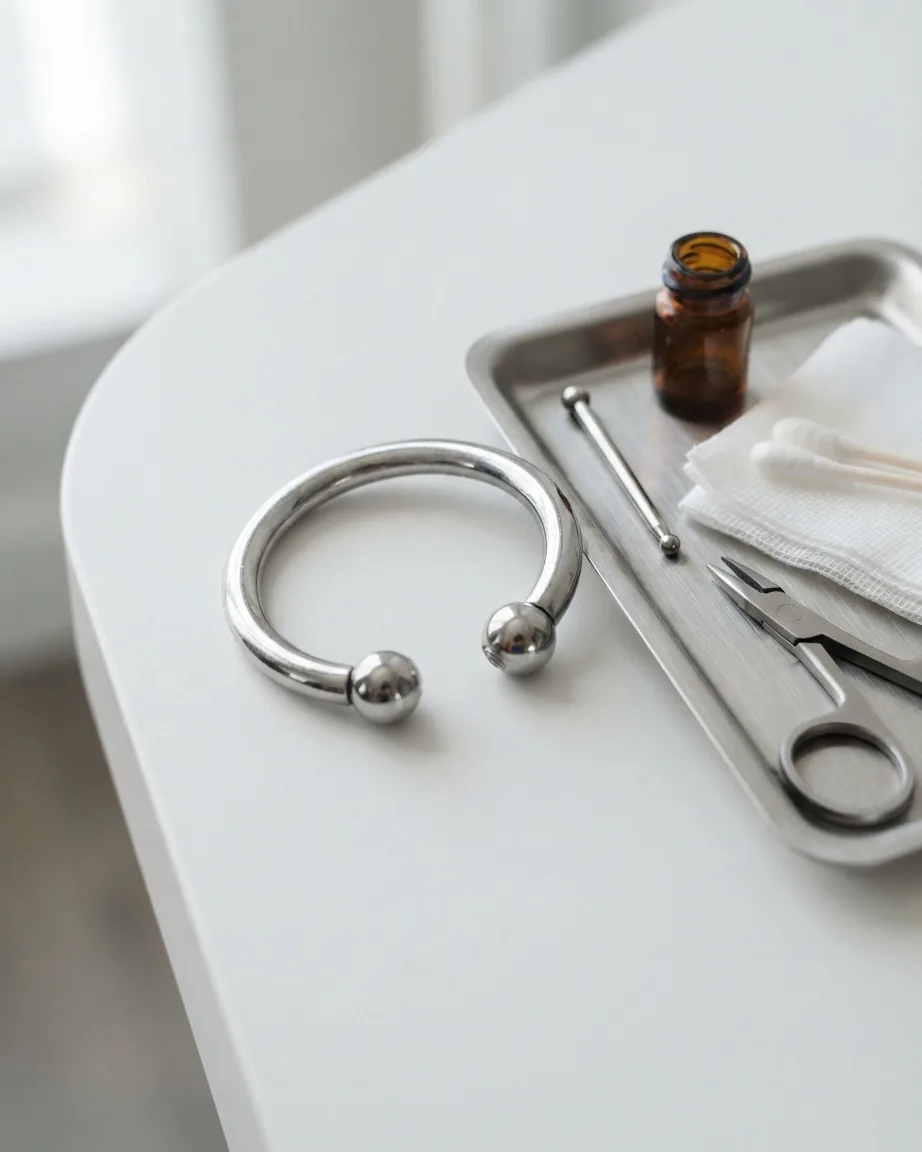
Septum starter jewelry is usually a circular barbell, sometimes called a horseshoe, or a clicker sized with a little length to allow for swelling. A retainer, a clear or flesh-toned piece that hides the piercing, exists for people who need to conceal it, but swapping into one is still a jewelry change and waits for the same healing signs as any other swap.
Downsizing is your piercer’s call, not an elective swap
Here is the part that looks like a contradiction and is not. You are told to leave the first jewelry in for the full healing period, and then you see your piercer swap it out weeks before that period ends. Both are correct, because they are two different actions.
Initial jewelry is deliberately long. The post or barbell is sized with extra room so that when the piercing swells in the first days and weeks, the swelling has somewhere to go and the jewelry does not dig in. Once that swelling subsides, the long post is now too long: it moves, levers against the channel, and can slow healing or encourage the piercing to migrate. Downsizing is the piercer replacing that long starter with a shorter piece that fits the settled tissue. It happens before full healing on purpose, and it is a clinical adjustment performed by someone who can assess the channel and handle it without trauma.
That is a separate thing from you deciding at home that the dates look close enough and threading in a ring you bought online. A professional downsize uses sterile technique, a correctly sized replacement, and a trained read of whether the tissue can take it. An elective self-change before the channel is ready carries none of those protections. So the rule stands in both directions: leave your initial jewelry in unless the size, style, or material is causing a problem your piercer confirms, and let the piercer be the one to make any change while the piercing is still healing.
Nose gauges and sizing: matching the thickness and length the channel already holds
Gauge is the thickness of the jewelry’s wire, and it is the measurement that quietly decides whether a change goes smoothly or tears. Your piercer chooses a gauge at the start, and the channel heals to that exact diameter. When you change the jewelry, the new piece needs to match that gauge, because a channel sized for one thickness will not comfortably accept a thicker one without stretching, and a thinner one leaves the piercing loose and prone to irritation. Guessing the number is the common error. If you do not know your gauge, your piercer can measure it, and keeping that figure written down makes every future change easier.
Length and style need the same care. A nostril stud has to match both the gauge and the wire length that suits the thickness of your nostril, and a septum piece has to clear the tissue without sitting too tight or dangling too loose. Measuring means two things: the gauge, which is wire diameter, and the wearable length or inner diameter, which is how the piece sits in the piercing. Buy to both, not to looks alone.
See also: our average gauge nose piercing guide, and the 18g nose piercing sizing breakdown. Cost is the one number nobody can hand you flat, because it tracks the studio, the region, and the quality of the jewelry metal far more than the placement itself; ask your piercer for a figure that reflects the implant-grade piece you actually want rather than the cheapest stud in the case.
If the nose looks infected when it is finally time to change
Sometimes the dates line up and the piercing picks that moment to go wrong. A piercing that is infected is not a piercing you change. National health bodies, including the NHS, publish guidance specifically on infected piercings, and the consistent direction is to leave the jewelry in place and seek medical advice rather than pulling it out and swapping in something new.
The signs to watch for are a cluster, not any single symptom. Worth getting checked promptly:
- Increasing redness that spreads out from the piercing rather than fading.
- Swelling that gets worse after the first week or two instead of settling.
- Heat around the site, with the skin feeling hot to the touch.
- Thick or discolored discharge, especially green or foul-smelling.
- Pain that intensifies instead of easing, or fever.
The instinct to remove the jewelry and let it “breathe” is the wrong move here. Taking the jewelry out can let the surface close over an infection trapped inside, turning a treatable problem into an abscess. The safer path is to keep the jewelry in, which maintains drainage, and to get the piercing assessed by a clinician who can tell you whether to remove it and what treatment it needs. Change nothing about the jewelry until a medical professional directs it. This article compiles documented aftercare standards and cannot diagnose anything from a distance; anything that looks or feels infected is a reason to see a professional, not to self-treat.
For the wider set of placements and the aftercare that surrounds them, see nose septum piercings, and for the routine that supports healing before any change, our saline solution guide.
When can you change your nose piercing without tearing the channel or losing the hole
Two failure modes bracket the actual change, and both come from rushing. The first is forcing jewelry in. If the old piece comes out and the new one will not pass cleanly, that resistance is information, not an obstacle to push through. Forcing a stud or ring through a channel that is still too tight or not fully healed tears the tissue, restarts the healing clock, and can leave scarring that makes future changes harder. If it does not slide, stop.
The second is leaving the hole empty while you fuss with jewelry. Nose piercings close fast, and not only new ones. The Association of Professional Piercers warns that piercings, even healed ones, can shrink or close in minutes, even in channels that have been open for years. That is the quiet trap in a routine change: you slide the old piece out, spend a few minutes cleaning or wrestling with a stiff clasp, and the channel tightens behind you. By the time you turn back, the new jewelry no longer threads.
So the mechanics of a safe change are deliberate. Have the replacement ready, matched in gauge, and within reach before you remove anything. Make the swap in one smooth motion rather than leaving the hole bare. If the new piece resists, reinsert the old one immediately to hold the channel open, and try again later or let a piercer do it. A retainer or the original jewelry back in place beats an empty hole every time.
Pulling it together: the day you can change your nose piercing is the day both halves of the test pass. The minimum window for your placement has elapsed, 3-4 months for a nostril or 6-8 weeks for a septum, with longer being normal, and the piercing shows no tenderness, no secretion, and no crusting when you check it. Match the gauge, keep the hole occupied, and never force a piece that does not want to go. When any of those conditions is in doubt, the current jewelry stays in and the next step is your piercer’s chair, not your bathroom mirror.
Does a nose piercing close if I take the jewelry out for one night?
It can, and age offers no protection. Channels that have stayed open for years still tighten quickly once nothing holds them, sometimes within minutes of removal. A full overnight gap is more than enough for a nostril or septum to shrink past the point where the same jewelry re-enters easily. If you must remove a piece, have a retainer or the original ready to go straight back in.
Can I switch to a hoop for my first nose jewelry change?
You can once the piercing is fully healed and passes the readiness check, but a hoop is a demanding first swap. A ring moves and tugs more than a flat-backed stud, so switching into one before the channel is settled invites irritation. Many people make a stud-to-stud change first and move to a hoop later. Match the hoop’s gauge and inner diameter to your piercing before buying.
My septum hit its six weeks but still feels tender. Should I change it anyway?
No. The 6-to-8-week figure is a minimum, and tenderness overrides it. Soreness when you press the area means the internal tissue is still healing, whatever the calendar says. Changing into new jewelry while the channel is tender risks tearing and a longer recovery. Wait until the piercing feels neutral and stops any crusting or discharge, then reassess, and ask your piercer if progress stalls.
How Much the Healing Window Can Stretch: Upper vs Lower Bound
Every healing figure in this article is a range, not a date, and the arithmetic shows how wide that range really is. Divide the top of each window by the bottom and you get the factor by which a slow healer can outlast a fast one for the same placement:
| Item | Value |
|---|---|
| Nostril, full healing (WebMD, 2-4 months) | 4 ÷ 2 = 2× . The slowest healers need twice as long as the fastest – the single biggest reason the lower number is not your clearance date. |
| Starter-jewelry window (WebMD, 8-12 weeks) | 12 ÷ 8 = 1.5× . Even just “leave it undisturbed” spans a 50% stretch, and this is a minimum-in-place figure, not a healing figure. |
| Nostril (APP, 3-4 months) | 4 ÷ 3 = 1.33× . |
| Septum (APP, 6-8 weeks) | 8 ÷ 6 = 1.33× . |
Takeaway: if you anchor on the bottom of any range, you are betting you are the fastest healer in the sample. For a nostril, being wrong by that margin means the tissue is still only halfway through. That is why the lower edge sets the earliest a change could be possible, and the tenderness/secretion/crusting check decides whether it actually is.