The most consequential decision you make for a new daith has nothing to do with jewelry and everything to do with one label line: a sterile saline solution for daith piercing aftercare should list 0.9% sodium chloride as its only ingredient. That specification, published by the Association of Professional Piercers in its Suggested Aftercare for Body Piercings, rules out several products you probably already own and quietly rules in a cheaper one you may have overlooked. This desk compiles aftercare routines from published professional body-modification standards and manufacturer specifications; what follows reflects that sourced material, not a diagnosis of your ear.
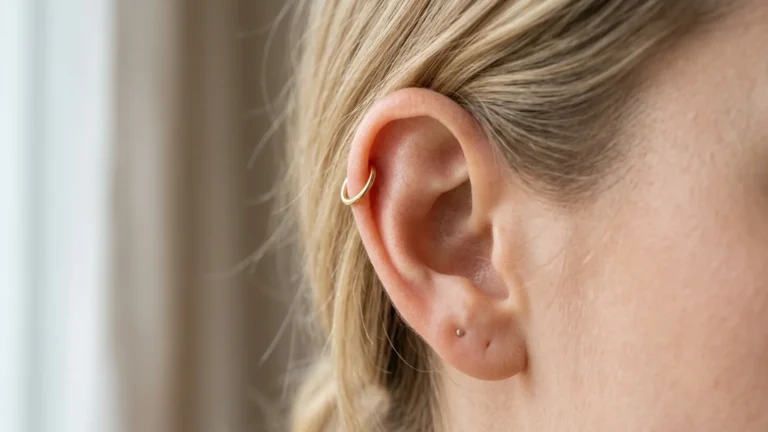
The daith sits deep inside the ear’s inner fold, which makes it harder to reach and slower to heal than most cartilage placements. Get the product and the frequency right, and you remove the two variables that cause the most trouble.
Quick answer: Use a sterile saline wound wash labeled 0.9% sodium chloride and nothing else. Skip contact-lens saline, eye drops, nasal spray, alcohol, hydrogen peroxide, iodine, and antibacterial soap. For a daith piercing, clean once a day at most; over-cleaning irritates healing tissue more than occasional under-cleaning does. Spray or press saturated gauze into the fold, tilt your head to let it reach the back, and pat dry without rotating the jewelry. Expect roughly 9 to 12 months to fully heal, even when the surface looks settled much sooner.
The 0.9% NaCl label check: wound wash, not contact-lens or eye saline
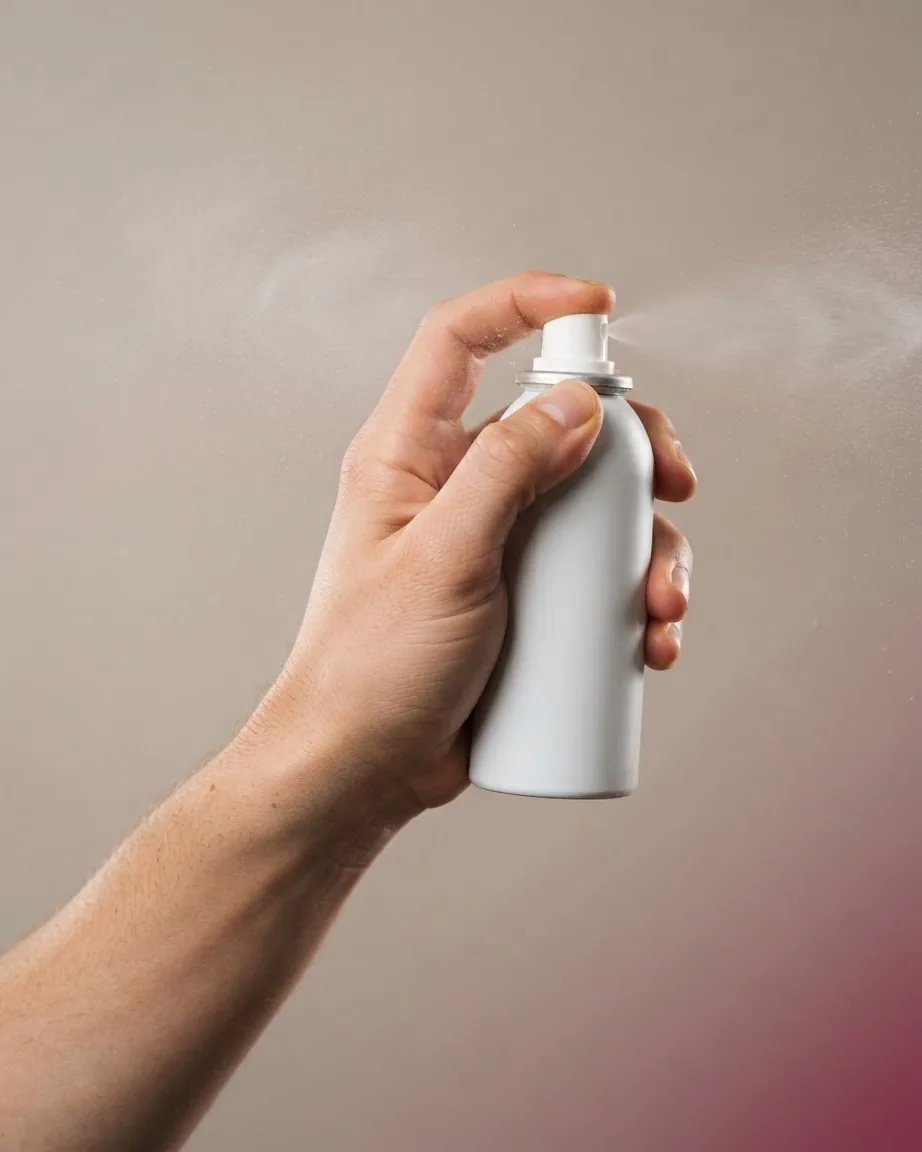
Not every bottle marked “saline” is interchangeable. The APP aftercare guidance specifies that the ingredients should list 0.9% sodium chloride as the only ingredient, which is the concentration of a sterile wound-wash solution. Contact-lens saline, eye drops, and nasal sprays frequently contain buffers, preservatives, or additional agents, so they fall outside that specification even though the word “saline” appears on the front.
A persistent source of confusion is whether a piercing-branded aftercare spray is worth its premium over a plain wound wash. On this point a community discussion on r/piercing notes the two are often “identical in ingredients and ratio – USP Grade Water and USP Sodium Chloride (9mg/mL).” If the label on a general wound wash reads 0.9% sodium chloride with no other ingredient, it meets the same standard as a product sold specifically for piercings. The branding changes the price, not the chemistry.
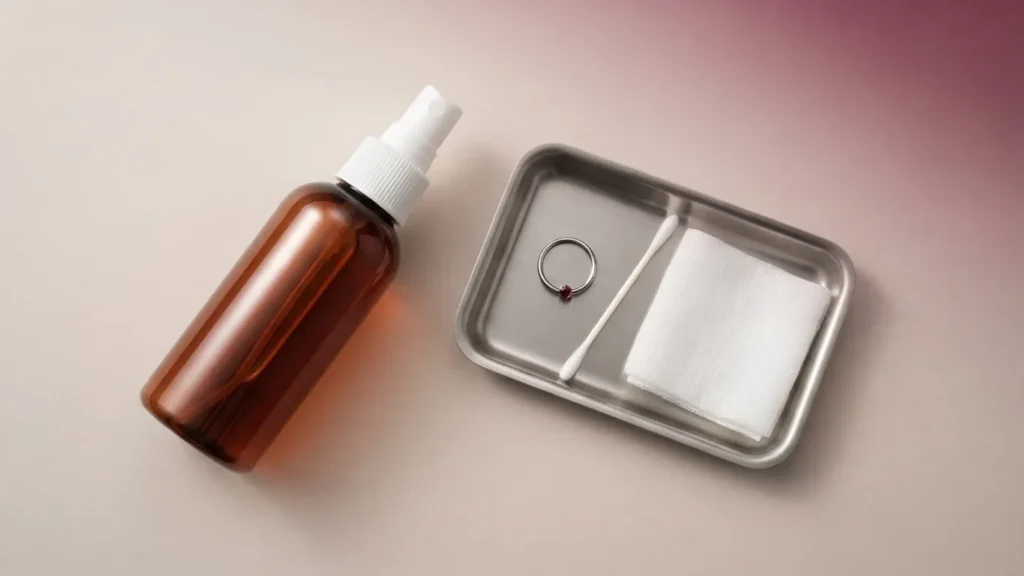
NeilMed sells its Piercing Aftercare Fine Mist in a 75mL travel-size canister and a 177mL full-size canister, with the smaller one sized to fit in a bag for cleaning away from home. A fine-mist delivery is useful for a daith precisely because it reaches into a fold that a dripping bottle struggles to cover.
Products to keep away from a healing daith
- Contact-lens saline, eye drops, nasal spray: formulated for mucous membranes and eyes, not open wounds; they carry additives that fall outside the 0.9% NaCl-only spec.
- Alcohol and hydrogen peroxide: both disrupt the forming tissue and can prolong healing.
- Antibacterial soap, iodine, and antiseptic liquids: too harsh for continuous wound contact.
- Tea tree oil and ointments: trap moisture and debris in a fold that already drains poorly.
Getting saline into the deep daith fold without rotating the jewelry
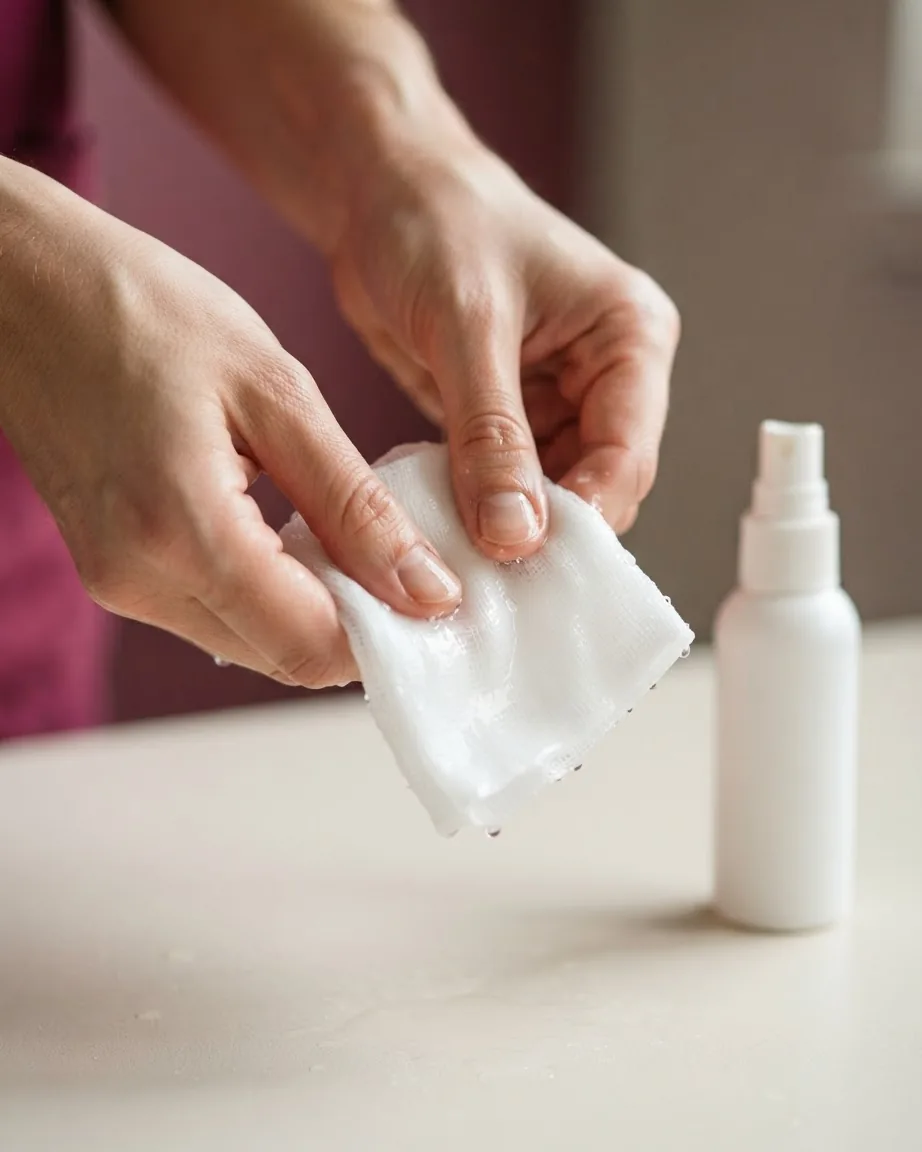
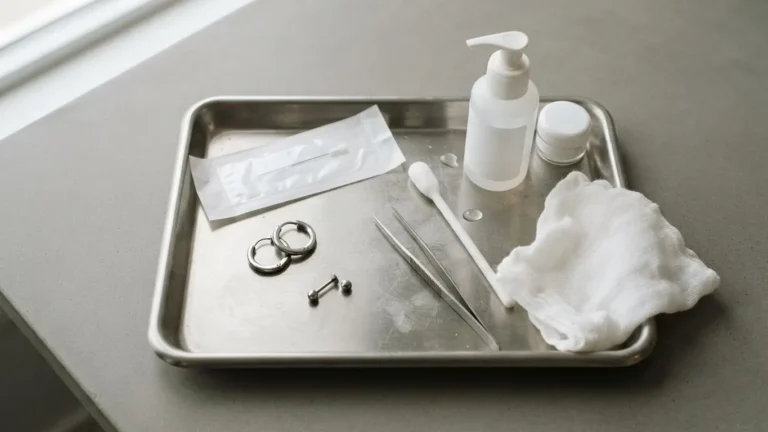
Generic “spray it twice a day” advice assumes an open, flat piercing. A daith is neither. The jewelry threads through a curved ridge at the ear’s entrance, so solution has to be driven into the fold rather than merely misted at the surface. Wash your hands first. Then either spray the saline directly into the ear or press a piece of saturated gauze against both the front and back of the piercing so the liquid saturates the channel.
Daith Medical Ltd, writing in its healing guide, describes letting the spray travel up and around into the ear, waiting 2 to 3 minutes for it to soak in, then letting the water run out before treating the other side. Tilting your head matters here: gravity is what carries the solution to the back of the fold and then drains it away. Pat the area dry with a clean, disposable material rather than a towel, which harbors bacteria and can snag on the jewelry.
One instruction holds across nearly every professional source: you do not need to move or rotate the jewelry during cleaning. Twisting a ring to “work the solution in” tears at the healing channel and reopens it. Leave the piece still.
How often to clean a daith – and why over-cleaning backfires
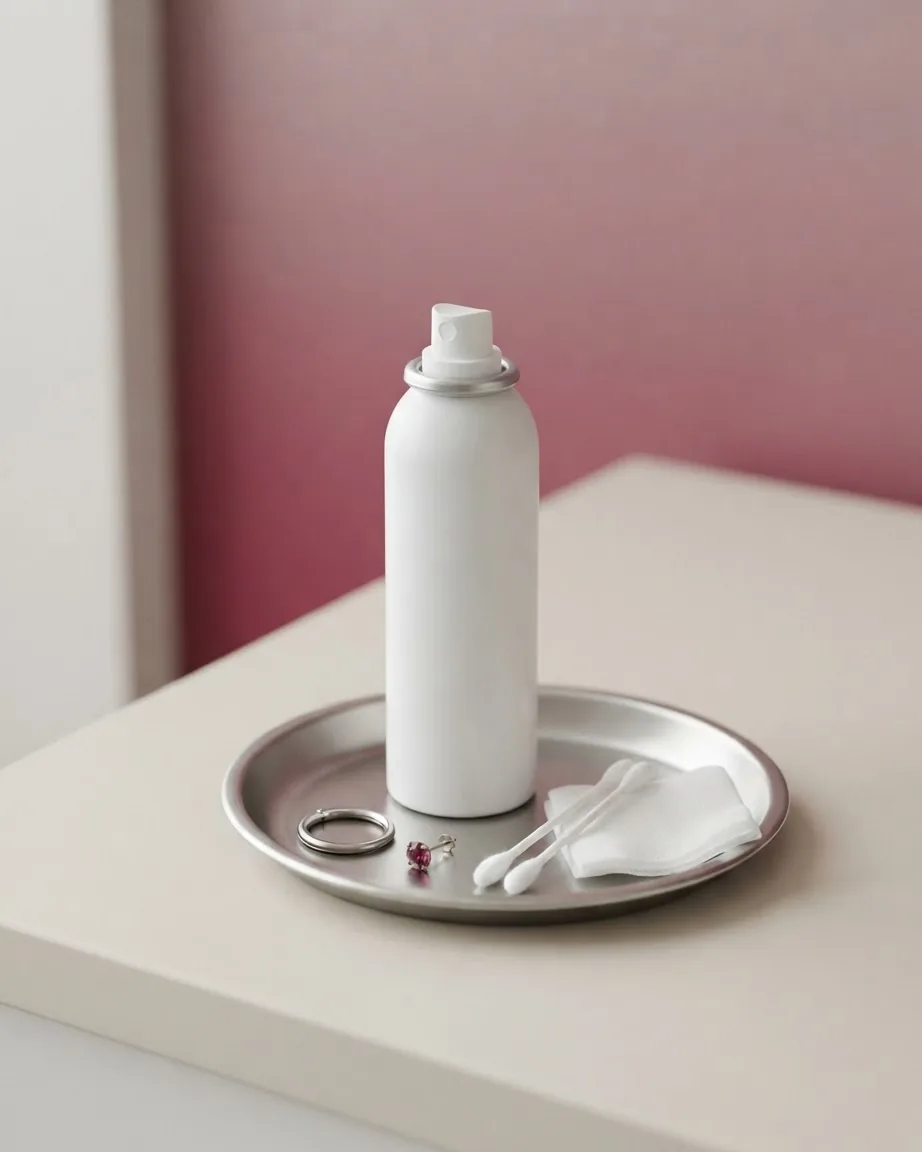
The single behavior most worth changing is frequency. Across the professional guidance compiled here, over-cleaning emerges as the dominant failure mode for the daith, not neglect. Cleaning once a day is a reasonable ceiling for this placement; pushing to three, four, or more rounds strips the tissue of the moisture it needs and keeps the wound perpetually irritated.
Where sources differ is on how long each session should last. Healthline’s overview of daith piercing healing describes soaking the piercing in saline for 5 to 10 minutes at least once per day until it is healed. Daith Medical Ltd describes a shorter 2 to 3 minute soak. The APP and NeilMed model saline as a brief spray or rinse rather than a timed soak at all. These are three valid procedures, not a product conflict – the common thread is a single daily contact with the solution, not repeated scrubbing.
If you take one number from this section: once a day, not more. Under-cleaning an occasional day does far less harm than cleaning a healthy daith five times.
Saline rinse versus water-only: a genuine split between studios
Here the professional record does not line up, and flattening the disagreement would mislead you. The APP, Immaculate Piercing, and most studios center daith aftercare on sterile saline rinses. Platinum Point takes the opposite line in its daith aftercare guidance, telling clients to use warm running water only and listing what to skip: “no saline, sprays, soaks, soap, creams, Savlon, Betadine, tea tree oil, Dettol, hydrogen peroxide, iodine or alcohol wipes.”
This is a real difference of professional practice, not a mistake on either side, and it is not resolved. What both camps agree on is the deeper principle: the daith heals best when you leave it alone and stop over-treating it. A once-daily saline rinse and a once-daily warm-water rinse are both restrained routines built to avoid the same hazard. The practical reading: follow the specific instructions your own piercer gave you, and if those conflict with something you read online, your piercer – who saw the placement – wins the tie.
When saline runs out: shower rinse first, DIY sea-salt last
If you are out of sterile saline before your next canister arrives, there is a sensible order of fallbacks. A warm shower rinse is the gentler option: let clean running water pass over and through the fold, with no products. It is the same restrained approach Platinum Point recommends as a primary method.
A homemade sea-salt soak is a last resort, and the APP main aftercare page now advises against mixing your own, noting that a DIY solution “will commonly result in the product being far too salty and strong.” A solution that is too concentrated burns the tissue and defeats the purpose. The APP’s aftercare page for minors still carries a fallback ratio for those who have no alternative: dissolving a small measure of non-iodized, fine-grain sea salt – on the order of 1.42 grams, or 42 grams across a batch depending on the quantity you mix – into one cup, 8 oz. or 250ml, of warm distilled or bottled water. Treat this as an emergency measure, not a routine; the moment proper sterile saline is available again, switch back.
Daith healing timeline: why “feels healed” is not healed
A daith is a long-haul piercing. Platinum Point states a daith takes 9 to 12 months to heal fully and can look healed on the surface months before it actually is. Healthline puts the figure at up to 9 months, and contrasts that with an earlobe, which heals in only 1 to 2 months. These are studio and outlet estimates rather than one standardized clinical measurement, which is why the upper bound slides between 9 and 12 months – preserve both figures and plan for the longer one.
The gap between surface healing and interior healing is where people get hurt. A daith can feel fine, stop crusting, and sit comfortably while the inside of the channel is still fragile. That is why Platinum Point advises waiting at least 12 months, once fully healed, before changing to a new style such as a clicker or ring. Swap jewelry too early and you risk reopening the wound from the inside.
For the wider context on living through a cartilage heal, see our aftercare healing section. See also our rook jewelry guide and our multiple ear piercings guide for related inner-ear placements.
Normal crust versus infection: what to watch and when to call someone
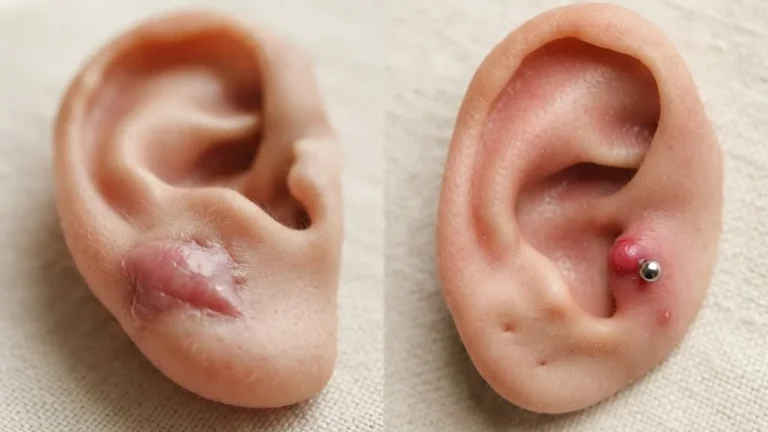
During normal healing, a daith will produce some crusting – a pale or clear-ish discharge that dries at the jewelry and softens off during cleaning. Mild tenderness, occasional warmth, and a little redness right at the holes are expected early on. None of that signals a problem on its own.
The signs that call for a clinician are different in character: spreading redness, swelling that worsens rather than settles, heat radiating from the area, throbbing pain that intensifies past the first days, and green or yellow pus with an odor. Fever alongside any of these is a reason to seek medical care promptly. A piercer can advise on jewelry and technique; a physician treats a suspected infection. This desk does not diagnose – if your ear looks or feels wrong by these markers, see a professional rather than waiting it out.
A separate worry is the firm bump that can appear beside a cartilage piercing. Telling an irritation bump apart from a true scar formation changes what you should do about it, and our keloid vs piercing bump guide walks through those differences.
The daith-and-migraine misconception, kept in its lane
Many people choose a daith hoping it eases migraine, and the claim deserves a clear, cautious answer. The American Migraine Foundation addresses daith piercings and migraine directly, and the evidence does not support treating the piercing as a medical intervention. A single case report in Frontiers in Neurology is just that – one documented case, not a controlled trial.
Figures circulate that sound persuasive, but the numbers most often quoted come from non-peer-reviewed online surveys rather than controlled studies, and they cannot establish cause. If migraine is your reason for considering a daith, discuss migraine management with a clinician, and treat any ear change as a piercing decision on its own terms.
Living around a healing daith: earbuds, headphones, and water
The daith’s position makes everyday ear habits part of aftercare. In-ear earbuds press directly against the piercing and can introduce bacteria and pressure; over-ear headphones rest on the cartilage. Both are worth minimizing while the channel is still raw, and anything that sits in the ear should be clean before it goes near a fresh daith.
Water is the other constraint. Daith Medical Ltd advises avoiding swimming for 4 weeks in either the sea or a pool, since standing and chlorinated water both carry contamination risk for an open wound. A 10-minute dip is not worth a setback measured in extra months. Showering is fine throughout; submerging in shared water is what to postpone.
FAQ
Can I use contact-lens solution on my daith if it says “saline” on the bottle?
No. Lens products are built for eyes and usually include buffers or preservatives, which push them outside the 0.9% sodium chloride-only standard a piercing wound needs. A wound wash whose single listed ingredient is 0.9% NaCl is the correct choice; the word “saline” alone on a label does not guarantee it.
Is a general wound wash really the same as pricier piercing spray?
Chemically they can match exactly. A plain sterile wound wash reading 0.9% sodium chloride with no additives delivers the identical solution – USP water and USP sodium chloride at 9mg/mL – that many piercing-branded mists contain. Check the full ingredient line; if it matches, the cheaper canister does the same job.
What if I accidentally cleaned my daith four times today?
One heavy day is unlikely to cause lasting harm, but make it the exception, not the pattern. Return to a single daily session and let the tissue recover its moisture. Persistent over-cleaning dries and irritates the channel, which is the opposite of what a once-a-day routine protects against.
My daith stopped crusting after a few weeks – can I change the jewelry?
Not yet. A quiet surface does not mean the interior channel has closed; full healing runs around 9 to 12 months. Wait until at least the 12-month mark, and ideally have a piercer confirm it is settled, before swapping in a clicker or ring to avoid tearing the wound open from inside.
What “0.9% NaCl” actually puts in each canister
The label spec sounds abstract until you convert it. A sterile wound wash is 9mg of sodium chloride per millilitre, and 9mg/mL works out to exactly 0.9% (9 ÷ 1000 × 100) – the two numbers on the label are the same number written two ways, so a bottle reading one but not the other still meets the standard. Running that concentration across NeilMed’s two canister sizes shows how little salt is actually involved:
- 75mL travel canister: the salt dissolved across the whole can amounts to only a fraction of a gram.
- 177mL full-size canister: even the larger bottle holds just a small amount of salt in total.
- Size difference: 177 ÷ 75 = 2.36×, so the full canister holds about two-and-a-third times the travel one – worth weighing against its price before you buy two travel cans.
The takeaway: correct saline is extremely dilute by design. If a homemade mix or a mislabelled product delivers noticeably more salt than the professional spec, it is stronger than intended and risks burning the healing fold.