A tragus heals from the outside in. The skin on the surface can knit shut and look settled at two or three months while the channel running through the cartilage underneath is still thin-walled and easily disturbed. That gap, between how a piercing looks and how healed it actually is, drives most of the confusion around tragus piercing healing time, and most of the setbacks that follow it. The number people quote is rarely the number that governs their decisions, and the two are not the same month.
A tragus piercing healing time is typically 3 to 6 months, and in some cases the full process takes up to a year. The tragus is cartilage, which heals more slowly than the soft tissue of an earlobe. For roughly the first 2 weeks, expect some throbbing, redness, warmth, and clear or light-yellow seepage that crusts at the exit points; all of that is normal. Swelling that has not eased after 48 hours, or symptoms dragging on past 2 weeks, points toward infection and warrants a clinician. Clean twice daily with sterile saline, leave the original jewelry in, and do not twist it.
Why a tragus heals from the outside in
The tragus is the small flap of cartilage sitting in front of the ear canal, and cartilage does not behave like the fleshy tissue of a lobe. According to Healthline, a tragus piercing usually heals in 3 to 6 months, and the whole process can run up to a year depending on care and whether complications appear. Medical News Today frames the underlying reason plainly: any fresh piercing is an open wound, and cartilage placements such as the tragus close much more slowly than ordinary skin.
Healing works from the surface down. The outer skin seals first, which is exactly why a piercing can look calm at two or three months while the cartilage channel is still fragile. That delay explains the common pattern where a tragus that seemed fine flares after a night spent sleeping on it, or after an early jewelry change. The visible calm is genuine; the structural strength beneath it has not caught up. Read the 3-to-6-month range as the floor for when the inside is stable, not the day the outside stopped weeping.
For other cartilage placements, see our inner conch piercing and upper ear piercing guides.
Where the 6-to-8-week number comes from
A figure that circulates constantly is 6 to 8 weeks, and it causes real trouble because people attach it to the wrong thing. That number, from Medical News Today, describes how long any open wound takes to close, a general baseline for piercings as a category, not an estimate for a tragus specifically. Both the 6-to-8-week figure and the 3-to-6-month figure come from credible health publishers, and both describe the same piercing, which is why readers conflate them.
Scope is what separates them. The same Medical News Today guidance notes that although the surface wound may take around 8 weeks to fully close, the irritation symptoms of a normal heal should settle well before that point. The practical reading is simple enough to act on: the 6-to-8-week window marks roughly when the outer wound stops being an open wound, while the 3-to-6-month range marks when the cartilage channel is actually solid enough to trust with a jewelry change or steady pressure. Plan around the longer number and the shorter one will take care of itself.
Cleaning with sterile saline, and the overcleaning trap
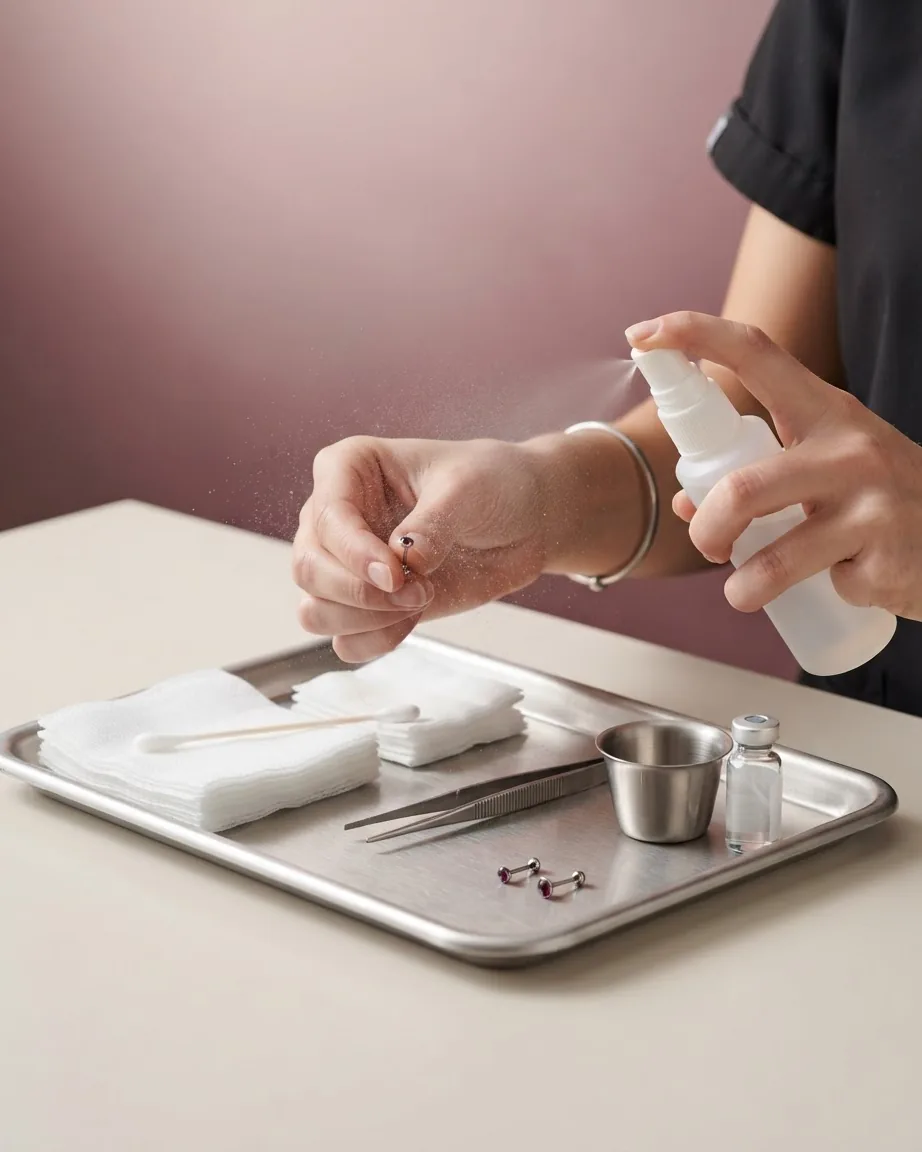
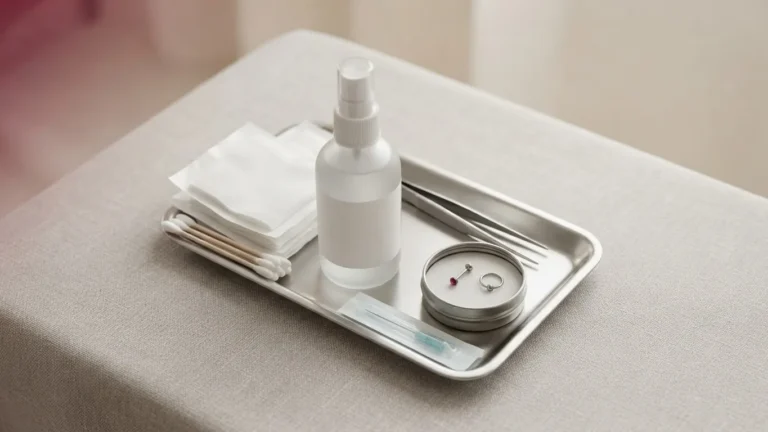
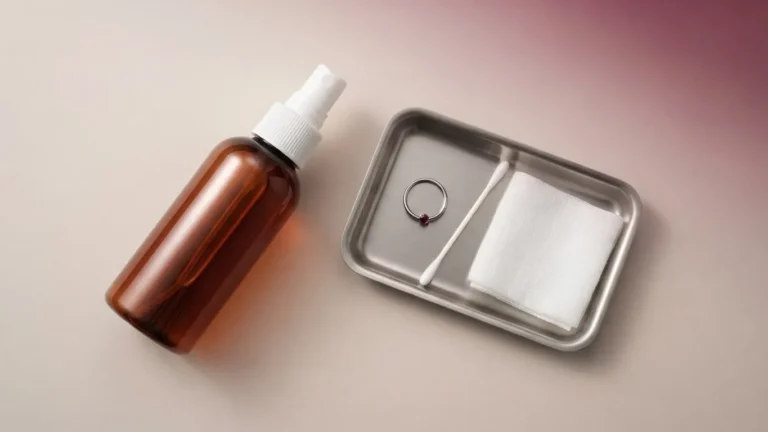
Sterile saline is the standard solution for a healing tragus; it lifts crust and debris gently. Twice a day, saturate the piercing, let the saline soften any dried matter, and let it come away on its own. Pat dry with clean disposable material rather than a cloth towel, which holds bacteria and snags on the jewelry.
Skip the harsher products. Alcohol, hydrogen peroxide, antibacterial soaps, tea tree oil, and antibiotic ointments either dry the tissue out or coat it and smother it, and each one lengthens the heal instead of shortening it. For the wider set of healing rules, see our aftercare healing section.
The more frequent mistake is doing too much. Cleaning more than twice a day, or scrubbing at the crust, strips the fragile new surface and keeps the wound permanently irritated, which reads to a lot of people as a piercing that “won’t heal.” Do not rotate or twist the jewelry while you clean, either. Turning the post to “keep it from sticking” is unnecessary; it drags bacteria through the channel and tears the new lining. Modern aftercare dropped the old twist-it-daily habit years ago. The Association of Professional Piercers, the nonprofit that sets the industry’s aftercare standards, is the body that defines these protocols, and they favor leaving the piercing alone over handling it.
What is normal, and when swelling means trouble
Give yourself a dated rule so you are not guessing. For about the first 2 weeks the tragus will throb, run warm, look pink, and weep clear or pale-yellow fluid that dries into crust. Medical News Today treats those as ordinary healing signs, provided they fade rather than build. The hard flag is timing: swelling that has not started coming down after 48 hours, or any of those symptoms still going strong past the 2-week mark, is the point where normal irritation and early infection diverge. Because cartilage takes so long to close, a tragus stays an open wound longer than a lobe, which leaves it exposed to infection for more of its heal.
If you suspect infection, do not reach for the jewelry first. The instinct to pull it out is the wrong move: removing the post can seal the hole over an active infection and trap it inside the tragus. Leave the jewelry in, keep cleaning with saline, and ask a physician whether to keep it in, swap it, or take any other step. That call belongs to a clinician, not to a guess at the bathroom mirror. Red streaks, thick green or gray discharge, spreading heat, or fever are reasons to be seen sooner rather than later.
Leaving the jewelry in, and downsizing mid-heal
The single most effective thing you can do for the timeline is nothing: leave the original jewelry in place until the tragus is fully healed. Healthline is direct about not being rough with or removing the jewelry for about 3 months, which is the point where the piercing is settled enough to touch. Because cartilage heals outside-in, a swap at two or three months meets a channel that still has a fragile interior, and that is where a lot of “it was fine, then it flared” stories start.
There is one exception, and it is not a do-it-yourself job. The initial post is usually set long to leave room for early swelling, and once that swelling subsides the extra length lets the jewelry snag and shift, which drags out the heal. Downsizing to a shorter post often helps, but have your piercer do it rather than changing it yourself. Even a well-healed tragus can start closing fast the moment jewelry comes out, so every removal carries that risk. Hand the timing and the handling to the person who did the piercing.
Pain, at the piercing and during the heal
The procedure itself is a brief, sharp pinch as the needle passes through the cartilage, and it is over quickly. What surprises people is the slow burn afterward. A tragus can stay tender for a stretch of the heal, flaring when it gets bumped, slept on, or pressed by an earbud, and that lingering soreness is part of why the 3-to-6-month window feels long. Mild, fading tenderness tracks with normal healing. Pain that sharpens instead of easing, or that arrives alongside the infection flags above, is the signal to see a professional rather than wait it out.
Keeping it out of water
Submerged water is a problem during healing because pools, baths, hot tubs, and lakes all carry bacteria straight into an open wound. Healthline advises against immersing the piercing for at least 3 weeks after it is done. Careful showering is fine over that period, as long as you let clean water run past the piercing rather than aiming pressure at it. Treat the 3 weeks as a firm minimum for full immersion, not a finish line; the broader rule from the Association of Professional Piercers is to keep the tragus out of submerged water for the whole heal, which runs far longer than three weeks.
What actually slows a tragus down
Most prolonged heals trace back to repeated small disturbances rather than one dramatic event. The tragus sits exactly where daily life touches the ear, so the fixes are mostly about pressure and contamination. Work through this list and you remove the common causes of a heal that stalls:
- Earbuds and headphones. Healthline suggests keeping them off a tragus until it is healed, or at least the first month or two, since they press on and press bacteria into the wound.
- Side-sleeping on that ear, phones held against it, and tight hats or headbands, all of which bear down on the piercing for long stretches.
- Smoking and nicotine, plus caffeine, alcohol, and ongoing stress, which work against the body’s healing capacity.
- Overcleaning, covered earlier: more than twice daily or scrubbing at crust keeps the surface raw.
- Certain medications and medical conditions that slow wound healing generally.
None of these is a hard ban so much as a trade. Each contact with the piercing resets a little of the progress the cartilage has made, and the resets are cumulative. The people who clear the 3-to-6-month window near the short end are the ones who manage to mostly forget the tragus is there.
What it costs, briefly
Cost does not change the timeline, but it comes up alongside it. Healthline’s figures land in the same neighborhood from two of its pages: the FAQ lists roughly $25 to $50 and the pain page cites about $20 to $50, before aftercare supplies and a tip for the piercer. One related point matters more for healing than price: if you decide against keeping the piercing and take the jewelry out before it has healed, keep up aftercare until the skin closes, which Healthline says happens within a few weeks.
The number worth planning around
Read the tragus timeline as a mechanism, not a countdown. The surface seals in weeks; the cartilage underneath takes 3 to 6 months, sometimes a year, to become something you can trust. Clean twice a day with saline, do not twist the jewelry, leave it in and let a piercer handle any downsizing, keep the ear out of submerged water and away from earbuds and pillows, and judge trouble by the 2-week and 48-hour marks rather than by how settled it looks. Plan around the long number, protect the piercing from the small daily insults, and the short number tends to follow.
Your Tragus Healing Timeline in Weeks: How Much Is Left After It ‘Looks Done’
The article’s own figures convert into a timeline that shows exactly why 3 to 6 months is a floor, not a finish line. The full structural range of 3 to 6 months is what governs jewelry changes and pressure. Against that, the surface milestones are small: the surface wound closes in about 8 weeks, which means the cartilage channel keeps strengthening well after your tragus stops looking like an open wound.
- The structural heal of 3 to 6 months is the window that governs jewelry changes and pressure.
- The surface closes well before the cartilage channel is solid, and that gap is where “it looked fine, then it flared” stories begin.
- Normal symptoms end around week 2, but the leave-the-jewelry rule keeps hands off for the full 3 months. That is a long stretch of calm-looking but still-fragile cartilage after the irritation fades.
Read every short milestone – 2 weeks of symptoms, 3 weeks out of water – as an early checkpoint, not the end. The number that should actually govern your decisions is the longer one.