A conch can look calm and feel fine four months after the appointment while the channel running through the cartilage is still rebuilding underneath. That distance between how it looks and how it actually is explains most of the confusion around conch piercing healing time. People book a jewelry change the moment the redness fades, then wonder why a settled-looking piercing reacts badly. The honest answer is a range rather than a date, and the range is long. This guide walks the timeline by placement, the sterile-saline routine the main professional bodies agree on, and the specific signs that mean stop cleaning and call a clinician.
Conch piercing healing time runs roughly 4 to 12 months, the standard span for cartilage piercings and far longer than a lobe. Cartilage carries less blood than the fleshy lobe, so it repairs slowly. During that stretch the jewelry stays in and untouched, cleaned once or twice a day with sterile saline and nothing stronger. A conch can seem healed before the inside has closed, so a quiet surface is not permission to swap jewelry. Change it only after a piercer confirms the channel is done, not on a calendar date you picked in advance. Rushing any step resets progress.
The conch piercing healing time, month by month
Two sources that piercers and clinicians lean on give slightly different floors for the same piercing. Medical News Today states that a conch, like other cartilage piercings, can take 4 to 12 months to heal fully. Cleveland Clinic, describing cartilage piercings as a group, expects between six and 12 months. The ceiling is identical at 12 months. The only disagreement is how early the fast end can arrive: four months by one account, six by the other.
There is a practical way to hold both numbers without averaging them into a false precision. Treat 12 months as your planning horizon and the lower figure as a best-case that applies to some people, not a target you are behind on if you miss it. Anything you schedule around the piercing, like a jewelry downsize or sleeping comfortably on that side, belongs near the back of the range, not the front. A conch that is still tender at month eight is inside normal territory, not failing.
The early phase, the first weeks, is the inflammatory stage: swelling, warmth, pink skin around the hole, and light crusting as fluid dries. That settles into a long, quiet middle stretch where the piercing looks unremarkable but the tissue lining the channel is still thin and easy to disturb. The final stage is the slowest and the least visible, which is exactly why the timeline is quoted in months rather than weeks.
Why a conch heals slower than an earlobe
The mechanism is blood supply. A lobe is soft, fleshy tissue with a rich blood flow, so it closes quickly. Cartilage receives far less blood, and tissue that gets less blood rebuilds slowly, which is why Cleveland Clinic groups the conch with the multi-month cartilage timeline rather than the weeks a lobe needs. The same low-flow trait has a safety consequence. The Centers for Disease Control and Prevention, writing in Emerging Infectious Diseases, notes that severe infections tend to settle in poorly vascularized tissue such as ear cartilage, and it has documented an outbreak traced to a contaminated aftercare product.
That combination, slow repair plus a tissue type where infections turn serious, is why a conch deserves more patience and a more careful cleaning routine than a quick lobe shot. For how placement changes healing across the ear more broadly, see also: our ear piercing take to heal guide.
Surface-healed versus fully healed
The single distinction that prevents most conch setbacks comes from the Association of Professional Piercers: a piercing can seem healed before the process is actually finished. The outside closes and calms down well ahead of the deeper tissue. Someone looking in a mirror sees no redness, no crust, no soreness, and reasonably concludes the job is done.
It is not, and acting on the appearance is where things go wrong. Swapping jewelry, changing to a decorative piece, or getting rough with the piercing while the inner channel is still immature can tear tissue that had almost closed, which restarts the inflammatory stage and adds months. The reliable read is not visual. It is a piercer confirming the channel by handling and inspecting the piece, ideally toward the longer end of the window if you have any doubt. A calm surface earns patience, not a reward.
Cleaning a conch with sterile saline
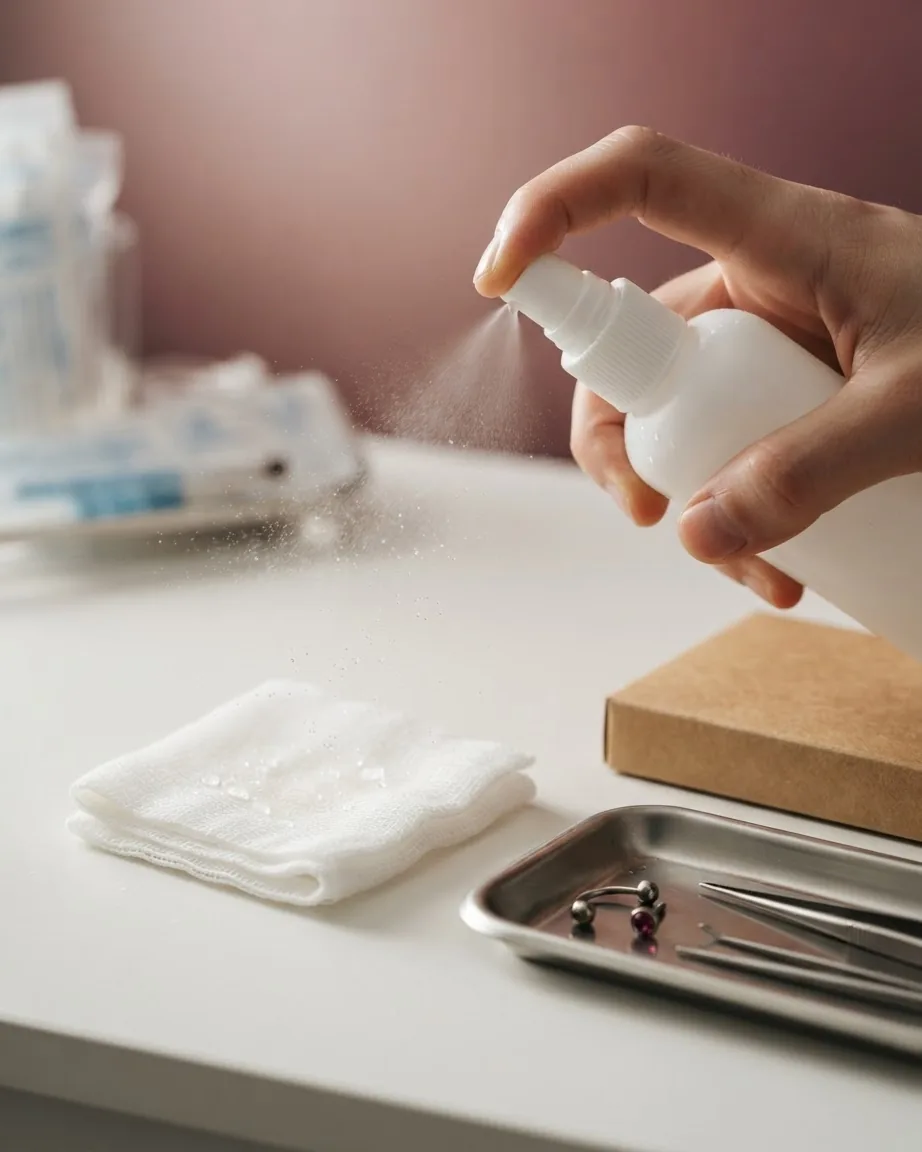
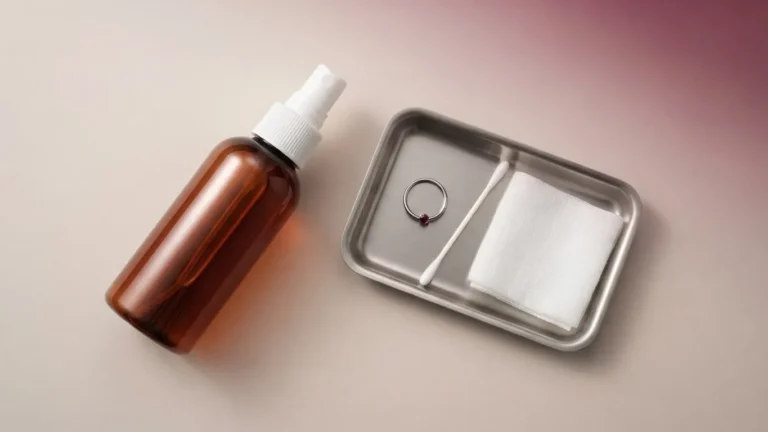
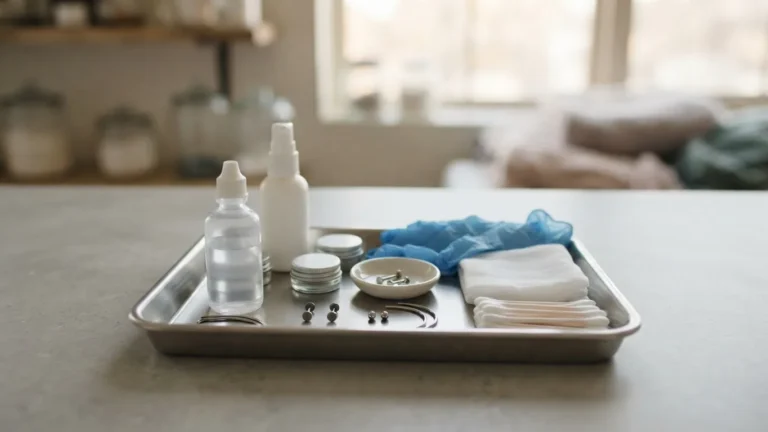
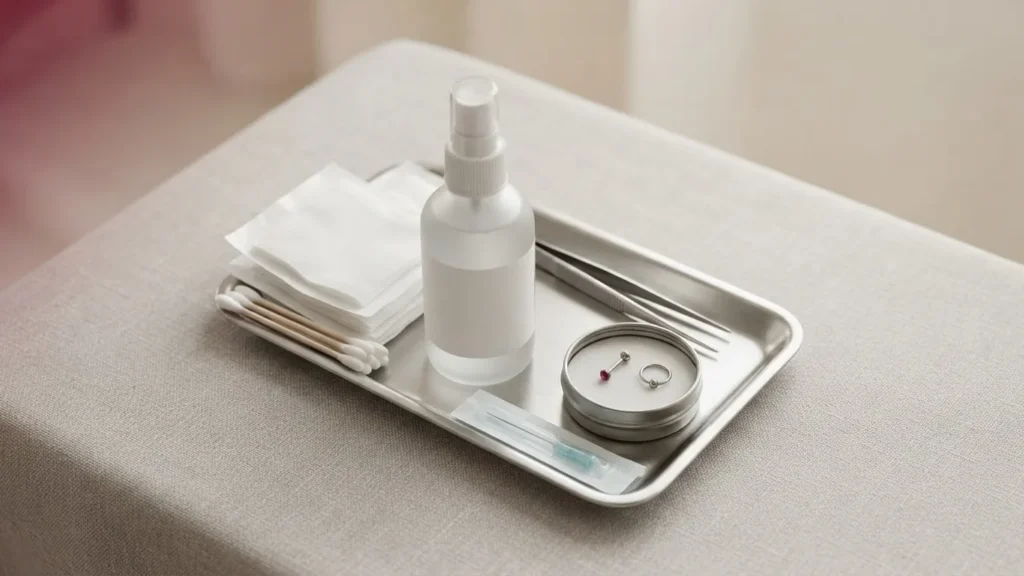
The agreed routine is plain and short. Clean the piercing once or twice a day with sterile saline wound wash, applied by spray or on a clean gauze, long enough to soften and lift any crust, then leave it dry and alone. The Association of Professional Piercers specifies the product precisely: your saline should list “0.9% sodium chloride as the only ingredient”, sometimes with purified water noted. That number matters because homemade mixes and stronger solutions are not the same thing and can irritate healing cartilage.
Two habits do more harm than the dirt they are meant to remove. The first is overcleaning. Scrubbing several times a day, or soaking the ear constantly, strips the fragile new tissue and keeps the site inflamed. Once or twice daily is the ceiling, not a minimum to exceed. The second is rotating or twisting the jewelry during cleaning. It is unnecessary and it drags crust and bacteria through the channel while tugging on tissue that wants to be still.
On cleaning agents beyond saline, the rule is restraint. Hydrogen peroxide, rubbing alcohol, and antibacterial soaps are harsh on a healing piercing and dry out the tissue, so they stay off a conch; a plain, fragrance-free cleanser is the gentler route when something beyond saline is used. The American Academy of Dermatology and the Association of Professional Piercers both publish consumer aftercare guidance along these lines. This whole routine sits inside our broader aftercare and healing coverage for anyone cross-checking placements.
Normal healing versus signs of infection

Early redness, mild swelling, light tenderness, and a bit of clear or whitish crust are ordinary for a fresh conch and fade over the first weeks. An irritation bump can also appear without meaning infection. For an irritated site, Mayo Clinic describes a warm compress: a clean, warm, damp cloth held to the area until it cools, usually around 15 minutes, which can be repeated. Mild and improving is the pattern to expect.
The picture that is not normal is one that gets worse rather than better. Here is how the published guidance sorts routine healing from trouble worth acting on:
- Usually routine: mild redness right at the hole, light swelling in the early weeks, clear or pale crust, tenderness that eases over time, an irritation bump that responds to a warm compress.
- Warning signs: pain that climbs instead of fading, redness or warmth that spreads outward, swelling that keeps growing, thick yellow or green discharge, and any fever or feeling unwell.
Cartilage infection is the reason the warning column is taken seriously. Mayo Clinic advises seeking medical care for a painful cartilage piercing. A systematic review of transcartilaginous ear infections indexed in PubMed, from the National Library of Medicine, found that waiting more than 5 days of symptoms before getting treatment was significantly more likely to end in hospitalization. Read that figure for what it is: it comes from people who already had a cartilage infection, not a countdown you are allowed to run on a fresh piercing. It argues for acting sooner, not for waiting until day five.
The stakes climb further when an abscess forms. A 2025 clinical study, also listed in PubMed, identified abscess formation as an independent factor for complications in auricular perichondritis, which includes piercing-related cases. Perichondritis is inflammation of the tissue around the ear cartilage, and it is the kind of outcome the whole cautious routine exists to avoid.
Who to call depends on what you are seeing. A piercer is the right first stop for jewelry fit, an irritation bump, or a question about whether the channel has settled. A doctor or clinic is the right stop, promptly, for the warning signs above, because suspected infection in cartilage is a medical matter rather than an aftercare tweak. None of this is a diagnosis you can make from a screen, and a conch that looks or feels wrong should be seen by a professional rather than managed on guesswork. National health services, the National Health Service among them, publish plain-language symptom checklists for the same reason.
When you can change the jewelry on a conch
The timing rule is the same one that trips people up at the surface-healed stage. Cleveland Clinic’s guidance is to wait until the piercing is fully healed before changing jewelry, and full healing on a conch means the end of the 4-to-12-month window, confirmed by inspection rather than by how it looks in the mirror. The reward for waiting is a channel that tolerates the swap; the penalty for rushing is tearing and a reset clock.
If you want a different style, a smaller post for comfort, or a flat-back that sits better against the head, book that as a planned change with a piercer once the healing window has closed, and lean toward the longer end of the range if you are unsure. The person who pierced it can judge the tissue in a way a self-check cannot, and can downsize or restyle without re-injuring the site. For how placement and ear anatomy shape the fit on this specific piercing, see also: our outer conch piercing guide.
How Many Saline Cleanings a Conch Actually Takes
The routine is one line of advice, but across a healing window of 4 to 12 months it adds up to a number worth seeing before you start.
So depending on how your conch heals and how often you clean, you are looking at somewhere between roughly 120 and 720 separate saline sessions. That spread is the real reason overcleaning does damage: at the top end you are already touching the piercing 720 times, and adding extra scrubs on top of that only strips tissue that needs to be left alone.
Frequently asked questions
Can I change the jewelry at four months if the conch looks healed?
Four months is the earliest the fast end of the range can appear, and only for some people. A surface that looks settled often sits over tissue that has not finished closing, so a swap then can tear the channel and restart healing. Have a piercer assess the piece first, and lean toward the longer end if there is any doubt.
Is five days of soreness a safe amount of time to wait before seeing a doctor?
No. The five-day marker comes from studies of patients who already had cartilage infections, where longer delays before treatment meant worse outcomes and more hospital stays. It is not a buffer to run down on a fresh piercing. Pain that climbs, redness that spreads, thick discharge, or fever means contact a clinician without waiting.