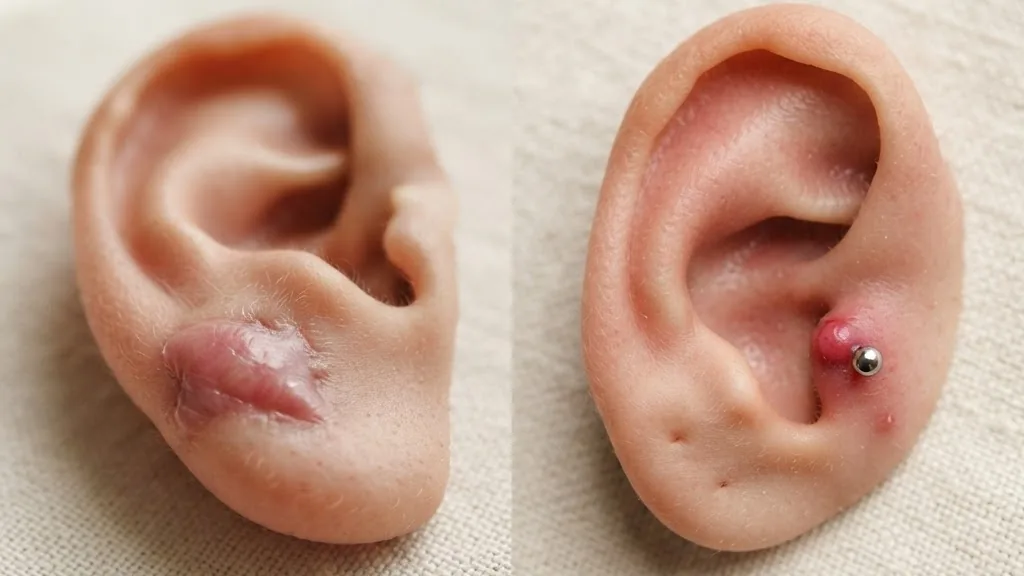
Keloid vs piercing bump is one of the most common worries after a new piercing, and the difference matters more than most people realize. The short version: a piercing bump is usually a minor, treatable irritation that stays small and fades with good care, while a keloid is an aggressive scar that grows beyond the original wound, keeps expanding, and almost always needs professional treatment. Telling them apart early can save you months of frustration.
This guide lays out exactly how the two differ, what causes each, how they are treated, and when a lump means it is time to see a dermatologist. The information here reflects guidance from dermatology and professional piercing sources, so you can act on facts instead of forum panic.
The short answer
Here is the distinction in plain terms.
- A piercing bump is typically an irritation bump or a hypertrophic scar. It shows up quickly, stays confined to the piercing site, and often calms down once you remove whatever is irritating it.
- A keloid is a type of raised scar caused by the body overproducing collagen during healing. It grows past the edges of the original wound, keeps getting bigger over time, and does not resolve on its own.
The single most useful clue is growth. A bump tends to stay put or shrink with care. A keloid keeps marching outward, spreading onto skin that was never pierced. If you remember one thing, remember that keloids cross the border of the wound and bumps do not.
Keloid, hypertrophic scar, and piercing bump compared
There are really three things people lump together as a “bump.” Seeing them side by side makes the differences clear.
| Feature | Irritation bump | Hypertrophic scar | Keloid |
|---|---|---|---|
| How fast it appears | Days to weeks | Weeks | Weeks to months |
| Size and spread | Small, at the site | Raised, within wound borders | Grows beyond the wound |
| Feel | Soft, tender | Firm, raised | Firm, rubbery, sometimes itchy |
| Color | Pink or red | Pink to skin tone | Often darker than skin |
| Course | Improves with care | May fade over time | Keeps growing, persists |
| Treatment | Aftercare and time | Conservative care | Professional treatment |
Irritation bumps and hypertrophic scars sit at the manageable end of the spectrum. Keloids sit at the serious end. Most bumps people fret over turn out to be the manageable kind, but the only way to be sure is to watch how the lump behaves.
How to tell the difference over time
You usually cannot diagnose a lump on day one. Time is the real test, and watching a few traits over a few weeks gives you the answer.
Watch the timing. A bump that pops up fast, within days of an irritation, is more likely a simple irritation bump. A lump that forms slowly over weeks or months is more concerning for a keloid.
Watch the growth. This is the big one. Mark roughly where the lump ends. If it stabilizes or shrinks with good care, it is almost certainly a bump or hypertrophic scar. If it keeps creeping outward and onto unpierced skin, that pattern points to a keloid.
Watch the feel and color. Irritation bumps tend to be soft and pink. Keloids tend to be firm, rubbery, and darker than the surrounding skin, and they can itch or feel tender.
Watch the response to care. A bump usually improves when you fix the cause and stay consistent with gentle saline. A keloid ignores aftercare and keeps growing regardless. If weeks of good care do nothing, that resistance is itself a clue.
What causes piercing bumps
Irritation bumps are your body reacting to a problem at the piercing. Find the cause and you usually find the fix. Common triggers include:
- Physical trauma: snagging the jewelry on clothing, hair, or a phone, or sleeping on the piercing.
- Poor jewelry: cheap or reactive metals, especially anything with nickel, or jewelry that is the wrong size or shape.
- Aftercare problems: both too little cleaning and too much. Harsh products and over-cleaning irritate the tissue just as neglect does.
- Moisture and pressure: trapped moisture, makeup, or constant pressure on the area.
- Changing jewelry too early, before the piercing has healed enough to handle it.
Because these causes are fixable, irritation bumps often respond well once you correct the underlying issue and give the area time to settle.
What causes keloids
Keloids are different. They are not just a reaction to irritation but a disorder of how the skin heals. During normal healing, the body lays down collagen and then stops. In a keloid, that process does not switch off, and collagen keeps building into a raised, expanding scar.
The biggest risk factor is genetics. Keloids run in families and are more common in people with darker skin tones. They also tend to appear more often between the ages of about 10 and 30 years old. Certain spots, like the earlobe and cartilage, are more prone to them. If close relatives get keloids, or you have formed one before, you carry a higher risk and should mention it to your piercer before any new work.
How to treat a piercing bump
For an ordinary irritation bump, the approach is conservative and patient. The goal is to remove the cause and let the body recover.
- Identify and stop the irritation. Check for snagging, pressure while sleeping, or reactive jewelry.
- Upgrade the jewelry. Switch to implant-grade material such as ASTM F-136 titanium, which is biocompatible and far less likely to irritate. Make sure the size and fit are right.
- Clean gently. Use sterile 0.9% saline twice a day. Skip alcohol, hydrogen peroxide, tea tree oil, and home remedies that can make things worse.
- Leave it alone. Do not pop, squeeze, or pick at the bump, and do not remove the jewelry at the first sign, which can trap problems inside.
- Give it time. Irritation bumps can take weeks to settle even after you fix the cause.
If you are unsure which saline to use, our guide to sterile saline solution walks through the right concentration and method, and you can find more in the aftercare and healing guides.
How to treat a keloid
Keloids rarely improve with home care alone, so treatment usually means seeing a dermatologist. The good news is that several professional options work, often in combination.
- Corticosteroid injections are a first-line treatment. They can flatten and soften keloids, and studies report improvement in roughly 50% to 80% of cases, though it often takes a series of injections.
- Silicone sheets or gel applied over the scar can help reduce its size and appearance over time.
- Cryotherapy freezes smaller keloids to shrink them.
- Laser therapy can reduce redness and flatten the scar.
- Surgical removal is an option, but keloids have a high rate of coming back after surgery, so it is usually paired with injections or other treatments to lower that risk.
The key takeaway is that a true keloid is a medical issue, not an aftercare issue. Trying to scrub or treat it away at home tends to fail, and aggressive home treatment can irritate it further.
A realistic timeline for each
Putting rough numbers on the process helps set expectations, even though every body differs.
| Stage | Irritation bump | Keloid |
|---|---|---|
| When it appears | Within days to 4 weeks of irritation | Slowly over 4 weeks to several months |
| How it responds to care | Often eases within 2 to 8 weeks once the cause is fixed | Keeps growing for 6 to 12 months or more |
| Typical treatment length | Aftercare over a few weeks | Months of professional treatment |
For an irritation bump, you should see improvement within about 2 to 8 weeks of correcting the cause and cleaning with 0.9% saline twice a day. If 8 weeks of solid care produces no change at all, treat that as a signal to get it checked. A keloid, by contrast, often needs a course of corticosteroid injections spaced weeks apart, and improvement of 50% to 80% is measured over months, not days. Patience and the right care path matter more than any single product.
Other lumps people mistake for keloids
Not every lump near a piercing is a bump or a keloid. A few other things can show up, and they call for different responses. Knowing they exist keeps you from jumping to the worst conclusion.
- A granuloma is a small, sometimes weepy bump of overgrown tissue that can form on a healing piercing. It often responds to consistent saline care and sometimes a professional touch.
- An abscess is a pocket of infection. It is painful, warm, and may leak pus, and it needs medical attention rather than scar treatment.
- A cyst can develop near a piercing channel and feels like a smooth lump under the skin. A doctor can confirm and drain or remove it if needed.
- Normal swelling in the early weeks can feel like a lump but is just part of healing and settles on its own.
The reason this matters is that an infection or abscess needs prompt medical care, while a scar like a keloid is treated more slowly and electively. When in doubt, a quick check with a piercer or doctor sorts out which path you are on.
What to expect at a dermatology visit
If a lump points toward a keloid, seeing a dermatologist is the smart move, and knowing what happens there takes away the nerves. The visit is usually straightforward.
The dermatologist will look at the lump, ask how long it has been there and whether it has grown, and feel its texture. They will ask about your personal and family history of keloids, since that genetic background guides the diagnosis. In most cases they can identify a keloid by sight and history alone, without anything invasive.
From there, they will talk through a treatment plan, which often starts with corticosteroid injections and may add silicone, cryotherapy, or laser depending on the size and location. They will also set expectations, because keloid treatment is a process measured in weeks and months, not a single appointment. Going in with your timeline of when the lump appeared and photos of how it has changed gives the doctor exactly what they need to help you faster.
How to prevent both
You cannot change your genetics, but you can stack the odds in your favor. Prevention comes down to a few habits.
- Choose a reputable piercer who uses clean technique and quality jewelry.
- Insist on implant-grade jewelry from the start, such as ASTM F-136 titanium.
- Follow gentle aftercare: sterile saline twice a day, no harsh chemicals, and no over-cleaning.
- Avoid trauma: do not play with the jewelry, protect it from snags, and try not to sleep on it.
- Do not change jewelry too early, and have the first change done by a professional.
- Know your history. If you or your family are keloid-prone, talk to your piercer first and consider placement carefully. Picking a piercing suited to your anatomy helps, and our overview of nose piercings for different nose types is a good starting point.
When to see a dermatologist or doctor
Use this simple rule. If a lump is behaving like a manageable bump, give it careful home care. If it is behaving like a keloid or an infection, get a professional involved.
See a dermatologist if a lump keeps growing, becomes large, spreads beyond the piercing site, or lingers for 6 to 12 months or more. Those are the hallmarks of a keloid, and earlier treatment tends to work better than waiting until it is large.
See a doctor promptly if you have signs of infection rather than scarring: severe or increasing pain, warmth, swelling that worsens, thick yellow or green pus, or fever. An infection needs different care than a scar. For trustworthy background on keloids and treatment, the American Academy of Dermatology and the Cleveland Clinic are solid references, and the Association of Professional Piercers covers the jewelry and aftercare side of prevention.
FAQ
How do I know if my piercing bump is a keloid?
Watch how it grows. A keloid forms slowly, feels firm, is often darker than your skin, and keeps expanding beyond the piercing onto normal skin. A regular bump stays small, stays at the site, and improves with care. If it keeps growing despite good aftercare, see a dermatologist.
Can a piercing bump turn into a keloid?
Not exactly. They are different things. An irritation bump does not transform into a keloid, but if you are keloid-prone, the same piercing could develop a keloid separately. The cause, not the bump, is what determines which one you get.
Will my piercing bump go away on its own?
Often, yes, if it is an irritation bump and you fix the cause. Upgrade the jewelry, clean gently with saline, and stop any trauma. It can still take weeks. A true keloid, on the other hand, will not go away without professional treatment.
Should I take my jewelry out if I have a bump?
Usually no. Removing jewelry from an unhealed piercing can let it close and trap the problem inside, and it does not address the cause. Keep quality jewelry in, fix the irritation, and clean gently unless a professional advises otherwise.
Are keloids more common on certain piercings?
Yes. Earlobe and cartilage piercings are among the more keloid-prone spots. Your personal and family history matters even more than location, so if keloids run in your family, weigh that before piercing high-risk areas.
Do home remedies like tea tree oil cure piercing bumps?
Be cautious. Some people use diluted tea tree oil, but it can irritate sensitive healing tissue and is not a reliable cure. Sterile saline and fixing the underlying cause are safer and better supported. For anything that keeps growing, see a professional rather than experimenting at home.
Can keloids be removed completely?
They can be treated and greatly reduced, but keloids are prone to returning, especially after surgery alone. That is why dermatologists usually combine treatments, such as surgical removal followed by corticosteroid injections, to lower the chance of regrowth. Realistic goals are flattening and shrinking the scar rather than guaranteeing it never comes back.
How long should I wait before worrying about a bump?
Give a fixed irritation about 2 to 8 weeks of consistent saline care. If it is shrinking, you are on track. If it is growing, spreading past the piercing, or unchanged after roughly 8 weeks of good care, book a professional visit. Early action on a possible keloid leads to better results.
If I am keloid-prone, can I still get piercings?
You can, but go in informed. Tell your piercer about your history so they can guide placement and jewelry choices, and consider lower-risk spots over high-risk areas like cartilage and earlobes. Some people choose to consult a dermatologist first. Quality implant-grade jewelry, gentle aftercare, and avoiding trauma all reduce the odds, though they cannot erase a genetic tendency. Going in with a plan beats being surprised later.
The bottom line
In the keloid vs piercing bump question, the deciding factor is behavior over time. A piercing bump appears quickly, stays small and confined, and fades once you correct the cause and clean gently. A keloid forms slowly, feels firm and often darker, and keeps growing beyond the wound, which is why it needs a dermatologist rather than home care. Watch how your lump grows, upgrade to implant-grade jewelry, keep aftercare gentle, and know your family history. When a lump keeps expanding or shows signs of infection, do not wait it out. Early professional care gives you the best outcome, and the sooner a keloid is treated, the easier it usually is to manage. Above all, do not panic at the first lump. Most settle with patience and clean, gentle care, and the few that do not are exactly the ones a professional can help you handle.