Sterile saline solution for nose piercing aftercare is the single product I tell every client to buy, and it is also the one people get wrong more than any other step. The confusion is understandable, because “saline” gets used for a dozen things on a pharmacy shelf, and a lot of online advice still pushes homemade sea-salt mixes that the professional standard moved away from years ago. A nose piercing is a fresh wound in a spot that is constantly exposed to air, hair, makeup, and your own hands, so what you rinse it with genuinely matters. Let me clear up exactly what to use, what to avoid, and how to apply it on a nostril or septum without slowing your healing.
I have walked thousands of clients through aftercare, and the ones who heal cleanest do less, not more. They use the right product, twice a day, gently, and otherwise leave the piercing alone. Over-cleaning and the wrong products cause as many problems as neglect. Here is the routine I actually hand out.
What “Sterile Saline” Means and Why It Is the Standard
Sterile saline is a solution of 0.9 percent sodium chloride in purified water, which happens to match the salt concentration of your own body fluids. That is the whole point: at that concentration it flushes away crust, debris, and bacteria without stinging, drying, or damaging the new tissue. The Association of Professional Piercers is specific about this. They recommend a sterile saline labeled for use as a wound wash, with 0.9 percent sodium chloride as the only active ingredient and sometimes purified water listed, and nothing else. Their suggested aftercare guidelines are the reference I trust over any product marketing.
The key word is “wound wash.” You want a product that says it on the label. Many sprays sold for piercings are exactly this, and pharmacy wound-wash saline works just as well and often costs less. Cleveland Clinic has a plain explanation of what saline solution is and the 0.9 percent figure in their overview of saline solution if you want the medical background.
Sterile Saline vs Sea-Salt Soak vs Nasal Spray
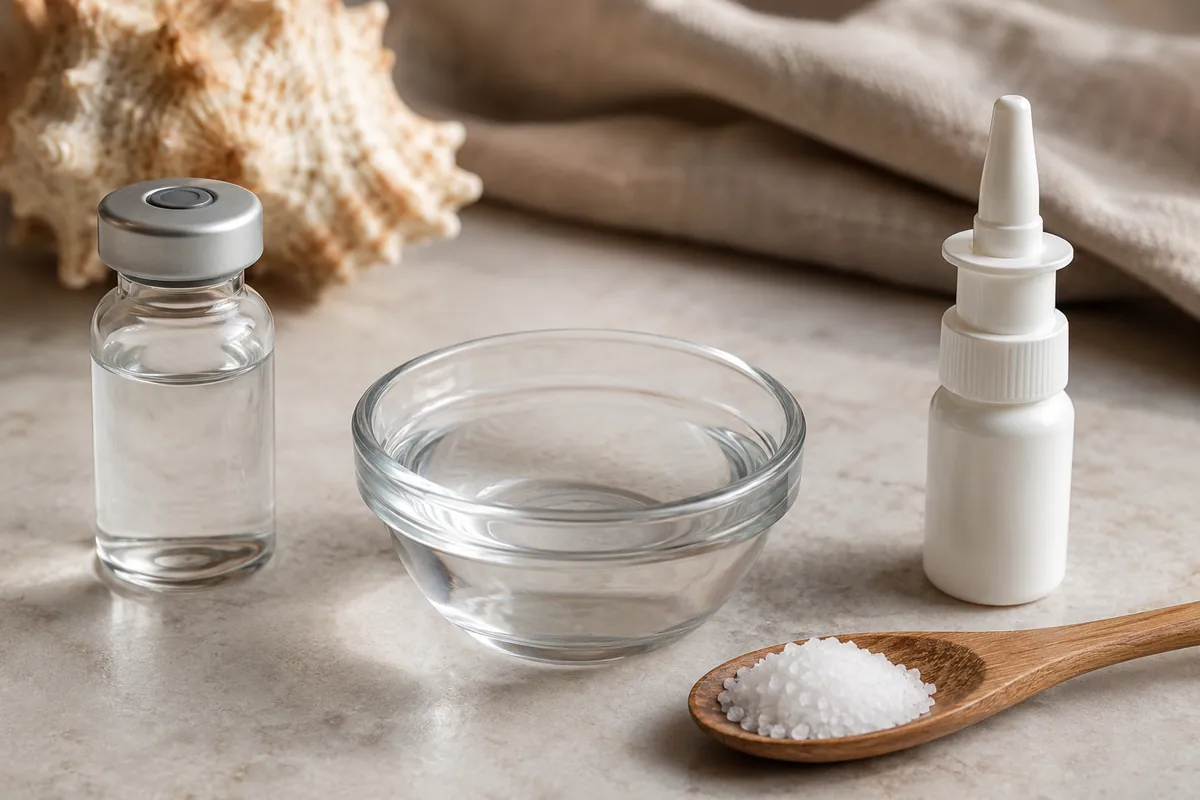
This is where most people go wrong, so let me separate three things that share the word salt.
Sterile saline wound wash is what you want. Buy it, do not make it. It is correctly concentrated and sterile.
Homemade sea-salt soak used to be standard advice, and you will still find recipes online calling for a quarter teaspoon of non-iodized sea salt in warm water. The APP no longer suggests mixing your own, because home batches commonly come out too strong, and an over-salty solution dries out and irritates a piercing instead of helping it. If you ever do a warm soak on a piercer’s specific advice, it is a different thing from your daily rinse, not a replacement for it, and the concentration has to be right.
Nasal saline spray, contact lens saline, and eye drops are not the same and should not be used. The APP specifically warns against these sound-alikes, because they often contain additives, preservatives, or buffers meant for the eye or sinus, not for cleaning a wound. A decongestant nasal spray in particular has active drugs you do not want near a piercing.
How to Clean a Nose Piercing With Saline, Step by Step
The method is the same idea whether you have a nostril or a septum, with small differences for reaching the inside. Do this twice a day, no more, unless your piercer tells you otherwise.
Start by washing your hands thoroughly with soap and water. This is the step people skip and it is the most important one, because your fingers carry the bacteria most likely to cause trouble. Then saturate the area with sterile saline. A spray bottle makes this easy; aim and mist until the piercing and the jewelry are wet. If you prefer, soak a piece of clean, non-shedding gauze in saline and hold it against the piercing for a minute or two to soften any crust.
Let the saline sit briefly, then gently wipe away loosened crust with clean gauze or a cotton swab. Do not pick dried crust off dry; soften it first. Do not twist, spin, or slide the jewelry back and forth. The old advice to rotate jewelry is outdated and actively harmful; it drags bacteria into the channel and tears healing tissue. Once you have cleaned it, pat the area dry with a fresh piece of gauze or a disposable paper product. Damp piercings invite bacteria, and a cloth towel can snag the jewelry and harbor germs. The exact same rinse-soften-pat method works for ear cartilage too, and our walk-through of a saline routine for a tragus piercing uses the identical steps if you have piercings in both places.
Reaching the Inside of a Nostril
A nostril piercing has an inside end you cannot easily see. You do not need to scrub inside the nose; over-cleaning the interior can irritate the delicate lining. Misting the outside generously usually lets enough saline reach the channel. If your piercer recommends rinsing the inside, a gentle saline-dampened swab at the visible opening is plenty. Never jam anything up your nostril to reach it.
Cleaning a Septum
A septum sits centrally and both sides are reachable. Mist both nostril openings, let it soften any buildup, and wipe gently. Septums are prone to a normal buildup sometimes called “septum funk,” which is just secretions and debris; regular gentle saline rinsing keeps it in check. If you are choosing or changing jewelry, our guide to septum rings and sizing covers what is safe to wear while it settles.
Products to Keep Away From Your Nose Piercing
Just as important as what to use is what to avoid. Rubbing alcohol and hydrogen peroxide both kill healing cells along with bacteria and dry the tissue, slowing everything down. Antiseptics like Bactine and antibiotic ointments such as triple-antibiotic creams trap moisture, can cause reactions, and are not meant for this. Tea tree oil and other essential oils are too harsh undiluted and unpredictable. Scented soaps, makeup, and harsh face washes around the site are irritants. And as covered above, skip nasal sprays, contact lens solution, and eye drops. When in doubt, plain sterile saline and clean hands are almost always the right answer.
How Often, and For How Long
Twice a day is the sweet spot for most nose piercings: once in the morning, once at night, plus a rinse any time it gets obviously dirty or after heavy sweating. More than that and you risk over-drying. Keep it up for the full healing window, not just until it looks fine, because nose piercings heal from the outside in and look done long before they are.
Healing times differ by placement, and that shapes how long you stay on saline. Healthline puts a standard nostril at roughly 4 to 6 months, with the higher, thicker tissue of a high nostril taking longer; their nose piercing healing guide breaks the placements down. A septum, when placed in the soft sweet spot, often heals faster, around 6 to 8 weeks, but keep rinsing until your piercer confirms it is settled. Do not stop early just because the soreness is gone.
| Placement | Typical healing | Saline frequency | When to stop daily rinsing |
|---|---|---|---|
| Standard nostril | 4 to 6 months | twice daily | when fully healed, not just pain-free |
| High nostril | 6 to 9 months | twice daily | later; this one is slow |
| Septum | 6 to 8 weeks (soft tissue) | twice daily | once piercer confirms healed |
Choosing and Buying: Spray, Bottle, or Soak
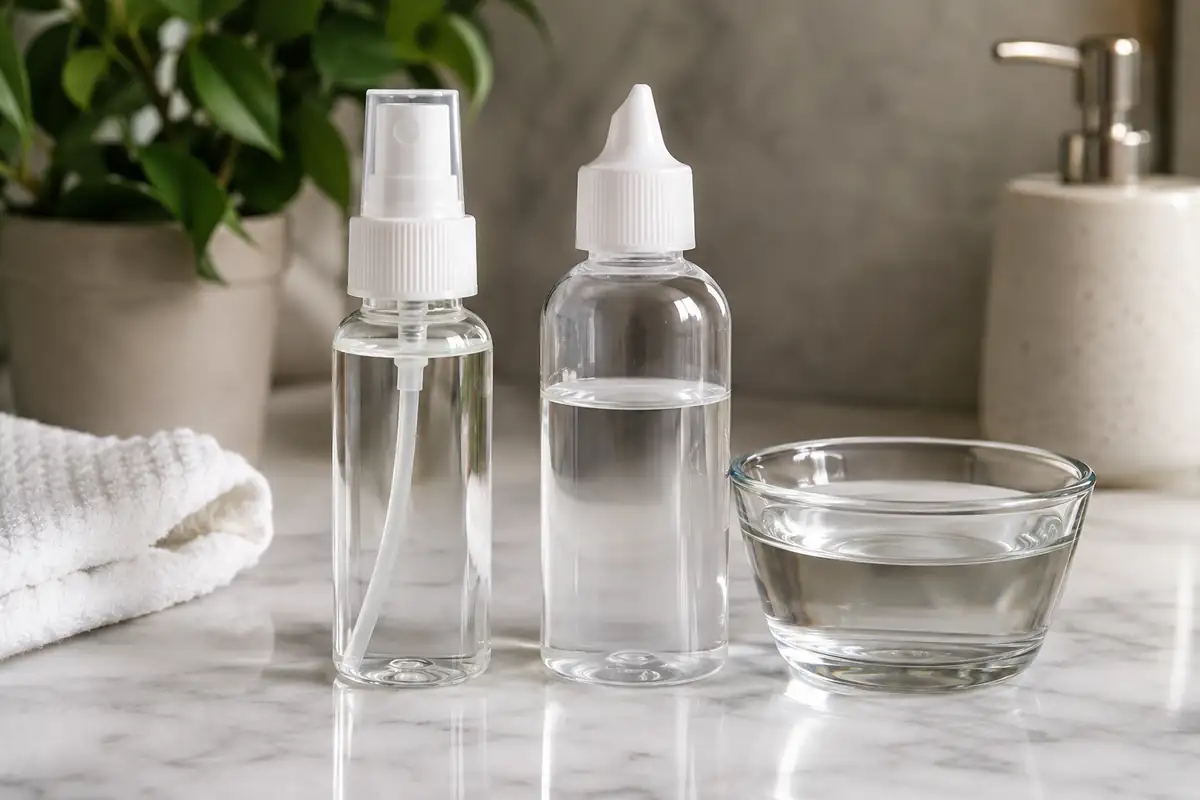
Sterile saline comes in a few formats and they are mostly about convenience, not effectiveness. A pressurized spray can is the easiest for a nose piercing, because you can mist the area hands-free and it reaches awkward angles. A plain bottle of wound-wash saline costs less per ounce and works fine if you apply it with clean gauze. Single-use vials or ampoules are handy for travel and for keeping things genuinely sterile, since an opened bottle is exposed to air over time.
Whatever the format, read the label, not the front of the package. The ingredient list should be sodium chloride 0.9 percent and water, full stop. Marketing words like “piercing aftercare” mean nothing on their own; plenty of pharmacy wound-wash sprays in the first-aid aisle are identical to the pricier piercing-branded ones and cost a fraction. If a product lists added moisturizers, witch hazel, benzalkonium, or anything you do not recognize, put it back. Buy one bottle or can at a time so it does not sit open for months, and check the expiration date, because saline does expire.
The Mistakes That Slow Nose Piercings Down
Most healing problems I see are self-inflicted, and they cluster around a handful of habits. Over-cleaning is the big one: people who rinse five or six times a day dry the tissue out and create the very irritation they are trying to prevent. Twice daily is the target. Touching and turning the jewelry is the next offender, often done absent-mindedly throughout the day with unwashed hands. Keep your fingers off it.
Changing the jewelry too early ranks high too. The piercing can feel fine and look healed on the surface while the channel underneath is still raw, and swapping jewelry then reopens it and can introduce bacteria. Wait for the full window. Sleeping face-down on a fresh nostril, letting makeup or foundation cake around the site, and using harsh face washes or scrubs near it all set healing back. So does layering on ointments, hoping to speed things up; a piercing wants to breathe, and trapping moisture under a thick cream invites trouble.
One subtler mistake: people stop rinsing the moment the soreness fades, usually weeks too early. The discipline is to keep the simple routine going on schedule even when the piercing feels boring and fine, because that quiet middle stretch is when the deeper tissue is still knitting together.
Saline and Daily Life: Showers, Pools, and Makeup
You do not have to hide from normal life while a nose piercing heals, but a few adjustments help. Showering is fine and even useful; let clean water run over the piercing, save any soap or face wash for the very end, and rinse thoroughly so no residue sits on the site. Do your saline rinse after the shower, not before, so you finish clean and dry.
Submerging the piercing is the thing to avoid. Pools, hot tubs, lakes, and the ocean carry bacteria that a healing wound does not need, so skip them for the first several weeks, or at minimum for as long as your piercer advises. If you cannot avoid water, a fresh saline rinse afterward is sensible. Makeup, foundation, and skincare should stay off the immediate piercing area until it is healed; when you do apply them nearby, keep them away from the jewelry and clean gently with saline if anything migrates onto the site. None of this is forever. It is the price of a few months of patience for a piercing that heals clean the first time.
What Normal Healing Looks Like, and the Signs That It Is Not
In the first weeks, expect some redness, mild swelling, light crusting, and a clear or slightly whitish discharge that dries to crust. That is your body healing, and saline simply keeps it clean. A small irritation bump can appear from snagging, the wrong jewelry length, or sleeping on it; that is a reason to see your piercer, not to start adding products.
The signs that mean stop self-treating and see a doctor are different: spreading redness or red streaks, heat radiating from the area, throbbing pain that worsens after the first days, thick yellow or green discharge, swelling that keeps growing, or a fever. Those can point to infection, and a nose infection is not something to manage with rinses. Cleveland Clinic has a clear summary of what an infected nose piercing looks like and when to seek care. For non-emergency irritation, the APP’s troubleshooting guidance lines up with what a good piercer will tell you in person.
Frequently Asked Questions
What sterile saline solution should I use for a nose piercing?
Use a sterile saline labeled as a wound wash with 0.9 percent sodium chloride as the only ingredient, sometimes with purified water listed. Buy it ready-made from a pharmacy or as a piercing aftercare spray. Avoid products with added moisturizers, antibacterials, or preservatives, and avoid nasal sprays, contact lens saline, and eye drops.
Can I make my own saline solution for a nose piercing?
The Association of Professional Piercers no longer recommends mixing your own sea-salt solution, because home batches commonly come out too strong and over-dry the piercing, which slows healing. Sterile, ready-made saline is correctly concentrated and reliable. If a piercer ever advises a warm soak, that is a separate occasional measure, not your daily rinse.
How often should I clean my nose piercing with saline?
Twice a day for most people, morning and night, plus a rinse after heavy sweating or if it gets dirty. Cleaning more than that risks over-drying and irritation. Keep up the routine for the full healing window, since nose piercings look healed on the surface long before the channel is actually done.
Should I clean the inside of my nostril piercing?
You do not need to scrub inside the nose. Misting the outside generously usually lets enough saline reach the channel. Over-cleaning the interior can irritate the delicate nasal lining. If your piercer recommends it, a gentle saline-dampened swab at the visible opening is enough. Never push anything up your nostril to reach it.
Why should I not twist or rotate the jewelry while cleaning?
Rotating jewelry is outdated advice that drags bacteria into the healing channel and tears the new tissue forming around the piercing. Saturate the area with saline, soften and wipe away crust gently, and leave the jewelry still. The piece should move freely on its own once healed; you do not need to manually turn it.
When should I see a doctor about my nose piercing?
See a doctor if you notice spreading redness or red streaks, heat, throbbing pain that worsens after the first days, thick yellow or green discharge, growing swelling, or a fever. Those can signal infection. Mild early redness, light swelling, and crusting are normal. For irritation bumps or jewelry issues, see your piercer first.
Bottom Line
Sterile saline solution for nose piercing care comes down to one product used well: a wound-wash saline of 0.9 percent sodium chloride, applied twice a day with clean hands, softening and wiping away crust without twisting the jewelry, then patting dry. Skip the homemade sea-salt recipes, the alcohol and peroxide, and the sound-alike nasal and eye products. Keep rinsing for the full healing window, which runs longer for nostrils than for a correctly placed septum, and treat any spreading redness, heat, throbbing, or discharge as a reason to see a doctor rather than something to rinse away.