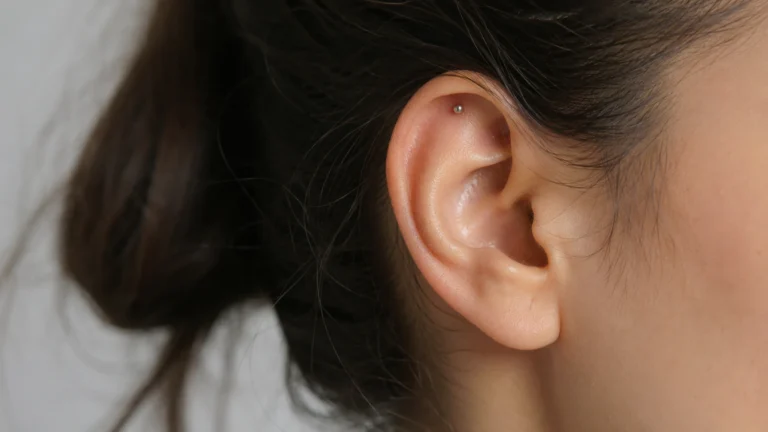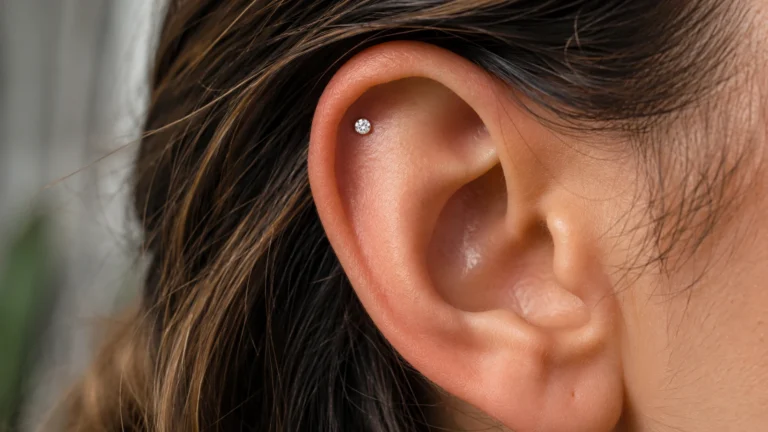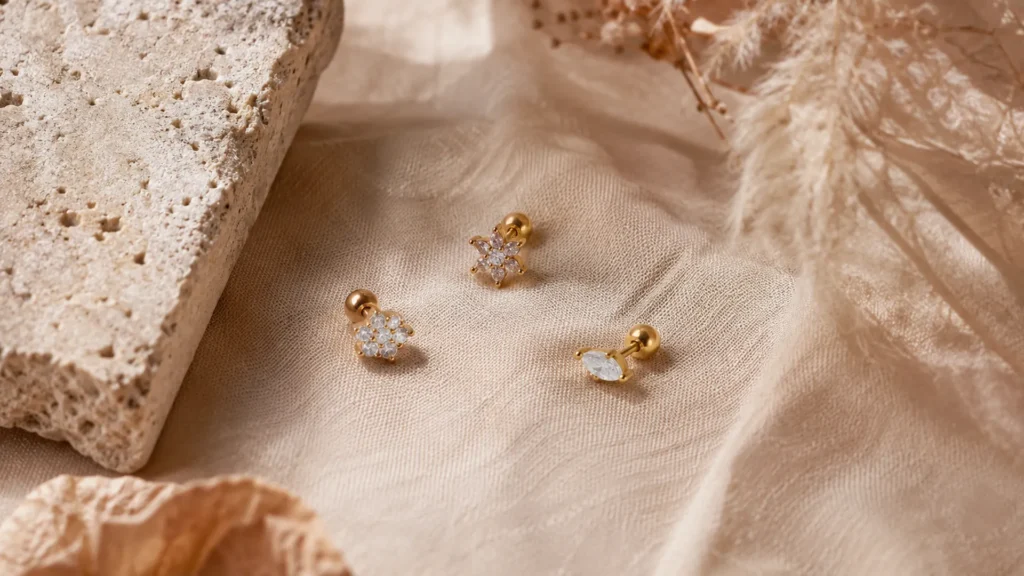
Tragus earrings sit in one of the trickiest little spots on the ear, that small flap of cartilage right in front of the ear canal, and the jewelry you put there has to respect both your anatomy and your healing. Most of what comes up when you search for tragus earrings is a wall of shop pages: pretty studs, pretty hoops, no real guidance on what fits, what is safe for a fresh piercing, or when you can actually swap to that cute piece you have been eyeing. I have pierced and re-jeweled a lot of tragus piercings, and the difference between one that looks great and heals clean and one that grows an angry bump usually comes down to the earring choice. Let me save you the trial and error.
This guide covers the jewelry styles that actually work on a tragus, how to read post length and gauge so a stud sits flush, when it is genuinely safe to change your first earring, the materials worth paying for, and the warning signs that mean you stop fiddling and get help. The tragus is small, but the details matter more here than almost anywhere else on the ear.
What Makes the Tragus Different From Other Ear Piercings
The tragus is a thick little nub of cartilage that partly covers the entrance to your ear canal. It does not have a lot of nerve endings, which is why many people find the piercing itself less sharp than they feared, more of a firm pressure and a pop. What it does have is an awkward shape and a tight position against the side of your head. That geometry drives every jewelry decision.
Because the tragus sits so close to the ear canal, a stud’s flat back or disc has to clear the opening without poking into it. Because it presses against your head, a piece that sticks out too far catches on phones, earbuds, pillows, and your own fingers. And because it is cartilage, it heals slowly and stubbornly compared to a soft earlobe. Healthline puts typical tragus healing at 3 to 6 months, and sometimes up to a year, which lines up with what I see in the studio; their overview of tragus piercings is a fair plain-language summary. That long heal is exactly why your first earring choice is not just cosmetic.
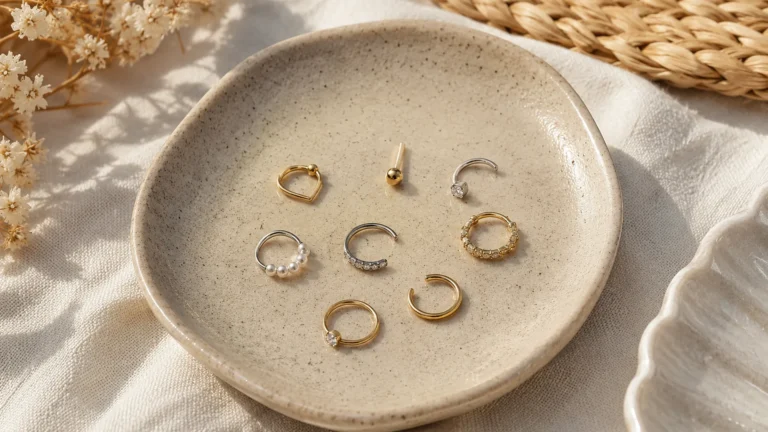
The Earring Styles That Work on a Tragus
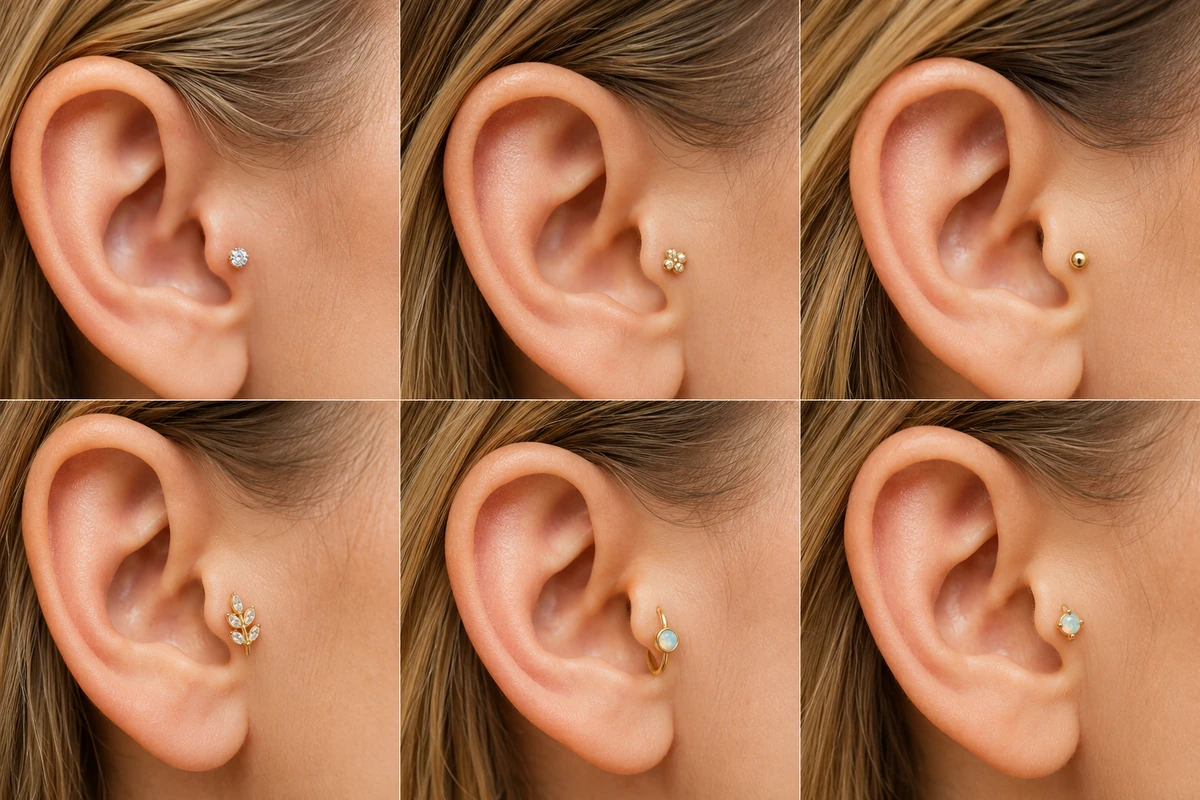
There are really three families of tragus jewelry, and each suits a different stage and goal.
Flat-Back Studs (Labret Style)
A flat-back stud, sometimes called a labret-style stud, has a decorative front and a smooth flat disc on the back. This is my default recommendation for a tragus, healed or healing. The flat disc sits against the back of the cartilage comfortably and does not press a ball into your ear canal the way a barbell can. It stays put, it is low profile, and it is the easiest style to sleep on. For most people, a flat-back is the earring you will wear most of the time.
Hoops and Huggies
Small hoops and tight little huggies look great on a tragus once it is fully healed. The catch is diameter. Too large and the hoop droops and snags; too small and it digs in and irritates the channel. On a tragus, the workable range is usually quite small, often in the 6mm to 8mm region for a clicker or huggie, adjusted to your anatomy. A hoop is a poor choice for a fresh piercing because the constant movement and the way it can swing against the ear slows healing.
Barbells
A lot of tragus piercings are started with a straight or curved barbell, because the ball ends give swelling somewhere to go. The downside is that the inner ball can rub against the ear canal opening. Many piercers, myself included, prefer to start with a slightly longer flat-back and downsize once the swelling settles. If you were pierced with a barbell, that is fine; just expect that you may want to switch to a flat-back later for comfort.
Getting the Size Right: Gauge and Post Length
This is the part the shop pages skip, and it is the part that decides whether your earring sits flush or causes problems. Two measurements matter.
Gauge is the thickness of the post. Tragus piercings are commonly done at 16g or 18g. Lower numbers are thicker. You want your replacement jewelry to match the gauge you were pierced at, because forcing a thicker post through or letting a thinner one wobble both cause trouble.
Post length is how far the front sits from the back disc. A fresh piercing is fitted with a longer post to leave room for swelling. Once the swelling goes down, that extra length lets the jewelry shift and snag, which is a classic cause of irritation bumps. Downsizing to a shorter post that sits close to the skin, without pressing into it, is one of the most underrated steps in healing a tragus well.
| Jewelry | Typical gauge | Typical size | Best for |
|---|---|---|---|
| Initial flat-back (healing) | 16g to 18g | longer post for swelling | fresh piercing, weeks 1-8 |
| Downsized flat-back (settled) | 16g to 18g | shorter post, sits flush | after swelling subsides |
| Clicker or huggie hoop | 16g to 18g | 6mm to 8mm diameter | fully healed tragus |
| Barbell (initial only) | 16g | length set for swelling | some studios’ starter choice |
Treat these as ranges. The right numbers for you depend on how thick your tragus is and how it swelled, which is why a good piercer measures and downsizes you rather than guessing online. If you are unsure what gauge you have, do not eyeball it; have a piercer check.
Materials: What Is Actually Safe Against Healing Cartilage
For initial and healing jewelry, the standard is non-negotiable in my book: implant-grade titanium (ASTM F-136) or solid gold of 14k or higher, and the piece should be internally threaded or threadless so no sharp threading drags through the channel. The Association of Professional Piercers spells out why initial jewelry has to be biocompatible and properly finished, and their guidance on jewelry for initial piercings is the reference I point clients to.
Where people get burned is cheap “stainless” or “surgical steel” earrings that contain nickel. Nickel is one of the most common contact allergens, and against fresh cartilage it can trigger a stubborn reaction that looks like an infection but is really irritation. Gold-plated and gold-filled are not the same as solid gold; the plating can wear and expose base metal. If a piece is suspiciously cheap, assume it is not what you want near a healing tragus.
Once you are fully healed, you have more freedom, but a lot of people find they simply react better to titanium or solid gold long term and stick with it. If you have ever reacted to costume jewelry, take that as a signal.
When Can You Change a Tragus Earring
The honest rule is not a date on a calendar; it is whether the piercing is healed. For a tragus, that usually means waiting the full healing window, often around 4 to 6 months at minimum and sometimes longer, before you swap the jewelry yourself. Changing too early is the single most common way people set their healing back, because pulling jewelry through a channel that is still forming reopens it.
Signs it is ready: no soreness when you touch it, no crusting, no swelling, and the jewelry moves freely without discomfort. If you are within the window but desperate to change, have your piercer do the first swap; they can tell whether it is truly healed and they have the tools to do it cleanly. the same healing-and-jewelry logic applies to nearby cartilage spots, and our honest guide to the anti-tragus piercing walks through the same patience the tragus demands.
One more thing: even a “healed” tragus can be tight and fiddly to change because of where it sits. That brings us to doing it safely.
How to Change a Tragus Earring Without Hurting Yourself
Wash your hands first, every time. Work in good light with a mirror, or better, get a second person, because the tragus is hard to see on yourself. Loosen or unscrew the front with clean fingers, support the back disc so you are not tugging the cartilage, and ease the old piece out along the channel rather than yanking it sideways. Have your new piece ready, threadless or internally threaded, and guide it in following the same angle. If it will not go, do not force it. Forcing creates micro-tears that invite infection and bumps.
If the channel feels tight or you cannot get the new piece seated, stop and see your piercer. There is no shame in it; the tragus defeats plenty of experienced wearers. The cleaning routine you used while healing carries straight over to keeping a changed piercing happy, and our walk-through of a proper saline rinse for the tragus is the routine I hand to clients.
Living With a Tragus Earring: Earbuds, Glasses, Phones, and Sleep
The tragus sits exactly where your daily life happens to bump into your ear, and this is where a lot of irritation comes from rather than from the piercing itself. Earbuds are the big one. In-ear buds and earplugs press right against the tragus, and during healing that pressure and the friction of inserting and removing them can stir up a fresh piercing. If you rely on earbuds, switch to over-ear headphones for the first few months, or at least be gentle and clean about it. Wireless buds that hook over the ear instead of plugging in are a friendlier option.
Phones are the second offender. Pressing a phone to your healing ear, or trapping bacteria from a phone screen against the piercing, is an easy way to introduce an irritation. Wipe your phone, or use speaker or earbuds for long calls during healing. Glasses arms rest higher and usually clear the tragus, but if yours sit low, be aware of any rubbing.
Sleep is the quiet saboteur. Side-sleeping on a fresh tragus compresses the jewelry into the cartilage all night, which is a leading cause of bumps and crooked healing. A travel pillow with a hole in the middle, or simply training yourself onto the other side, makes a real difference. A flat-back stud helps here too, because there is no protruding ball to grind against the pillow. None of this is forever; once you are healed, you can go back to your earbuds and your favorite sleeping position. It is the healing months that ask for the adjustment.
What Tragus Earrings Cost and Where to Spend
Price on tragus jewelry covers an enormous range, and the number tells you a lot about the metal. A genuine implant-grade titanium flat-back from a reputable source typically runs somewhere in the rough range of 20 to 60 US dollars for a plain or small-gem piece, and solid gold climbs from there depending on karat and stones. If you see “titanium” or “surgical steel” tragus earrings for a couple of dollars, be skeptical; that price rarely supports proper material and finishing.
My honest advice on where to spend: put the money into the piece you wear while healing and as your everyday stud, because that is what is in contact with your body the most. You can be more relaxed about decorative pieces you swap in occasionally on a fully healed piercing, though I would still avoid obvious nickel. Buying one good flat-back beats buying five cheap ones that each risk a reaction. The studio that pierced you is usually the safest place to buy replacements, because they can match your exact gauge and post length and confirm the material.
Warning Signs: When to See a Piercer, and When to See a Doctor
A little redness, mild tenderness, and light crusting are normal in the early months. An irritation bump, a small firm lump that comes from friction or the wrong jewelry, is common on the tragus and usually a piercer or a jewelry change resolves it. Take any bump to a professional rather than poking at it.
What is not normal, and what should move you from a piercer to a doctor, is the following: spreading redness or red streaks, heat radiating from the ear, throbbing pain that gets worse after the first days, thick yellow or green discharge, swelling that keeps growing, or a fever. Those can signal infection, and an infected cartilage piercing is serious because cartilage has a poor blood supply and heals slowly. Healthline has a clear rundown of what an infected tragus piercing looks like and when to seek care. The American Academy of Dermatology also notes that yellowish discharge, soreness, and persistent puffiness around a piercing can indicate infection; their advice on caring for a new piercing is solid general reading. When in doubt, a doctor, not a forum.
Putting It Together
If you are healing, wear a properly sized flat-back stud in implant-grade titanium or solid gold, get it downsized once the swelling settles, and leave it alone. If you are fully healed and want to play, small hoops and huggies in the 6mm to 8mm range open up, but keep the good materials. Match your gauge, respect the post length, and never force a change. The tragus rewards patience and punishes shortcuts more than almost any other ear placement, so treat your earring choice as part of the aftercare, not just an accessory.
Frequently Asked Questions
What kind of earring is best for a tragus piercing?
A flat-back stud, also called a labret-style stud, is the best all-around choice. The smooth back disc sits comfortably against the cartilage near the ear canal, stays low profile, and is the easiest to sleep on. Hoops and huggies work once fully healed, but flat-backs are ideal for both healing and everyday wear.
What size are tragus earrings?
Tragus earrings are commonly 16g or 18g in gauge (thickness). Studs use a post length fitted to your anatomy, longer at first to allow for swelling, then downsized. Hoops and huggies for a healed tragus usually fall around 6mm to 8mm in diameter. Match the gauge you were pierced at.
When can I change my tragus earring?
Wait until the piercing is fully healed, which for a tragus often means around 4 to 6 months at minimum and sometimes longer. Signs it is ready include no soreness, no crusting, no swelling, and jewelry that moves freely. If you are unsure, have your piercer do the first change rather than risking it yourself.
Why does my tragus earring keep getting a bump?
Irritation bumps on the tragus usually come from friction, jewelry that is too long after swelling subsides, low-quality metal, or sleeping on it. The fix is often downsizing to a flush flat-back in implant-grade titanium and leaving it alone. See a piercer for a stubborn bump; do not pick at it or apply random products.
Can I wear a hoop in a tragus piercing?
Yes, once it is fully healed. Choose a small diameter, often around 6mm to 8mm, so the hoop neither droops and snags nor digs into the channel. Hoops are a poor choice during healing because their movement irritates the fresh piercing and slows it down.
What materials are safe for tragus earrings?
For healing, use implant-grade titanium (ASTM F-136) or solid 14k or higher gold, internally threaded or threadless. Avoid cheap stainless or surgical steel that may contain nickel, a common allergen, and avoid gold-plated pieces, since the plating can wear and expose base metal. Many people stick with titanium or solid gold even after healing.
Bottom Line
Tragus earrings have to fit a small, slow-healing cartilage spot tucked against your head, so the choice is as much about safety as style. Start and heal in a properly sized flat-back stud of implant-grade titanium or solid gold, downsize after the swelling settles, and wait until you are truly healed before switching to a hoop. Match your gauge, never force a change, and treat any spreading redness, heat, throbbing, or discharge as a reason to see a doctor rather than something to manage at home.