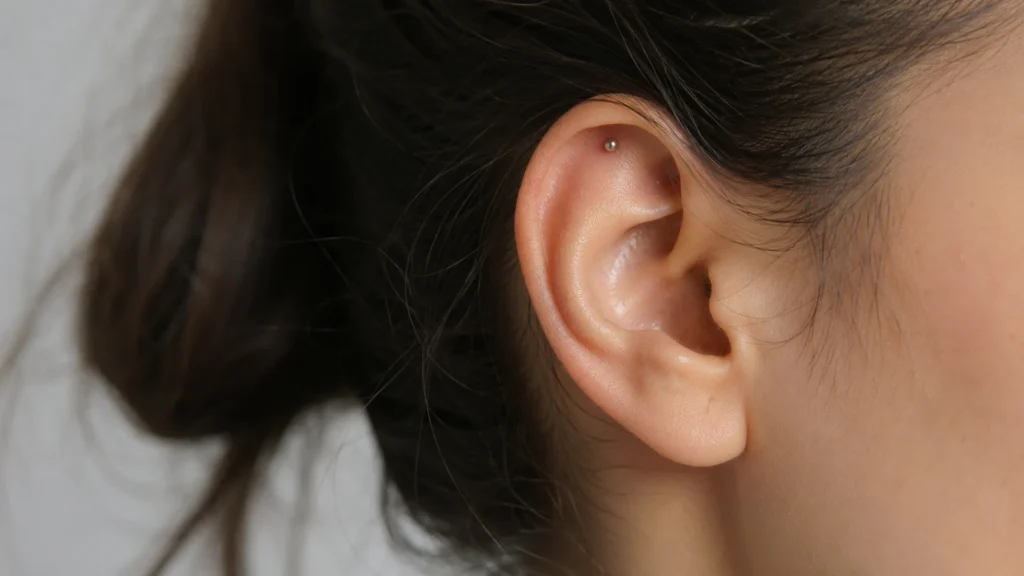
Hidden helix is the piercing people ask me for when they want jewelry that seems to float on the upper ear with no visible entry point, and it is one of the few placements where I have to start the conversation by checking your anatomy before I check your jewelry wishlist. The whole effect depends on your ear having a deep enough fold along the upper rim to tuck the back of the piece out of sight. Not every ear can do it, and a good piercer will tell you that honestly rather than sell you a result your anatomy cannot hold. I have done plenty of these and turned down a fair number too, so let me walk you through what it actually is, whether your ear can carry it, and how to heal it without drama.
This guide covers what a hidden helix is and how it differs from a floating, vertical, or standard helix, a self-test you can do at home to gauge your anatomy, the jewelry mechanics that make or break the hidden effect, realistic pain and healing, aftercare for stubborn cartilage, and the warning signs that send you to a piercer or a doctor.
What a Hidden Helix Piercing Actually Is
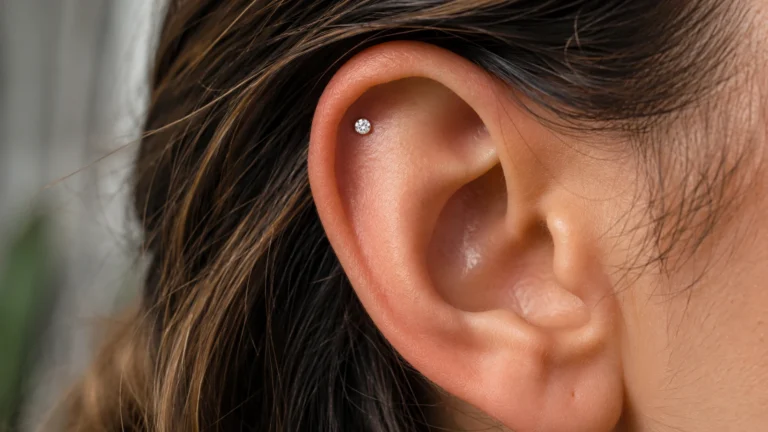
A hidden helix sits at the very top of the ear, in the outer cartilage rim, but it is placed so the entry of the piercing tucks underneath the fold of the rim. What you see is the decorative end of the jewelry peeking out or dangling along the top of the ear; what you do not see is where the post goes in. That concealed entry is the entire point, and it is why this placement is as much about your ear’s shape as it is about the piece you choose.
Mechanically it is still a helix piercing, a single hole through the upper cartilage. The “hidden” part is a placement and jewelry trick, not a different kind of piercing. That matters because it heals like any other cartilage piercing: slowly, stubbornly, and on its own schedule. Healthline notes that helix and cartilage piercings can take anywhere from 4 to 12 months to heal fully and that they heal from the outside in, so they look done long before they are; their guide to cleaning an ear piercing is a sensible overview of that timeline and the care it needs.
Hidden Helix vs Floating, Vertical, and Standard Helix
The names get blurred online, so here is how I separate them in the studio.
| Placement | Where it sits | What you see | Anatomy it needs |
|---|---|---|---|
| Standard (flat) helix | upper outer rim, flat on the cartilage | both ends of the jewelry | almost any ear |
| Hidden helix | upper rim, entry tucked under the fold | only the decorative end, entry concealed | a deep, defined rim fold |
| Floating helix | placed so the jewelry appears to sit on the ear with a minimal visible back | a clean front, low-profile back | moderate rim, good for flat-backs |
| Vertical helix | pierced top-to-bottom through the rim so a barbell sits vertically | both ends of a curved or straight barbell | enough rim height for the angle |
The hidden helix is the fussiest of the four about anatomy, because hiding the entry needs a genuine fold to hide it in. A floating helix is more forgiving and gives a similar minimal look without demanding as much. If your ear is not a candidate for hidden, a floating or standard helix often gets you most of the way there.
Can Your Ear Hide a Helix? A Self-Test Before You Book
This is the part the trend articles skip, and it is the one that saves you a wasted appointment. Stand at a mirror in good light and look at the top outer edge of your ear, the rim that curls over. You are checking for a fold deep enough to swallow the back of a small piece of jewelry.
Press gently along that upper rim with a clean fingertip. If you can feel and see a clear pocket where the rim curls inward, deep enough that a fingertip nail edge tucks slightly under it, your anatomy is promising. If the rim is shallow, thin, or rolls outward rather than inward, the entry of a hidden helix will likely peek out, and the “hidden” effect fails. Some ears are deep on one side and flatter on the other, which is completely normal and just means one ear may suit it and the other may not.
Treat your self-test as a heads-up, not a verdict. Bring what you found to a piercer: “my upper fold feels shallow, can this actually hide?” A good one will look, mark a test position, and show you in a mirror before any needle comes out. If they say your anatomy will not hold it, believe them. Pushing a hidden helix onto an ear that cannot conceal it gives you a slightly awkward standard helix with the wrong jewelry, not the look you came for.
Why a Reputable Piercer Might Say No
Hearing “no” is frustrating, but it is a sign of a professional protecting your result and your ear. The common reasons: your rim fold is too shallow to hide the entry, your cartilage is too thin to support the placement safely, the angle needed would put the jewelry under constant pressure, or your ear has already been pierced nearby and there is not enough healthy tissue left for a clean new hole. None of these are a reflection on you; they are anatomy.
A piercer who pierces anything you ask for regardless of anatomy is a piercer to avoid. The ones worth trusting offer alternatives. I will often suggest a floating helix or a well-placed standard helix that suits the ear you actually have, which usually heals better and looks more intentional than a forced hidden piercing.
The Jewelry That Makes the Hidden Effect Work
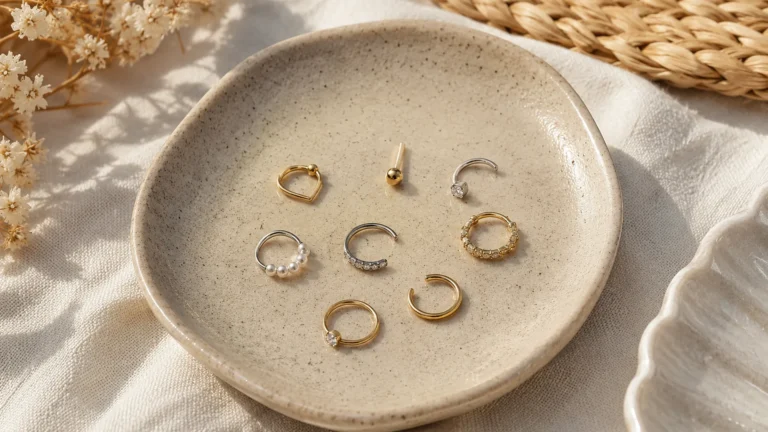
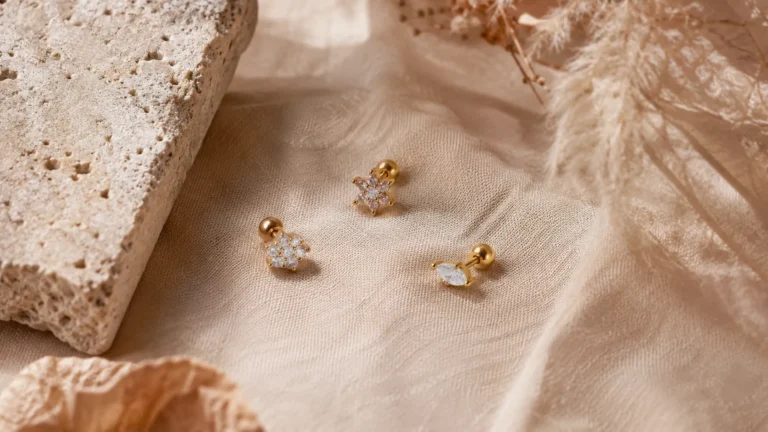
The hidden helix relies on a specific kind of piece: a flat-back, labret-style stud with the flat disc tucked under the fold and a decorative or elongated end showing on top. The post length has to be exact. Too long and the disc does not seat under the fold, so the entry shows and the effect is lost; too short and it presses into the cartilage and irritates the channel. This is why the right piece for a hidden helix is fitted to your ear, not bought blind online.
Material is non-negotiable for healing. Insist on implant-grade titanium (ASTM F-136) or solid gold of 14k or higher, internally threaded or threadless so nothing rough drags through the fresh channel. The Association of Professional Piercers explains exactly why initial jewelry has to be biocompatible and properly finished in their standards for initial piercing jewelry. Cheap steel often carries nickel, a common allergen, and against healing cartilage that reaction can look alarmingly like an infection.
Once healed, you have more freedom with decorative ends, dangles, and chains that drape along the rim, but the post that sits in the channel should stay high quality. If you have reacted to costume jewelry before, take that as your cue to stay with titanium or solid gold for good.
Pain and Realistic Healing
The piercing itself is a firm pinch and a brief pressure, similar to other upper-ear cartilage placements; most people rate it moderate, not unbearable. The longer story is healing. Plan for cartilage time: often 6 to 12 months for a hidden helix to be truly healed, even though it can look settled within a couple of months. Cartilage has a poor blood supply, which is why it is slow and why rushing it backfires.
The traps specific to a hidden helix are pressure and snagging. Because it sits at the top of the ear, sleeping on it, pulling clothing over your head, hats, and even towel-drying your hair can knock or compress it. A travel pillow with a hole, careful dressing, and patience all help. If you want a sense of how upper-ear cartilage placements compare for comfort, our honest ear piercing pain chart ranks the rim and inner-cartilage spots the way I experience them in the chair.
Aftercare for Stubborn Cartilage

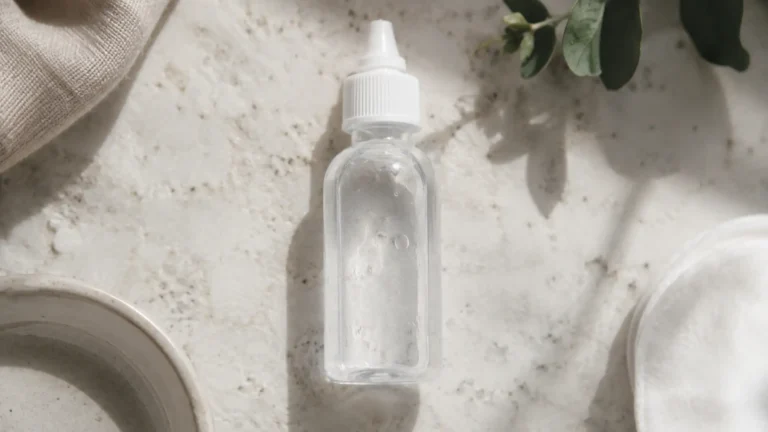
Keep it simple and consistent. Clean twice a day with a sterile saline rinse, let it air dry or pat with clean non-shedding gauze, and do not twist, spin, or play with the jewelry. Keep hair products, makeup, and dirty fingers off it, and keep it out of pools, lakes, and hot tubs while it heals. Do not change the jewelry yourself until it is genuinely healed; on a hidden helix, an early change can dislodge the careful placement that hides the entry.
Irritation bumps are common on cartilage and usually come from friction, the wrong jewelry length, or pressure during sleep, not from infection. A bump is a reason to see your piercer, not to start poking at it with home remedies. Healthline has a level-headed rundown of what a cartilage piercing bump is and what actually helps. The same patient routine that works for other inner-ear cartilage placements, like the snug piercing, carries straight over here.
What a Hidden Helix Costs and Where the Money Goes
Cost varies a lot by region and studio, but the structure is worth understanding so you know what you are paying for. You are typically paying two things: the piercing fee for the piercer’s skill and the sterile setup, and the jewelry, which on a hidden helix is often the bigger number because the look depends on a quality fitted piece. In many US studios the piercing service itself lands somewhere in a modest range, while the implant-grade titanium or solid gold flat-back that actually creates the hidden effect can cost more than the piercing.
Resist the urge to shop the cheapest option. A bargain hidden helix usually means either a rushed placement that does not truly hide the entry, or low-quality jewelry that risks a reaction. Tipping your piercer is customary in the US for good work, the same as any skilled service. The thing you are really buying is judgment: a piercer who assesses your anatomy honestly, marks a placement that hides, and fits a piece that seats correctly is worth more than one who simply makes the hole. Think of the fitted jewelry as part of the procedure, not an add-on.
Building Around a Hidden Helix
A hidden helix rarely lives alone for long, because the floating look pairs beautifully with other upper-ear placements in a curated arrangement. If you are planning more than one piercing, talk to your piercer about the whole layout before you start, not piece by piece. Spacing matters: cartilage needs healthy tissue between holes to heal well, and crowding placements too close can compromise both. A good piercer maps out where future pieces could go so your first hidden helix does not box in your options.
Timing matters too. Because cartilage heals slowly, stacking several new piercings at once means several long, simultaneous healing windows and more places that can get irritated. Many people are happier spacing new upper-ear work out over months, letting each settle before adding the next. If you dream of a full curated ear, a hidden helix is a strong anchor piece, but build it patiently. The look that ages well is the one that healed well, and rushing a cluster of cartilage piercings is the fastest way to end up with bumps and uneven results.
When to See a Piercer, and When to See a Doctor
Mild redness, light swelling, and a little crusting in the early weeks are normal. A piercer handles the non-emergencies: irritation bumps, a piece that feels too long once swelling drops, jewelry you cannot remove, or placement that has shifted. Do not try to fix or downsize a hidden helix yourself; the whole point of the placement is precision.
See a doctor if you notice signs of infection: spreading redness or red streaks, heat radiating from the ear, throbbing pain that worsens after the first days, thick yellow or green discharge, swelling that keeps growing, or a fever. Cartilage infections are serious because the tissue heals so slowly, and they are not something to manage from a blog. The American Academy of Dermatology lists yellowish discharge, soreness, and persistent puffiness as infection signals in its advice on caring for a new piercing. If a piercing keeps reacting or you form a raised keloid-type scar, a dermatologist is the right person to assess it.
Frequently Asked Questions
What is a hidden helix piercing?
A hidden helix is an upper-ear cartilage piercing placed so the entry tucks under the fold of the ear’s rim. You see only the decorative end of the jewelry, while the point where it goes in stays concealed. It is a placement and jewelry trick rather than a different type of piercing, and it heals like any other helix.
Can anyone get a hidden helix?
No. The look depends on having a rim fold deep enough to hide the entry. If your upper ear is shallow, thin, or rolls outward, a piercer may decline because the entry would show. A floating or standard helix is often a better fit for those ears and gives a similar minimal look.
How can I tell if my ear suits a hidden helix?
Look at the top outer rim in a mirror and press gently along it. If there is a clear inward pocket where a fingertip tucks slightly under the fold, your anatomy is promising. If the rim is shallow or flat, the entry will likely peek out. Have a piercer confirm with a test mark before booking.
How long does a hidden helix take to heal?
Expect cartilage time, often 6 to 12 months for full healing, even though it can look settled within a couple of months. Cartilage heals slowly from the outside in, so keep up your saline routine and avoid changing the jewelry until it is genuinely healed.
Does a hidden helix hurt more than a regular helix?
Not really. It is the same upper-cartilage piercing, so the pain is similar, a firm pinch and brief pressure that most people rate moderate. The bigger challenge is the long healing window and avoiding pressure and snagging at the top of the ear during that time.
What jewelry is used for a hidden helix?
A flat-back, labret-style stud with the disc tucked under the fold and a decorative end showing on top. The post length must be fitted to your ear so the disc seats correctly. Use implant-grade titanium or solid 14k or higher gold for healing, internally threaded or threadless, and avoid cheap nickel-bearing metals.
Bottom Line
A hidden helix piercing is one part jewelry trick and one part anatomy. The floating, no-entry look only works if your upper rim has a fold deep enough to hide the back of the piece, so do the mirror self-test and let a reputable piercer confirm before you book. Heal it on cartilage time with a steady saline routine and a properly fitted, high-quality flat-back, avoid pressure and snagging at the top of the ear, and treat any spreading redness, heat, throbbing, or discharge as a reason to see a doctor rather than something to ride out at home.