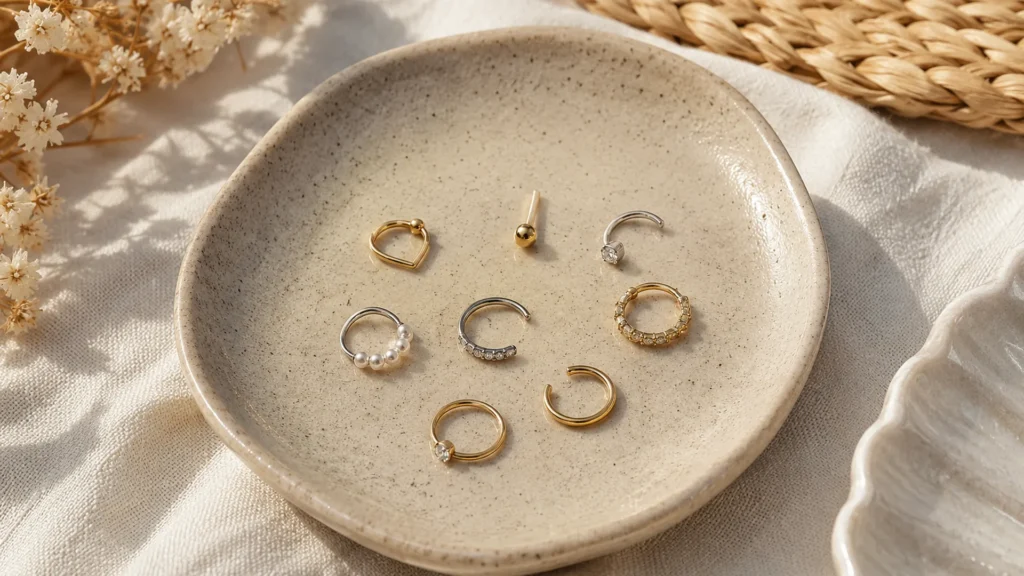
Nose piercing for nose types is the question I get more than almost any other at the studio, usually phrased as “will this even look right on me?” The honest answer is that there is no nose shape that “can’t” be pierced. What changes from face to face is where the mark should sit, which placement heals cleanest on your particular anatomy, and what size and style of jewelry actually flatters your nose instead of fighting it. I have marked thousands of noses, and the people who walk out happiest are the ones who understood their own anatomy before they sat in the chair. That is what this guide is for.
I am going to walk you through how to read your own nose the way a piercer does, then match that to the main placements: standard nostril, high nostril, septum, and bridge. After that we get into jewelry sizing with real numbers, healing timelines by placement, and the warning signs that mean you stop reading blogs and call a professional. None of this replaces an in-person consult, but it will make that consult ten times more useful.
How to Actually Read Your Own Nose
Before you fall in love with a photo, spend five minutes in good light with a mirror, looking at your nose straight on and in profile. You are checking four things, and each one nudges placement and jewelry in a direction.
Width across the nostrils. Wider noses carry a small ring or a flat-back stud beautifully, because the jewelry sits in proportion. On a narrow nose, an oversized hoop can look like it is swallowing the nostril, so a delicate stud or a smaller-diameter ring tends to read better. This is not a rule so much as a starting point.
The depth of the nostril crease. Run a fingertip up the side of your nostril until you feel the natural fold where the wing of the nostril meets the cheek. That crease is where a classic nostril piercing usually lands. A deep, well-defined crease gives a piercer an obvious target and a stable channel. A shallow or barely-there crease means placement is a judgment call, and a good piercer will mark a few options and let you choose in the mirror.
Bridge height and the supratip break. In profile, look at the line from between your eyes down to the tip. If you have a high, straight bridge, a bridge piercing has the flat real estate it needs. If your bridge dips or you have a pronounced bump, a bridge piercing can sit awkwardly or place more tension on the tissue. The supratip break is the slight dip just above the tip of the nose; it influences how a high nostril or a tip-area placement frames the face.
Symmetry. Almost nobody is perfectly symmetrical, and that is fine. But knowing whether your nostrils sit at slightly different heights changes the conversation. With a single nostril stud, asymmetry rarely matters. With paired piercings or a septum, your piercer marks to your true center, not to a ruler, because your face has its own midline.
Write down what you find. When you tell a piercer “my crease is shallow on the left and my bridge has a bump,” you have just made their job easier and your result better.
Standard Nostril: The Most Forgiving Placement for Almost Every Nose
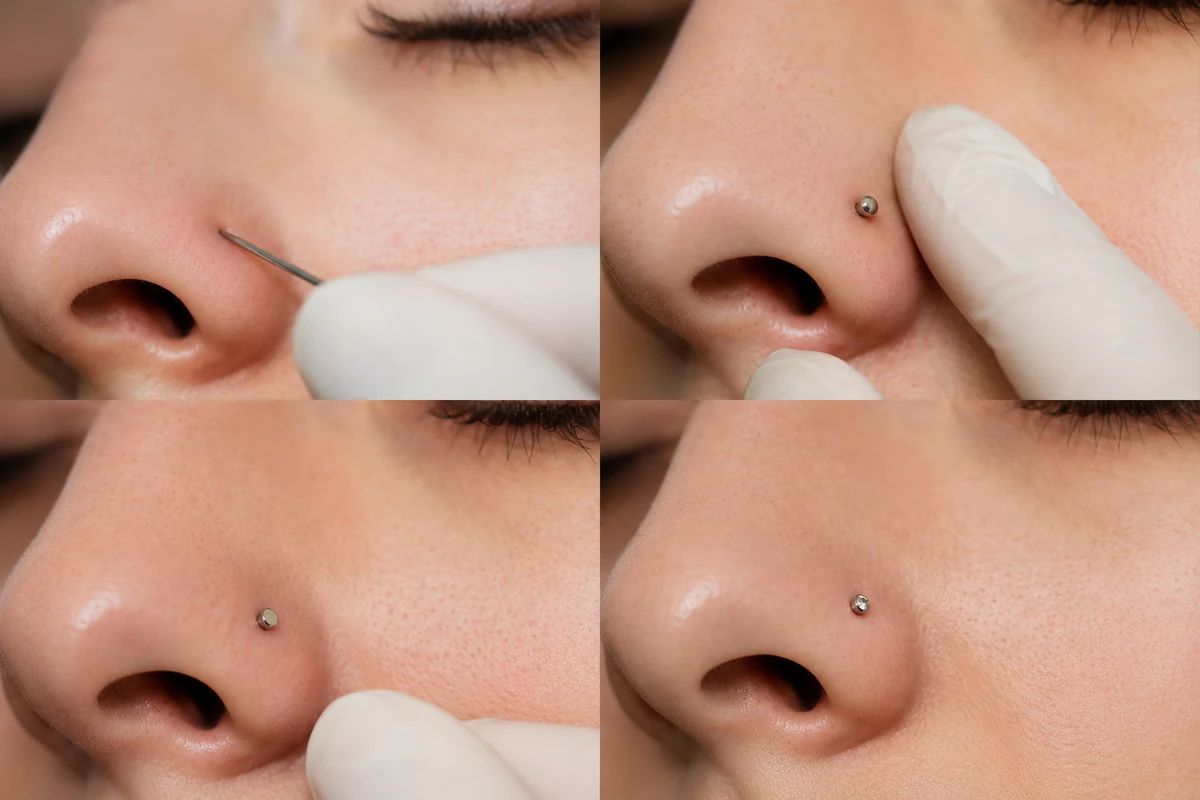
The single nostril piercing is the workhorse, and it suits the widest range of nose shapes because it is so adaptable. On a straight nose it reads clean and minimal. On a nose with a bump or hump, a side stud is genuinely useful: it draws the eye outward and balances the profile rather than highlighting the center line. On a wider nose, you have room to choose between a tiny stud that stays subtle and a small hoop that adds a little movement.
Where exactly it sits is the part people underestimate. A skilled piercer does not just aim for the crease; they consider how the jewelry will angle once it heals, whether a stud will sit flush, and how a future hoop would hang. If you think you might want to switch from a stud to a ring later, say so during marking, because placement that flatters a stud is not always the same placement that flatters a hoop.
One anatomical note the style blogs skip: if your nostril tissue is thick, your piercer may recommend a slightly longer post so the disc or gem is not pressing into the inside of your nose. That single detail prevents a lot of irritation bumps down the line.
High Nostril: Striking, But Not Equally Friendly to Every Nose
A high nostril sits a centimeter or more above the natural crease, higher up the side of the nose. It looks deliberate and modern, and on a longer or straighter nose it can be lovely. But it is less forgiving than a standard nostril for two reasons. First, it cannot take a ring; the tissue and angle only really work with a flat stud, so if hoops are your dream, this is not your placement. Second, it tends to be a slower, fussier heal because of where it sits and how easy it is to bump.
If your nose is short or your crease is very high already, a high nostril can crowd the limited space. This is exactly the kind of call a piercer makes in person. I have turned people away from a high nostril and toward a standard placement simply because their anatomy did not leave room for both to coexist if they wanted a second piercing later.
Septum: Centered, Flexible, and Less About Nose Shape Than You Think
Septum piercings get a lot of “does my nose suit it” worry, and most of that worry is misplaced. A septum does not go through cartilage if it is done correctly; it passes through the “sweet spot,” a thin column of soft tissue just below the cartilage and in front of the harder part of the septum. Because it sits at your facial midline, it works on symmetrical and asymmetrical noses alike, and you can hide it with a retainer flipped up inside the nostrils when you need to.
Where nose type does matter is proportion and jewelry choice. A wider nose can carry a chunkier ring or a larger diameter without looking overwhelmed. A narrower nose often looks best with a smaller-gauge, smaller-diameter clicker or circular barbell. If your septum is naturally deviated, do not panic; a piercer simply marks to your real center, and the jewelry follows your anatomy. If you love rings as an overall style, the septum pairs naturally with hoops elsewhere, and the same logic that guides choosing septum rings by gauge and diameter applies here.
Bridge and Other Surface-Adjacent Placements: Read the Anatomy Honestly
A bridge piercing crosses horizontally over the top of the nose between the eyes. It is a surface piercing, which means it sits in a pocket of skin rather than passing through deep tissue, and surface piercings carry a higher lifetime risk of migration and rejection than nostril or septum work. Anatomy matters here more than anywhere else on the nose. You need enough pinchable skin across the bridge to hold the jewelry, and a relatively flat, straight bridge so the barbell does not put uneven pressure on the tissue.
If your bridge is low, very rounded, or you cannot pinch a clean fold of skin there, a reputable piercer may decline, and that is a sign of a good one, not a difficult one. I would rather tell someone their anatomy is not ideal for a bridge than do a piercing I expect to reject in a year. The American Academy of Dermatology notes that piercings in areas with thinner or more mobile skin are more prone to complications, which is the practical reason surface placements demand careful anatomy assessment. You can read their general guidance on piercing safety at the AAD’s advice on caring for a new piercing.
Matching Jewelry to Your Nose: Real Sizes, Not Just Styles
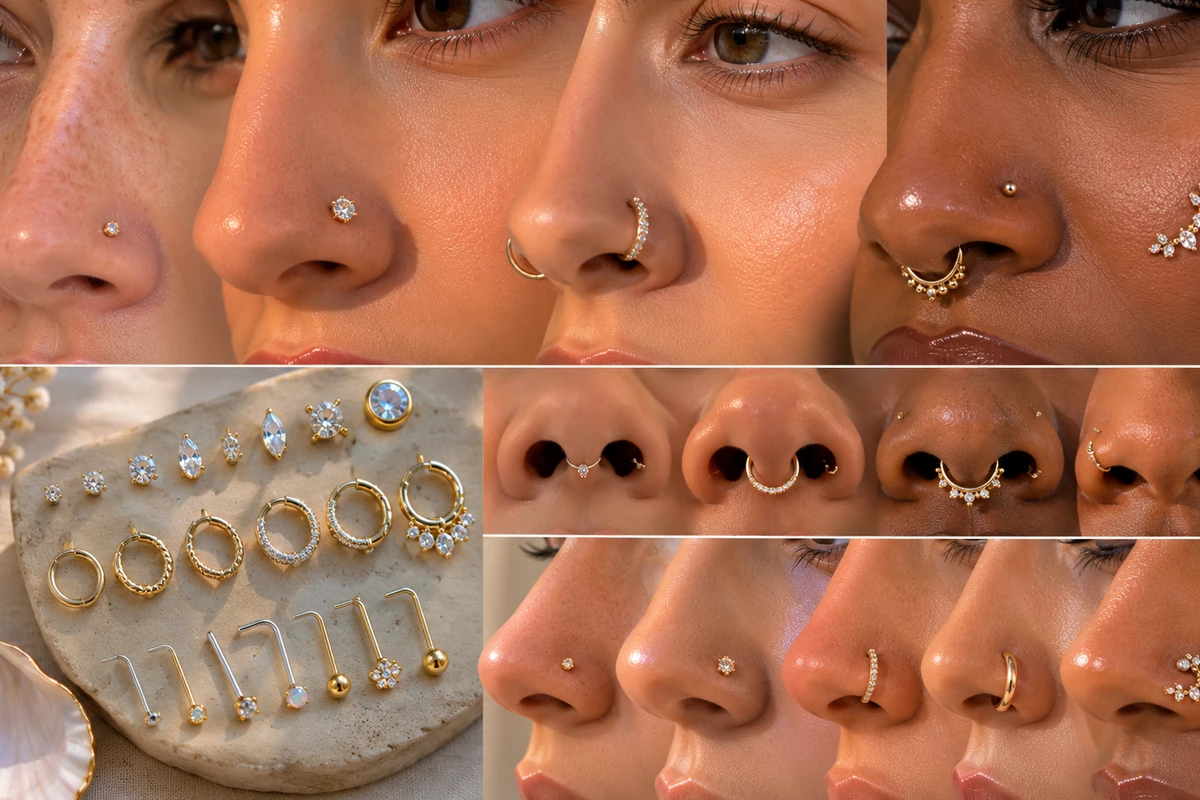
This is where most online guides go vague, listing screw versus L-shape versus bone without ever giving you a number. Sizing is what makes jewelry look intentional. Gauge is thickness; lower numbers are thicker. Diameter or length is the size of the ring or the post.
For a nostril stud, the gem or end size is the visible style choice, but the gauge and post length are the fit. For a hoop, diameter is everything: too large and it droops, too small and it digs.
| Placement | Typical gauge | Typical size | Best jewelry for the placement |
|---|---|---|---|
| Standard nostril (stud) | 20g to 18g | post sized to tissue thickness | flat-back labret, L-shape, screw |
| Standard nostril (ring) | 20g to 18g | 6mm to 8mm diameter | seamless hoop, captive bead ring |
| High nostril | 20g to 18g | short flat-back post | flat-back stud only (no rings) |
| Septum | 16g to 14g | 8mm to 10mm diameter | clicker, circular barbell, retainer |
| Bridge | 16g to 14g | fit to skin fold width | straight barbell only |
Treat those as starting ranges, not gospel. Your piercer will measure you and may adjust. The pattern to notice: thicker, more centered placements like the septum and bridge use heavier gauges and barbell-style jewelry, while the delicate nostril placements use finer gauges and flat-back studs. A wider nose can push diameters toward the top of each range; a narrow nose toward the bottom.
Material Matters as Much as Size
Whatever the placement, insist on implant-grade titanium (ASTM F-136) or solid gold of 14k or higher for the initial piece, and make sure it is internally threaded or threadless so no rough threading drags through the fresh channel. The Association of Professional Piercers is clear that initial jewelry should be biocompatible and high quality; their jewelry standards for initial piercings are worth reading before you let anything cheaper near a healing hole. Surgical steel can carry nickel and is a common trigger for irritation, so I steer clients away from it for fresh work.
Healing Timelines and Risk by Placement
Here is the YMYL part the fashion guides leave out, and it is the part that actually protects you. Different nose placements heal on different schedules, and the timeline shapes how soon you can change jewelry and how careful you need to be.
| Placement | Typical healing time | What makes it slower |
|---|---|---|
| Standard nostril | about 4 to 6 months | bumping, makeup, glasses resting on it |
| High nostril | about 6 to 9 months | tight angle, easy to knock, slower tissue |
| Septum | about 6 to 8 weeks (soft tissue) | fastest if placed in the sweet spot |
| Bridge (surface) | about 8 to 12 weeks, with ongoing migration risk | mobile skin, swelling, pressure from glasses |
Notice the surprise: a septum in the correct spot often heals faster than a nostril, because soft tissue closes quicker than the cartilage-adjacent nostril wall. People assume the scarier-sounding placement takes longest. It usually does not.
Across every placement, the aftercare basics are the same: clean twice a day with a sterile saline rinse, do not twist or spin the jewelry, keep makeup and fingers off it, and leave it alone otherwise. Healthline has a solid plain-language overview of nose piercing aftercare and what normal healing looks like, which you can find in their nose piercing healing guide. If you want the deeper saline routine, the same principles I use for ear placements carry straight over to the nose, and our walk-through of building a proper saline rinse routine applies almost word for word.
When to Call a Piercer, and When to Call a Doctor
Some redness, mild swelling, and a little crusting in the first weeks are normal. What is not normal, and what should move you from waiting to acting, is the following: spreading redness or red streaks, heat radiating from the area, thick yellow or green discharge, throbbing pain that worsens after the first few days, swelling that keeps growing, or a fever. Those can signal infection, and infection in the nose is not something to manage with online tips. See a doctor.
For non-emergency issues, a piercer is your first stop. Irritation bumps, jewelry that suddenly feels too tight after swelling, a stud that has sunk, or a piece you cannot remove safely are all things a professional handles in minutes. The big mistake I see is people trying to fix a placement or downsize jewelry themselves, often making an irritation bump worse. The Cleveland Clinic has a clear summary of infection signs and basic care that is worth bookmarking; their overview of an infected nose piercing lines up with what I tell clients in the chair.
One more honest note: if a piercing keeps rejecting or you develop a stubborn keloid-type scar, that can be tied to your skin’s tendency rather than anything you did wrong. A dermatologist, not a forum, is the right person to assess scarring.
Putting It Together for Your Specific Nose
If you have a straight, average-width nose, you have the easiest menu: standard nostril for everyday, septum if you want something you can hide, and a bridge is at least on the table if your skin cooperates. If you have a wider nose, lean into proportion; you can carry a hoop or a slightly larger septum diameter that a narrow nose could not. If your nose has a bump or hump, a side nostril stud genuinely helps balance the profile. If your nose is short or your crease sits high, be cautious about stacking a high nostril on top of a standard one, because space runs out fast.
The thread running through all of it: nose type changes the details, not whether you can be pierced. The way pain and healing differ by placement matters too, and if you are weighing comfort, our honest pain ranking by placement for ear work uses the same logic that applies to the nose, where soft-tissue spots tend to hurt and heal differently than cartilage-adjacent ones. Take your self-assessment to a reputable piercer, talk through your goals, and let them mark your real anatomy. That conversation is worth more than any chart, including this one.
Frequently Asked Questions
Is there a nose shape that cannot get a nose piercing?
No. Every nose shape can be pierced. What changes is the ideal placement and jewelry size for your anatomy. The only real limits come from specific surface placements like a bridge, where you need enough pinchable, relatively flat skin; a piercer assesses that in person.
Which nose piercing suits a wide nose best?
Wide noses carry both small hoops and flat-back studs well because the jewelry stays in proportion. A septum can also look balanced and can take a slightly larger diameter. The goal is jewelry that complements the width rather than a tiny piece that gets lost or an oversized one that overwhelms.
Does a septum piercing work if my septum is deviated?
Usually yes. A piercer marks to the soft “sweet spot” below the cartilage and to your real facial center, not to a perfectly straight line. A deviation rarely prevents the piercing, though it may slightly shift placement. Have a professional evaluate it rather than guessing.
How do I know what jewelry size to buy?
Get measured by your piercer for the initial piece. As a rough guide, nostril work runs 20g to 18g, septums 16g to 14g, nostril hoops around 6mm to 8mm diameter, and septum diameters around 8mm to 10mm. Anatomy and swelling change these, so confirm sizes before buying replacements.
Which nose piercing heals the fastest?
A septum placed correctly in the soft sweet spot often heals fastest, around 6 to 8 weeks, because soft tissue closes quicker than the cartilage-adjacent nostril wall. Standard nostrils take roughly 4 to 6 months, and high nostrils and bridge piercings take longer and need more care.
What are the signs my nose piercing is infected?
Spreading redness or red streaks, warmth, throbbing pain that worsens after the first days, thick yellow or green discharge, growing swelling, or fever point toward infection. Those signs mean you see a doctor, not a piercer. Mild early redness, light swelling, and a little crusting are normal during healing.
Bottom Line
Nose piercing for nose types comes down to reading your own anatomy first: width, crease depth, bridge height, and symmetry. Those four things tell you which placement will flatter and heal well, and what size and style of jewelry will look intentional. Standard nostril suits almost everyone, septum is more flexible than people fear, high nostril and bridge ask more of your anatomy and your patience. Buy implant-grade titanium or solid gold for the first piece, follow a steady saline routine, and never push through warning signs. Bring your self-assessment to a professional piercer, and treat any sign of infection as a reason to see a doctor.