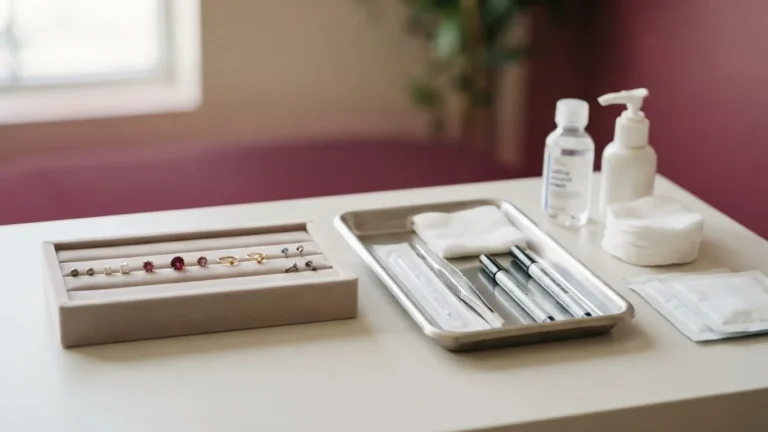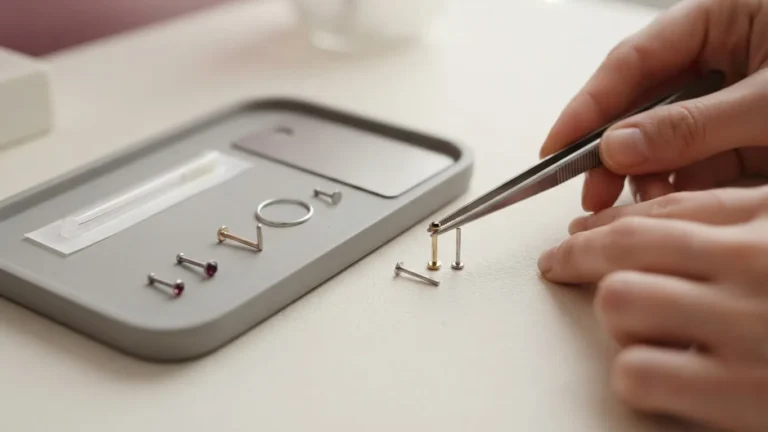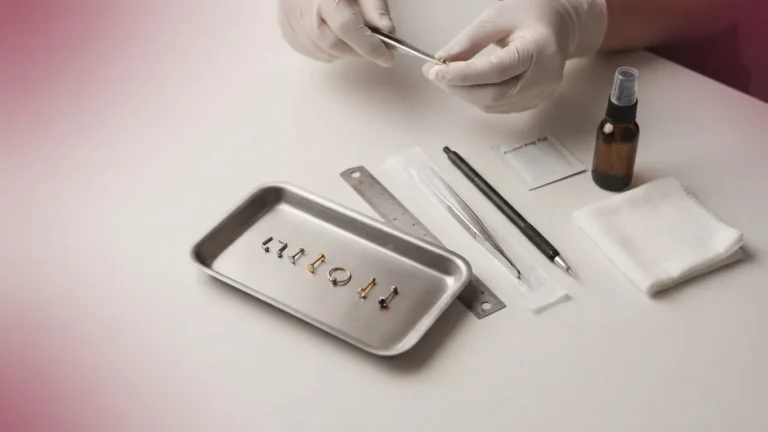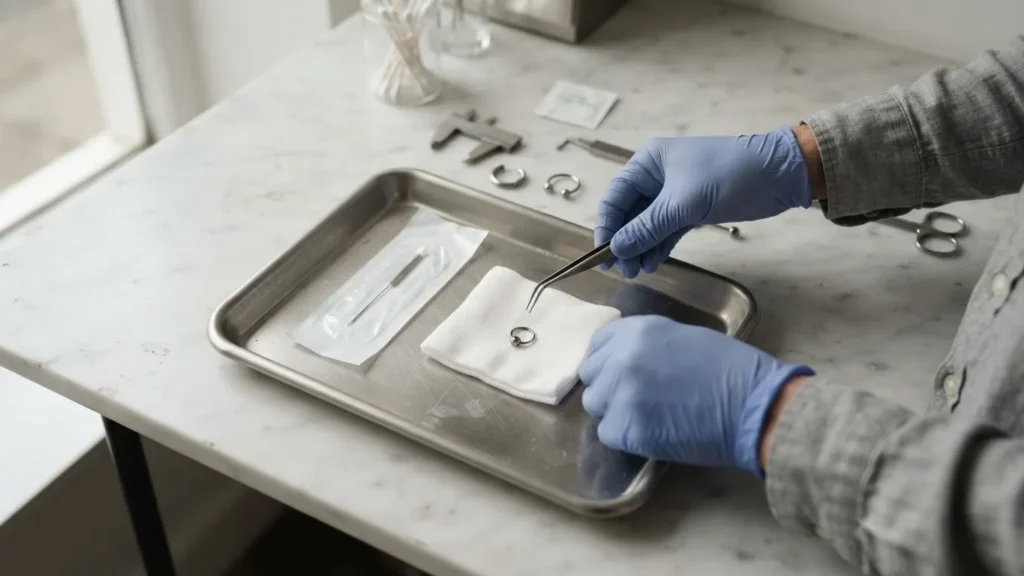
A single studio in Philadelphia, Infinite Body Piercing, lists its septum service fee at $60 and its starting jewelry at $20 to $50, which puts the real out-the-door number at $80 to $110 before tax. That one line item does more to answer how much does a septum piercing cost than any national average, because it shows the two things that actually move the price: the piercer’s labor and the metal you walk out wearing. Most published ranges blur those together. The Lobecraft Editorial Desk compiles these figures from body-jewelry retailers and operating studios, and the gap between a quoted range and a final total is where most first-timers get surprised.
Below is the short version, then the full accounting.
What a septum piercing costs, in brief: A septum piercing typically runs $40 to $100 across the board, with retailers and studios clustering tightly. Plug Your Holes and Finders Keepers both cite $40 to $100; Healthline and FreshTrends put it near $40 to $90. Two things decide where you land: whether the quote includes jewelry, and which studio you choose. Add a tip (often 20%), basic aftercare saline, and the occasional jewelry-change fee, and a realistic all-in figure sits closer to $80 to $110. Cost should never be the deciding factor over studio safety.
The $40 – $100 range, and why two quotes for the same piercing don’t match
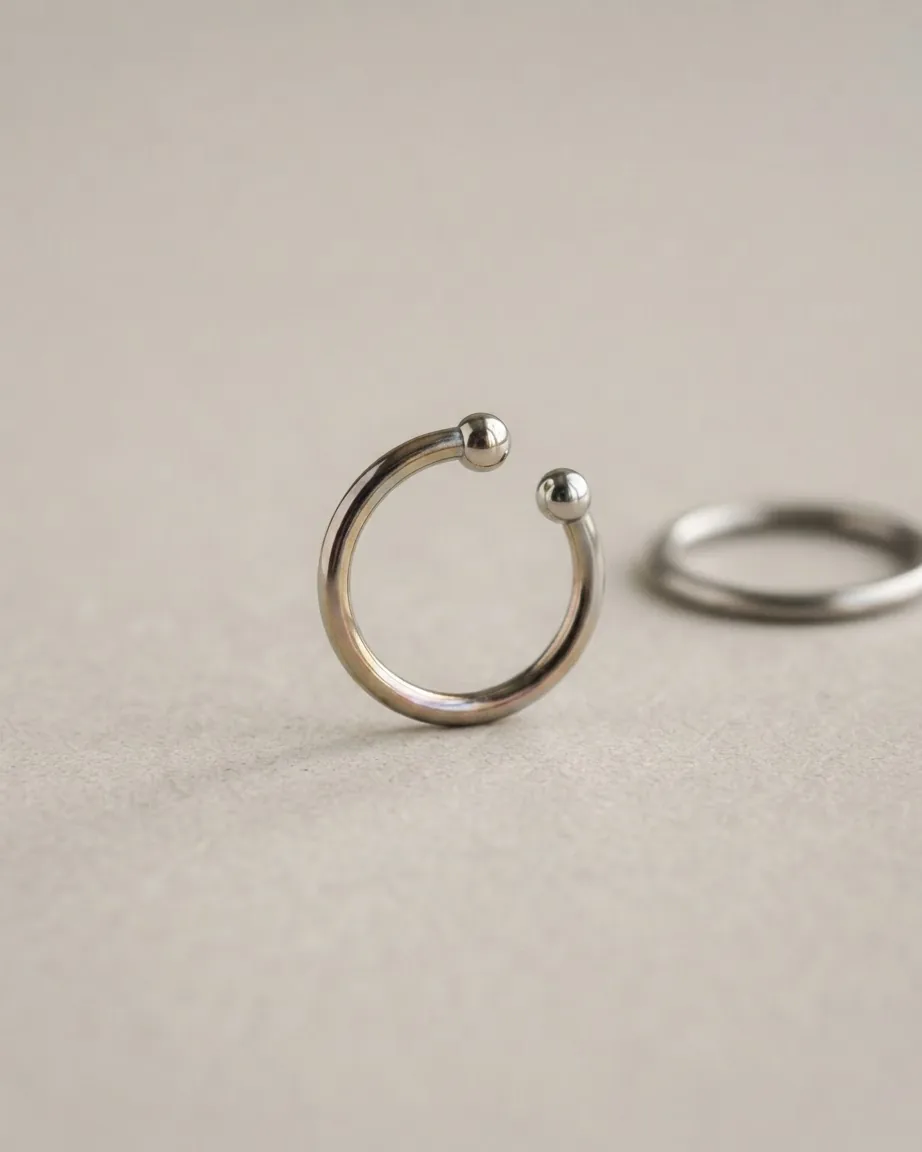
Four sources give a national figure, and they agree more than they disagree. Plug Your Holes, a body-jewelry retailer, states that most septum piercings range from $40 to $100. Finders Keepers Body Piercing lands on the same $40 to $100 average. Healthline, writing for a consumer-health audience, puts the typical cost between about $40 and $90. FreshTrends prices the piercing itself at $40 to $90, then adds jewelry on top.
So why can two studios quote you numbers that feel incompatible? The ranges are measuring different things. FreshTrends states plainly that its $40 to $90 is for the piercing only, plus jewelry, and elsewhere notes that a quoted price may or may not include the jewelry at all. That single caveat explains most of the confusion. A $40 quote that excludes jewelry and a $90 quote that includes it can describe the exact same visit.
There is a harder limit worth naming: no two of these sources independently confirm the same dollar figure for the same studio. A national range and one studio’s menu line are not the same quantity, so treat the range as a sanity check, not a price you can hold a shop to.
Service fee vs. jewelry: the split that decides your real total
The cleanest way to read a price is to separate it into layers, because that is how studios actually bill. Two operating shops publish the split openly, and they line up closely.
At Infinite Body Piercing in Philadelphia, the septum service fee is $60, with starting jewelry between $20 and $50, for a starting total before tax of $80 to $110. At Fatty’s Tattoos & Piercings in the DC area, the septum service is $60, with a captive bead ring from $15 and up. The labor charge is identical at both; the swing comes entirely from what you choose to wear.
This is the line that a blended range hides. When a retailer tells you “$40 to $90,” you cannot tell whether a titanium clicker is baked in or waiting as an add-on. Before you book, ask the studio one question: does the quoted number include the jewelry, or is the metal priced separately? If it’s separate, ask for the starting jewelry price so the two layers are visible. The difference between a bare service fee and a loaded total can be $50 on a septum.
- Service fee (labor): $60 at both Infinite Body and Fatty’s.
- Starting jewelry: $15 and up at Fatty’s (captive bead ring); $20 to $50 at Infinite Body.
- Starting all-in, before tax: $80 to $110 (Infinite Body).
The costs after the needle: tip, aftercare, and jewelry-change fees
The piercing-day receipt is not the end of the spending. Three recurring costs sit just past it, and only one of them is optional.
First, the tip. Infinite Body states that tipping a piercer is not required, while describing 20% as standard. On a $60 service that adds roughly $12; on an $80 to $110 all-in it climbs higher. It’s a courtesy, not a surcharge, but budget for it rather than being caught short at the counter.
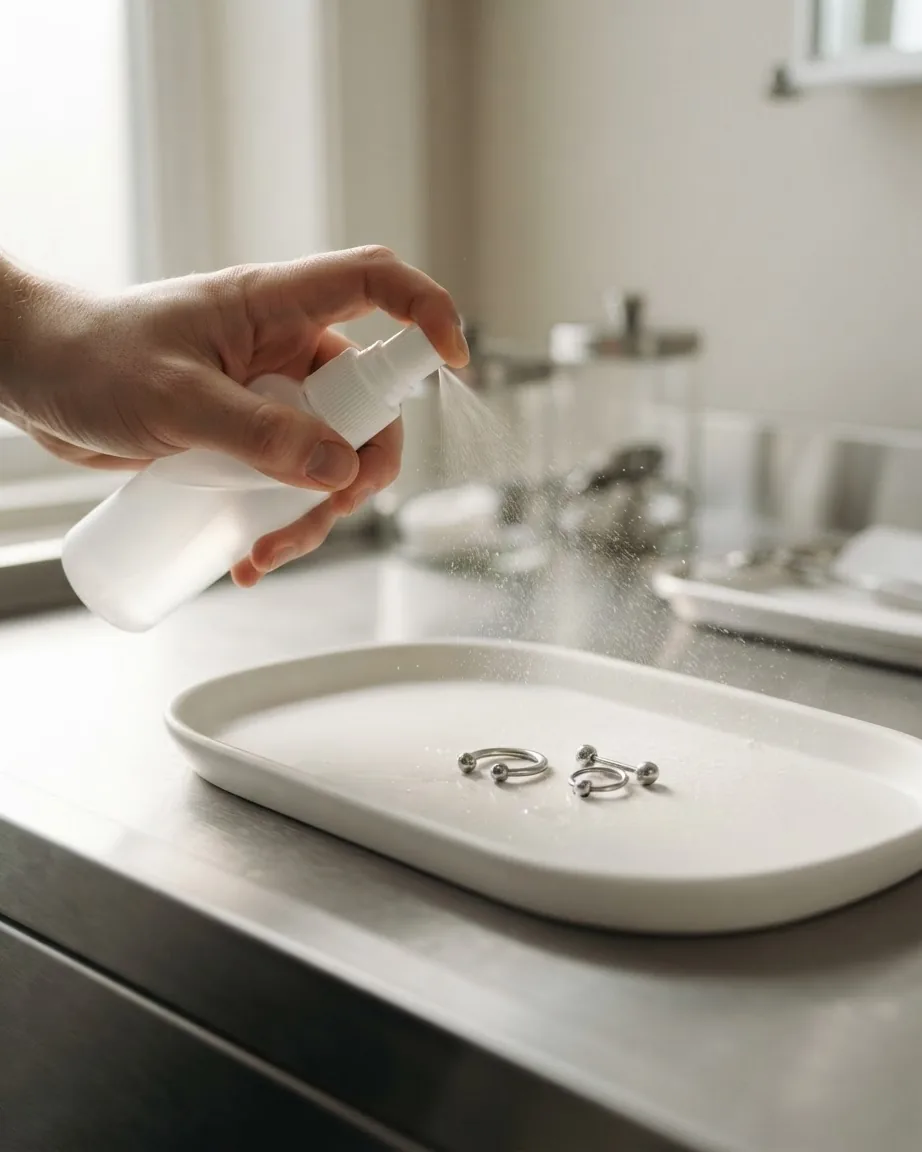
Second, aftercare. A septum needs little more than a sterile saline spray for cleaning, which runs a few dollars and is not built into the piercing quote. Keep that small line in your head so the “finished” price isn’t a surprise.
Third, and the one most people forget: jewelry changes. If you want a professional to swap your starter piece for something new, studios charge for it. Infinite Body charges $10 per sitting for jewelry changes; Fatty’s charges $20 for a standard jewelry change. That fee recurs every time you want a hands-on change you don’t do yourself, and it matters more for a piercing with a long healing window, because changing too early invites problems. For a tour of the wider placement before you commit, see our nose septum section.
What the price should buy: implant-grade jewelry and a needle, not a gun
A cheap quote is only a bargain if the safety basics hold. The Association of Professional Piercers sets the material bar for what belongs in a fresh hole, and this is where “how much” quietly becomes “how much for something that heals.” Cost should never outrank the studio’s standards.
On metal, the APP’s position is specific. Implant-certified titanium (Ti6Al4V ELI) should be ASTM F-136 compliant, ASTM F1295, or ISO 5832-3 compliant, or else commercially pure titanium that is ASTM F-67 compliant. Gold is acceptable for initial piercings only if it is 14k or higher, nickel- and cadmium-free, and alloyed for biocompatibility. Gold-plated, gold-filled, and vermeil pieces are not acceptable for fresh piercings, per the same standard. A very low starter-jewelry price can signal that the metal is wrong rather than that you found a deal.
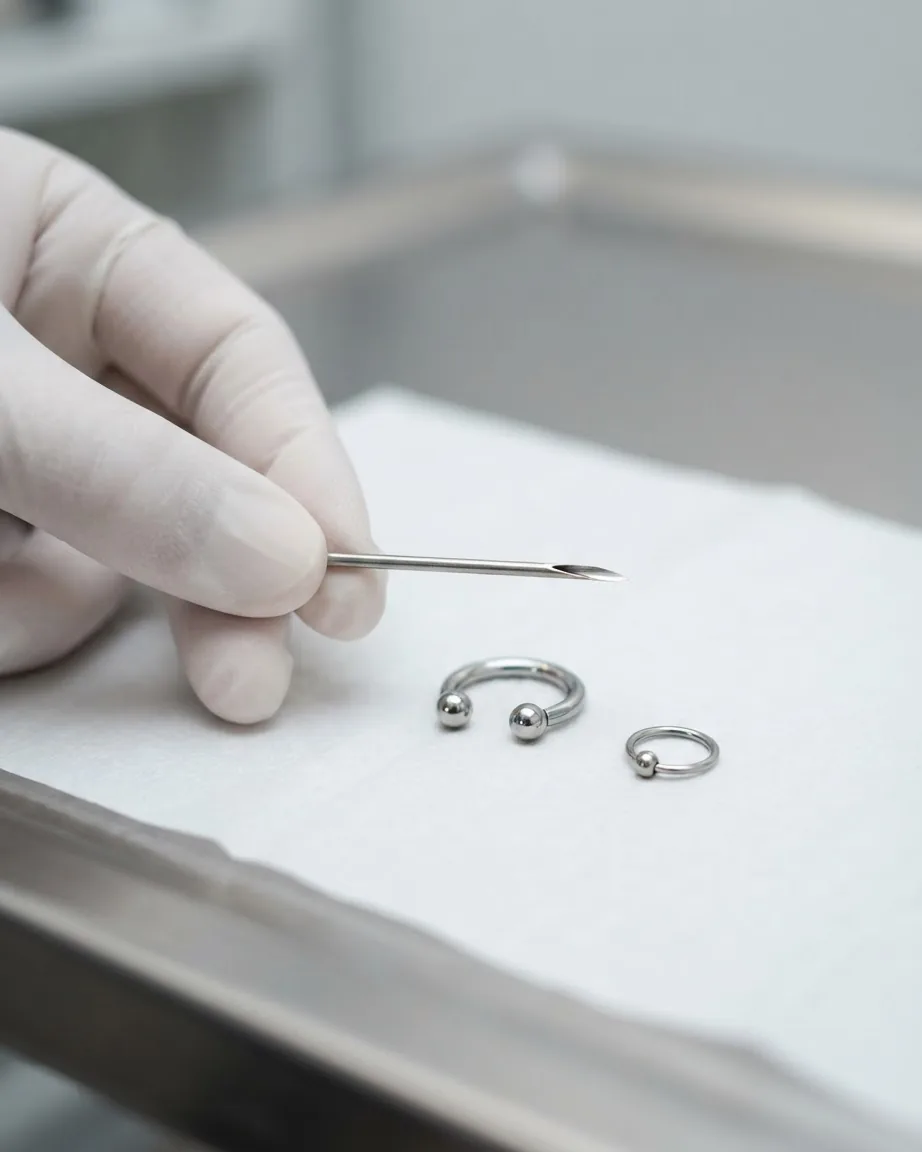
The tool matters as much as the metal. The APP holds a documented position against piercing guns, which crush rather than cut tissue and cannot be fully sterilized. A septum should be done with a single-use needle. A studio that quotes you a rock-bottom price while reaching for a gun is not cheaper in any way that counts.
This framing comes from the Lobecraft Editorial Desk’s practice of pulling material claims from manufacturer specifications and aftercare from published professional standards, rather than from any one shop’s sales copy.
How long a septum piercing takes to heal, and why two timelines both look right
Healing time changes what you pay later, because a longer heal means more paid jewelry-change visits and a longer wait before you can safely swap the starter yourself. Two reputable sources quote numbers that look like they clash. They don’t, quite.
FreshTrends states that the average healing time for a septum piercing is 6 to 8 weeks, provided you were pierced in the proper spot. Healthline frames it differently: a septum does most of its healing in 2 or 3 months but can take 6 to 8 months to heal completely for some people. These are two milestones, not a contradiction. The 6-to-8-week figure describes the early, superficially settled stage; the 2-to-3-month-plus figure describes full maturation of the channel.
There’s a sharp caveat buried in the FreshTrends number. That short window assumes you hit the “sweet spot,” the thin strip of soft tissue between the cartilage and the bottom of the nose, sometimes called the columella. If the needle goes through cartilage instead, FreshTrends states it will take at least 6 months, maybe longer. Placement, in other words, sets the clock. A piercer who finds that soft gap is buying you the faster timeline.
Practical takeaway: don’t book a jewelry change on the assumption you’ll be done at 8 weeks. Plan around the longer milestone, and treat the early comfort as superficial, not final.
Where the septum sits and how much it hurts compared to a lobe
The septum piercing does not go through hard cartilage when it’s placed well. It passes through the columella, the fleshy divider at the front of the septum, below the cartilage plate and above the tip of the nose. That soft strip is the reason a correctly placed septum can heal in the 6-to-8-week range rather than the months a cartilage pass demands.
On pain, the honest answer is that it’s brief and sits above a lobe but below a hard-cartilage piercing, assuming the sweet spot is hit. The sensation most people report is a sharp sting plus a strong urge to sneeze or tear up, because the area is nerve-rich. That watering is reflexive, not a sign of damage. If the piercer drifts into cartilage, both the pain and the healing time rise together. For a placement-by-placement sense of what to expect, our piercing pain chart maps the full scale.
None of this is medical advice. If swelling, heat, spreading redness, or discharge that looks like pus appears, or if pain climbs instead of fading, that is a reason to contact your piercer or a clinician rather than wait it out.
Nostril piercings: which side, which jewelry, and the healing window
Because septum shoppers often weigh a nostril at the same time, it’s worth putting the two side by side. A nostril piercing sits on the fleshy wall of one nostril, through tissue that is softer than ear cartilage but still slower to settle than a lobe.
Side is a matter of preference, not function; there’s no healing advantage to left over right, so pick the side that suits your face and the glasses or hoops you already wear. For starter jewelry, a nostril screw, an L-shaped post, or a small flat-back labret are the common choices, with a captive or seamless ring for those who want a hoop from day one. A ring moves more and can lengthen healing, which is why many piercers start a nostril with a stud.
The healing window for a nostril is longer than people expect, often several months of real maturation even when the surface looks calm early. As with the septum, resist the urge to change jewelry on the early milestone.
The sweet spot, pain, and healing for the septum specifically
The term “sweet spot” is not decorative. It names the narrow band of soft tissue the needle should pass through, and finding it is the single piece of skill that separates a quick heal from a months-long one. The columella itself is the cartilage wall you can feel; the sweet spot is the thin membrane just in front of and below it, where there’s no cartilage to fight through.
Hit it, and FreshTrends logs the heal at 6 to 8 weeks for the early stage, with Healthline’s fuller 2-to-3-month maturation on top. Miss it and go through cartilage, and the floor jumps to at least 6 months. Pain tracks the same line: the sweet-spot pass is a quick, sharp pinch, while a cartilage pass is both sharper and slower to recover.
This is why the piercer’s assessment matters more than the price. A studio that marks you, checks the anatomy, and adjusts for a crooked or thick septum is doing the work that earns the faster timeline. If your anatomy doesn’t offer a clean sweet spot, a good piercer will tell you, and that conversation is worth more than a $10 discount.
Nose gauges and sizing: the standard gauge and how to get a fit
Gauge is the thickness of the jewelry bar, and septums are typically pierced thicker than lobes. The common starting gauges for a septum fall at 16g or 14g, with 16g being a frequent default; a septum stretches more readily later than many placements, but the starter gauge is a piercer’s call based on your anatomy, not a number to request blind.
For sizing, two measurements decide fit: the gauge (bar thickness) and the diameter or length (how far the jewelry spans). A septum clicker or ring needs a diameter that clears the nostrils without pinching, while a retainer needs enough length to flip up out of sight. The reliable way to get both right is to have your piercer measure at the appointment rather than guess from a size chart, because swelling in the first stretch of healing changes what fits comfortably. If you plan to hide the piece for work, our septum retainer guide covers the discreet option.
- Gauge: bar thickness, commonly 16g or 14g for a septum starter.
- Diameter/length: the span of the piece, measured to clear the nostrils and allow for early swelling.
- How to get it right: have the piercer measure in person; don’t buy final jewelry before healing.
Aftercare basics, and the signs that mean see a professional
Aftercare for a septum is deliberately plain. The published professional standard is a sterile saline rinse once or twice a day, gentle handling, and leaving the starter jewelry in place for the full healing window rather than spinning or changing it. Nothing harsh belongs near a fresh piercing; alcohol, hydrogen peroxide, and strong soaps slow healing rather than help it. This is general guidance compiled from professional aftercare standards, not a treatment plan for your specific nose.
The reason to leave jewelry alone ties straight back to cost and risk. Among people who get a piercing other than the earlobe, the American Academy of Pediatrics states that about 1 in 3 end up having a complication. That figure is the strongest argument for paying for the professional jewelry change (the $10 to $20 fee) rather than forcing a swap early at home.
Contact your piercer or a clinician if you see spreading redness or heat, swelling that worsens after the first days, yellow or green discharge, or pain that intensifies rather than settling. A written guide can’t diagnose anything; a professional looking at the actual piercing can.
Under-18 pricing and the consent rules that govern access
Price and access both shift for minors, and the shift is driven by law as much as by the shop. The American Academy of Pediatrics states that at least 38 states have laws prohibiting minors from getting piercings without parental permission. That consent requirement is the baseline most reputable studios enforce regardless of state, often alongside age floors of their own.
On the money side, the surcharge is real but local. Fatty’s Tattoos & Piercings prices a septum piercing for a minor at $80, available for ages 13 and up and only at its Silver Spring location, against the $60 adult service fee. Read that carefully: the $80 is one studio’s conditioned figure, tied to a specific location and a 13-year minimum, not a national rate. A parent planning a budget should call the exact studio, confirm the age floor and the documents required for consent, and expect the minor price to sit above the adult one.
How to lower the cost without cutting a corner that matters
There is one legitimate lever that saves money without touching safety: stacking piercings in a single appointment. Infinite Body Piercing discounts each service fee by $10 when more than one piercing is done in the same sitting. On a $60 septum service, that is a real reduction, and it rewards anyone already planning a nostril or ear piece on the same day.
The corners worth avoiding are the ones that trade safety for a lower sticker. A quote is only worth comparing when both studios use single-use needles and implant-grade jewelry; otherwise the cheaper price is buying a worse outcome. Skipping the professional jewelry change to avoid a $10 to $20 fee during healing is another false economy, given the roughly 1-in-3 complication rate for non-earlobe piercings. If you’re already weighing more than one hole, our multiple ear piercings guide fits the same planning conversation.
The honest summary of the levers: book multiple piercings together for the per-service discount, confirm whether jewelry is included before you agree to a number, and spend on the starter metal and the needle rather than hunting the lowest headline price.
Your real Infinite Body total, line by line (with tip and later changes)
The published $80 to $110 starting range at Infinite Body is the number before tax and before the tip, so it isn’t what leaves your wallet. The studio describes 20% as standard, which on the $60 service fee works out to $12. Fold that in and the honest out-the-door figure shifts upward beyond what you’d budget from the menu alone.
- Tip (20% of the $60 service fee): $60 × 0.20 = $12.
- Low-end all-in, with tip: $80 + $12 = $92.
- High-end all-in, with tip: $110 + $12 = $122.
The spending also doesn’t stop on piercing day. A septum can take 2 to 3 months to settle and up to 6 to 8 months to fully mature, and swapping the starter piece early invites problems, so most people wait and pay a pro to change it. At Infinite Body’s $10 per change, two piercer-performed swaps during healing add $20 ($10 × 2) on top of everything above.
One lever moves the price the other way: if you book the septum alongside another piercing in the same sitting, each service fee drops $10, taking the $60 septum labor down to $50 ($60 − $10). That’s the only built-in discount in the menu, and it roughly cancels out the tip.
FAQ
Does a septum piercing hurt more than getting a lobe done?
Yes, but not by much when it’s placed in the thin membrane rather than cartilage. Most people feel a quick, sharp pinch and an involuntary urge to sneeze or water at the eyes, since the area carries plenty of nerves. That reflex watering is normal. A cartilage misplacement raises both the sting and the recovery length.
Can I change my own septum jewelry to save the studio fee?
Only safely after the channel has matured, which can stretch toward the 6-to-8-month mark rather than the early 8-week milestone. Swapping too soon risks irritation and extends healing. If you’re unsure whether it’s ready, paying a studio’s $10 to $20 change fee buys a trained check that a mirror at home cannot give you.
Will a studio pierce a septum on someone under 18?
It depends on jurisdiction and the shop. At least 38 states require parental permission for minors, and age floors vary: Fatty’s, for example, sets 13 as its minimum and offers minor septums only in Silver Spring. Expect a higher fee, a consent form, and photo ID for the accompanying parent. Call the exact location first.
Why did one shop quote me $40 and another $90 for the same piercing?
Almost always because one figure excludes the metal and the other folds it in. FreshTrends notes a quote may or may not cover jewelry. A bare service fee at Infinite Body is $60, while starter jewelry adds $20 to $50 on top. Ask whether the number you’re given is labor only before you compare two studios.
Is cheaper jewelry ever fine for a fresh septum?
No. For an initial piercing the APP accepts implant-certified titanium or 14k-and-up biocompatible gold; it rules out gold-plated, gold-filled, and vermeil. A very low jewelry price often signals plated metal, which is the wrong choice for an unhealed channel and can drive the 1-in-3 complication odds higher rather than saving you money.