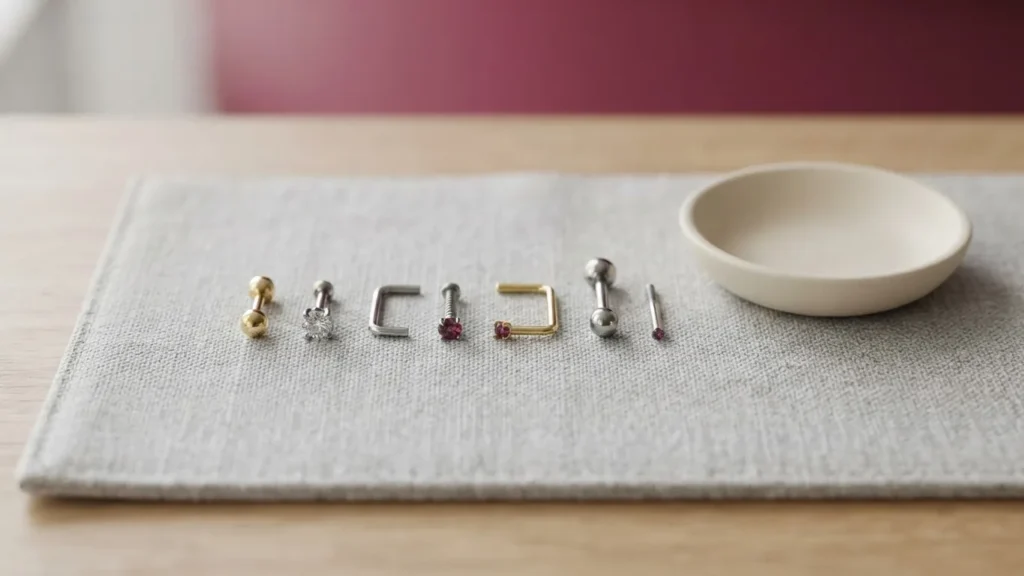
The number works backward. A smaller gauge number means a thicker post, so an 18G nose stud is physically thicker than a 20G one, not thinner. That single reversal is the thing most buyers get wrong at checkout, and it shapes every other decision about 18g nose piercing jewelry: which hole it fits, whether it will warp as a hoop, and whether forcing it into an existing channel will hurt. BodyCandy puts the rule plainly, noting that “the smaller the number, the thicker the jewelry. So, an 18G stud is actually thicker than a 20G one.” The same relationship holds in the other direction too, as Pierced Addiction frames it: a 20G piece is thinner than an 18G one despite the larger number.
This desk compiles the gauge-to-millimeter values, material standards, and healing windows below from retailer specification pages and from the Association of Professional Piercers, flagging where those sources disagree rather than averaging them away.
The Answer: What 18g Nose Jewelry Is, in Plain Numbers
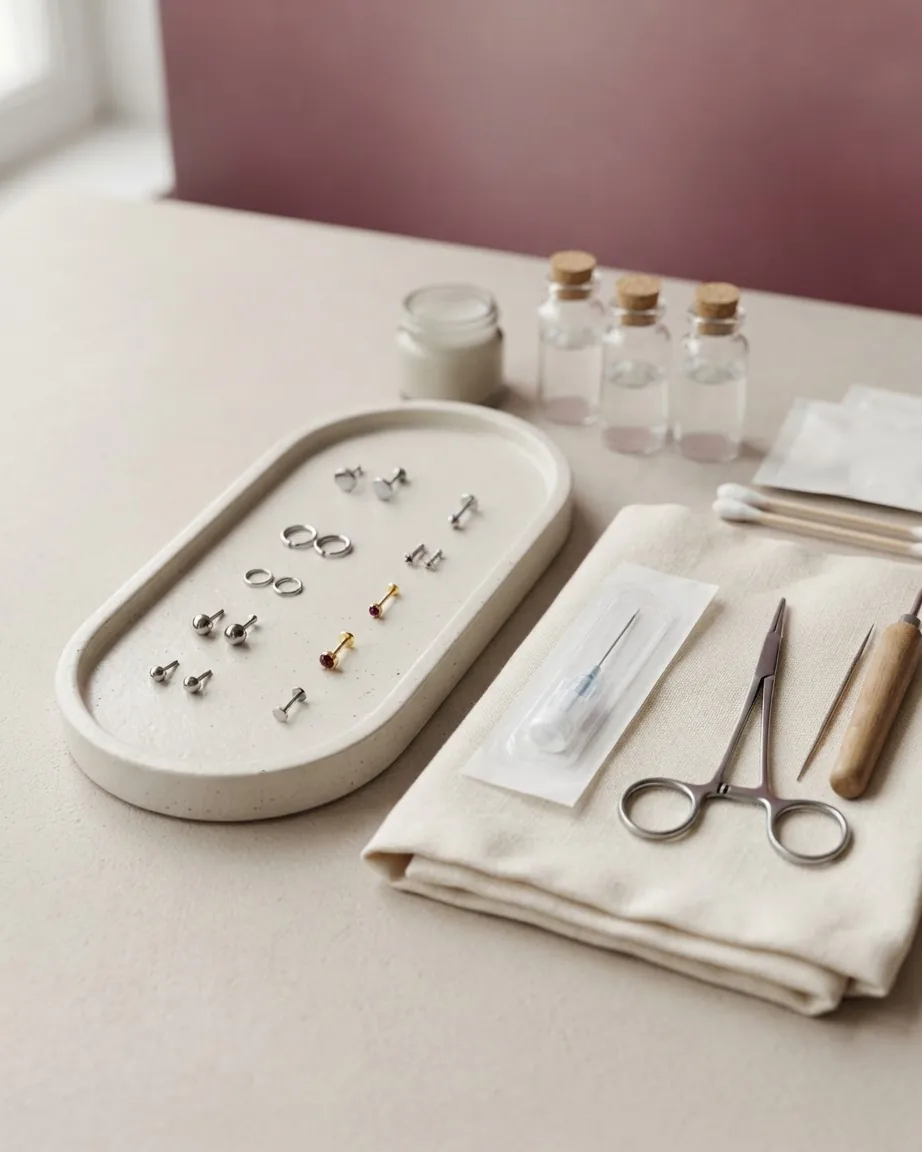
18g nose piercing jewelry is nostril or hoop jewelry with a post roughly 1.0mm thick (BodyCandy lists it as 1.02mm; both describe the same gauge rounded differently). It is thicker and sturdier than 20G (0.8mm), and both 18G and 20G are the standard nostril sizes. The difference in hole size between them is about 0.21mm, so an 18G post needs an 18G or larger channel; it cannot be pushed into a healed 20G hole without trauma. Standard nostril stud length runs around 1/4 to 5/16 inch. Expect roughly 2 to 3 months of healing before changing jewelry.
Why 18G Is Thicker Than 20G, and How to Read the Scale
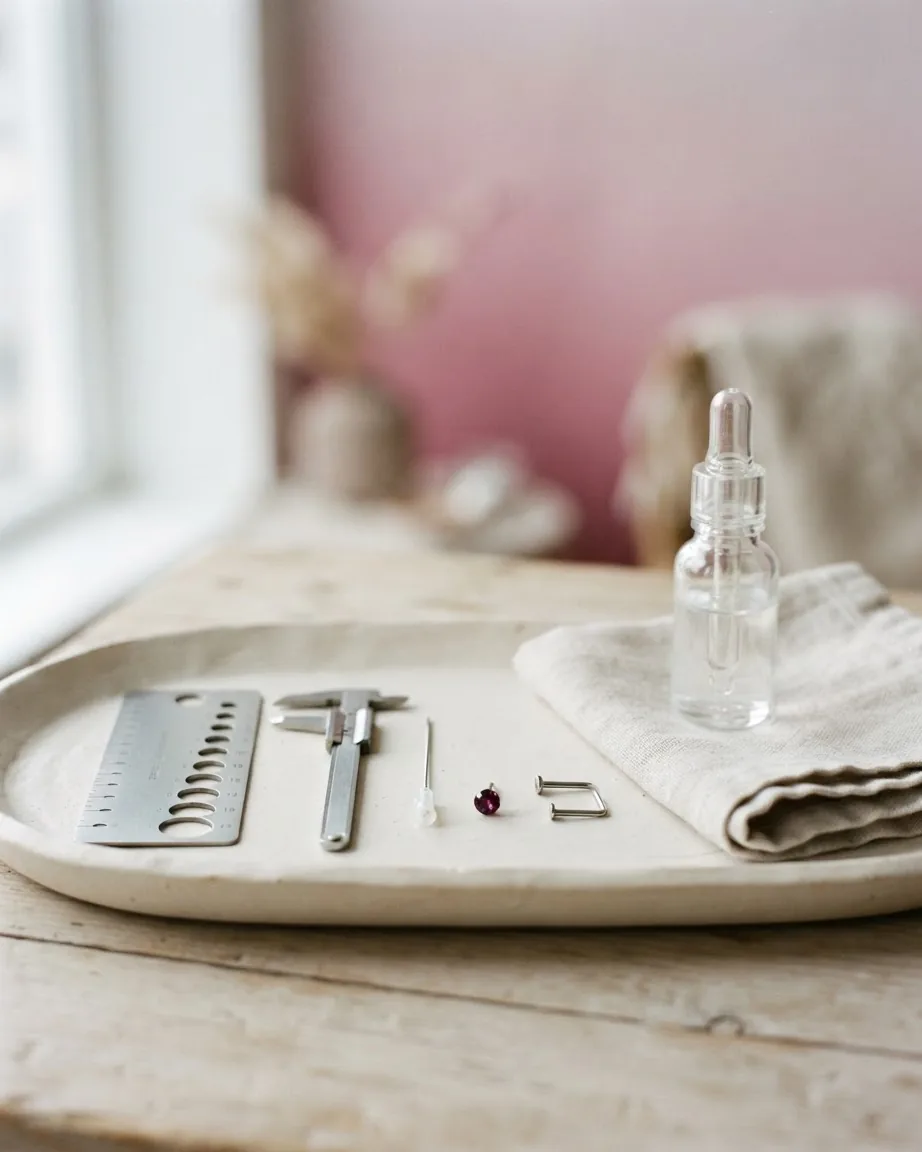
The gauge scale counts down as jewelry gets thicker. A caliper chart lines up the common nose sizes directly: 0.8mm reads as 20G, 1.0mm as 18G, 1.2mm as 16G, and 1.6mm as 14G. So moving from 20G to 18G adds thickness; moving from 18G to 16G adds more. If you own a digital caliper, you can confirm a piece’s gauge by measuring the post, not the decorative end.
Put plainly, higher numbers mean thinner jewelry: a 20G post is thinner than an 18G post, despite the larger number. For a nostril, that leaves two realistic choices, framed as siblings: 20G the slightly thinner, more delicate option and 18G the slightly thicker, sturdier one. The other retailer pages land on the same pair as the defaults.
Septum jewelry sits outside this nostril range. A septum piercing uses 16G or 14G instead, so the 18G defaults above apply to the fleshy nostril, not the cartilage wall between your nostrils.
18g in Millimeters: 1.0mm or 1.02mm, and Why Both Are Right

Two numbers circulate for the same gauge, and they are not a real disagreement. One value lists 18g as 1.0mm, repeated as “1.0mm = 18G” on a caliper chart. BodyCandy writes “18G (1.02mm): Another industry standard. It’s a bit thicker and more durable.” These are the same gauge rounded to different precision, 1.0mm against 1.02mm, not two different thicknesses.
What this means for a buyer: a listing that says 1.0mm and a listing that says 1.02mm are describing jewelry that fits the same hole. Treat them as interchangeable at the millimeter level. The number to actually hold onto is the gauge label, 18G, because that is what a piercer and a sizing chart both work from. The decimal is a translation for people shopping by caliper or by metric spec sheets.
18g vs 20g for a Fresh Nostril: What a Piercer Reaches For
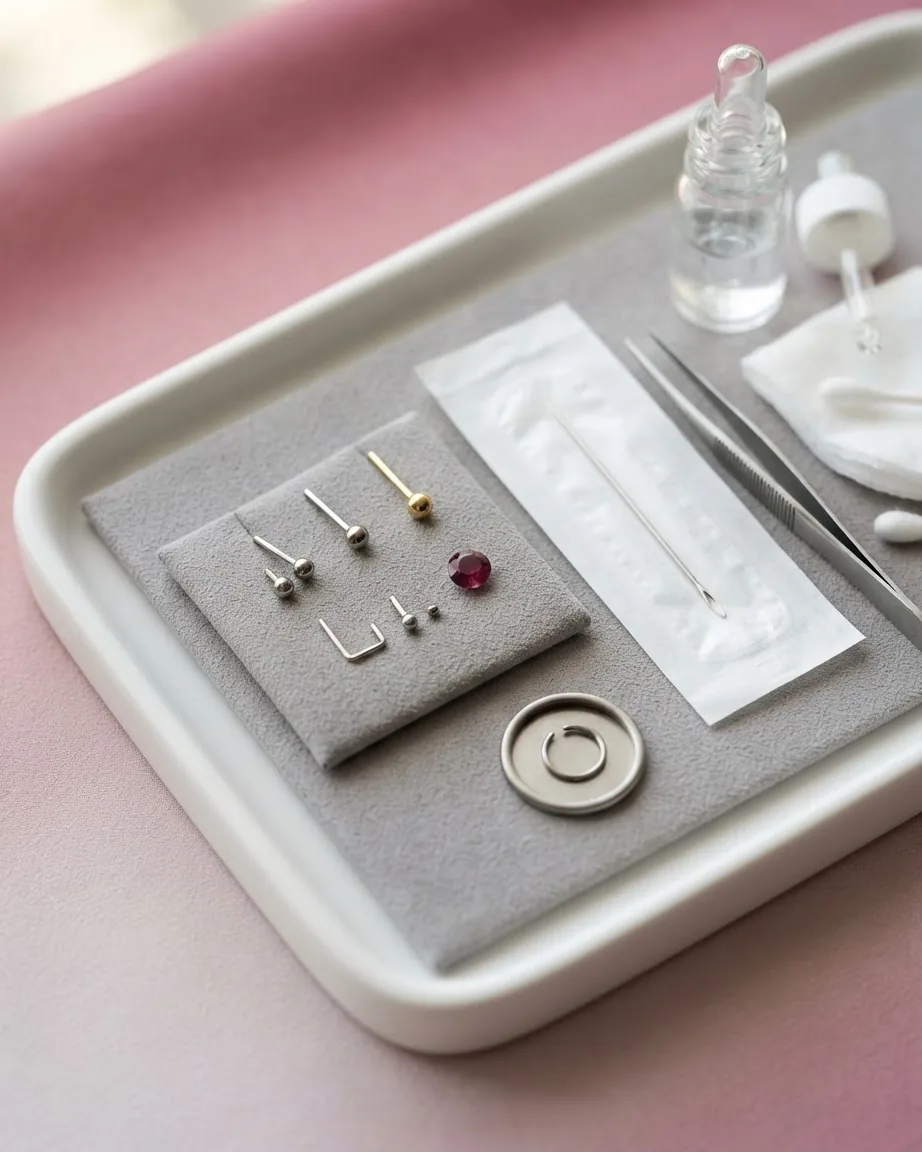
Both sizes are standard, so the choice is not between right and wrong. PlugYourHoles states that 18G and 20G are the most popular for nose piercings, and that some professional piercers might go up to a 16G for initial piercings to encourage better healing. The go-to sizes for most nostrils are 20G and 18G.
Where the “most common” starting size is concerned, the sources point in different directions, and this guide will not pretend otherwise. Pierced Addiction reports 20G as the most common starting size for nostril piercings in the US. BodyCandy’s page, by contrast, carries a claim that about 60% of piercers lean toward 18G, alongside figures that 20G reduces the risk of migration by up to 30%. Those BodyCandy percentages appear without a cited study, so treat them as marketing rather than measured data. The reliable takeaway is narrower: some piercers prefer 18G as an initial gauge because the slightly larger channel can reduce the risk of the piercing tightening too aggressively during healing. That is the real, situation-based reason to pick 18G over 20G for a first nostril, and it is a conversation to have with the person doing the piercing.
If durability matters to you more than a delicate look, 18G is the sturdier post. If you want the most discreet seat for a tiny stud, 20G is the thinner one. Neither is a mistake on a healthy nostril.
Putting 18g Jewelry Into a 20g Piercing: The 0.21mm Trap
This is the error that sends people to a piercer with a swollen nose. The channel-size difference between the two gauges looks negligible on paper. The gap is approximately 0.21mm: an 18-gauge piercing hole is about 0.21mm larger than a 20-gauge one, which makes it easier to insert jewelry with thicker posts. Read quickly, that sounds like a rounding error you could ignore.
It is not. A 20G channel is sized for a 0.8mm post. An 18G post is about 1.0mm. Stepping a piercing up in gauge “requires gradual stretching under professional guidance and cannot be accomplished by forcing an 18G piece through a 20G channel.” Try it anyway, and the result follows: attempting to force it through causes tissue trauma that presents as immediate pain, swelling, and often an irritation bump in the days that follow.
So the honest answer depends on the direction you are going. Going down a size is fine; a 20G piece drops into an 18G hole loosely. Going up is a stretch, not a swap. The safe condition is clear: if you started with a 20G, you can often safely size up to an 18G once you’re fully healed, done deliberately rather than by shoving a wider post into an unstretched channel. On an unhealed or unstretched 20G nostril, 18g nose piercing jewelry does not belong yet.
Material Standards for 18g Nose Jewelry, Assembled Into One Checklist
Gauge decides fit; material decides whether the piercing heals or fights you. Retailer pages rarely gather the material rules in one place, so here they are from the Association of Professional Piercers standard for initial-piercing jewelry.
- Titanium: the APP standard calls for implant-certified titanium (Ti6Al4V ELI) that is ASTM F-136 compliant, ASTM F1295 or ISO 5832-3 compliant, or commercially pure titanium that is ASTM F-67 compliant.
- Steel: steel that is ASTM F-138 compliant or ISO 5832-1 compliant, per the same APP standard.
- Gold: the APP notes that gold higher than 18k is too soft for body jewelry because it can easily be scratched or nicked, so 18k and below is the ceiling, not a minimum.
- Threading: internally threaded jewelry is part of the APP standard for initial piercings, meaning the part that passes through your skin is smooth, with the threading hidden inside rather than running against the healing channel.
There is a gauge-and-material interaction worth naming here. The same standard warns that the body may treat jewelry that is too thin in gauge like a splinter, resulting in migration or rejection. That is part of why some piercers avoid going thinner than the standard nostril gauges for a fresh piercing, and it is a second argument, alongside healing, for not treating “thinner” as automatically gentler.
Sizing Beyond the Gauge: Post Length and Hoop Diameter
A correctly gauged piece can still irritate a nostril if its length or diameter is wrong, and this is where people get stuck when the gauge checks out but a bump keeps returning. The two measurements are separate: gauge is the thickness of the post that goes through the piercing, while diameter is the size of the circular hoop measured from one inner edge to the other. They are independent specs. An 18G hoop and a 20G hoop can share a diameter; two 18G hoops can have very different diameters.
For studs, length is the variable to watch. FreshTrends gives the working range: the standard nose ring gauge is 18G or 20G, and the stud itself will probably be around 1/4 to 5/16 inch in length. Too long is not a harmless cushion. Excess post length creates movement with every contact, which is the leading cause of mid-healing nostril irritation bumps. If your gauge is right and a bump persists, post length, or on a hoop the inner diameter, is the next thing to check before you blame the metal.
FreshTrends keeps the standard stud length and gauge pairing on record, which is the pairing most fresh nostril work follows. For the wider sizing picture across nose placements, see our standard nose piercing gauge guide, and the broader nose septum section.
Why 18G Wins for Hoops Specifically
If you are buying a nostril hoop rather than a stud, the gauge choice tilts toward 18G for a mechanical reason, not an aesthetic one. The sturdier 18G is a dream for statement hoops because it has the strength needed to support the ring’s shape without warping. A thinner 20G ring is more prone to losing its circle under daily knocks.
A charted entry backs the same role, listing 18G (1.0mm) as the standard for nostril hoops, high nostril, and some initial nostril piercings. So the pattern across sources is consistent, that 18G is the hoop-oriented gauge while 20G leans toward thin, delicate studs. The downside of going too thin for the job also matters: a post undersized for the pressure on it risks the cheese-cutter effect, where the jewelry can slowly irritate and even migrate through the tissue.
Initial Gauge Versus Healed Gauge: They May Not Match
A detail that confuses people reading their own piercing paperwork: the gauge you were pierced at is not always the gauge you end up wearing. Some professional piercers use a needle that is one gauge larger than the intended healed jewelry size. Under that approach, a nostril intended to settle at 20G might be opened with an 18G needle, so an 18g initial receipt can precede a 20g healed piercing.
Practically, this means two things. First, do not assume the number on your aftercare card is the number you will shop for later. Second, sizing “up” to 18g after healing may not be a stretch at all if the channel was opened larger to begin with, which is why the person who pierced you is the right source for what your specific hole can take. When in doubt, have them confirm the gauge before you buy a wider post.
Healing Time and When It Is Safe to Change 18g Nose Jewelry
Plan for a window, not a date. The healing time for recovering from a standard nostril piercing runs 2 to 3 months. That is the period during which the jewelry a piercer installed should stay put, and the period before any gauge change, stretch, or first jewelry swap should be considered.
Changing jewelry too early, or forcing a wider gauge during this window, reopens the trauma risk described above: pain, swelling, and irritation bumps. The cautious reading of the sources is to leave an initial piece undisturbed through the healing window, change jewelry only once the piercing is settled, and step up in gauge only after full healing and, ideally, with professional guidance for any stretch.
None of this replaces an in-person look. The figures here are general ranges from retailer and standards sources, not a diagnosis of your nose. If a piercing stays painful, hot, visibly swollen, discharges beyond the normal early period, or grows a bump that will not settle, that is a cue to see your piercer or a clinician rather than to troubleshoot the jewelry yourself. Infection and rejection are not something to assess from a spec chart.
The Historical Weight Behind a Small Stud
The jewelry is tiny; the practice is not new. In many cultures nose piercings symbolize beauty, status, or marital significance, and they have been worn for over 4,000 years. That long run is part of why the nostril has a settled set of standard gauges at all: 18G and 20G are not arbitrary retail defaults but the sizes the practice has converged on for a thin, mobile piece of tissue that has to heal around metal.
For the reader deciding today, the useful inheritance is the sizing logic, not the symbolism: a standard gauge pair, a known healing window, and a clear rule that thicker posts go into channels sized for them, never forced. See also our septum retainer guide for the cartilage-side counterpart to nostril sizing.
How Much Thicker 18G Really Is Than 20G (The Math on the Post)
The gauge numbers hide how big the jump actually is. Run the two post thicknesses from the caliper chart against each other – 1.0mm for 18G, 0.8mm for 20G – and the step up is far from a rounding error. An 18G post is 1.25× the diameter of a 20G post, which is a 25% increase in thickness (a flat difference of 0.2mm in post diameter). That is the real reason “just one size up” is misleading: you are asking a channel built for 0.8mm to accept a post a full quarter thicker.
- Ratio: 1.0mm ÷ 0.8mm = 1.25 – the 18G post is 1.25 times as thick as the 20G post.
- Absolute gap: 1.0mm − 0.8mm = 0.2mm of extra post diameter.
Frequently Asked Questions
Is 18g or 16g used for a septum piercing?
Septums run thicker than nostrils. A septum piercing uses 16G or 14G rather than the 18G or 20G typical of a nostril, with charts showing septums typically starting at 16G. If you are shopping for the cartilage wall between your nostrils, skip the 18g nostril defaults and size toward 16G or 14G.
Does an 18G nose ring leave a bigger scar than a 20G?
The sources do not quantify scarring by gauge. What they do document is that the channel difference is only about 0.21mm, and that a larger hole is harder to shrink than to open. Because sizing up is a deliberate stretch rather than a reversible swap, the practical point is to choose your long-term gauge before healing rather than planning to change later.
Can I switch from a stud to a hoop at the same gauge?
Yes, if both are the same gauge and your piercing is healed, since gauge and hoop diameter are separate measurements. Pick a hoop whose inner diameter suits your nostril, and favor 18G for a ring that must hold its shape, since 20G hoops warp more easily under daily pressure than the sturdier 18G.
Why would a piercer start me at a thicker gauge than I plan to wear?
Some use a needle one size larger than the intended healed jewelry, so the channel heals slightly roomier than the final post. It is also a hedge against the body treating a too-thin piece like a splinter, which is linked to migration or rejection. Confirm your actual healed gauge with the piercer before buying replacements. Healing times and aftercare notes here are general information compiled from published sources, not medical advice. Anything that looks infected or rejected warrants a visit to your piercer or a clinician.