Drafted with AI language models. How this page was made
Deciding what gauge to pierce nose tissue at depends on placement, and the sources split on the single most common nostril size. A standard nostril is pierced at either 18G (1.0mm) or 20G (0.8mm); a septum starts thicker at 16G (1.2mm). The 18G-vs-20G question is genuinely unsettled across professional references, so the honest answer is a range, not one number. Advanced placements climb to 14G (1.6mm).
Quick answer: A standard nostril is pierced at 18G or 20G (roughly 1.0mm or 0.8mm). Some piercers go up to 16G (1.2mm) for a sturdier initial channel. A septum is typically 16G. Remember the scale runs backwards: a higher number is thinner, so a 20G post is thinner than an 18G post. Your healed jewelry gauge should match your pierced gauge; forcing a thicker post into a thinner channel causes trauma. For your exact size, let your piercer measure your anatomy.
What Gauge to Pierce Nose: The Nostril and Septum Numbers
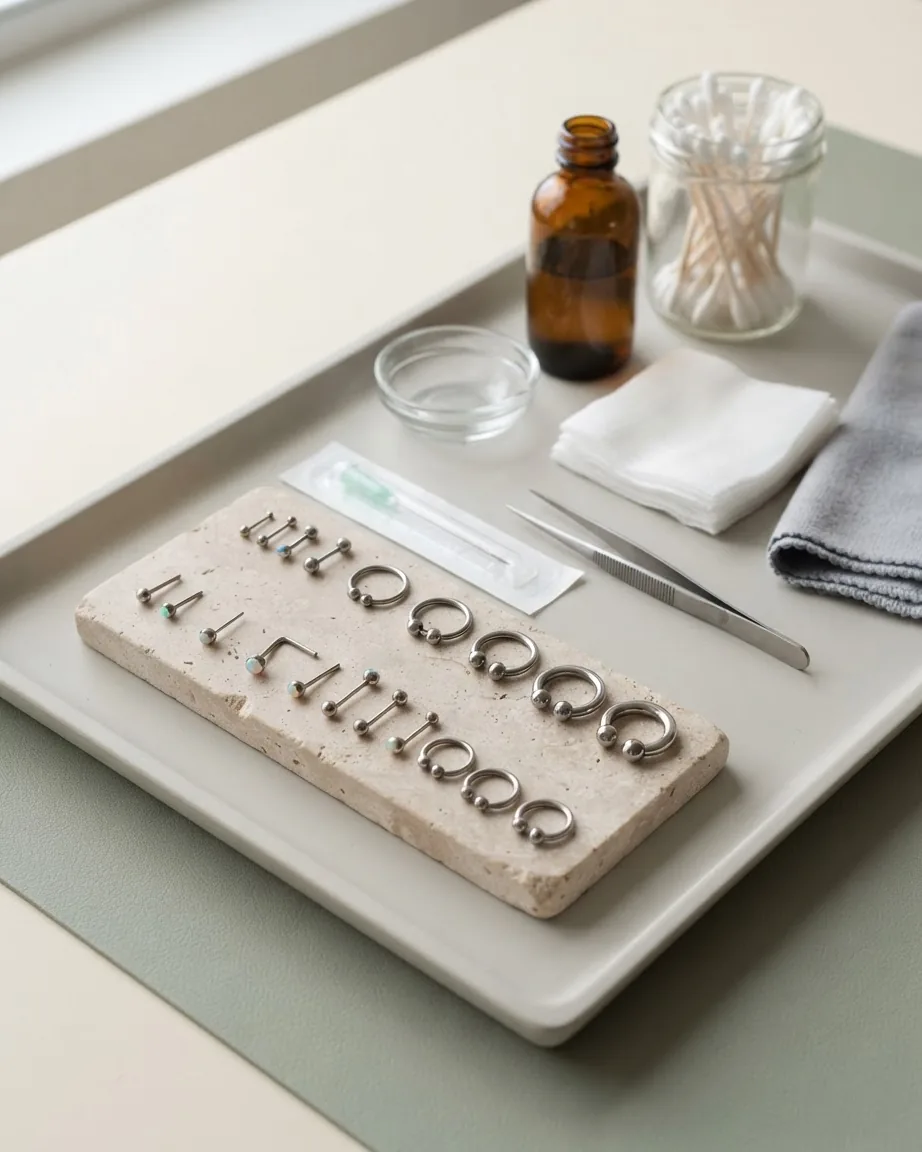
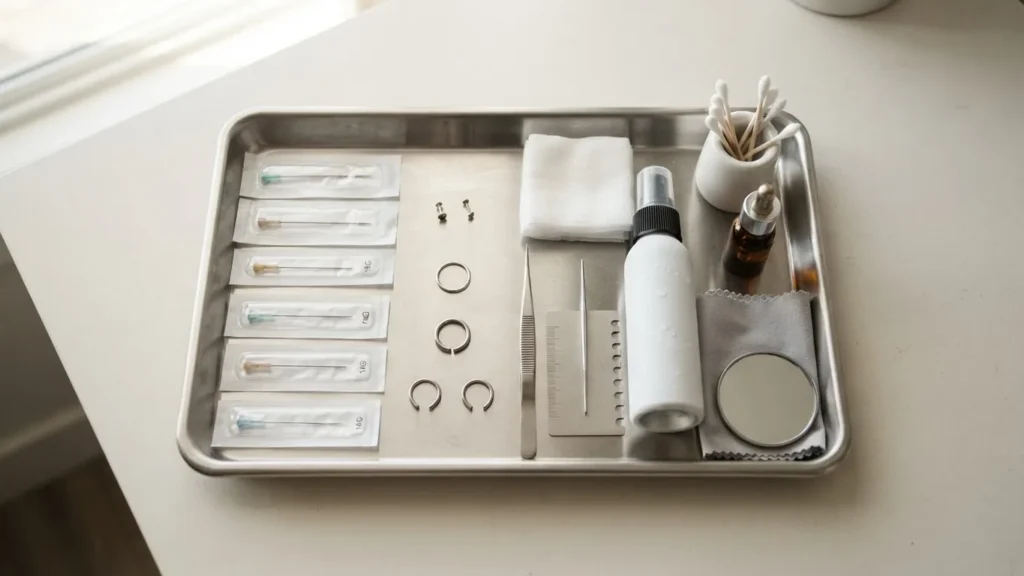
For a nostril, references cluster around 18G and 20G but do not agree on which leads. Pierced Addiction names 20G as “the most common starting size for nostril piercings in the US”, a view RingsSizeChart echoes, calling 20G (0.8mm) the standard nostril gauge. Vital Piercing takes the other side, stating “Most US nostril piercings are done at 18G. If you were pierced in a reputable studio in the US, 18G is the safe default”, a claim you can read in full at Vital Piercing. Mantra Tattoo likewise calls 18G the typical needle, with 20G or 16G used depending on anatomy.
A useful way to read the split: the initial pierce and the healed jewelry are not always the same size. A piercer planning 20G healed jewelry may use an 18G needle, because the slightly larger channel leaves room for swelling. So a 20G “standard” sold for daintier wear and an 18G “default” for the fresh pierce can both be right.
The septum runs thicker because it passes through the soft columella, not hard cartilage, which supports a sturdier bar. Pierced Addiction puts most septums at 16G (1.2mm); Plug Your Holes agrees 16G is “the most popular” while noting a 14G to 18G range.
This table is a multi-source synthesis: the documented gauge per placement with its millimeter equivalent, drawn only from the figures the sources state. No single page lists them side by side this way.
| Placement | Gauge | Millimeters | Note from source |
|---|---|---|---|
| Nostril (standard) | 18G / 20G | 1.0mm / 0.8mm | Most common nose sizes |
| Septum | 16G | 1.2mm | Through soft columella |
| High nostril | 18G, 20G | 0.8-1.0mm | 6mm post; hoops not compatible |
| Bridge | 16G | 1.2mm | 20-24mm barbell for swelling |
| Rhino (vertical tip) | 14G | 1.6mm | Curved 10-12mm |
| Nasallang | 14G | 1.6mm | Straight 34-40mm; both nostrils plus septum |
The scale confuses people at the jewelry counter. Higher number means thinner: a 20G post is thinner than an 18G post despite the larger figure. A digital caliper settles it (0.8mm = 20G, 1.0mm = 18G, 1.2mm = 16G, 1.6mm = 14G). Diameter is separate from gauge: a 22G and a 14G hoop can both be 8mm across and look alike from the front, yet sit very differently in the piercing. The most common hoop diameter is 8mm.
Match the gauge, don’t force it. Wearing 18G jewelry in a 20G piercing requires stretching the channel, and forcing it causes tissue trauma: the thinner healed channel has shrunk around the thinner post. A 22G (0.6mm) is a specialty size for some Indian and Middle Eastern markets and is rarely available in the US, so it is not a safe assumption for a US initial pierce. Nostrils should be pierced with a hollow needle; the APP’s standards on initial jewelry are a useful reference for why. See also our nose septum section for placement walkthroughs.
Gauge Alone Won’t Heal It: Material, Grade, and Aftercare

A correct gauge is necessary but not sufficient: what the post is made of matters as much. The Association of Professional Piercers notes initial jewelry “Must be of an appropriate gauge (thickness)” and warns the body may treat too-thin jewelry like a splinter, risking migration or rejection, per the APP; gold is acceptable only if 14k or higher, nickel- and cadmium-free. Wyre Council advises “316” surgical steel or 18- or 22-carat gold and, in a point of disagreement, says 9- or 14-carat gold should not be used, which you can check at Wyre Council. On 14k gold the two authorities diverge; that is not ours to resolve.
Allergen warning
Why grade is not pedantry: a 2025 meta-analysis found nickel allergy significantly associated with piercings, odds ratio 5.9 (95% CI 3.6-9.4, n = 5333), and reported that 24.7% of European earrings intended for piercing exceeded EN1811 nickel limits, data archived at PubMed Central.
Healing times vary by source. Torbay Council states a nose piercing heals in up to 6 months; BodyArtForms puts nostrils at 6 to 9 months and warns one may look fine early yet need closer to 9-12 months to fully heal. For rinsing, the APP specifies saline listing 0.9% sodium chloride as the only ingredient. Authorities also disagree on moving jewelry: the APP says rotation is unnecessary and may irritate, while the NHS advises you “gently turn the jewellery while cleaning the piercing” at the NHS. Follow your own piercer’s protocol, and if the site looks infected or the jewelry feels embedded, see a clinician.
How Much Thicker Is Each Gauge Jump, in Real Terms
The article says forcing a thicker post into a thinner channel causes trauma, but one gauge step sounds trivial until you convert it to millimeters. Taking the daintiest common standard nostril size, 20G (0.8mm), as the baseline channel, here is how much each other post differs from it. The numbers come straight from the mm values in the gauge chart above.
- 18G (1.0mm) is 25% thicker than a 20G channel: (1.0 − 0.8) ÷ 0.8 = 25%. This is the exact 18G-vs-20G mismatch the piece warns about: a quarter more diameter the thinner channel has to stretch around.
- 16G (1.2mm) is 50% thicker than a 20G channel: (1.2 − 0.8) ÷ 0.8 = 50%. Half again as thick, which is why a 16G septum bar is not interchangeable with a 20G nostril stud.
- 14G (1.6mm) is 100% thicker: double: (1.6 − 0.8) ÷ 0.8 = 100%. The advanced-placement gauge is twice the diameter of a standard 20G nostril post.
- 22G (0.6mm) is 25% thinner than a 20G channel: (0.8 − 0.6) ÷ 0.8 = 25%. That thinness is why the body can treat a 22G post like a splinter in a channel sized for 20G.
Frequently Asked Questions on Nose Piercing Gauges
Is 16g or 18g better for nose piercing?
Neither is universally “better”: it depends on placement. For a standard nostril, 18G (1.0mm) is a common initial choice, though some piercers go to 16G for sturdier early healing. A septum, by contrast, typically starts at 16G because it passes through the soft columella. Let your piercer match the number to your anatomy.
Is a nose piercing 18 or 20 gauge?
Both appear. FreshTrends calls 18G or 20G the standard nose ring gauge, and sources part ways on which is most common for the US initial pierce: 20G by some, 18G by others. One reason: a piercer may use an 18G needle for planned 20G healed wear, leaving swelling room.
Is 22 gauge too small for the nose?
For a US initial piercing, effectively yes. At 0.6mm, 22G is a very thin specialty size seen in some Indian and Middle Eastern markets and rarely stocked in the US. Too-thin jewelry can be treated by the body like a splinter, inviting migration. US nostrils sit at 18G or 20G instead.
Is 18 gauge too thick for the nose?
No, 18G is listed as standard for nostril hoops, high nostril, and some initial nostril piercings. The real risk is mismatch: wearing 18G in a 20G channel forces a stretch and causes trauma. Thickness that suits a fresh pierce can be wrong for a healed hole sized to 20G.
Changing Your Nose Jewelry at the Right Gauge
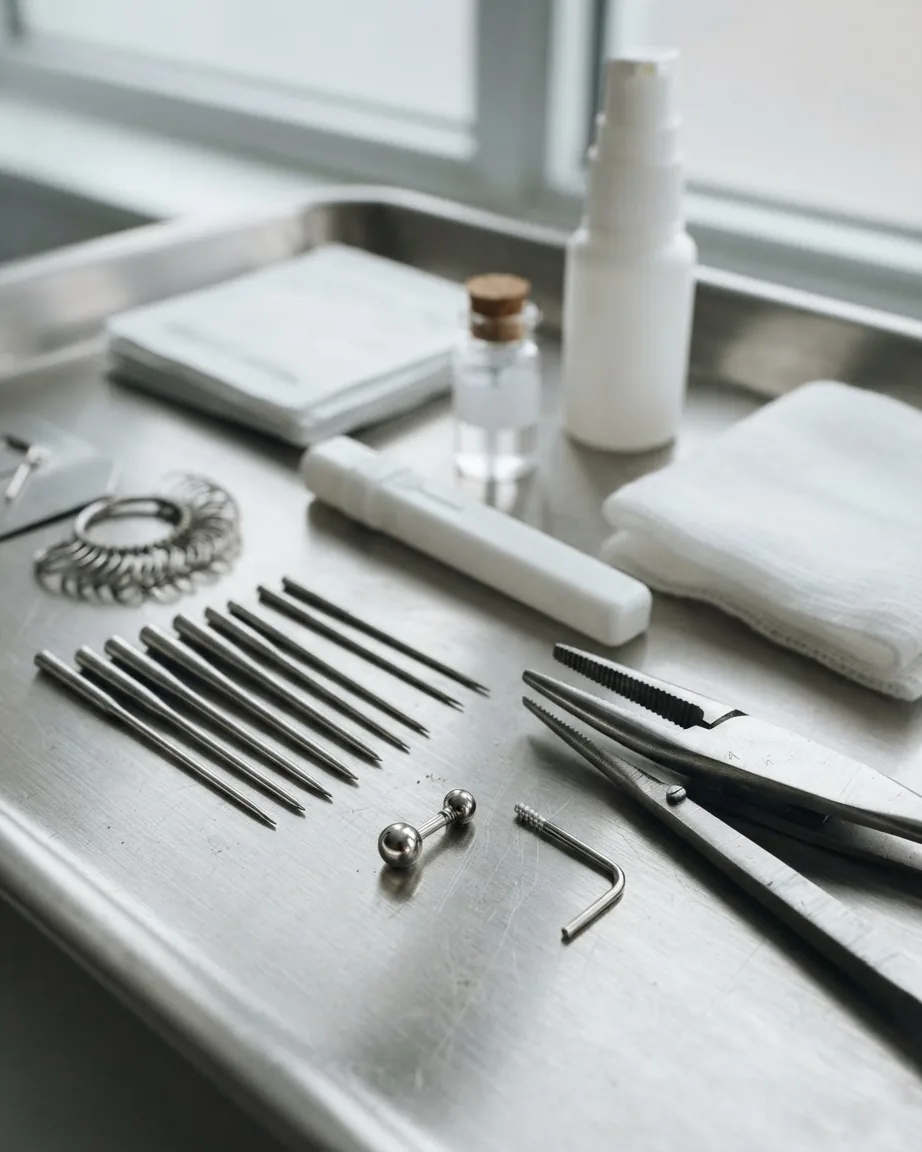
Swapping jewelry safely comes down to matching the gauge your channel actually is, not the number you prefer. Measure before you buy: a digital caliper reading of 0.8mm means 20G, 1.0mm means 18G. If a nostril was pierced at 20G, a 20G replacement slides in; an 18G one asks the thinner channel to stretch. Septum wearers should note nostril jewelry is typically 18g: 20g and built for different anatomy, so a nostril stud is usually not interchangeable with a 16G septum bar. For diameter, 8mm and 12mm hoops read very differently on the same face even at one gauge. Changes are safest after full healing, which BodyArtForms places at 6 to 9 months for nostrils, and if a swap meets resistance, pain, or discharge, stop and have your piercer or a clinician look.