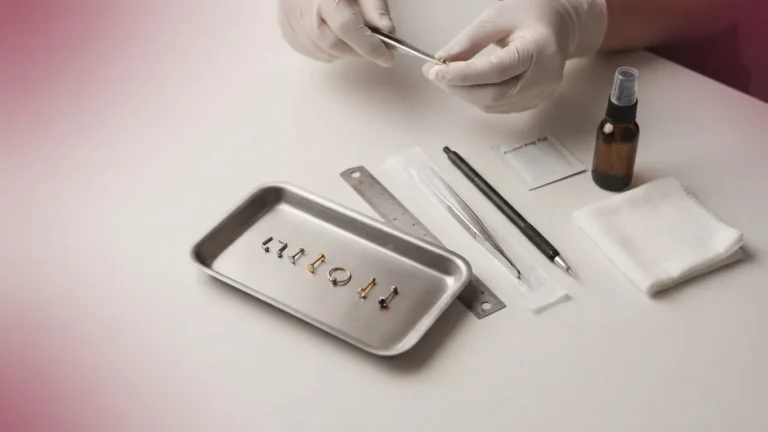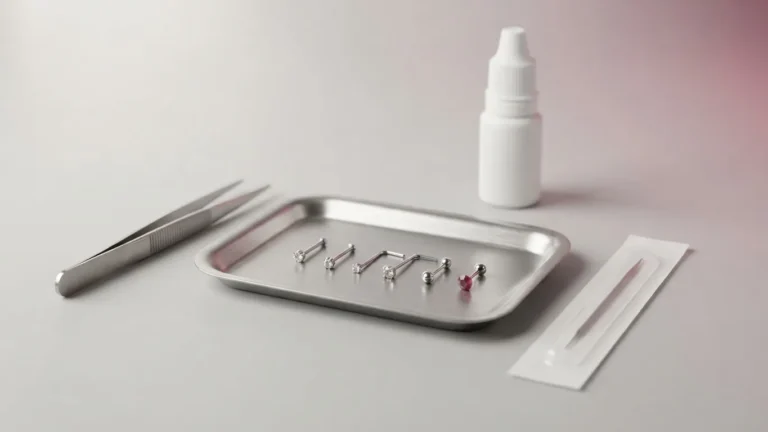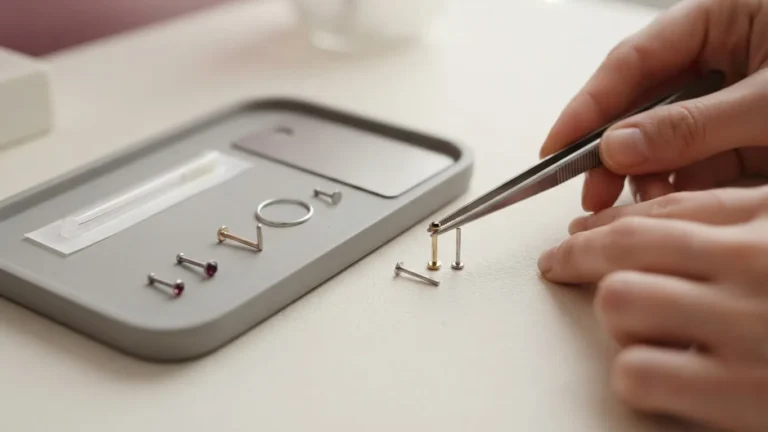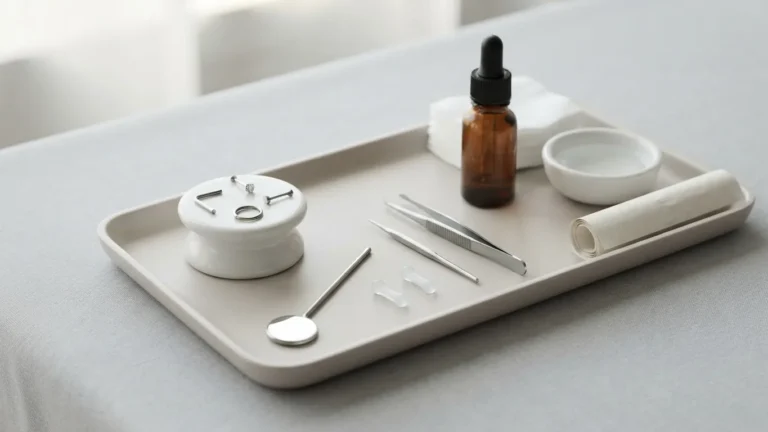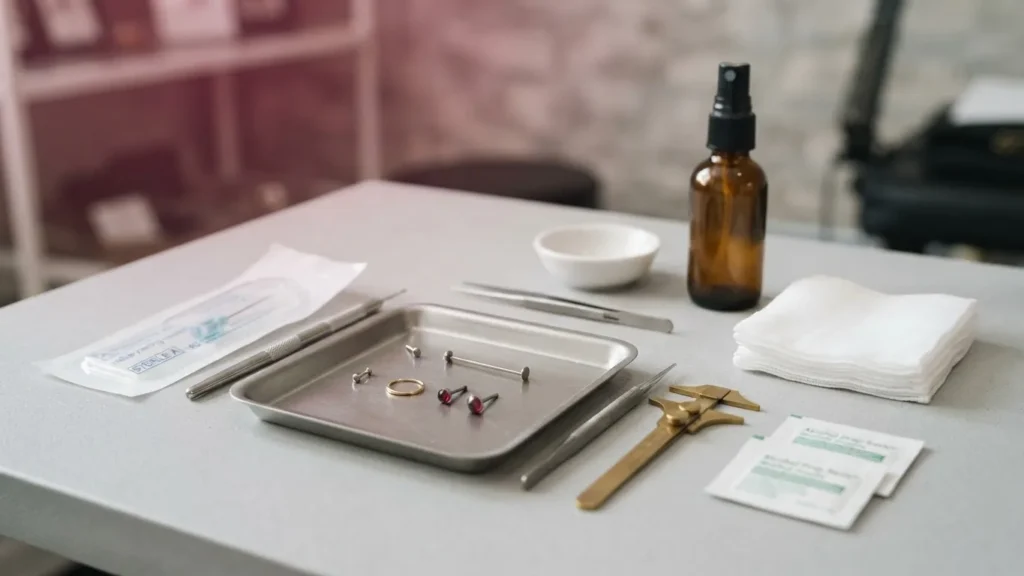
The spot a piercer actually aims for on a nostril is rarely the crease where the nose wing folds. That fold moves every time you flare or scrunch, it collects oil and grit, and jewelry seated in it tends not to lie flat. Good nose piercing placement starts from a different question: what do you want the finished look to be – a snug hoop, a small stud, a chain strung between two holes – and work backward to where the channel has to sit. Placement is a planning decision made before the needle, and it sets your healing time, your pain, your jewelry size, and your odds of trouble more than any aftercare routine will.
Four placements cover most requests: a traditional nostril, a high nostril, a septum, and a bridge across the top of the nose. Nose piercing placement, not the jewelry, is the first decision, because it sets the gauge your piercer can use, how long the channel takes to settle, how much it hurts, and your risk of embedding, migration, or rejection. A nostril passes through the wing of the nose; a high nostril sits in denser cartilage higher up; a septum threads the soft gap between the hard cartilage walls; a bridge rides across the surface skin. Choose the spot around the finished look you want, then let a piercer confirm it by feel.
Why Piercers Steer Away From the Nostril Crease
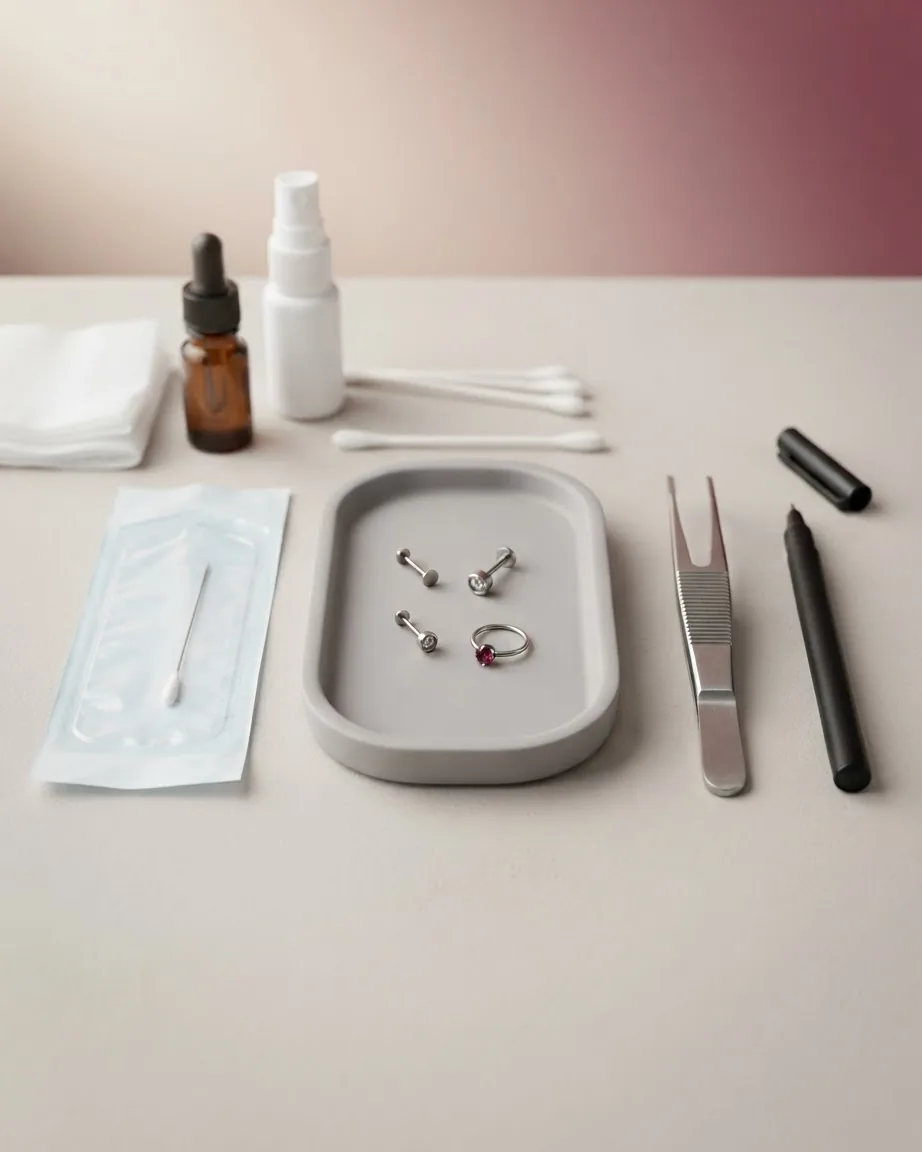
A traditional nostril piercing goes through the fleshy wing of the nose, and the target most piercers mark is a point just below the crease, kept roughly centered on the nostril when the face is viewed from the side. The crease is tempting because jewelry seems to tuck into it, but it is working tissue. It flexes with every flare and smile, it pools the oil the nose produces all day, and a stud or ring sitting in a moving fold rarely beds down flat while the channel is trying to close around it.
Centering matters for the same practical reason. A hole placed too far forward crowds the edge and can tear out; one placed too far back disappears into the shadow of the nostril. If your plan is a nostril-to-nostril chain or a particular hoop that must sit a certain way, that goal decides the exact dot – which is the forward-planning logic in action. Fame Tattoos frames placement as matching the spot to your anatomy and intended jewelry rather than copying a photo, since the same stud lands differently on a broad nostril than a narrow one.
The dot is the real decision point. When the piercer marks it, be fussy: look in a mirror, check both nostrils against each other, and do not nod until it is where you want the jewelry to live for years. This sits inside the broader nose septum group of nasal placements. See also our nostril piercing placement guide.
Picking a Side: An Even Split, Not a Rule
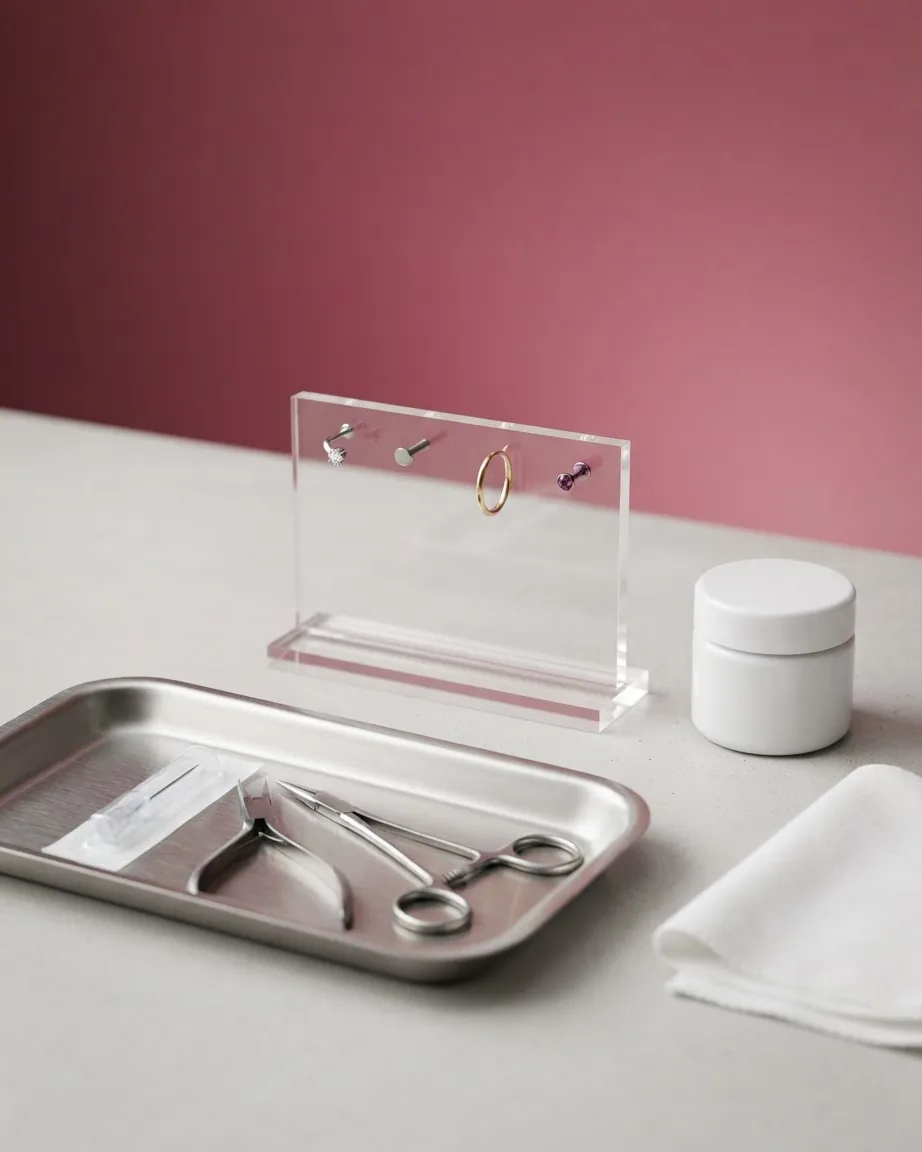
People often arrive convinced one side is correct. In practice there is no rule, and the choice between left and right is roughly an even split. Pick the side by things that actually affect you: which cheek you sleep on, which side your glasses or a mask rub against, how you read in the profile photos you already take. A side you press into a pillow every night settles more slowly, so if you sleep hard on one side, favor the other for the first several months. None of this changes healing time or risk; it only changes day-to-day comfort.
High Nostril: Denser Cartilage and a Two-Year Settle
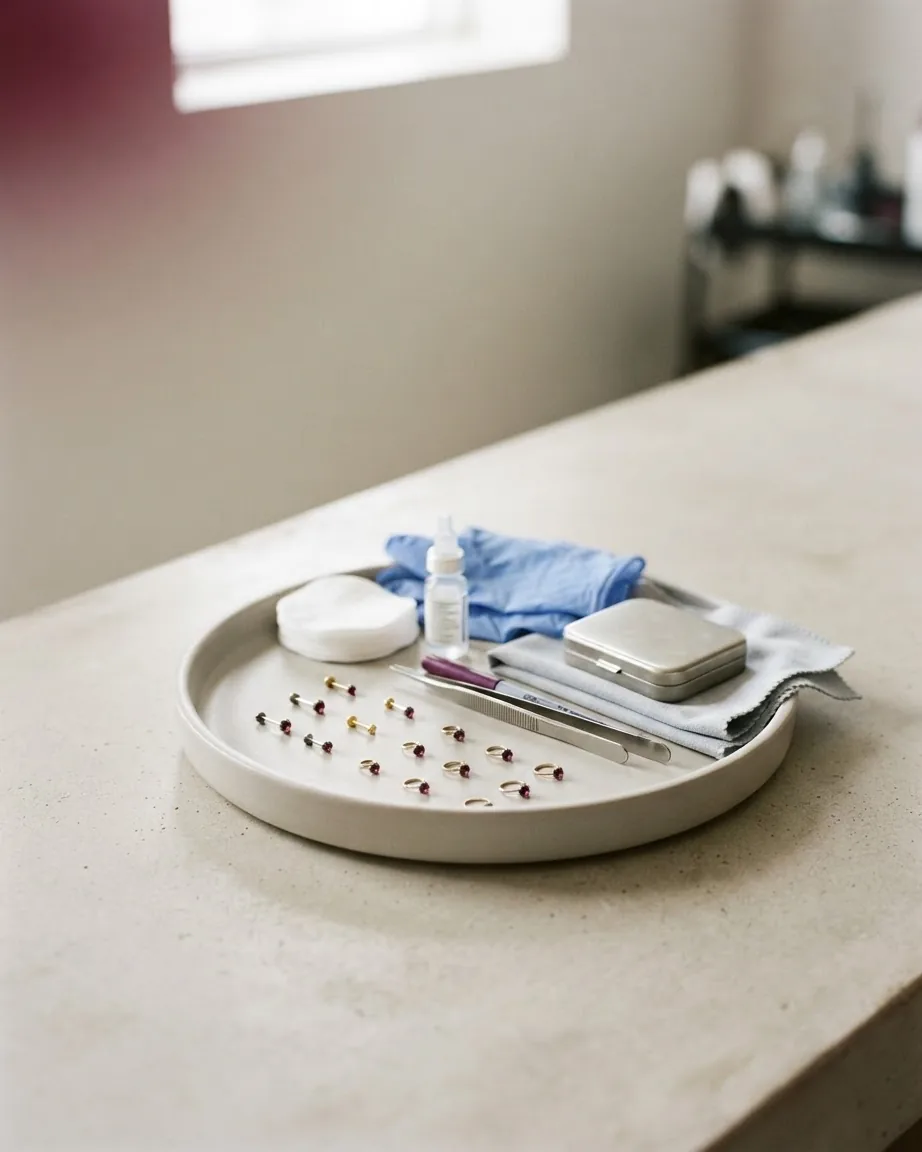
A high nostril sits above the traditional spot, where the nasal wall thickens into denser structural cartilage and the passage narrows. That anatomy is why it behaves so differently. The tissue is less forgiving, the jewelry has less room, and a post that is too thin can sink below the surface – an embedding risk specific to this placement.
Lynn Loheide, a professional piercer, pierces high nostrils thicker than a standard nostril for exactly this reason, using 16g or 14g to give the channel more to stabilize around. She says, “I do find 16g can often be more stable,” and reports a visible difference in healing and irritation between 18g and 16g on this spot. She also starts high nostrils with a 4mm inner disc and advises keeping a larger disc in place for as long as you wear the piercing, so a smaller back cannot embed into the thickening tissue.
Patience is the other half. Loheide notes her own high nostrils did not truly stabilize until she had worn them for nearly 2 years – far longer than the few months people expect from a nose piercing. Settling takes longer than the first comfortable weeks suggest, and the longer figure is the one to respect before you start swapping jewelry.
Septum Placement and the Sweet Spot
The septum piercing does not go through the hard wall you can feel between your nostrils. It threads the soft gap just in front of it – the sweet spot – a small window of thinner tissue a piercer finds by feel. Placed there, it is quick and comparatively gentle. Placed into the stiff cartilage even a couple of millimeters off, it hurts more, heals worse, and sits crooked.
Sources describe that sweet-spot tissue differently, and the disagreement is worth knowing before you book. Lynn Loheide calls it cartilage – soft alar cartilage – and treats the belief that the sweet spot contains no cartilage as a misconception. Fame Tattoos describes it instead as a thin membranous tissue sitting below the cartilage, closer to soft tissue than to cartilage proper. The anatomical label is unsettled. What both agree on, and what matters to you on the table, is that the correct target is the pliable gap and not the rigid septal wall, and that only hands-on assessment finds it.
Symmetry is the second surprise. Many people have a deviated septum – Fame Tattoos notes it occurs to some degree in up to 80% of people – so a piercing placed correctly in the sweet spot can still read slightly off-center once it heals. That is the anatomy showing through, and forcing the jewelry toward visual center can push it into cartilage it should avoid. On pain, a well-placed septum is among the milder nasal piercings; the pressure is brief and concentrated in that soft window rather than the cartilage around it.
Nose Gauges and Sizing: 18g, 16g, and Fitting the Jewelry
Gauge is the wire thickness of the jewelry, and for an initial nostril it has a floor. Lynn Loheide names 18g as the minimum she will use on a fresh nostril and often reaches for 16g instead, because the slightly thicker wire resists the forces that irritate a healing cartilage piercing. Go thinner than 18g and the jewelry can cut into the channel like a wire through soft material; the heavier gauge is the more stable starting point even though it looks almost identical once it is in.
Three measurements decide whether a piece actually fits: the gauge, the post length (the wire that passes through the nose), and the size of the decorative end. For the end, Loheide points to a 2mm to 2.5mm range as a sweet spot for an initial piercing – large enough to stay put if you snag it, since a gem that small will not pull back through the channel, yet not so large it catches on everything. Post length gets fitted to your tissue thickness at the consultation, which is why buying jewelry blind online so often ends in a piece that is too long and swings, or too short and presses in.
Jewelry style is a placement constraint too. Nostril screws and L-bends – the bent posts that hook into the nostril – are among the least secure options for a fresh piercing, and a new nostril can shrink fast enough that a piece backing out and dropping into the sink becomes a real problem in the early months. A flat-backed labret-style stud, threaded or press-fit, stays seated more reliably while the channel is new. Hoops usually wait until the piercing has settled. See also our average gauge nose piercing and 18g nose piercing guides.
Nose Piercings by Placement: Gauge, Healing, and Risk
The placements compiled side by side, with the gauge a piercer tends to start from, the healing windows reported by professional sources, and the risk that is specific to each spot. Where sources differ, both figures are shown rather than averaged.
| Placement | Common initial gauge | Initial jewelry note | Reported healing | Main placement-specific risk |
|---|---|---|---|---|
| Traditional nostril | 18g minimum, often 16g | Flat-backed stud; 2mm – 2.5mm end | 4 to 6 months (Fame Tattoos); up to a year (Loheide) | Tearing if the end is too large; screws and L-bends backing out |
| High nostril | 16g or 14g | 4mm inner disc, kept large | 6 to 9 months; ~2 years to fully stabilize | Embedding below the surface |
| Septum | Set at consultation | Sized to the sweet spot | 2 to 3 months in the sweet spot (Fame Tattoos) | Missing the sweet spot into hard cartilage; off-center from a deviation |
| Bridge | Set at consultation | Surface bar | 8 to 12 weeks initial (Fame Tattoos) | Migration and rejection, as a surface piercing |
How Nose Piercing Placement Drives Healing and Pain
Ask three reputable sources how long a nostril takes to heal and you get three answers. Byrdie, working with board-certified dermatologist Blair Murphy-Rose, MD and piercer Janeese Brooks, gives an average of 3 months, with the caveat that it is tender rather than painful for most of that stretch. Fame Tattoos puts a traditional nostril at 4 to 6 months. Lynn Loheide says 6 to 9 months on average, and up to a year.
None of them is wrong; they are measuring different things. The shorter figures mark when the piercing stops being sore and looks settled. The longest marks full healing, which happens from the outside in, so a channel can look done on the surface while the inside is still raw. That gap is exactly why piercers warn that a healed-looking surface can hide a channel that is still forming underneath. A professional downsize partway through – swapping a longer initial post for a shorter one once swelling drops – is standard, and swapping to a hoop or changing jewelry on the early timeline can set healing back. Plan around the longer number.
Septum timelines split the same way. Fame Tattoos reports a sweet-spot septum often heals in 2 to 3 months, faster than a nostril because it sits in soft tissue rather than through cartilage. Other beauty-desk guidance puts septum healing longer, in the four-to-six-month range. The reconciliation is identical: fast-to-comfortable and fully-healed are separate milestones, and the softer the tissue, the wider the gap can feel.
Pain tracks the tissue, and the tissue tracks placement. A lobe is the gentlest common piercing because it is soft, vascular flesh; every nasal placement moves through or past cartilage, so expect more pressure than a lobe even when the pinch itself is brief. A sweet-spot septum is mild; a high nostril, through that denser cartilage, is the most demanding of the group.
The bridge is the outlier. It rides across the skin at the top of the nose between the eyes, which makes it a surface piercing rather than a channel through cartilage – and surface piercings carry a built-in tendency to migrate or reject as the body works to push the bar out. Fame Tattoos lists an initial healing window of 8 to 12 weeks, but a bridge can heal and still not be permanent, and some are lost to rejection regardless of care.
Jewelry the APP Will Stand Behind
Placement decides where the hole goes; material decides whether it heals cleanly, and here the standard is not a matter of taste. The Association of Professional Piercers sets a floor for what belongs in a fresh piercing, and it is worth holding your studio to it. For titanium, the APP points to implant-grade material – Ti6Al4V ELI meeting ASTM F-136, or ASTM F1295 and ISO 5832-3, or commercially pure titanium meeting ASTM F-67. Those certifications mean the metal is documented to sit in the body without leaching the irritants cheaper alloys can.
Gold is acceptable only when it is solid and at least 14 karat. Gold plated, gold-filled, and vermeil (gold over a base metal) are not suitable for a fresh piercing, because the thin gold layer wears and exposes whatever is underneath to an open wound. The same logic rules out mystery-metal fashion studs for an initial piece.
This matters more on the nose than almost anywhere, because nasal placements heal slowly and sit in tissue that reacts badly to a reactive metal. Allergic reaction and infection are among the complications clinicians associate with piercings, and the cleanest way to take the metal out of that equation is to start with certified jewelry and verify the certificate rather than the marketing. The Mayo Clinic is among the academic medical centers that publish guidance on preventing piercing complications; when something looks wrong, a clinician – not a jewelry swap – is the right call. If a studio cannot tell you what their initial jewelry is made of, that is the answer.
Aftercare: 0.9% Saline, Water to Avoid, and the Signs to Stop
Aftercare for a nose piercing is deliberately dull, and that is the point. The APP’s guidance is to rinse with a sterile saline whose only ingredient is 0.9% sodium chloride – not a homemade sea-salt mix, not an antiseptic, not alcohol or hydrogen peroxide, all of which are harsh on new tissue. Clean once or twice a day, let it dry, and otherwise leave it alone. Twisting the jewelry, picking at crust, and over-cleaning slow healing more than they help.
Water is the quiet risk. Submerging a fresh piercing – pools, lakes, hot tubs, long baths – exposes it to bacteria while the channel is still open, so keep it out of standing water until your piercer confirms it has settled. A shower is fine; a swim is not, for longer than most people expect given how quickly the surface looks normal.
Know the line between irritation and infection. Some redness, light swelling, and clear or pale crusting in the early weeks are ordinary. Spreading redness, heat, swelling that worsens after the first days, green or yellow discharge, throbbing pain, or fever are not – those point to infection, and they are a reason to see a doctor, not to pull the jewelry out, since removing it can trap the infection inside the closing channel. For anything that looks or feels wrong, your piercer is the first call for jewelry and technique questions and a clinician for anything medical. None of this replaces that in-person assessment.
When You Can Safely Swap the Jewelry
The jewelry change people most want to make – a longer initial post for a shorter one, or a stud for a hoop – is governed by healing, not by a date on the calendar. The first, smaller change is usually a professional downsize once swelling has dropped, and that comes well before full healing. The bigger change, to different jewelry entirely, waits until the channel is healed all the way through, which on the nose runs toward the long end of the ranges above.
Two practical signs tell you a nostril is ready for an elective change: it has gone quiet, with no tenderness when you touch it, and it is producing no discharge or crusting. If either is still happening, it has not finished healing, whatever the surface looks like. Changing too early is how a half-healed channel gets torn and re-aggravated, which can add months. When in doubt, let your piercer make the first swap and watch how the tissue behaves before you take over. See also our change your nose piercing guide.
Piercing After a Rhinoplasty or Septum Repair
If you have had nose surgery, timing is a safety question. Lynn Loheide gives that roughly one-year figure for a standard repair, and adds an important caveat: surgery sometimes rebuilds the septum with grafted or hardened cartilage, and that reworked tissue may not take a piercing at all – a sweet spot can be gone or unreachable after reconstruction.
This is a case where the consultation does more than mark a dot. Tell your piercer about any nasal surgery, and expect them to feel for the sweet spot before committing. If the tissue has been grafted or stiffened, a reputable piercer will decline rather than force a channel through cartilage that was not meant to hold one. When a surgeon has been involved, loop in that surgeon or a clinician before booking, especially if the repair is recent.
Common Questions About Nose Placement
Can I start a fresh nostril with a hoop instead of a stud?
You can, but most piercers advise against it on day one. A ring moves more against the new channel, traps crust along its curve, and is harder to clean than a flat back. Studios often set you on a stud first and move you to a hoop only once the tissue has settled, which protects a channel that is still closing around the jewelry.
Will my nostril close if I leave the jewelry out for a day?
Possibly, especially in the first several months. New nose channels shrink quickly, and a stud left out overnight can be hard or impossible to reinsert without a taper. Even older nostril piercings can tighten within a day. If a piece falls out, clean a spare and put it back promptly, or go to your piercer rather than forcing it.
Does a deviated septum mean I cannot get a septum piercing?
Usually not. A deviation shifts where the sweet spot sits and can leave a healed piercing looking a little off-center, but most deviated septums still take a piercing cleanly. A piercer feels for the pliable gap and works with your anatomy. Only a severe deviation, or a septum rebuilt in surgery, tends to rule it out entirely.
Combien de fois plus long à cicatriser, à placement près
Pour éviter de mélanger des sources qui ne comptent pas « cicatrisé » de la même façon, on reste sur une seule: les fourchettes de Fame Tattoos (septum 2 – 3 mois, nostril traditionnel 4 – 6 mois, high nostril 6 – 9 mois). Divisées entre elles, elles donnent un multiplicateur net et identique aux deux bornes – c’est le vrai coût caché du choix d’emplacement, avant même de parler de bijou.
- Nostril traditionnel = 2× le septum. 4 ÷ 2 = 2 et 6 ÷ 3 = 2. À chaque extrémité de la fourchette, le nostril met deux fois plus de temps.
- High nostril = 3× le septum. 6 ÷ 2 = 3 et 9 ÷ 3 = 3. L’emplacement le plus difficile de la liste triple le délai du plus rapide.
- High nostril = 1,5× le nostril traditionnel. 6 ÷ 4 = 1,5 et 9 ÷ 6 = 1,5. Monter dans le cartilage plus dense rallonge la cicatrisation de moitié par rapport au nostril classique.