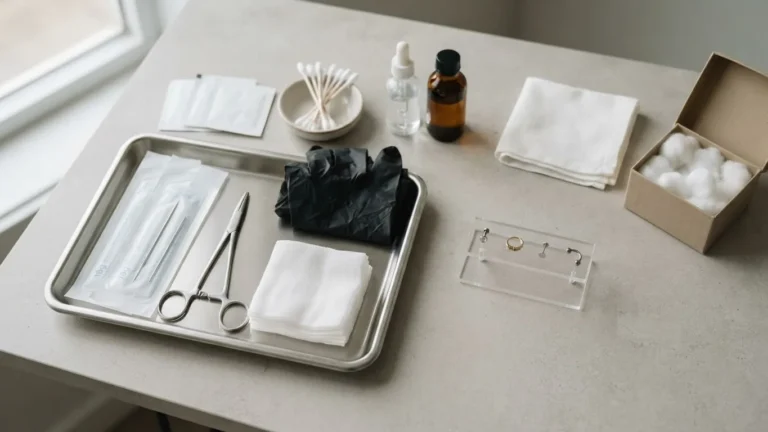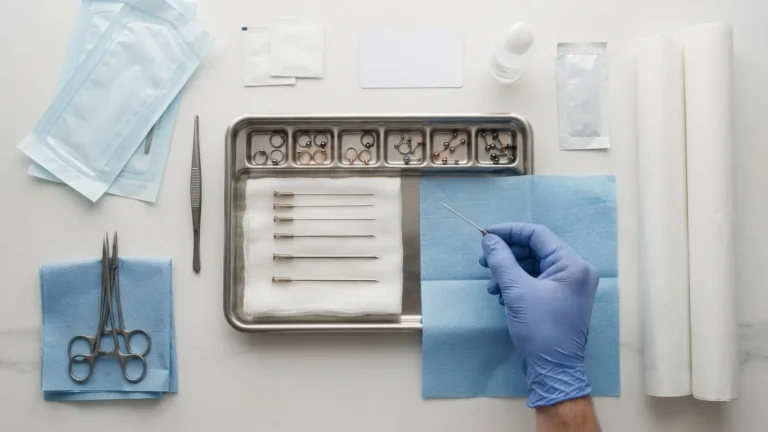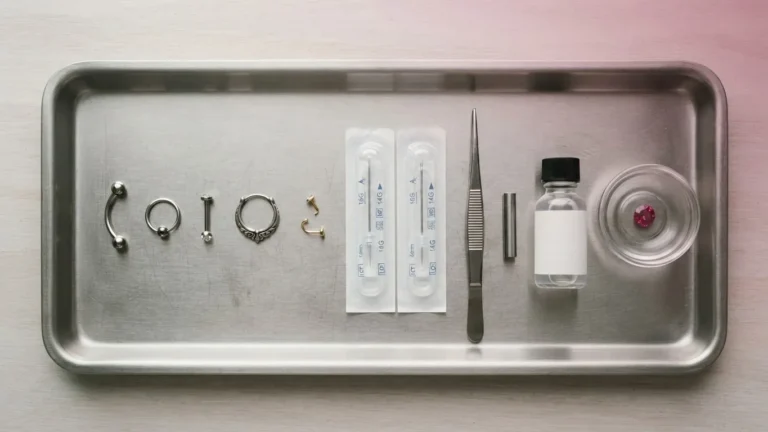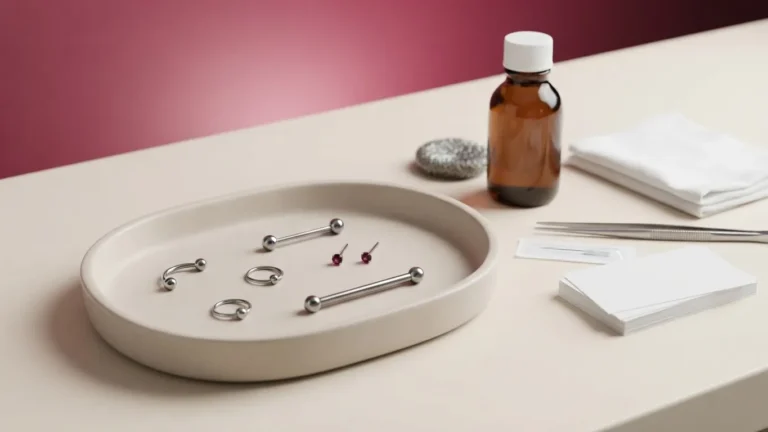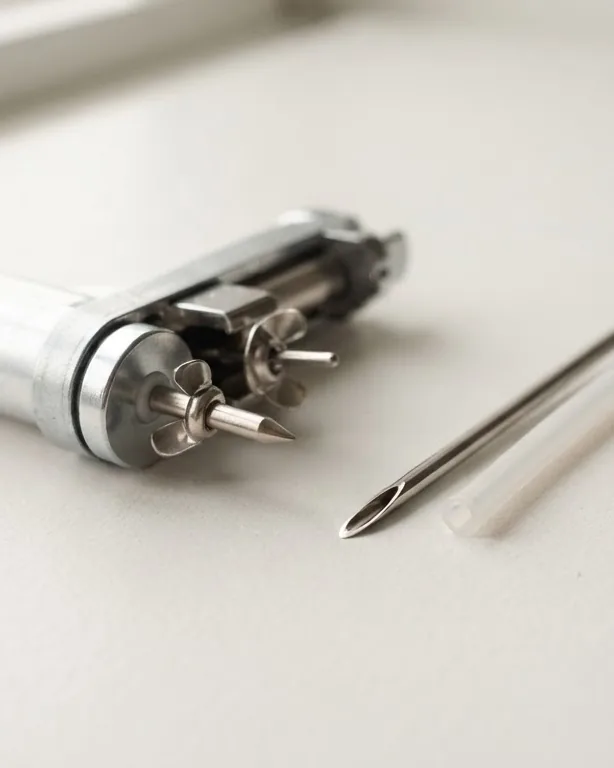
If you are weighing piercing gun vs needle, here is the short version I give every friend who asks me before a mall trip: a trained piercer with a single-use hollow needle is the safer, cleaner choice, and the Association of Professional Piercers (APP) will not let its members use guns at all. A gun punches a blunt stud through your ear by spring pressure. A needle slices a clean channel and lifts out a tiny core of tissue. That one difference shapes your pain, your healing time, your scarring risk, and how much grief the next few months bring you.
The core difference: blunt force versus a clean channel
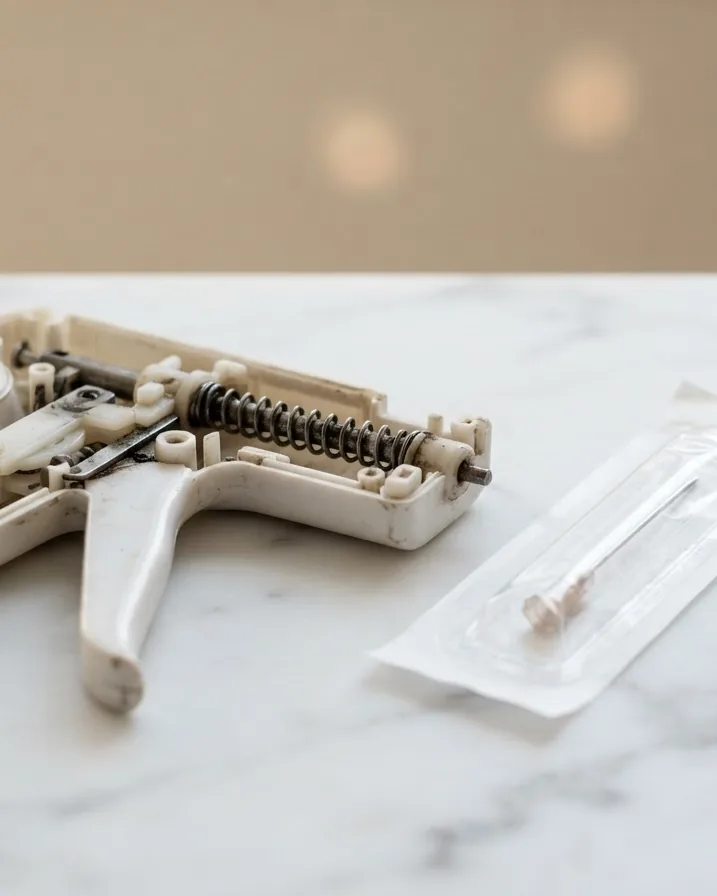
A spring-loaded gun does not cut. It drives a blunt-tipped earring stud through your lobe using stored mechanical force, so the tissue is crushed and torn apart rather than parted cleanly. The result is a ragged wound with more bruising around it, which is exactly the kind of damage that swells, throbs, and takes its time to settle. Think of it as the difference between poking a pencil through paper and slicing the same paper with a sharp blade. Both make a hole. Only one of them leaves neat edges that can knit back together without a fight.
A body-piercing needle is hollow and ground to a sharp beveled point. It parts the tissue fibers as it passes and removes a small plug of skin, which leaves an open channel for your jewelry and, just as usefully, room for fluid to drain while the wound heals. Less crushing means less swelling, and less swelling means fewer angry days. Piercers describe the needle wound as a proper channel rather than a bruise with a hole punched in the middle of it, and that framing matches what people feel afterward.
The mechanism matters most where tissue is unforgiving. Your earlobe is soft and fleshy and can absorb a fair bit of abuse. The upper ear is cartilage, which behaves nothing like a lobe. When you understand the tool, you understand why the same instrument that is merely a poor idea on a lobe becomes a genuinely bad one higher up the ear.
Sterility: the part a gun cannot fully clean
Sterility is where the gun argument really falls apart, and it is the reason professional bodies took a hard line. Most ear-piercing guns are made largely of plastic, and plastic cannot survive an autoclave, the heat-and-pressure cycle that actually sterilizes tools. Wiping the outside of a gun with an alcohol swab cleans the shell you can see. It does nothing for the internal working parts where the mechanism lives and where contamination hides.
The APP warns that blood from a piercing can aerosolize, meaning it becomes a fine mist of microscopic droplets that settles inside the device. The next person who sits down can have their fresh wound and their jewelry meet those surfaces. That is how a shared, non-sterilizable tool turns into a route for bloodborne pathogens, and it is why the APP states that only sterile, single-use disposable equipment is suitable for body piercing. Their guidance on this is published openly through safepiercing.org, the APP resource for both piercers and clients.
Some newer counter systems now use single-use plastic cartridges that enclose the moving parts, which is a real improvement over the old open guns. It reduces cross-contamination, and it is better than the reusable kiosk device your aunt remembers. Even so, the APP still recommends needles over any gun or cartridge system, because a sealed sterile needle removes the guesswork entirely. It comes out of an individual pouch, touches one client, and goes straight into a sharps bin. There is no shared chamber to worry about and nothing to clean between customers.
Pain, compared honestly
People expect the needle to hurt more because a needle sounds scarier than a friendly plastic gun. In practice most people who have tried both report the opposite. Healthline notes that piercing guns are cheaper and common for lobes, but that needles are the safer and more professional choice, and part of why they feel better comes down to the same sharp edge that makes them cleaner. A sharp point slides through tissue with a brief pinch. A blunt stud has to force its way in, and that shove is what people describe as a harder, duller thud.
There is also the pressure factor. A gun presses your ear between two plastic plates and fires, so you feel the clamp and the snap together, which many people find more jarring than a single controlled pass. A piercer using a needle can line up the angle, ask you to breathe, and move on your exhale. That control does not just improve placement. It softens the moment, because you are not braced against a device that decides the timing for you.
None of this means a needle is painless. You will feel it. But the sharp instrument tends to deliver a quicker, tidier sting rather than a crushing pop, and because the wound is cleaner, the ache afterward usually fades faster too. When I compare notes with people about their old gun lobes versus their newer needle work, the needle stories almost always include the phrase that it was over before they knew it.
Healing time: weeks for a lobe, months for cartilage
Healing is where the cleaner wound pays you back. A needle-pierced earlobe typically settles in about 6 to 8 weeks, while cartilage runs far longer, roughly 3 to 12 months depending on the exact spot and how well you leave it alone. Those windows assume a clean channel and good aftercare. A crushed, torn wound from a gun starts you at a disadvantage, and piercers commonly report that needle piercings heal something like 30 to 50 % faster than gun work, with fewer flare-ups along the way.
The reason is not mysterious. A clean channel has neat edges that can close in an orderly line, and the small tissue plug the needle removes leaves space so the jewelry is not pressing hard on raw walls the whole time. A gun wound has crushed edges and no drainage room, so it stays inflamed longer and gives bacteria more opportunity to cause trouble. Every extra day of swelling is an extra day something can go wrong.
Aftercare rides on top of the method. Expect the most swelling in the first 48 hours, keep the area clean with a saline rinse about twice daily, and resist the urge to twist or change the jewelry early. A saline soak and clean hands do more for you than any fancy product. If you start from a clean needle channel, that simple routine is usually enough. If you start from a bruised gun hole, the same routine has to work uphill against damage that was baked in on day one.
Tissue damage and gauge sizes
Gauge is the thickness of the jewelry post, and it interacts with the wound in a way that surprises people. On the gauge scale a smaller number means a thicker post. A standard lobe piercing sits around 20 g to 18 g, which is roughly 0.8 to 1.0 mm, and many piercers default to 18 g because it makes a sturdy channel. Cartilage is usually done at 16 g, a slightly thicker post, because a thicker channel is more stable and tends to heal better than a thin one that the jewelry can saw against.
Guns are built around one narrow range of pre-mounted studs, so you get whatever thickness the stud comes in, with no real choice and no ability to match the gauge to the spot. A piercer working with needles selects the gauge deliberately, then follows the needle with jewelry sized to that channel. That flexibility is not a luxury detail. Matching a 16 g post to a 16 g cartilage channel is part of why needle cartilage work behaves so much better over the long months it takes to heal.
There is also the matter of what the tool leaves behind. The gun’s blunt stud compresses the tissue it pushes through, so the walls of the new hole are bruised rather than cut. A needle channel has clean walls and a consistent diameter end to end. When you later want to size up, swap to a hoop, or wear a heavier piece, a channel that formed cleanly around a known gauge cooperates. A channel that formed around crush damage is more likely to be uneven, tight, or prone to irritation.
Scarring: hypertrophic bumps and keloids
Scarring is the risk that keeps people awake, and the method you pick nudges the odds. Two different marks get confused constantly. A hypertrophic scar stays inside the border of the original wound and often calms down over time. A keloid grows past the wound edge, keeps expanding, and is partly genetic, which is why it can be so stubborn. Telling them apart matters, and if you want the full breakdown I walk through it in this guide to keloid vs piercing bump.
Keloids are not rare. The incidence among people with ear piercings runs about 2.5 % to 6 %, and the risk climbs with darker skin tones and a family history of them. You cannot change your genetics, but you can avoid stacking extra trauma on top of that baseline. A blunt gun wound is more inflamed and more crushed than a clean needle channel, and more inflammation is exactly the environment where overgrown scar tissue gets its start. Reducing the initial damage is one of the few scarring levers actually in your control.
This is where cartilage raises the stakes again. A hypertrophic bump on a lobe is annoying but usually manageable. Overgrown scar tissue on a helix or conch is harder to treat and slower to resolve, and it often traces back to a rough start. Choosing the gentler tool will not guarantee a mark-free ear, because bodies differ, but it removes one avoidable source of the very inflammation that feeds these bumps.
Cost: cheap now or cheap later
Money is usually the reason guns survive at all. A mall or pharmacy gun piercing is cheap and sometimes bundled free with the earrings, while a studio charges more. A lobe at a reputable studio commonly runs about $25 to $55, and cartilage about $30 to $90, and that price buys things the kiosk cannot. You are paying for a trained piercer, autoclaved tools, a sealed sterile needle, and implant-grade jewelry rather than a mystery-metal stud.
Look at the full cost and the gap narrows fast. A gun piercing that scars, gets infected, migrates, or rejects can cost you far more in time, aftercare products, doctor visits, and eventual removal or redo than the studio fee you skipped. Cheap up front turns expensive when you are treating a bump for months or paying someone to repierce a lobe that healed crooked. The studio price is not a markup so much as it is the price of not gambling with your ear.
There is a jewelry angle too. Guns fire whatever stud they are loaded with, and the metal quality is often unknown, which matters if you have any nickel sensitivity. A studio starts you in titanium or another implant-grade material that a healing wound tolerates well. Better starter metal means fewer reactions, and fewer reactions mean you are not back within a month trying to fix an irritation that the cheap stud caused in the first place.
Why guns are limited to earlobes
Even people who defend guns usually draw the line at the earlobe, and that line exists for a real anatomical reason. The lobe is soft, fleshy, and well supplied with blood, so it can absorb blunt trauma and still recover most of the time. Cartilage is firm, and much of the upper ear has little or no blood supply of its own. Blood is what carries in the cells that fight infection and rebuild tissue, so a poorly supplied area punished by crushing force is set up to heal slowly and badly.
Fire a blunt stud into cartilage and you risk shattering or shearing it rather than making a clean hole. That can leave a fractured channel, a lump, or a deformity that does not simply fade with aftercare. This is why the APP and public-health voices say guns should never touch cartilage, and why a helix or conch belongs to a needle in trained hands. The tool that is merely a weak option on a lobe becomes a real hazard the moment you move up the ear.
Timing matters just as much as the tool, especially on cartilage that heals for many months. Rushing a jewelry swap on a channel that is still knitting is a classic way to trigger irritation or a bump. If you are unsure how long to wait before touching a healing helix or tragus, I lay out the timeline in this guide on when you can change a cartilage piercing. The tool gets you a clean start, and patience protects it.
Piercing gun vs needle: side-by-side comparison
Here is the whole argument in one view. The table below lines up the two methods across the factors that actually change your outcome, so you can see why the recommendation lands where it does rather than taking it on faith.
| Factor | Piercing gun | Piercing needle |
|---|---|---|
| Mechanism | Blunt force; crushes and tears a stud through | Sharp hollow tip; slices a clean channel and removes a tiny tissue core |
| Sterility | Mostly plastic; cannot be fully autoclaved; internal parts can harbor contamination | Individually sealed, single-use, sterile; used once then discarded |
| Tissue trauma | High; crushed edges, more bruising and swelling | Low; clean edges with room to drain |
| Typical healing | Slower; more flare-ups | Lobe about 6 to 8 weeks; cartilage about 3 to 12 months; roughly 30 to 50 % faster overall |
| Gauge control | Fixed pre-mounted stud only | Chosen to fit: about 20 g to 18 g lobe, 16 g cartilage |
| Scarring risk | Higher due to added trauma and inflammation | Lower baseline; keloid odds still around 2.5 % to 6 % by genetics |
| Cost | Cheap up front; costly if complications follow | About $25 to $55 lobe, $30 to $90 cartilage; buys sterility and skill |
| Safe placements | Earlobe only, at best | Lobe and cartilage, plus most body piercings |
How to choose a piercer, whichever tool
Picking the person is as important as picking the method, because a needle in careless hands is not safe either. Look for a clean, licensed studio where you can watch the piercer open a fresh sealed needle in front of you. Ask what jewelry material they start with, and expect to hear titanium or another implant-grade option, not simply gold-tone or surgical-looking metal of unknown makeup. A good piercer will talk you through placement, gauge, and aftercare without rushing you toward the register.
Two quick habits protect you. First, check that sharps go into a proper container and gloves are changed between clients. Second, be honest about your history, including any past keloids or metal reactions, so the piercer can adjust the plan. If a shop cannot answer basic sterility questions or waves off your concerns, that tells you what you need to know regardless of which instrument is on the tray.
Aftercare that protects a clean start
The tool gives you a clean channel, but aftercare decides whether that head start survives the first month. The routine is boring on purpose, and boring is what heals. Keep your hands off the piercing except when you are cleaning it, sleep on the other side so you are not grinding a fresh wound into a pillow, and treat the swelling of the first 48 hours as normal rather than a reason to fiddle. Most problems people blame on the piercing itself actually come from touching, twisting, or swapping jewelry far too soon.
Here is the short list I hand people so they are not guessing at the sink:
- Rinse with sterile saline about twice daily, roughly every 12 hours, using clean hands each time.
- Pat dry with a paper towel, not a cloth one that can snag the jewelry or hold bacteria.
- Skip alcohol, hydrogen peroxide, and harsh ointments, since they irritate the wound and slow healing.
- Leave the starter jewelry alone for the full heal window, about 6 to 8 weeks on a lobe.
- Watch for warning signs like spreading redness, heat, or thick discharge, and see a professional if they appear.
Cartilage asks for extra patience because it heals over months, not weeks. A helix or conch can feel fine on the surface long before the channel is truly stable underneath, which is the trap that produces so many irritation bumps. Keep the same saline routine going for the long haul, avoid sleeping directly on the piercing, and do not let a quiet week convince you the job is done at 3 months when the tissue may need closer to 12. Slow and steady wins on the upper ear far more often than anything you buy in a bottle.
One more honest note about products. The market is full of sprays, discs, and creams promising to speed healing, and most of them do nothing a plain saline rinse and clean hands do not already do. Spend your money on the piercing itself, meaning a skilled person, a sterile needle, and good jewelry, rather than on a shelf of aftercare gadgets. A clean start plus a dull, consistent routine beats an expensive kit layered on top of a rushed, crushed wound every single time.
Frequently asked questions
Is a piercing gun ever safe to use?
At best a gun is only defensible on a soft earlobe, and even there a sterile needle is the cleaner choice. On cartilage it is a genuine hazard, because the blunt force can shatter or shear firm tissue that has little blood supply to heal. The APP does not endorse guns in any form and disallows its members from using them, which tells you how the people who pierce for a living weigh the risk.
Does a needle hurt more than a gun?
Usually the opposite. A sharp needle slices through with a brief pinch, while a gun forces a blunt stud in with a harder pop, and it clamps the ear before firing. Most people who have felt both say the needle was quicker and less jarring. Because the wound is also cleaner, the ache afterward tends to settle faster rather than throbbing for days.
Why do professionals prefer needles over guns?
It comes down to a cleaner wound and true sterility. A hollow needle makes a precise channel with room to heal, comes sealed and single-use, and lets the piercer match the gauge to the spot. A gun crushes tissue, cannot be fully autoclaved, and fires one fixed stud. Healthline and the APP both point people toward needles for exactly these reasons. The Mayo Clinic likewise lists piercing with unsterile equipment among the causes of skin and bloodborne infections.
How long before I can change the jewelry?
Wait until the piercing has actually healed, not just stopped hurting. A lobe usually needs about 6 to 8 weeks, and cartilage needs far longer, often 3 to 12 months. Swapping too early on cartilage is a common cause of irritation bumps. When in doubt, leave the starter jewelry in and keep up the saline routine until the channel feels settled and dry.
The bottom line
Strip away the marketing and the choice is not close. A needle gives you a clean channel, real sterility, better gauge control, faster healing, and a lower floor on avoidable scarring, while a gun trades all of that for a cheaper, faster moment at the counter. The APP will not touch guns, and Healthline steers people the same way. Pay a good studio, let a trained piercer open a sealed needle, and give the wound the weeks or months it honestly needs. Your ear has to live with this decision far longer than your wallet will feel it.